Get in touch with LFADJ Company

Portable Explosion-Proof Lighting: A Field Lifecycle Guide

Portable explosion-proof lighting is meant for defined classified areas. The label alone does not necessarily determine whether a light is suitable for a specific job; safe field use involves matching the exact equipment and configuration to the job, inspecting it before use, controlling placement and power, and retaining records through repair or retirement. The same lifecycle is applicable to a handheld lamp or portable flood light as part of a larger industrial lighting scheme.
This guide focuses on that operating lifecycle. For model formats, ratings, available configurations, or quotations, visit the portable explosion-proof lighting product page. The intent here’s different: to provide a means to turn an approved light into a field controlled asset, starting from job planning, and ending upon its return.
The Short Answer: Control the Whole Lighting Assignment
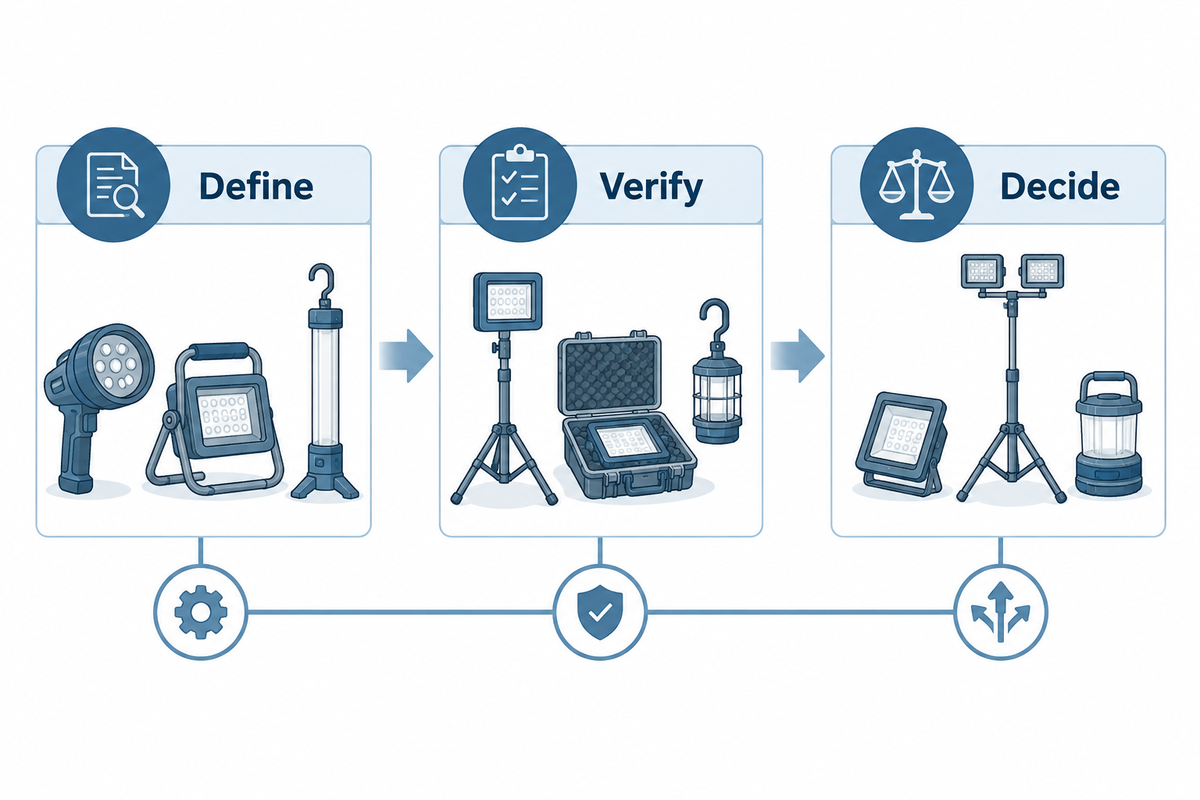
A dependable program consists of seven parts: define the job, verify suitability, issue the asset, inspect it, place and operate it, return and maintain it, and reassign, repair or retire it. Approval evidence is an input. Others include cable condition, charger restrictions, shock protection, escape visibility, and asset records.
Start With the Job, Not the Lamp
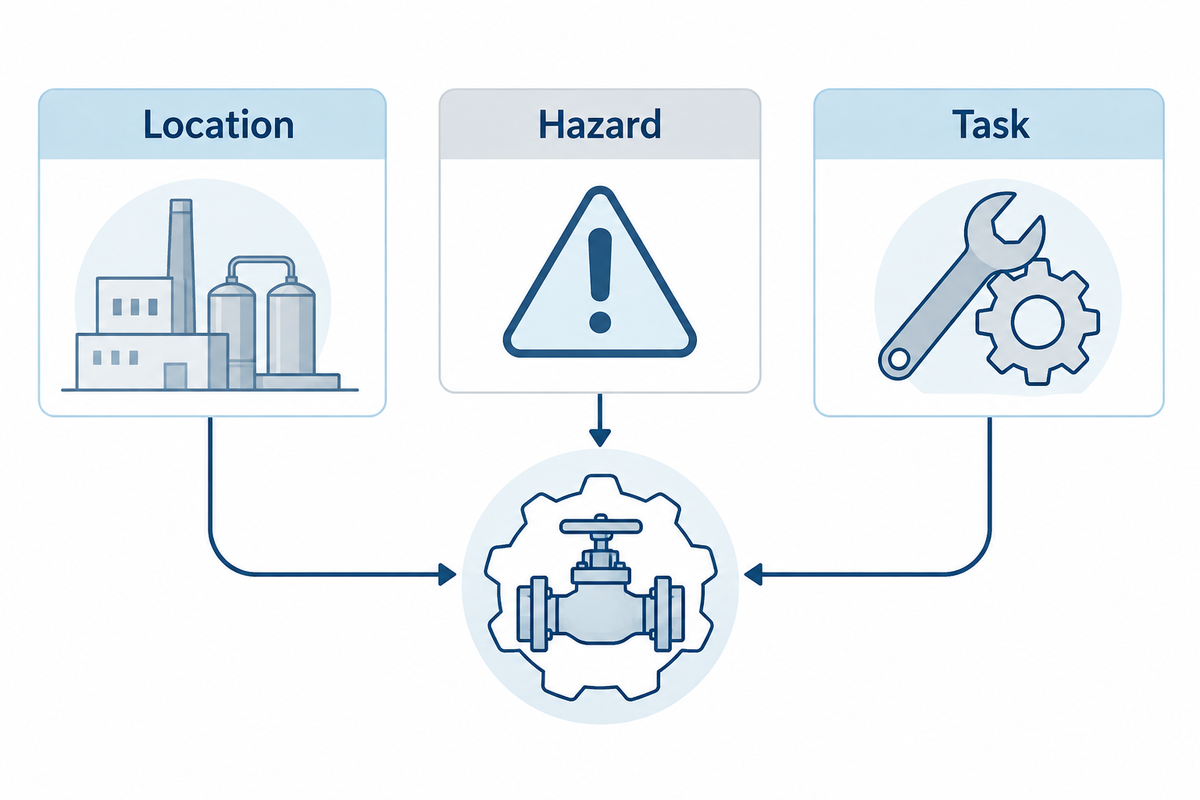
The first decision isn’t brightness or battery life. It’s if the equipment is appropriate for the site conditions. OSHA requires each room, section, or area to be classified individually, then allows the protection routes described in 29 CFR 1910.307 for equipment used there.
Job facts serve as the foundation of a request. Identify the area classification and job conditions—including the gas or dust hazard, normal and abnormal operating conditions, ambient conditions, wet or conductive surroundings, duration, access, cable route and emergency egress—and provide relevant details to define the job scope and requirements. Relevant job details include Class II dust hazards, ignition sources and required electrical connections, along with inspection, maintenance, rescue, support, cleaning and turnaround activities. Different job scopes and requirements can expose the same hazardous location lighting to varying degrees of rough treatment, harsh conditions, and other operating conditions.
Who determines the hazardous-location classification?
Where OSHA rules apply, the employer documents each hazardous-area classification; the site organization should name the authority responsible for that classification under the applicable local framework. A lamp supplier doesn’t classify the customer’s work area. Equipment decisions are made after the classification is complete. The site buyer or site engineer matches the exact marking, certificate scope, instructions for use, and configuration of the equipment to the classification and the site rules.
Shock protection and ignition protection are kept separate. A wet vessel, conductive enclosure, or damaged extension arrangement may create an electrical-shock hazard even when the luminaire has an appropriate hazardous-location approval. The site rules, wiring and protective means and voltage still need to be evaluated.
Build a Job-to-Light Handoff Card
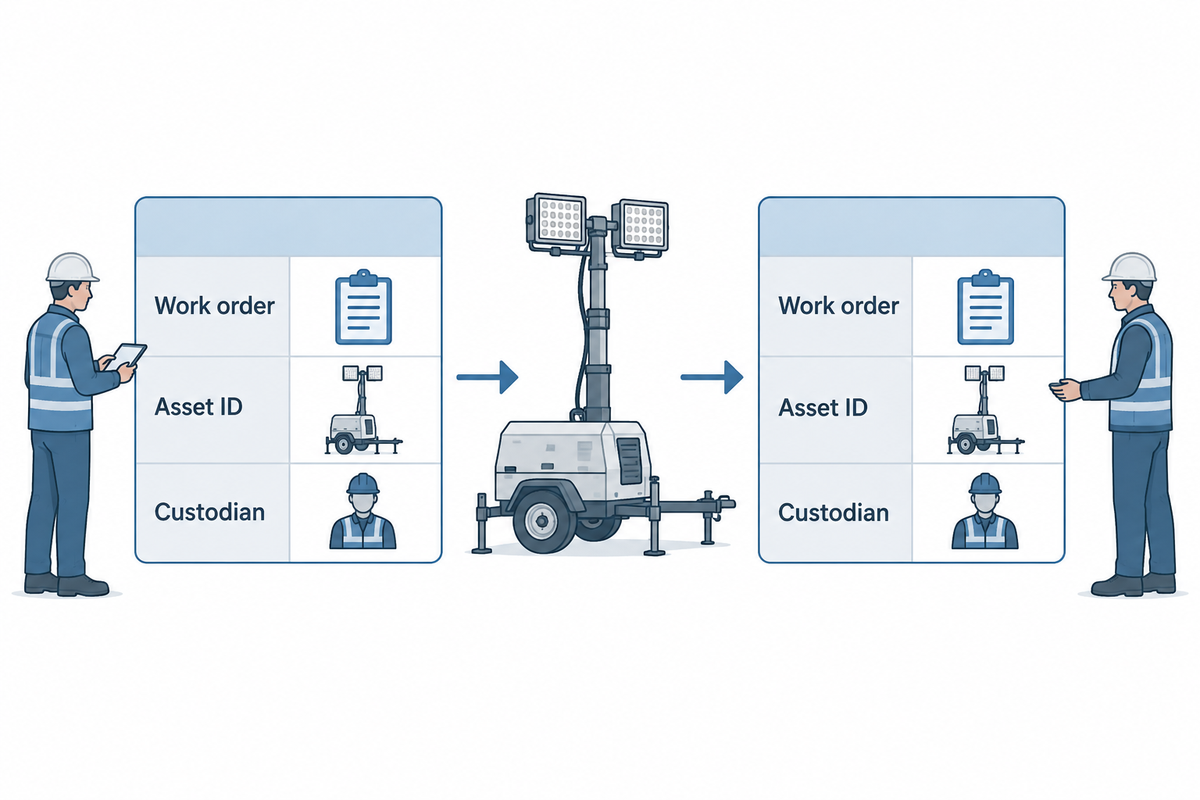
A handoff card connects job conditions to job assets, preventing an approved model from becoming an object of uncertain origin that moves between teams.
| Control category | Why it matters | Owner |
|---|---|---|
| Work order and location | Connects the issue decision to the site’s classification record | Site supervisor |
| Asset ID and model | Prevents evidence for one unit or configuration being applied to another | Tool crib or asset custodian |
| Marking and evidence reference | Lets the issuer verify certificate status and scope | Competent reviewer |
| Battery, charger, cable, plug, and accessories | Keeps the approved or instructed configuration together | Issuer |
| Inspection result and time | Shows the condition at issue and any shift-use trigger | User or inspector |
| Return status | Routes the unit to available, quarantine, repair, or retirement | Receiver |
| Classification record | Preserves the site input used for the suitability decision | Site engineer |
| Operating conditions | Captures wet, conductive, ambient, access, and contamination constraints | Supervisor |
| Change trigger | Defines when relocation, impact, or a configuration change requires review | User |
Don’t simplify the card to an “Ex-Light” checkbox. Enter the actual reference and revision. IECEx offers online resources for certificates; however, a certificate search is useful only if the result is for the specific model, variations, conditions of certification and the current status. LFADJ’s “exact-model document match builder” can assist in organizing the inputs for a product discussion.
Separate Approval From Portable Format
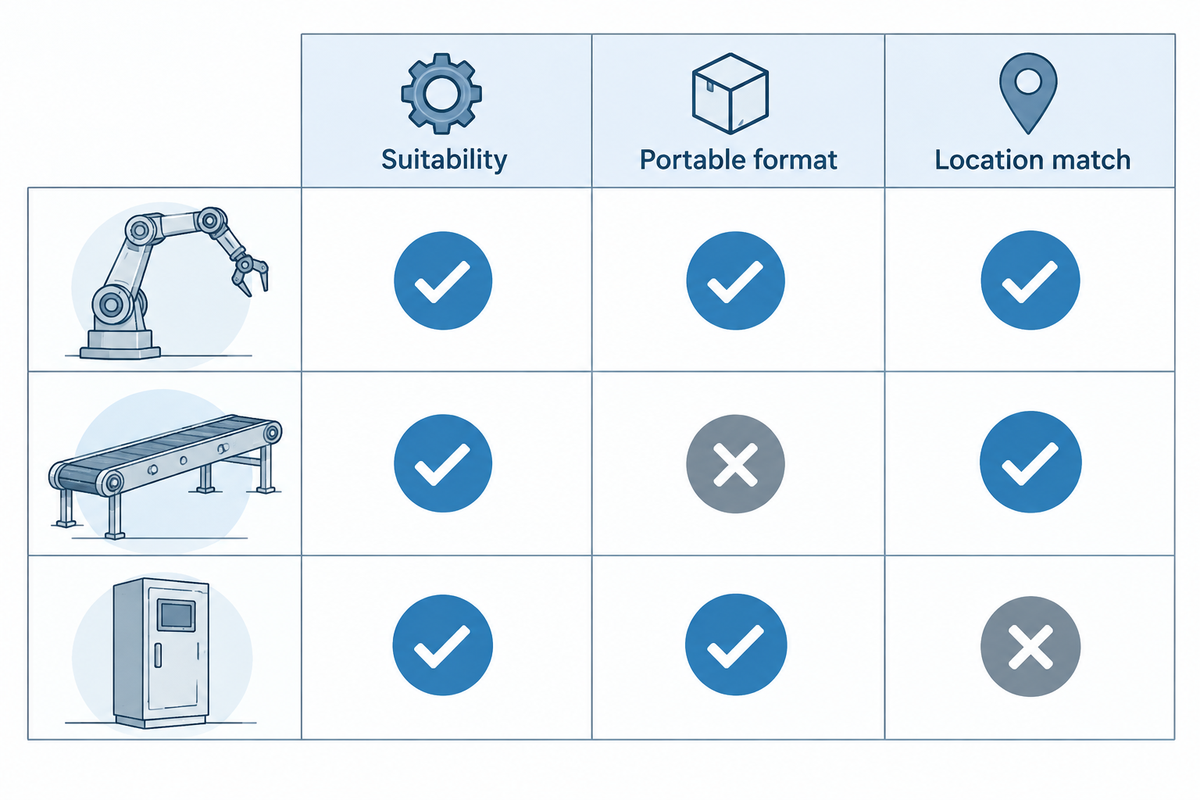
Portability describes how equipment is carried or moved, and has no bearing on whether equipment is suitable for use in a hazardous location. Historically, the U.S. Coast Guard made the distinction between portable lights and location suitability very clear. Portable lights aren’t necessarily approved for all compartments. The same can be said today. It’s important to ensure the marked construction and approval scope of the equipment is suited for the location, rather than assuming equipment marked as “industrial,” “rugged,” or “portable” is sufficient.
A light fixture may use explosion proof LED construction, but the complete fixture still needs the required approval and marking. For a North American Class I (Class 1) application, check whether the job is Division 1 or Division 2 and confirm the gas or vapor group. Flammable vapors and explosive gases are not the same classification as a combustible dust hazard environment. UL evidence, corrosion-resistant materials, LED lights, and color temperature can all matter, yet none replaces the location-to-equipment match.
| Format decision | Operational question | What it does not prove |
|---|---|---|
| Handheld | Can the worker keep both hands available when required? | Area classification suitability |
| Stand or magnetic mounting | Is the support stable and allowed by the instructions? | Approval of every mounting surface |
| Corded | Can the route avoid damage, strain, water, doors, and egress? | Shock protection or plug compatibility |
| Rechargeable | Where and with which charger may it be charged? | Permission to charge in the classified area |
The right choice could be an approved handheld unit for one task and an approved area light for another, even in the same facility. Consider configuration changes to be new decisions. Substituting a charger, extension lead, stand, guard, battery or repair part alters the conditions which were initially assessed.
Inspect Before Issue and Quarantine on Return
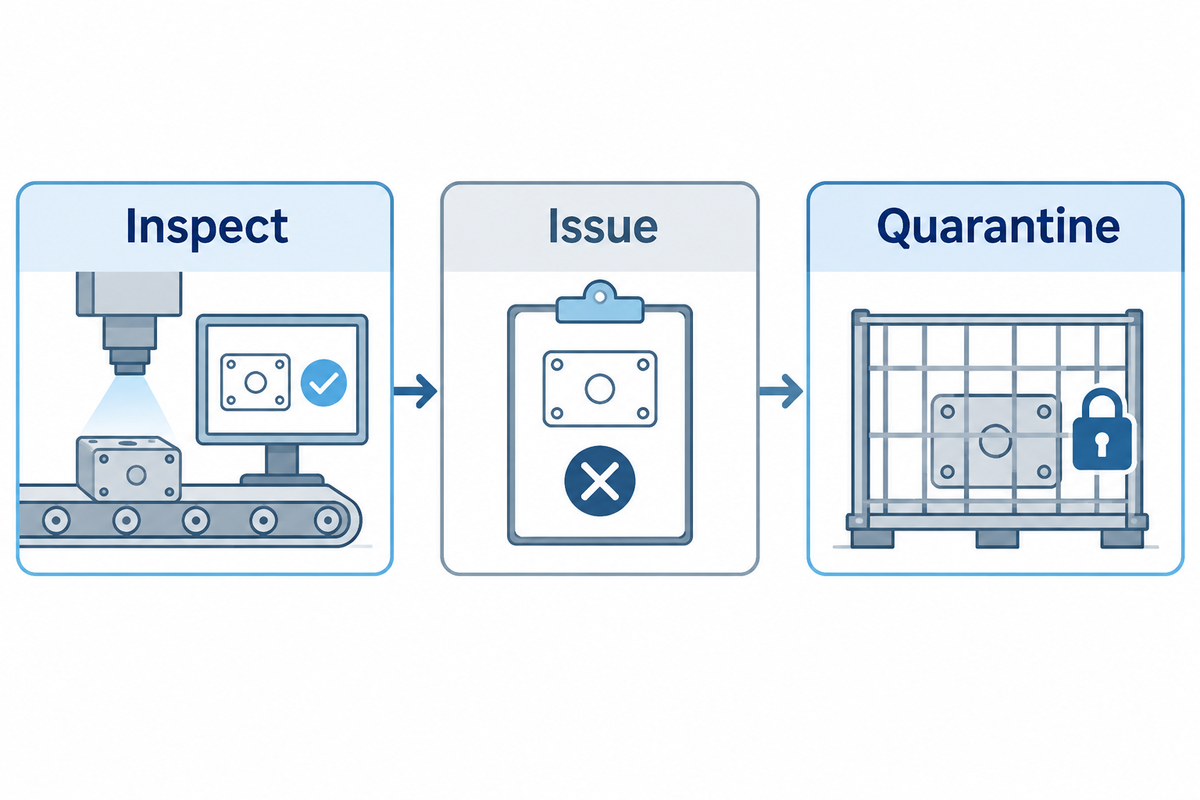
Inspect the complete issued configuration. Don’t just inspect the enclosure and take markings at face value. Also check identification and markings, globes and lenses, guards and seals, fasteners and cord glands, the battery housing, switch operation, mounts and stands, contamination, corrosion, unauthorized repairs, and the charger and accessories.
Which defects require immediate quarantine?
Any unit with an uncertain identity, missing or illegible markings, cracks, deformation, corrosion, loose or missing fasteners, damaged seals or glands, exposed conductors, cable or plug damage, fluid ingress, unapproved parts, or abnormal heat should be quarantined. Units with an atypical configuration should also be quarantined. Don’t return to service a quarantined unit.
BSEE Safety Alert 395 listed examples of hazardous location equipment including apparatus with corrosion, missing bolts or nameplates, damaged glands and seals, exposed wiring, and inadequate records. The lesson learned is that condition and traceability fail together. Red tagging should capture the asset ID, observed condition, the name of the person who reported it, the date, the work location, and the name of the person who’s authorized to determine the next status.
Per 29 CFR 1910.334, OSHA requires visual inspection of cord-and-plug portable electric equipment and extension cords before use on each shift, with an exception for equipment that’s left connected and not exposed to damage. This rule should be implemented within its limits. Don’t use it as a universal requirement for all battery-powered lights. Other applicable requirements, the manufacturer’s instructions, and the site’s risk-based inspection program still govern checks.
Place, Aim, and Control the Light Without Creating a New Hazard
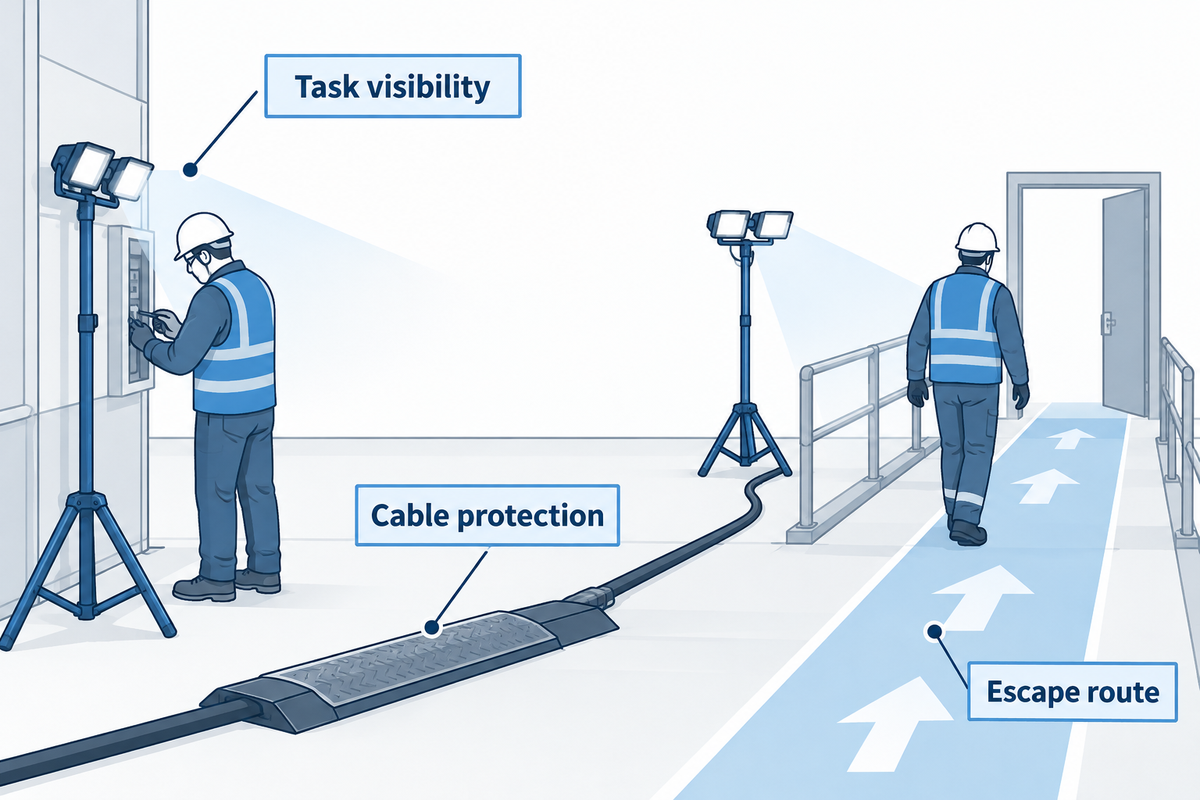
Three principles should be observed: maintain task visibility; protect cables and ensure support stability and equipment integrity; and manage interactions with people and vehicles while keeping escape routes visible. Poorly positioned lighting can create deep shadows, trip hazards, instability, and an obscured escape route.
- Beams should be aimed to allow the work face to be viewed along with the instruments and labels. The beam should not mask defects from view.
- Supporting cables shouldn’t be placed over sharp edges, exposed to pinch points, doors, hot surfaces, standing water and tensile loads. Never raise or lower a lamp by its flexible cord; use only a separate manufacturer-designated suspension feature that does not damage the cord.
- Check glare and shadows from the positions of workers, attendants, drivers, and nearby crew, as well as from the installer’s position.
- The escape view shows that a power failure or movement of the task light wouldn’t remove the illumination needed for a safe withdrawal.
When should the light be checked again during a shift?
Recheck after the unit has been moved, struck, rerouted, contaminated, or exposed to unexpected heat. Recheck as well after a protective device operates, a battery or accessory changes, or work conditions shift. Follow any before-use-on-each-shift rule that’s applicable. Stop work when the unit, evidence, or configuration no longer matches the original handoff decision.
Shared protection deserves attention. If lighting shares a protective circuit with other equipment, a fault elsewhere could remove lighting. Plan for alternate lighting where, in the event of a system failure, employees would be exposed to machinery or falls or have delayed escape. This is a system-level decision and can’t be solved by a single luminaire.
Charge, Clean, and Store Outside the Guesswork Zone
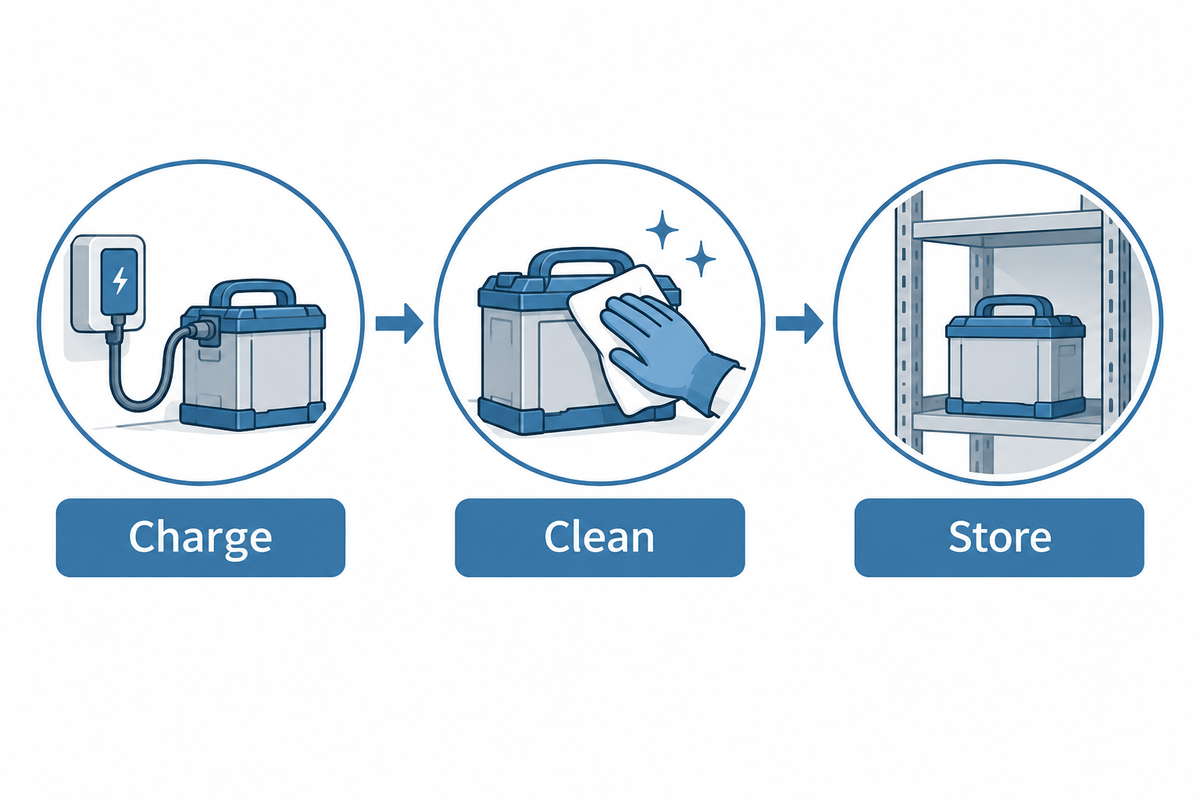
Charging permission must come from the exact equipment instructions, the site’s classified-area controls, and approval evidence covering the charging configuration; the HSE ATEX lighting safety alert illustrates why stated equipment limits and conformity evidence require exact verification. Approval to use a battery light in a classified location doesn’t permit charging in that location. Record the identity of the charger and permitted location, and the temperature limits, inspection, and response to a damaged or abnormal battery.
Clean using methods compatible with the enclosure, lens, seals and electrostatic precautions in controlled instructions. Don’t use aggressive solvents, high pressure, abrasives, or improvised tools to remove contamination quickly. Inspect components that were previously exposed or disturbed.
Use clear storage lanes: available, charging, awaiting inspection, quarantined, released after authorized repair. Separation prevents a red-tagged unit from returning to circulation while its database status says unavailable.
Create an Evidence-to-Asset Register
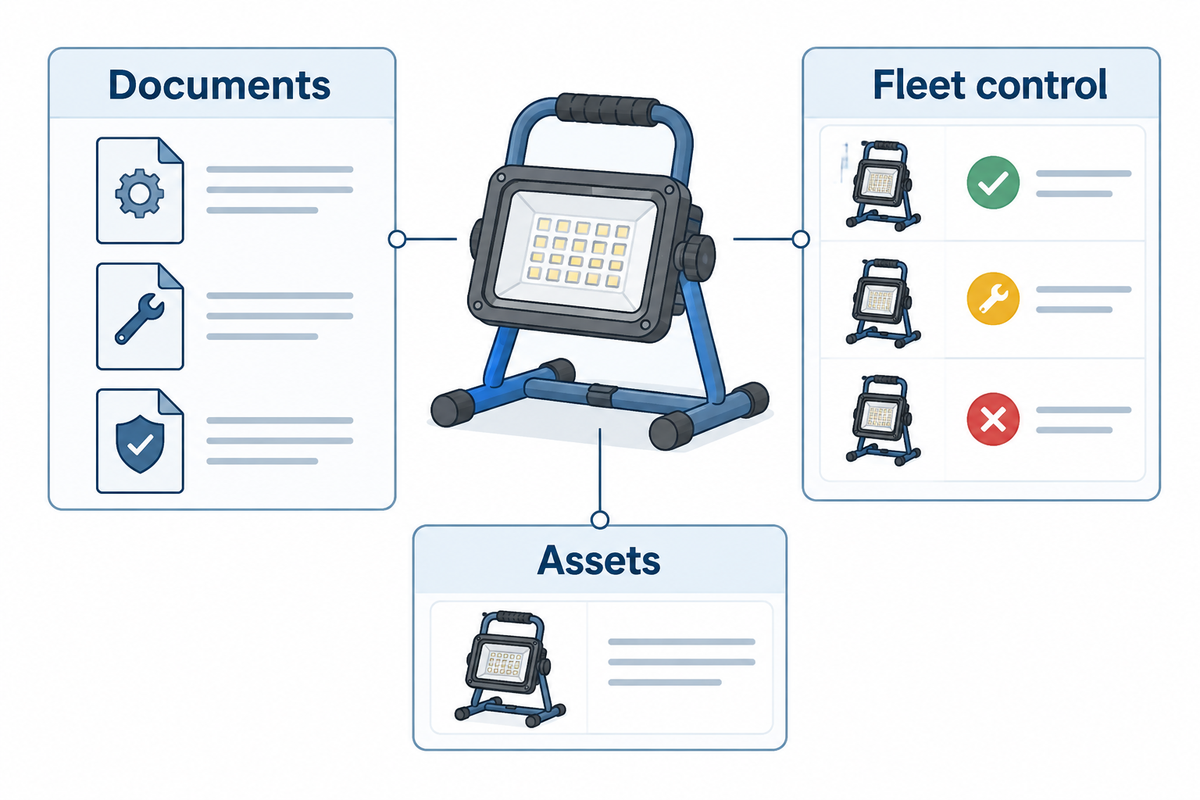
Use of evidence-to-asset registers links documents to assets and enables improved fleet control. Each asset should be described by characteristics such as model, serial or asset number, marking, certificate or declaration, controlled instructions, approved accessories, issue and inspection history, cleaning and charging events, defects and repairs, parts used, status and retirement reason. Use the hazardous-area input checklist to prepare the site-side facts before matching documents to equipment.
Don’t consider a downloaded certificate as evidence of final approval. Controlled documents can change or be superseded, and a product family can include several variations. Retain the evidence used to make a decision, indicate the date the evidence was revised or retrieved, and check periodically to see if the evidence has changed. When a supplier notifies you of a change, mark the affected asset IDs rather than filing away the notification.
What should a buyer verify before accepting a shipment?
Confirm identities, markings, ordered configuration, referenced evidence, instructions, accessories, condition, and the documents accompanying each unit. Acceptance should determine who may repair the light, which parts are controlled, how changes are reported, and which records are retained for an authorized repair.
Specify the Supplier Support Pack
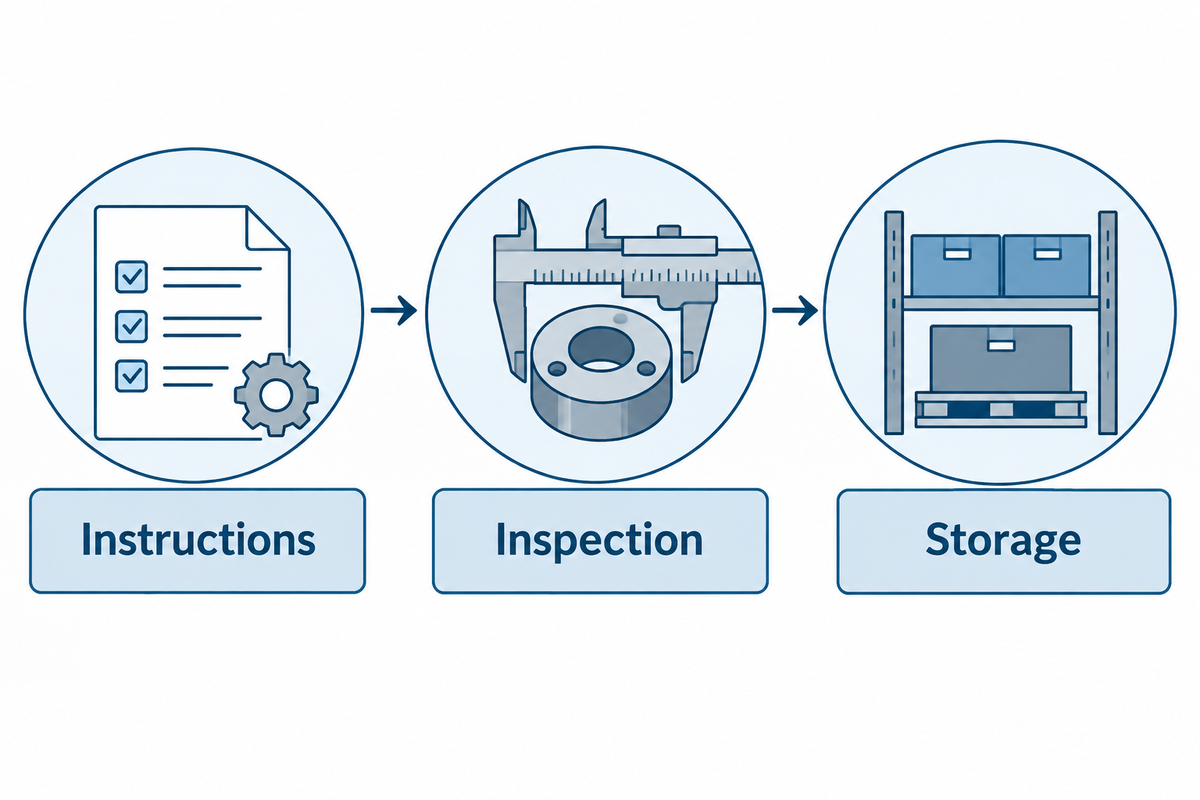
Substantiate the product’s identity and provide the applicable declaration or certificate; the IECEx Certified Equipment Scheme FAQs explain how certified equipment records are structured. State the conditions of use and provide instructions for installation, charging (where appropriate), inspection, cleaning, maintenance, and storage. Specify disposal instructions. Identify approved accessories and parts. Establish repair boundaries. Provide service contact details. Describe change and safety notices.
Where there’s a choice, include “as applicable” and highlight exceptions. The route changes with category and jurisdiction: in Great Britain, HSE notes that conformity usually involves a third-party certification body, but manufacturers can self-certify equipment intended for less hazardous explosive atmospheres. A manufacturer may have document retention duties that don’t mean the buyer receives a complete technical file. The procurement objective is controlled information to select, operate, maintain, and trace the delivered asset.
Reassign, Repair, or Retire: A Decision Framework
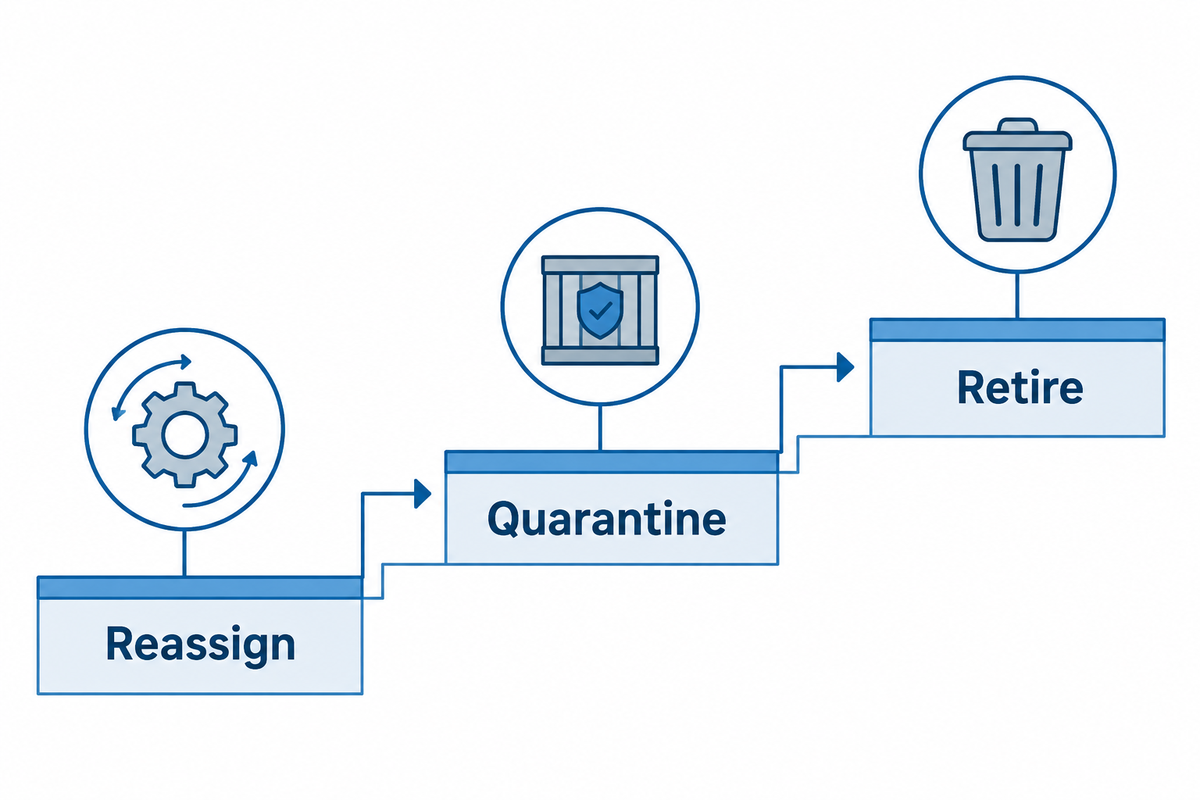
A light should transition to one of four statuses upon return. Reassign it only if condition, evidence, configuration, and job match. Quarantine it if identity, condition or evidence is uncertain. Repair it only through the authorized pathway with controlled parts and the post-repair checks required for that equipment, using the applicable IECEx operational documents where that scheme governs the asset. Retire it if integrity or traceability can’t be restored, support is withdrawn or repair isn’t permitted or economical.
A repair invoice isn’t a release decision. The record should demonstrate the reported defect, work performed, parts used, authorization, inspection or test, document revision and competent release. If any of those elements can’t be established, the unit remains quarantined.
Frequently Asked Questions
Can any explosion-proof portable light be used in any hazardous area?
No. Match the exact equipment marking, certificate or declaration scope, temperature conditions, gas or dust group, configuration, and instructions to the site’s documented classification. Portability, ingress protection, or a rugged enclosure does not replace that match, and local jurisdiction or authority requirements may add further conditions.
Can a rechargeable hazardous-area light be charged inside the classified area?
Only if site rules and controlled instructions explicitly permit the charging configuration. Operating approval doesn’t automatically extend to charging. Include the contacts, battery condition, charger, temperature, and area in the documented charging decision.
How often should portable explosion-proof lighting be inspected?
Where IEC 60079-17 (2013 edition) applies, the user visually checks hand-held and portable equipment before each use, every unit gets a close inspection at least every 12 months, and frequently opened enclosures such as battery housings get a detailed inspection at least every 6 months; longer intervals need expert advice. Also inspect before issue, after return, after impact or relocation, when conditions change, and whenever the controlled instructions call for it. OSHA also requires a before-use-on-each-shift visual inspection for certain portable equipment and extension cords, subject to the rule’s scope and exception.
What is the fastest reason to quarantine a light?
Uncertainty. If the identity, marking, condition, configuration, or repair history of an asset can’t be connected to verifiable evidence, tag and separate it. Missing traceability can’t be restored by a quick judgment.
Is an IECEx certificate search enough to approve a light for a job?
No. The verification of certificate identity and status helps, but the competent reviewer must match the variations, conditions, markings, and instructions of the certificate to the documented product, and verify that it’s in the correct configuration for the job. The site also controls the installation, shock protection, handling, inspection and emergency lighting, and maintenance.
What records should follow an authorized repair?
For an authorized repair, the service record should document, as applicable, the asset identity, defect report, repair authority, work performed, controlled parts, inspection or test results, releasing technician or organization, date, and evidence revision. The unit remains quarantined until the record and physical configuration support return to service.
References & Sources
- OSHA 29 CFR 1910.307, Hazardous (classified) locations
- OSHA 29 CFR 1910.334, Use of equipment
- See BSEE Safety Alert 395 – Electrical Equipment in Hazardous Locations.
- IECEx Certified Equipment Scheme FAQs
- HSE safety alert, ATEX lighting
- HSE, Site lighting
Turn the Guide Into a Product Brief
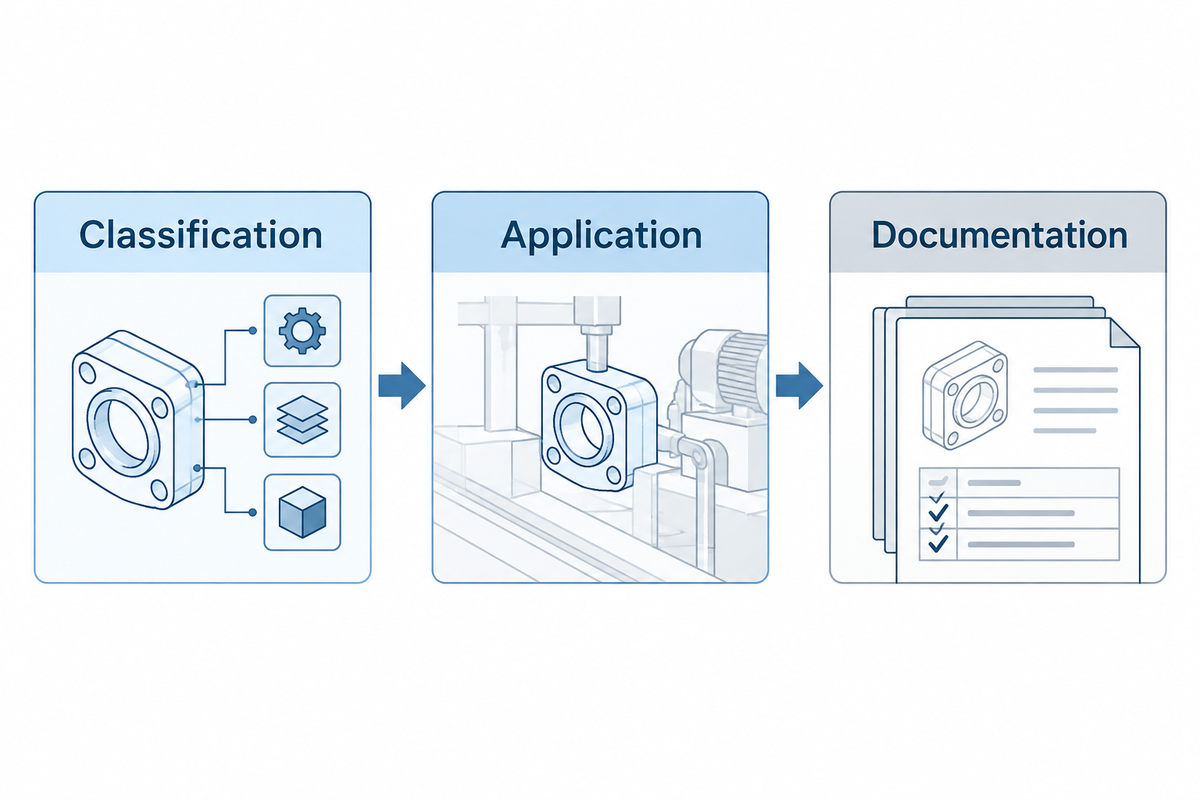
Provide LFADJ with your location classification, application, the format of the requested information, your preferred power source, your runtime goal, the environmental conditions, and the information you need documented. Review the available portable explosion-proof lights, runtime needs, and request-for-quotation readiness before confirming the model and operating limits.
LFADJ · COMPANY & TECHNICAL CONTEXT
Practical lighting guidance for real project conditions
LFADJ shares product context, application notes, and selection checks to help project teams compare industrial lighting options with the right site details in view.
What LFADJ covers
LFADJ focuses on industrial lighting and tailored lighting solutions for teams planning, specifying, or operating demanding work environments.
- Product context: mobile lighting, light towers, explosion-proof lighting, emergency lighting, and related industrial lighting equipment.
- Project context: application conditions, target illumination, runtime, site constraints, and product configuration questions.
- Decision support: use the information here as a starting point, then confirm final specifications against the actual installation and local requirements.
Industrial lighting
Application guidance
Project enquiries
NEXT STEP
Have a site question?
Send the operating environment, lighting target, expected runtime, and any drawings or photos you have. The existing enquiry form is ready for a focused discussion.
Start an enquiry Or use the LFADJ contact page