Get in touch with LFADJ Company

Industrial Emergency Lighting Systems for Industrial Sites
Comparisons of price should happen after appropriate functions, site conditions, power architecture, and required documents are identified. LFADJ aids project teams in identifying these inputs and matches an emergency light configuration to the need.
01
Project selection
We provide selection guidance based on your application environment and lighting requirements.
02
Technical coordination
We support product configuration and technical communication for the project.
03
Industrial scope
We serve energy, electric power, petrochemical, metallurgy, transportation and public safety.
04
Service continuity
We provide product-use consultation and after-sales issue handling under the contract.
Country and applicable approval route
01 / 06
Start with these project inputs
INPUTS // 01 — 06- 01 Country and applicable approval route
- 02 Escape, continued-operation or temporary task
- 03 Indoor, outdoor, wet or hazardous environment
- 04 Supply voltage and backup power concept
- 05 Mounting, coverage area and installation height
- 06 Quantity and required document package
Match the Lighting Function Before the Product Family
01 / EGRESS
Emergency escape lighting
This lighting system is used to illuminate a path to an exit after normal light fails. The fixture, exit sign, geometry of the path and the emergency mode lighting must be integrated to achieve the end result. A product label does not prove the end result.
02 / PROCESS
Continued-operation lighting
Industrial processes may require emergency lighting during a power failure to allow personnel to safely shut down the equipment, or continue critical process work. Egress lighting has different coverage, duration and power requirements from this type of lighting.
03 / DEPLOYMENT
Mobile and temporary lighting
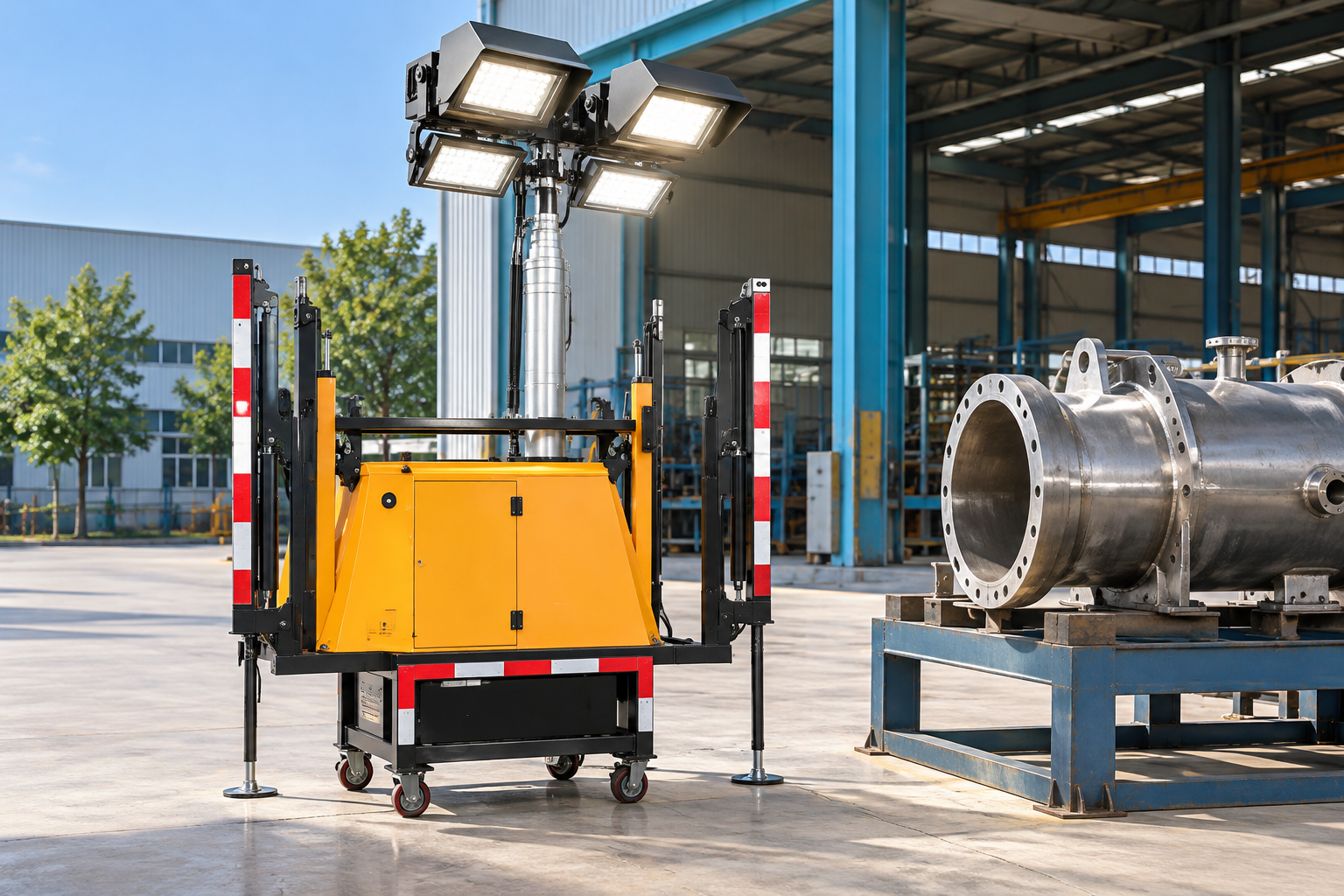
Emergency lighting is required to provide a path for evacuation. It is also required for night-time work and equipment inspection and maintenance. It may be provided by portable power, but it should not be substituted for a fixed unit unless the project design and local requirements support that.
LFADJ Industrial Emergency Lighting Project Fit Matrix
The matrix applies OSHA’s site-level requirement for adequately lighted exit routes to project inputs rather than treating a fixture label as the installed outcome.
| Project condition | Primary lighting role | Architecture to evaluate | Required evidence |
|---|---|---|---|
| Factory or warehouse exit route | Visible movement toward an exit | Self-contained fixtures, central battery or approved generator-backed circuit | Emergency photometrics, changeover, runtime, installation plan |
| High-bay or rack storage | Route and obstacle visibility | Distributed units or selected normal fixtures on backup power | Mounting-height calculation, spacing, test access, battery access |
| Wet or washdown location | Escape or task illumination under water exposure | Protected enclosure plus suitable backup method | Ingress rating, corrosion conditions, emergency function documents |
| Hazardous location | Escape, shutdown or mobile response | Exact-model explosion-proof or other approved protection method | Area classification, gas/dust group, temperature class, certificate scope |
| Outdoor industrial facility | Exit discharge, assembly point or response task | Weather-suitable fixed or portable lighting | Outdoor rating, temperature range, beam/coverage evidence |
| Temporary shutdown work | Inspection and controlled work area | Portable or lifting lighting with planned charging and deployment | Operating role, power source, placement, cable and access plan |
Emergency, Mobile, Lifting and Explosion-Protected Options
IEC 60598-2-22 defines requirements for emergency luminaires; hazardous-location suitability remains a separate exact-model question.
Industrial emergency light and fixture options
LFADJ is experienced in the manufacturing of industrial, mobile, and emergency lighting systems. Relevant lights may be fixed or portable. It depends on the task to be performed.
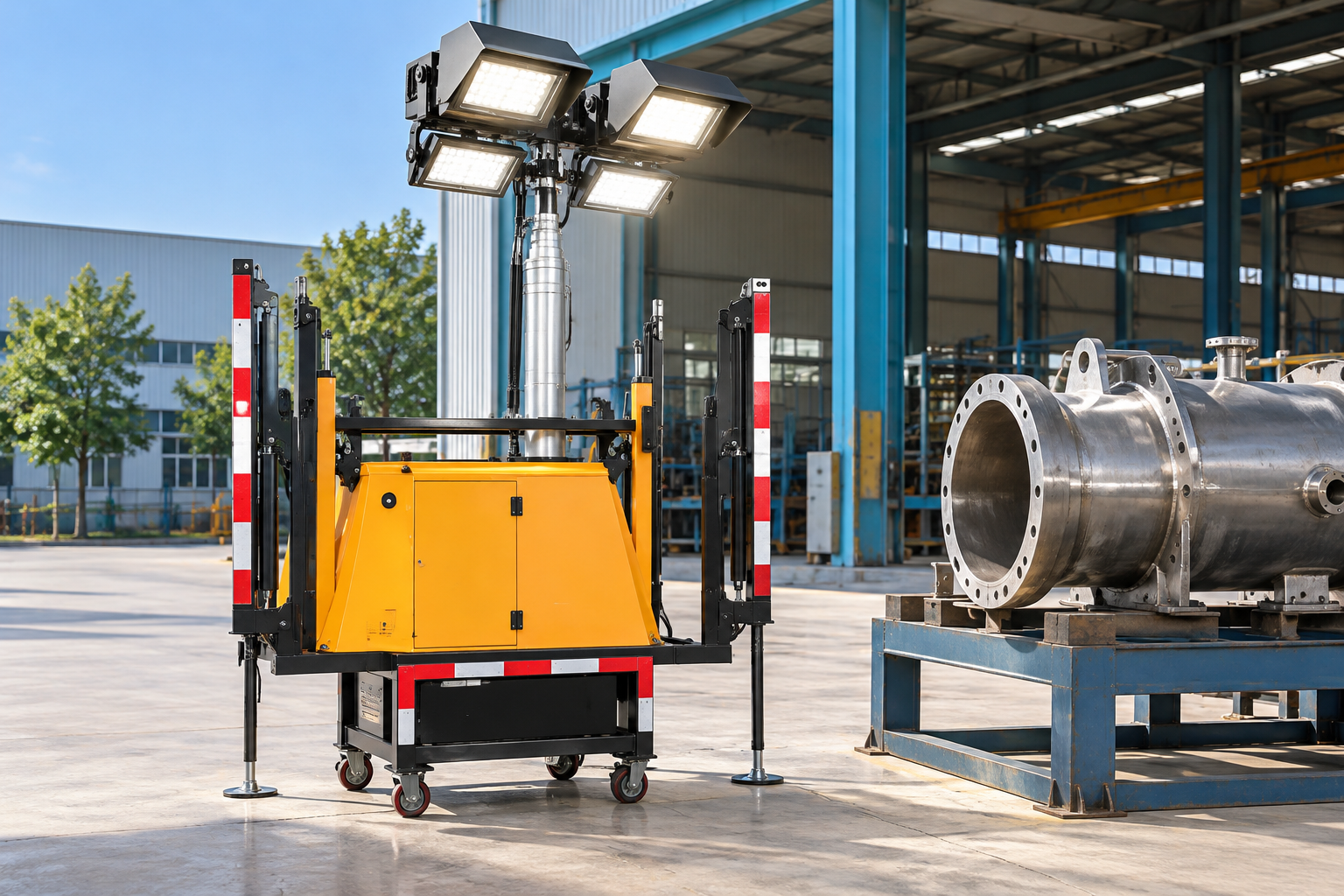
The supplied category image does not contain a readable model specification table. Model numbers, lumen output, battery runtime, voltage, wattage, ingress rating and explosion-protection marking must therefore come from the quotation-stage datasheet and certificate, not from inference.
- 01 Emergency lighting equipment for industrial sites
- 02 Portable working and emergency lamps
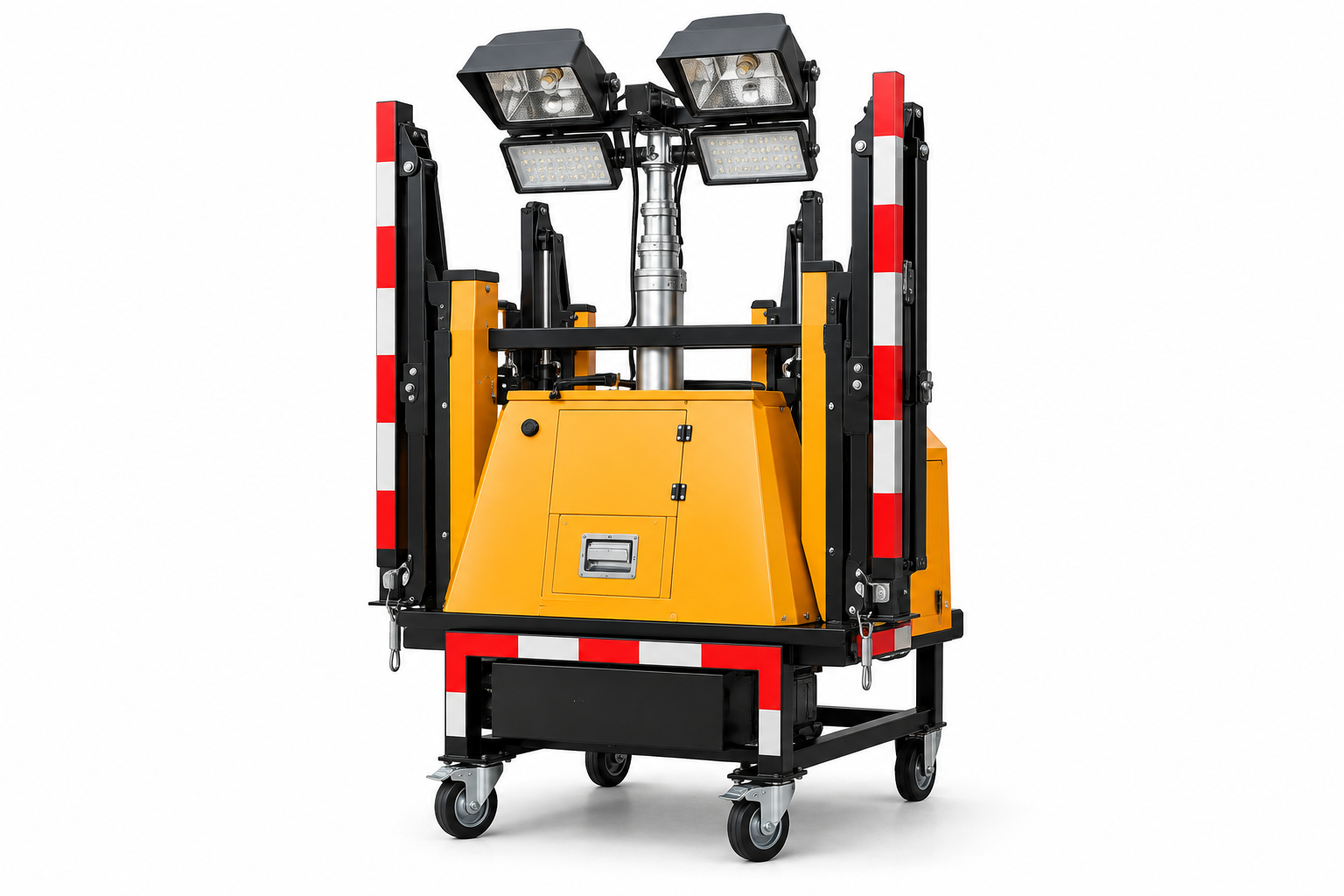
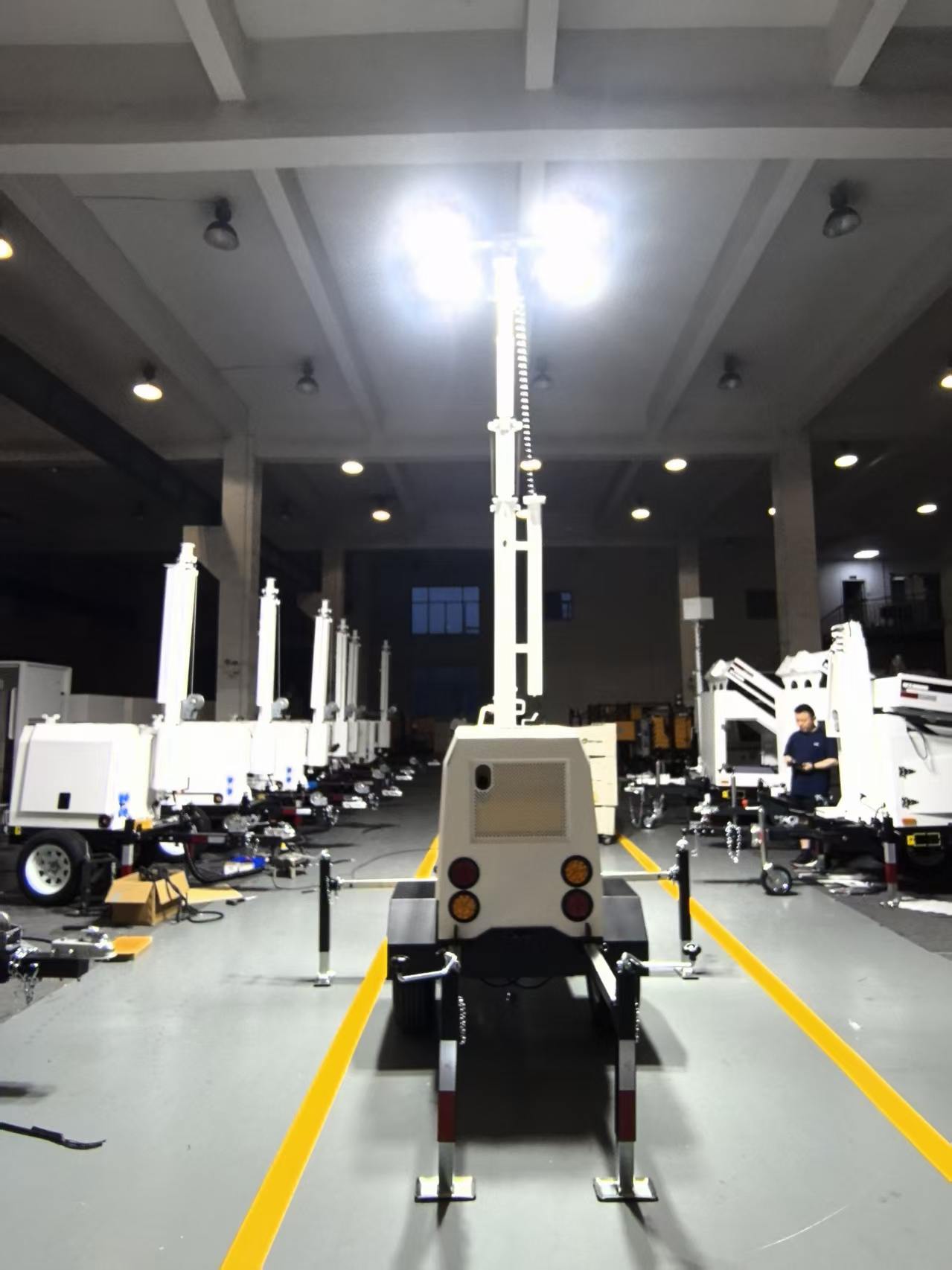
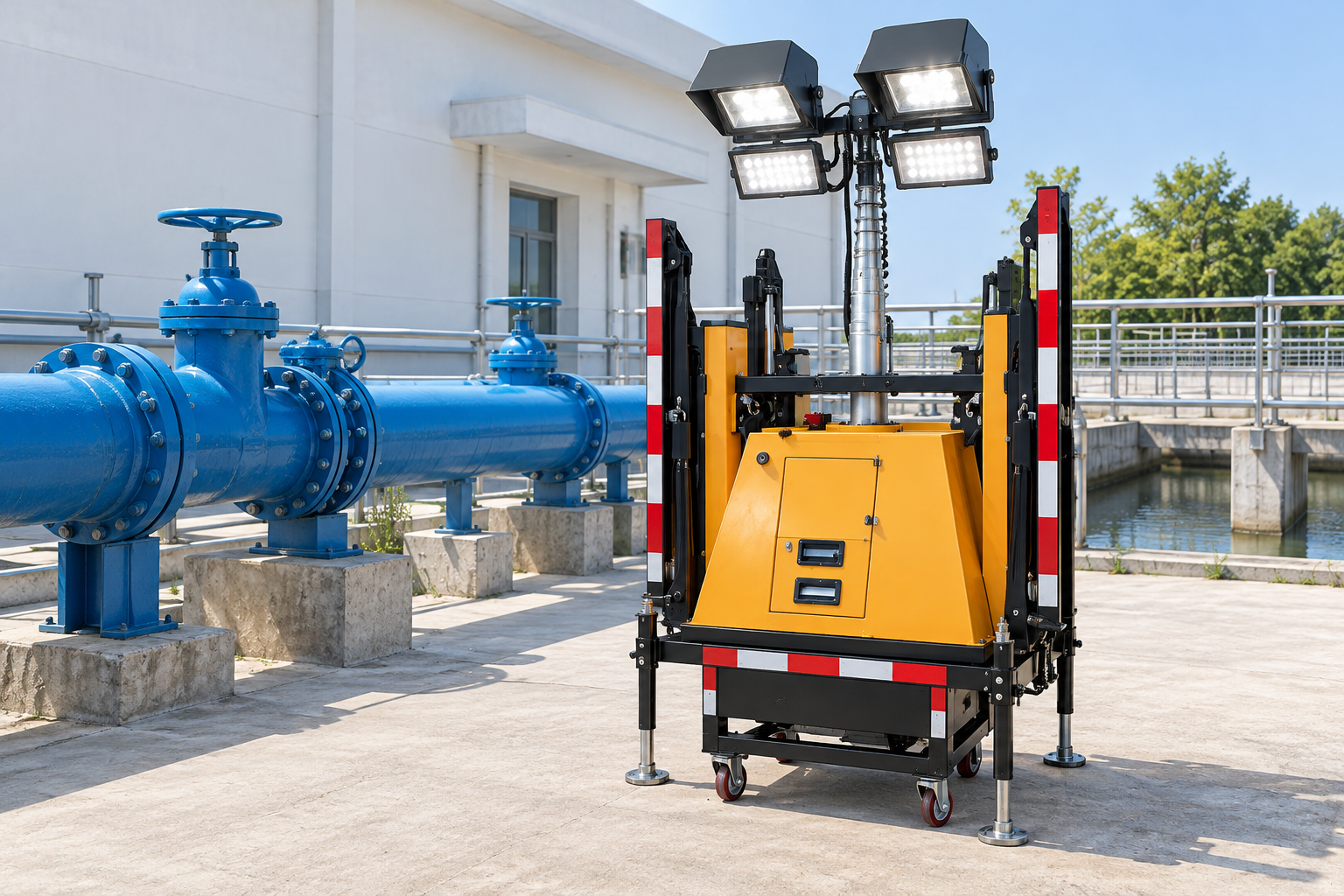
- 03 Mobile lighting systems for temporary deployment
- 04 Lifting lighting devices for wider work areas
- 05 Explosion-protected products for verified hazardous conditions
Inputs That Define a Workable Configuration
UL’s testing overview separates equipment categories and market routes, supporting a jurisdiction-first RFQ.
| RFQ field | Why it matters | What to send |
|---|---|---|
|
01
Target jurisdiction
|
UL 924, IEC 60598-2-22 and local rules do not form one interchangeable approval | Country, region and approving authority |
|
02
Safety function
|
Escape, shutdown and temporary work require different proof | Operating scenario and responsible system |
|
03
Site geometry
|
Height, racks, stairs and obstacles change visible coverage | Plan, dimensions, mounting points and exit route |
|
04
Environment
|
Indoor, outdoor, wet, corrosive and hazardous conditions affect construction | Temperature, water, dust, corrosion and impact exposure |
|
05
Electrical supply
|
Voltage, circuit arrangement and failure mode affect transfer and wiring | Normal supply, emergency source and control method |
|
06
Backup requirement
|
Battery duration must match the project, not a generic catalog assumption | Required duration, load and recharge plan |
|
07
Installation scope
|
Equipment supply is different from complete system design and acceptance | Define supplier, designer, installer and commissioning responsibility |
|
08
Documents
|
Company certificates cannot replace exact-model evidence | Datasheet, test report, certificate, instructions and inspection records |
Self-Contained, Central and Mobile Backup Architecture
Engineering guidance describes generator, central battery and unit-equipment approaches; the appropriate architecture follows the project context.
Project Support From Selection to After-Sales Service
Plan the test recovery window before occupancy or production decisions. UK government guidance notes that a full-discharge test can leave batteries recharging and may require alternative arrangements.
Define
01Provide the site, function, electrical supply, installation conditions, quantity and documentation required.
Screen
02LFADJ redefines the application scope and eliminates product families which do not correspond to the requested role.
Configure
03We provide product configuration and technical communication for the project.
Define
01 / 06
Provide the site, function, electrical supply, installation conditions, quantity and documentation required.
Document
04The quote determines the exact model, available certifications, test reports and instructions and the commercial scope.
Supply
05It aligns configuration and supply with the project and contract.
Support
06We provide product-use consultation and after-sales issue handling under the contract.
Quality Systems, Certificates and Test Documentation
We can provide test reports covering emergency lighting systems and related industrial lighting products when the relevant document exists for the quoted product. Approval routes are not interchangeable because a scope mismatch creates project risk; compare the official certificate scope, accredited lab test report and any third-party verification with the exact quoted model. An emergency certificate is not a substitute for area classification, and treating company credentials as product evidence is the wrong answer.
| Verified company or document fact | Source-stated reference |
|---|---|
| Company establishment | 2013 |
| Quality management system | ISO 9001:2015 |
| Environmental management system | ISO 14001:2015 |
| Occupational health and safety management system | ISO 45001:2018 |
| LFADJ and LONGFA lamps trademarks | Class 11 |
| Government procurement experience in Panjin | 2018 contract record |
Industrial Applications and Company Experience
Application experience supports supplier screening, while the installed escape-lighting result must still satisfy the site's exit-route duties.
Energy and process industries
01LFADJ lighting is used in coal, oil and gas, power and steel industries. Each project still requires an environmental and document review.
Transport and infrastructure
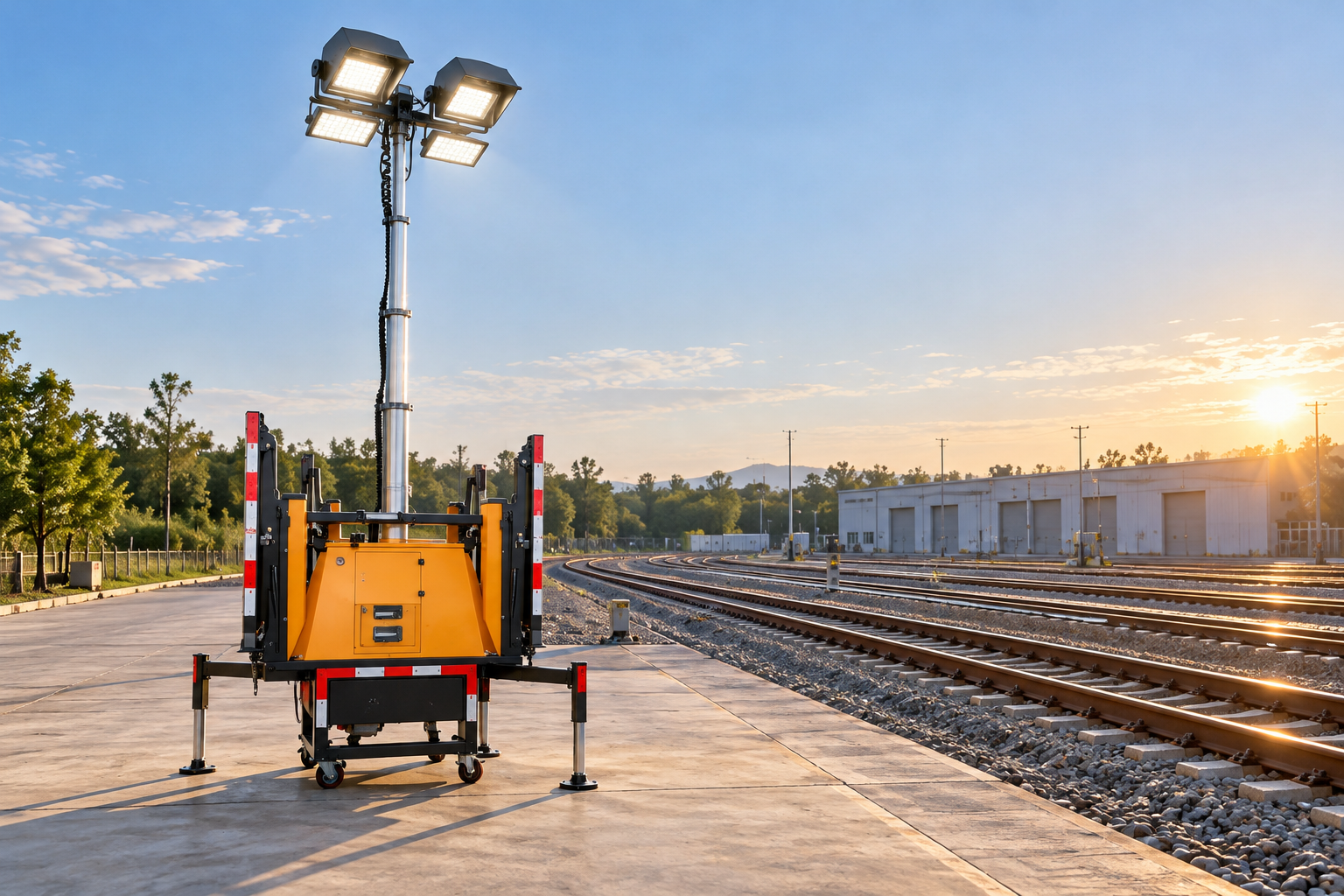
02Fixed routes can be combined with temporary maintenance lighting for track, ship and venue work. The request should separate life-safety duties from work-light duties.
Public safety and emergency response
03Portable and mobile systems support fire and public safety and rescue work.
Energy and process industries
01 / 03
Founded 2013
- Industrial lighting
- Mobile lighting
- Explosion-proof lighting
- Emergency lighting
Zhejiang LONGFA Lighting Co., Ltd. has carried out industrial lighting development and manufacturing since 2013. The company integrates research and development, manufacturing, trade and service in Yueqing, Zhejiang.
Project Boundaries That Protect the Specification
The applicable product standard and installed exit-route duty answer different parts of the specification.
Equipment evidence
01 — 05- A lumen value does not prove route-level illumination
- An IP rating does not prove explosion protection
- A company ISO certificate does not certify a product model.
- A stated battery duration does not prove local compliance
- A portable LED light does not automatically qualify as an exit fixture.
Site responsibility
01 — 05- Map the actual exit and high-risk task areas
- Calculate emergency illumination at the required plane
- Confirm wiring, transfer and failure scenarios
- Commission the installed system
- Maintain test records and replacement readiness
Industrial Emergency Lighting Project, Architecture and RFQ Tools
Industrial Emergency Lighting Systems — Emergency Lighting Project Input Check, Emergency Backup Architecture Comparison, and Industrial Emergency Lighting RFQ Brief Builder.
-
Applications & Project Input
Emergency Lighting Project Input Check
industrial-emergency-lighting-systems / industrial / emergency-lighting-project-input-check
-
Specifications & Architecture
Emergency Backup Architecture Comparison
industrial-emergency-lighting-systems / industrial / emergency-backup-architecture-comparison
-
Process & RFQ Brief
Industrial Emergency Lighting RFQ Brief Builder
industrial-emergency-lighting-systems / industrial / industrial-emergency-lighting-rfq-brief-builder
Industrial Emergency Lighting FAQ
These answers frame procurement questions; final acceptance follows the target jurisdiction and exact equipment route.
Provide the country, lighting function, site plan, desired mounting height, operating environment, supply voltage, backup time, control, quantity and required documents. Provide hazardous area classification if flammable, combustible, dust or vapor is present.
Use of hazardous location lights are restricted to locations and situations for which they are designated and approved. The model, gas or dust group, temperature class, and ambient conditions and the certified conditions of the approval must be corresponding to the installation. “Industrial” or IP-rated construction is not sufficient.
No. An IP rating addresses ingress protection, while explosion-proof or other hazardous location approval addresses ignition for a defined atmosphere. Verify both separately when the project requires both.
Compare costs of equipment, circuiting, batteries, environment, service access, testing, labor and monitoring, failure concentration and replacement. Simplified access to equipment may enable better planning for maintenance; self-contained equipment may limit the need for dedicated wiring. Neither is automatically the best option.
Test equipment and plan for recharge of the batteries. Testing frequency is determined by local jurisdiction, type of equipment and the standard adopted by the local jurisdiction. Plan for the higher requirement and also retain instructions for use and a record of the test.
No. Runtime is just one input. The project also needs emergency output, route coverage, changeover behavior, installation, environmental suitability, accepted certification and maintenance.
Some projects use normal LEDs in conjunction with a central inverter or generator, but the total arrangement has to meet the relevant emergency system requirements. Check the behavior of the fixtures and controls, the transfer and circuit identification, emergency illumination and commissioning.
Ask for the datasheet and annex, nameplate, battery details, charger details, instructions, permitted accessories, and environmental conditions. Company management-system certificates are good evidence of trust but do not replace model level product documentation.
LFADJ reviews the application environment, the function required, configuration, quantity and the scope of the documentation prior to confirming commercial terms. The response, warranty, delivery, and support remain subject to the terms of the contract.