Get in touch with LFADJ Company
Manual Winch Light Towers
LFADJ Manual Winch Light Towers for Worksite Lighting
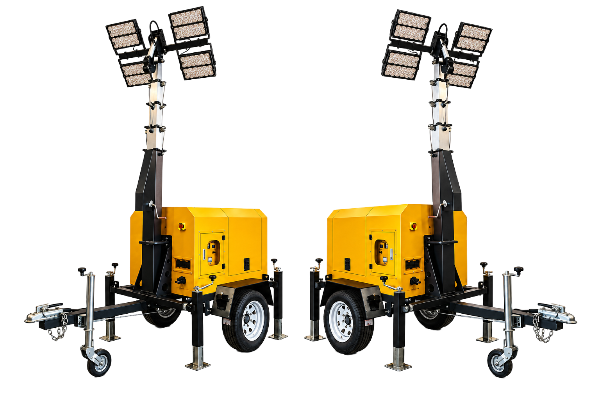
Our manual winch light towers combine a hand-cranked mast with diesel-powered lighting for construction sites, maintenance work and rental fleets. The D951 carries four LED lamps rated 400 W each, with a towable chassis that moves the lighting package between work areas.
- Manual mast operation with 340° rotation.
- Carbon-steel canopy and a Kubota Z482 diesel engine.
- Production lead time: 45-60 days.
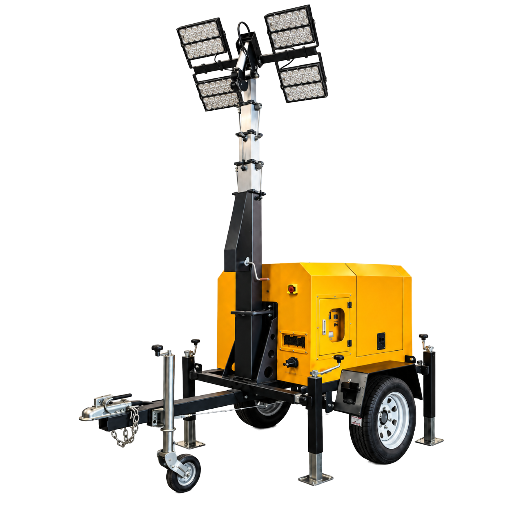
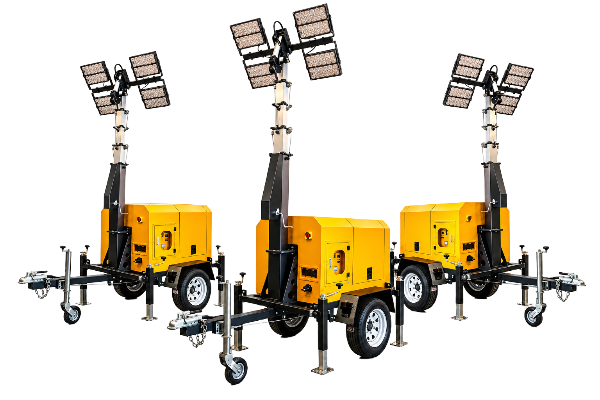
D951: a manual mast, separate lamp heads and a mobile diesel lighting package.
DATA /// D951
Model
D951
Mast operation
Manual winch
Lighting package
4 LED lamps · 400 W each
Mast rotation
340°
Transport envelope
1650 mm long ·1450 mm wide ·2350 mm high
Production
45-60 days
Manual Winch Mast and Site Lighting
We supply the D951 with manual winch mast operation so your crew can raise and lower the lighting assembly by hand. The 340° rotation lets you adjust the lighting direction; lamp aiming and tower position still need to match the work area.
Position the light for the task
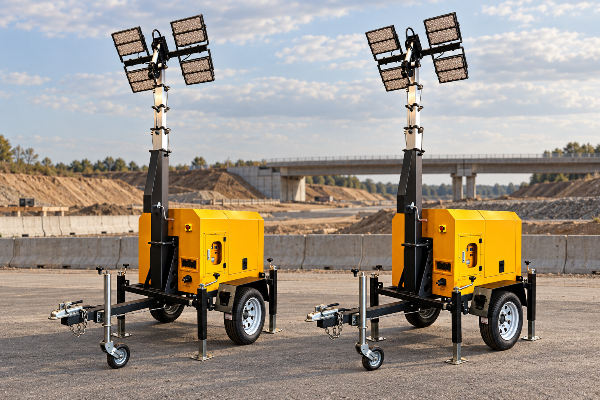
A road repair crew, an equipment-maintenance team and a pedestrian route need different lighting layouts. Specify the area, working plane, obstructions and required illumination before selecting the number of towers.
Match the crew and deployment cycle
Hand-cranking is one part of setup. Include positioning, stabilising, aiming and retraction when comparing a manual mast with hydraulic or electric winch alternatives.
A lighting brief that supports a useful layout
-
01 // Spec
Location and Task
destination country, the kind of work activity and the lighting criteria your project uses.
-
02 // Spec
Geometry
Area and dimensions, tower positions, working height and obstacles that cast shadows.
-
03 // Spec
Light quality
Illuminance (minimum and average), measurement plane, aiming of the beam and glare.
-
04 // Spec
Duty
Hours per shift, relocation frequency, pedestrian movement and refueling.
Coverage needs a common measurement basis
A high lumen figure is not necessarily the right lighting layout for your task. A large area quoted at a low minimum light level is not equivalent to the same area meeting a higher average requirement. Review a lighting layout and the darkest work points, rather than dividing total lumens by a chosen lux value to predict coverage.
Match the applicable lighting criteria
Construction-lighting criteria are task-specific: see OSHA 29 CFR 1926.56 for United States construction areas and HSE site-lighting guidance for shadows and access routes.
Power Platforms and Lamp Packages
Our D951 is a portable diesel light tower with four 400 W LED lamps. “Manual” identifies the mast lift mechanism; it does not necessarily require a mains connection, because the lamp power comes from the selected energy platform.
Selection axis
D951 configuration
What to compare
Selection axis
Mast actuation
D951 configuration
Manual winch
What to compare
Operator effort, deployment frequency, lowering and securing the mast.
Selection axis
Energy platform
D951 configuration
Diesel generator
What to compare
Fuel supply, operating duty, destination requirements and auxiliary load.
Selection axis
Lighting package
D951 configuration
4 LED lamps rated 400 W each
What to compare
Optics, aiming, illumination at the work plane and lamp replacement access.
Keep mast operation and lamp power separate
- A mains-powered portable light tower needs an appropriate external supply and cable arrangement.
- Solar, battery and hybrid light towers need their own energy storage and recharge calculations.
- An automatic mast or powered winch changes deployment, while the lamp power source remains a separate specification.
Light first, auxiliary equipment second
We discuss the equipment you intend to power alongside the lights when selecting the configuration. Send running power, motor-starting demand and whether the supply must be single phase or three phase; a tower selected for lighting alone may not meet a separate generator duty.
Mast, Chassis and Outdoor Protection
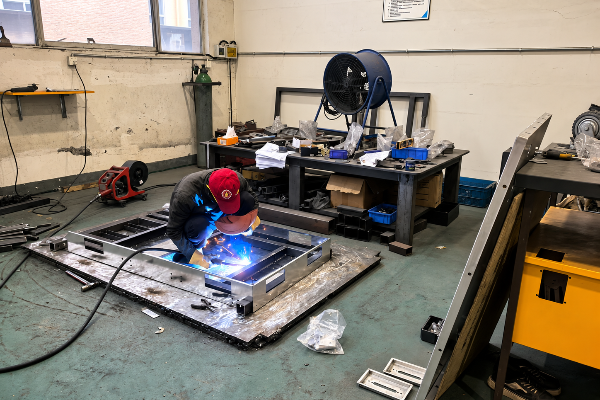
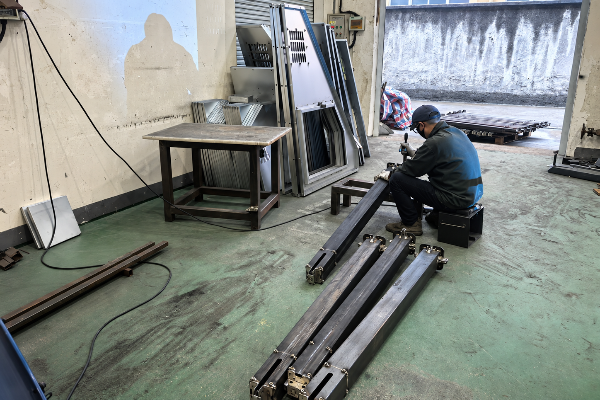
We supply a carbon-steel canopy with the D951 and a towable trailer arrangement for mobile lighting work. Site exposure and the storage routine affect what your purchase brief should specify for the mast, enclosure and chassis.
Exposure and finish scope
- Describe rain, dust, salt exposure and the storage environment.
- Define the finish and corrosion-protection requirements in the order.
- Assess lamp, cable and electrical-enclosure protection separately.
Inspection and service access
- Check mast sections, winch components, cables and securing points against the supplied instructions.
- Keep access to routine service points clear when placing the tower.
- Plan additional checks after relocation, damage or severe exposure.
SYS.DOC /// INSTRUCT
Use the model’s inspection instructions
Inspection scope reflects the equipment and its exposure, while deterioration history helps set inspection intervals. HSE work-equipment guidance explains why outdoor conditions and reinstallation can change inspection needs; a single fixed schedule does not fit every component.
We provide consultation and after-sales service for product-use problems. Keep the equipment number and work hour record available so the support staff can identify the correct unit and part.
D951 Configuration Specifications
We use the D951 model configuration as the starting point for your quotation. Compare the lamp package, mast arrangement, transport envelope and engine identity together so the equipment delivered matches the lighting and logistics brief.
Item
Configuration
Procurement use
ItemModel
ConfigurationD951
Procurement useIdentify the complete light tower in the order.
ItemMast operation
ConfigurationManual winch
Procurement useReview hand-crank operation and crew suitability.
ItemMast rotation
Configuration340°
Procurement useCheck aiming directions and obstructions.
ItemLED lamp count
Configuration4 LED lamps
Procurement useMatch the lighting-head arrangement.
ItemPower per lamp
Configuration400 W
Procurement useDefine the quoted lamp package.
ItemTransport length
Configuration1650 mm
Procurement useCheck loading space and access.
ItemTransport width
Configuration1450 mm
Procurement useCheck transport and storage width.
ItemTransport height
Configuration2350 mm
Procurement useCheck clearance with the mast stowed.
ItemEngine
ConfigurationKubota Z482
Procurement useMatch engine identification and parts support.
ItemEnclosure
ConfigurationCarbon-steel canopy
Procurement useDefine exposure and finish requirements.
Auxiliary power with the lights operating
Generator output, engine power and receptacle ratings describe different limits. We review the requested auxiliary load with the lighting package; the written configuration needs to state the power available while the lamps are on.
- List each connected device, running demand and starting demand, and indicate the intended simultaneous use.
- Confirm outlet voltage, frequency, phase and connector of the destination, as well as circuit breaker protection.
- Do not add the maximum ratings of separate outlets to create a higher total generator capacity.
Light Tower Pricing and Lead Time
We take into account the light tower, mast configuration, power requirements, quantity, and delivery scope, when evaluating cost and configuration tradeoffs. Therefore, an offer for lighting only, will be evaluated differently from a tender for a combination of motor starting, remote refueling, restricted access route, and specific destination documentation. A lower equipment price is only valid when the two offers cover the same scope and responsibility.
Resolve the scope before ordering
A configuration mismatch can delay a job because the lighting layout and auxiliary load need to be resolved before equipment is ordered. LFADJ uses the project brief to discuss these requirements together; the resulting quotation identifies the lighting tower and delivery scope.
Same-scope quotation comparison
Send with your enquiry
Why it affects the offer
Compare in each quotation
Task and lighting criteria
Sets the required layout and lamp duty.
Illumination criteria, measurement plane and proposed tower positions.
Lamp count and input power
Defines the lighting package.
Lamp type, optics, aiming and electrical input.
Mast actuation and deployment pattern
Changes equipment and operating requirements.
Manual, hydraulic or electric mechanism and included instructions.
Additional electrical loads
May change the selected generator and outlets.
Continuous and starting loads with lights on.
Engine and fuel arrangements
Influences support and operating duty.
Engine identity, runtime conditions and refuelling plan.
Transport and site access
Determines trailer, packing and loading needs.
Stowed envelope, hitch requirements and packed dimensions.
Destination and documentation
Sets the applicable project and import requirements.
Documents for the quoted configuration and destination.
Quantity and delivery schedule
Shapes production and shipment planning.
Production completion, freight and site-ready date separately.
Service and warranty scope
Changes responsibility after delivery.
Covered components, exclusions, maintenance and support arrangements.
Accessories, packing and freight
Determines the delivered scope.
Included items, optional items and transport responsibilities.
Inspection and Delivery Support
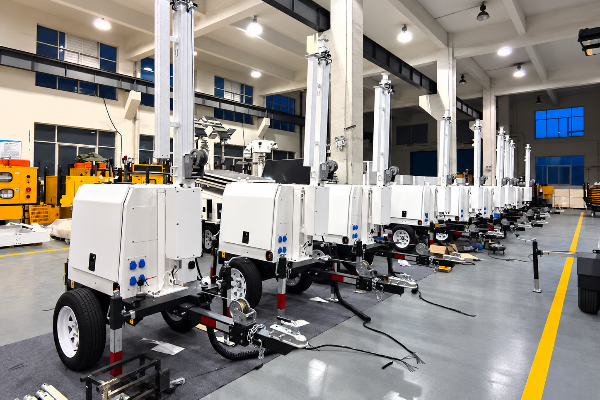
We support selection and technical communication pertaining to your operating environment and lighting requirements. Employ the agreed configuration to organize delivery checks, operator briefings and service arrangement for your fleet.
01
Identify the unit: match the D951 model, equipment number, engine and lamp package to the order.
02
Review the mast: Check the winch, and securing arrangements, and review the operating instructions for your specific model.
03
Review electrical duty: Confirm the lighting circuits and power conditions.
04
Agree dispatch evidence: Define configuration records, photographs, checks, and documents required by your purchase.
05
Set the service scope: Define scope of work for routine maintenance and after-sales contact, and parts.
Support starts with a precise fault description
A light tower that will not start and an engine that runs without lighting output are different support requests. Send the equipment number, working hours, operating conditions and the observed symptom so we can direct the enquiry to the relevant system.
- Check availability of parts in the area when choosing the engine and supporting your fleet.
- Confirm coverage of the generator set, batteries and service items in the order.
- Use the operating and maintenance instructions for the configured system.
We offer product-use consultation and after-sales trouble-shooting with regards to maintenance and related services, in accordance with the contract. Timing and scope of support to be agreed for the destination and project.
Discuss Delivery and Service RequirementsFrom Lighting Brief to Shipment
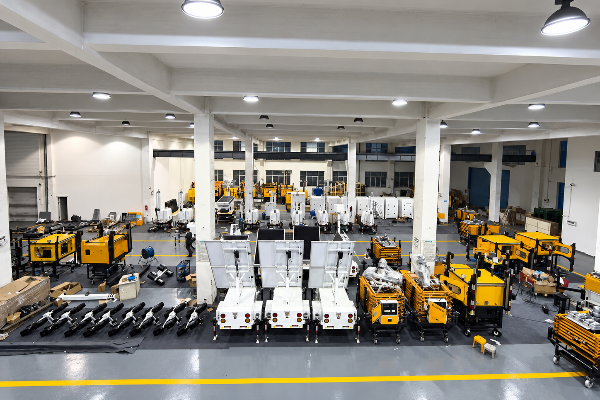
We transform your worksite brief into a configuration and supply conversation. Starting from the job is key to getting a reliable worksite illumination solution, as opposed to selecting a diesel light tower based on lumen or generator output.
01
Describe the task:
Give the destination, work area, lighting requirements and hours of operation.
02
Define deployment:
Provide positioning and relocation details, along with crew and access constraints.
03
List electrical loads:
Identify electrical devices used along with the lighting equipment, along with their starting requirements.
04
Review the configuration:
Match the project requirements (mast, lights, engine, trailer, and documentation).
05
Confirm the written offer:
Verify the product timing and quantities against the freight scope and service.
06
Prepare for receipt:
Arrange for unloading, storage, and operator training, and conduct required site checks.
SYS.DOC /// INSTRUCT
A brief the technical team can use
- Application and destination country.
- Area dimensions, illumination criteria and obstacles.
- Shift hours, fuel arrangements and relocation pattern.
- Auxiliary load list, quantity and delivery location.
D951 Mobile Light Tower Details and Applications
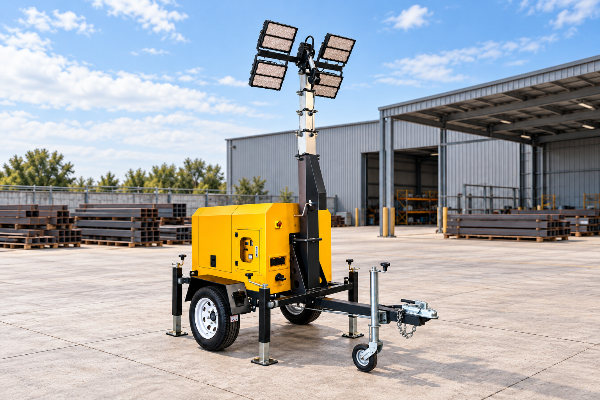
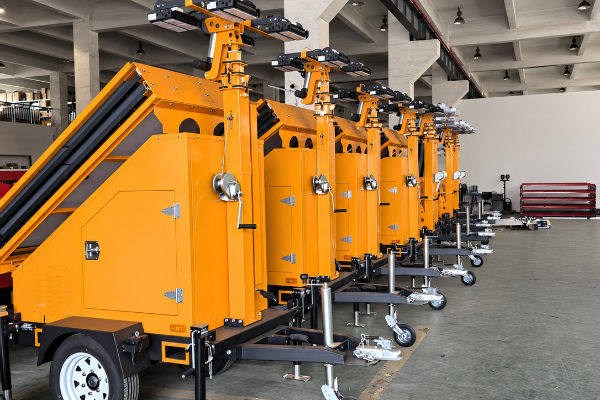
LFADJ supplies the D951 with four 400 W LED lamps, 340° mast rotation and a diesel engine on a mobile chassis. The product image shows the four-head arrangement and stabilising legs; your site layout determines how each LED light is positioned and aimed, which work points need additional illumination, and whether the tower can remain in place as equipment and crews move through the area.
Night construction and roadworks
01 //Specify work planes, plant movement, access routes and shadows from equipment. Use the lighting brief to assess tower positions before approving the lamp package.
Equipment maintenance
02 //Identify the repair area and any tools drawing power alongside the lamps. Keep local task lighting and clear service access in the plan.
Rental-fleet projects
03 //Record the configuration, instructions and service information for each unit. Include changing jobsite layouts and repeated deployment when comparing mast options.
Plan the lighting duty and escape route separately
Main worksite lighting and lighting that remains available after primary power fails serve different purposes. Include escape-route arrangements in the project plan where loss of the main light creates a risk.
- Check your lighting enquiry inputs before discussing the site with LFADJ.
Manual and Powered Mast Selection
A tower left in position for a long work period creates a different deployment burden from one repeatedly moved during a shift. Compare the actual setup and retraction work before choosing a manual winch, hydraulic lift or electric winch.
Count labor input, not just the stopwatch
Deployment labor hours equal the sum of every person’s actual minutes across the included stages divided by 60. If one person works for 10 minutes and another assists for 2 minutes, the total is 12 person-minutes, or 0.2 labor hours; this is an arithmetic example, not a D951 setup-time result.
- At different hourly rates, calculate each person’s cost separately and add the results.
- For repeated deployment, sum the measured work for every occurrence.
- Record site elapsed time separately because people can work together or join for only part of the task.
Light Tower Deployment Budget
Operation Step
Positioning and stabilising
Each person’s actual minutes; elapsed time separately.
Supports: Space, ground conditions and crew involvement.
Operation Step
Mast lift and lamp aiming
Person-minutes, hand-crank effort and working posture.
Supports: Deployment burden and operator suitability.
Operation Step
Retraction and relocation
Person-minutes for lowering, securing and repositioning.
Supports: Repeat work throughout the shift.
Financial Metric
Labor cost
Each person’s hours multiplied by that person’s loaded hourly rate.
Supports: Operating cost under the measured deployment pattern.
Financial Metric
Purchase and service
Same-scope quote and planned maintenance costs.
Supports: The tradeoff between acquisition and operating duties.
EVAL.01
Manual mast fit
Consider the D951 when the hand-crank duty suits the operators and deployment pattern. Review each safety-related feature under the selected model’s instructions, including the winch, cable, mast and securing arrangements, while keeping crew access, the working posture and the person responsible for retraction in the same deployment plan rather than comparing only the seconds spent turning the handle.
EVAL.02
Powered mast fit
Consider a powered alternative when repeated deployment or physical effort makes hand-cranking unsuitable. Compare the powered mechanism, service requirements and actual quoted price under the same lighting duty.
Manual Winch Light Towers: Engineering & Planning Tools
Access our proprietary calculators and evaluation matrices to configure your illumination deployment, forecast operational budgets, and ensure site compliance.
T-01
deployment budget
Calculate fuel consumption, maintenance intervals, and lifecycle costs based on your specific site shift patterns.
T-02
quote comparison
Objectively evaluate competing light tower specifications, focusing on mast stability, lumen depreciation, and chassis durability.
T-03
site readiness
Audit your worksite terrain, wind exposure, and towing access to ensure safe positioning and relocation of manual masts.
D951
Specify Your D951 Light Tower
Send us the work your lighting equipment must support. We provide product and configuration consultations, as well as supply coordination based on your operational needs.
Request a D951 Quote
01
Destination, application and lighting-area dimensions.
02
Illumination criteria, shift hours and deployment pattern.
03
Auxiliary load list, quantity and delivery location.
Manual Winch Light Tower Questions
It uses a hand-operated winch to raise and lower the mast. The D951 combines that manual mast with a diesel power package and four LED lamps; the lifting mechanism and energy platform are separate choices and are not interchangeable specifications.
The D951 configuration uses a diesel engine and generator to supply the lamps. Specify the destination’s electrical requirements and any connected equipment when requesting the quotation.
Runtime depends on the selected engine, usable fuel capacity, lamp duty and auxiliary load. Request the runtime basis for your configuration and check fuel consumption at your expected loads when planning refuelling.
Use the operating instructions for the delivered model to check positioning, stability, clearance and the winch and mast condition. Keep the operating area clear and follow the stated environmental limits rather than applying another model’s procedure.
Send your country, application, lighting area, required illumination, shift hours, relocation pattern and quantity. Include auxiliary electrical loads, access constraints and the delivery location so we can discuss the complete configuration.
Agree the operating instructions, service requirements and warranty coverage for the selected configuration with the order. Keep generator-set, battery and service-item coverage separate, and provide the equipment number and working-hour record for after-sales enquiries.
A manual mast needs hand-cranking, while a hydraulic arrangement uses a powered lifting system. Compare deployment frequency, operator effort, service needs and the complete quotation before selecting the mechanism.
Use the same task, illumination criteria, measurement plane and layout for both offers. Lamp wattage or total lumens alone cannot establish the usable light across a work area, especially where equipment creates shadows.
This depends on the selected generator, outlets and the simultaneous lighting load. Send the devices’ running and starting demand so the quotation can identify available auxiliary output with the lamps operating.
The lamp package, mast arrangement, power platform, auxiliary load, quantity and delivery scope shape the offer; the same mast height or engine brand is not a substitute for comparing the complete package and the operating conditions it must support. Compare included accessories, packing, documentation and service responsibilities alongside the equipment price.
Our D951 production lead time is 45-60 days. Freight and destination handling are separate from production, so include the required arrival date in your enquiry.