Get in touch with LFADJ Company
LFADJ · Zhejiang LONGFA Lighting
Industrial Mobile Lighting Manufacturer
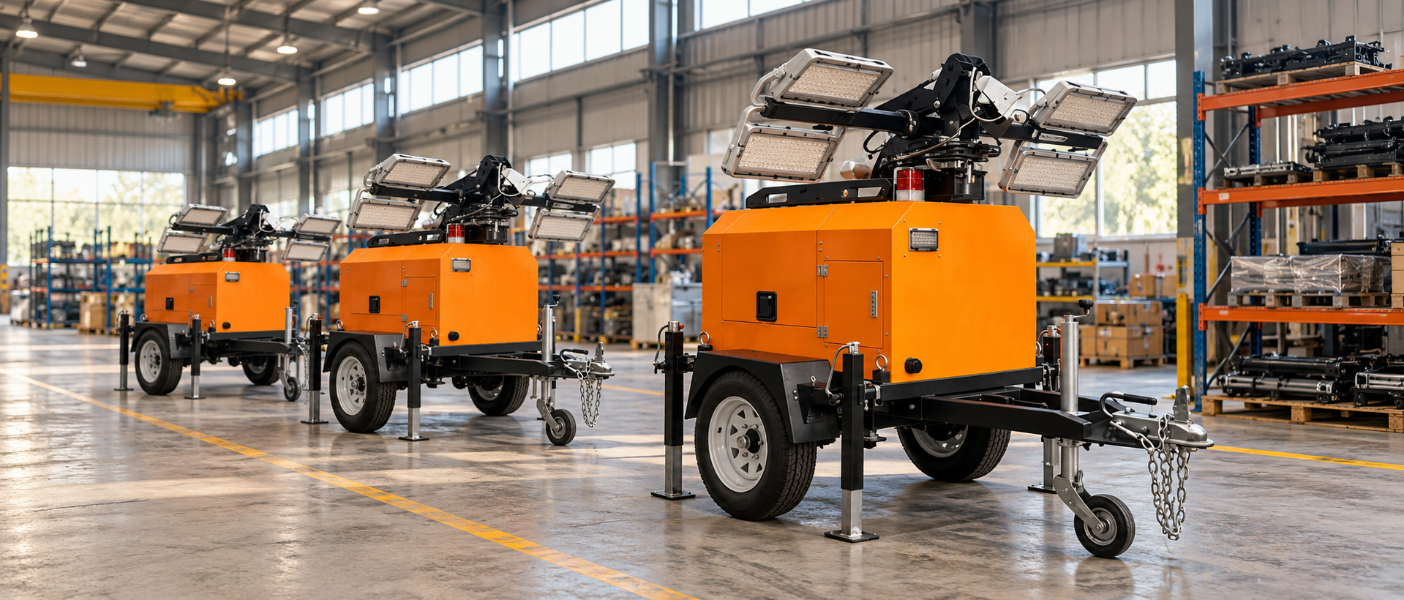
LFADJ is an industrial mobile lighting manufacturer. Our products include mobile light towers, portable work lights and mobile lighting solutions for construction, maintenance and emergency operations.
- Choose equipment around the work area, power supply and operating shift.
- Compare mobile, telescopic, portable and explosion-proof product families.
- Request a configuration and quotation for your quantity and destination.
Orders from 1 Unit
We accept orders from 1 unit, so an initial equipment order can start with a defined application.
D955 Lead Time
Our D955 lead time is 45–60 days; confirm the configuration and delivery schedule in your quotation.
Project Configuration
We offer product selection and customized lighting solutions based on the operating environment and lighting requirements.
Mobile Lighting for Industrial Worksites
A light tower has to illuminate the task, fit the site and work with power supply. For buyers coordinating a few construction sites, a shared brief reduces the risk of a configuration mismatch because the procurement team can compare the same work area, task illumination, power arrangement, handling constraints and operating shift before selecting a model or reviewing a quotation.
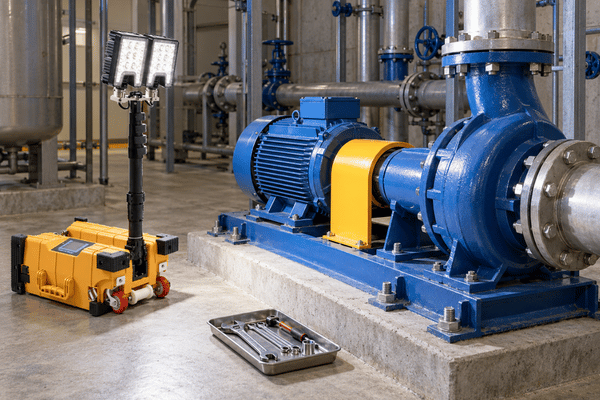
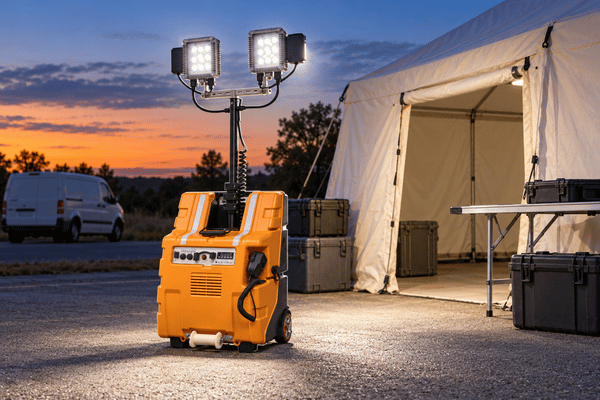
Task-Level Lighting Before Lamp Ratings
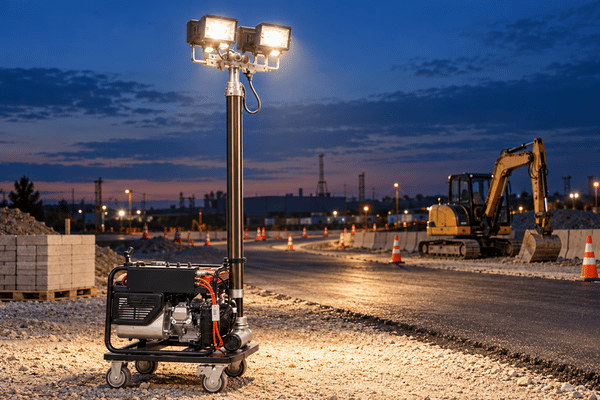
Watts describe power input; they do not establish illumination at the work surface. A 400 W lamp rating is not a substitute for a lighting layout: OSHA 1926.56 sets different construction illumination requirements for different activities, so a construction site brief should name the activity and measurement plane.
Six Product Families for Your Lighting Brief
A mobile light tower can also have a telescopic mast or belong to an emergency lighting package; these categories offer different ways to explore the range. Start with the equipment category that relates to your job and refine with our team.
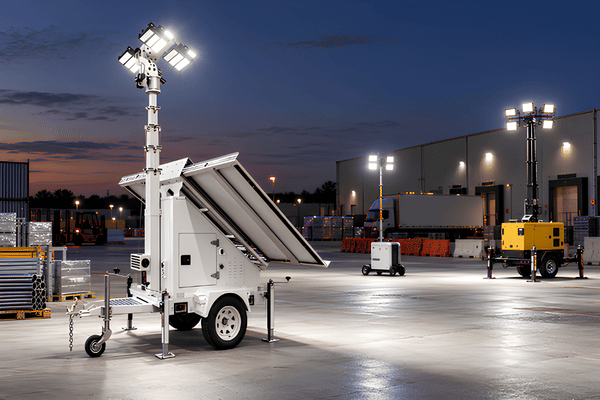
Mobile Light Towers
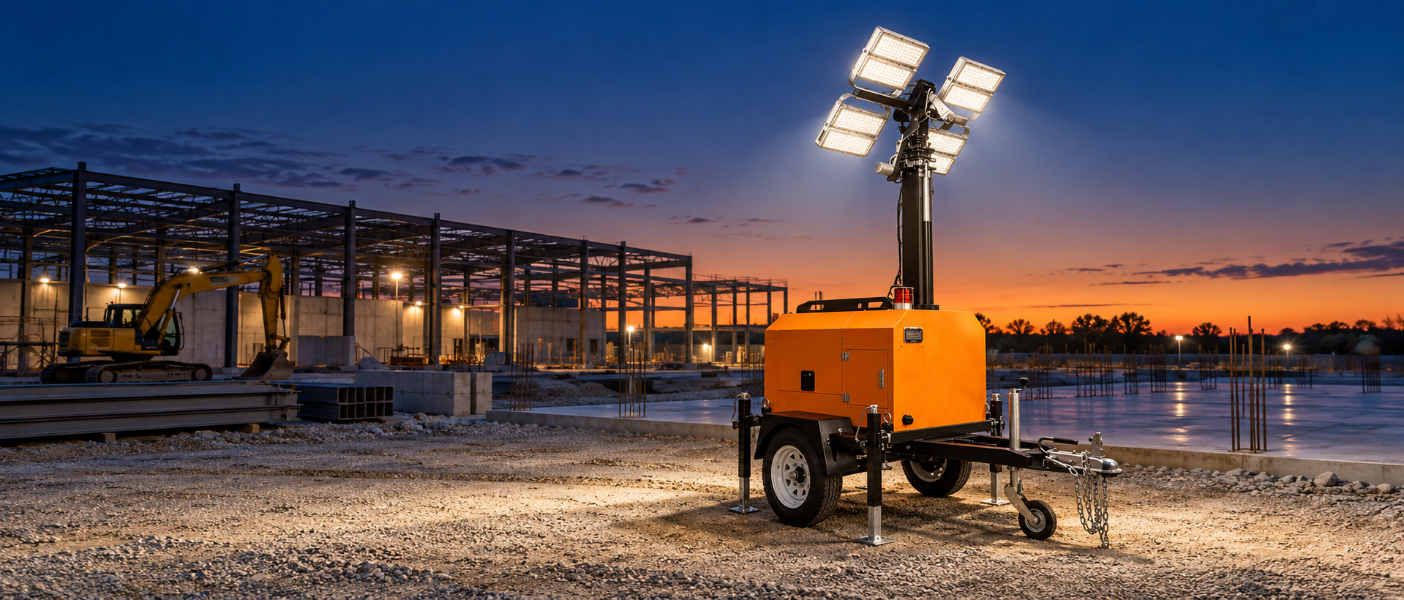
Elevated mobile lighting provides temporary area coverage where the transport and deployment space predominantly drives the solution.
- Send the work area and planned operating hours.
- Compare lamp, mast, power and transport configuration together.
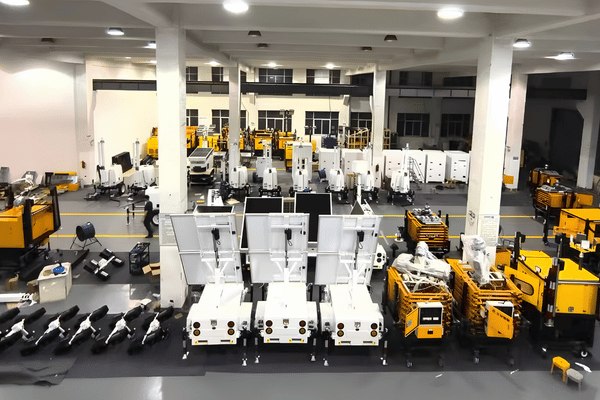
Mobile Lighting Systems
Mobile lighting built on the judicious combination of lamps, supports and power required at the site.
- Describe separate work zones and relocation frequency.
- List existing power equipment and connection requirements.
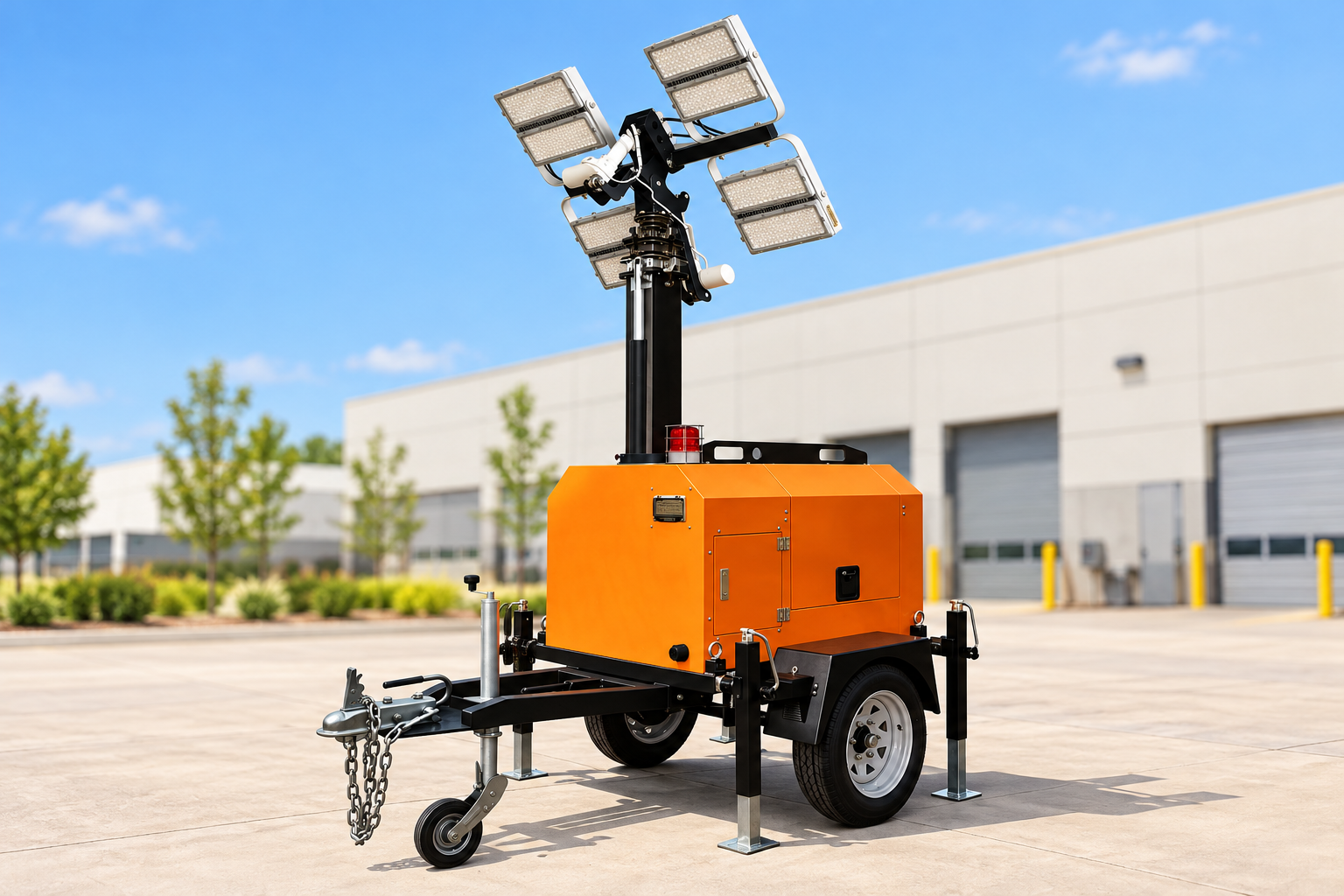
Telescopic Lighting Towers
Mast-oriented possibilities for projects where stowed dimensions, lifting arrangement and working height are critical.
- Provide access restrictions and deployment space.
- Confirm the mast configuration for the selected model.
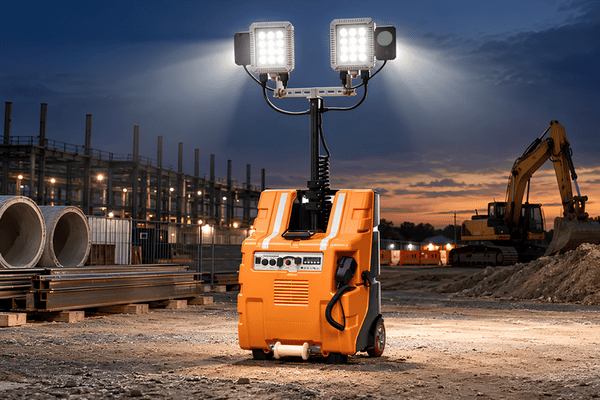
Portable Work Lights
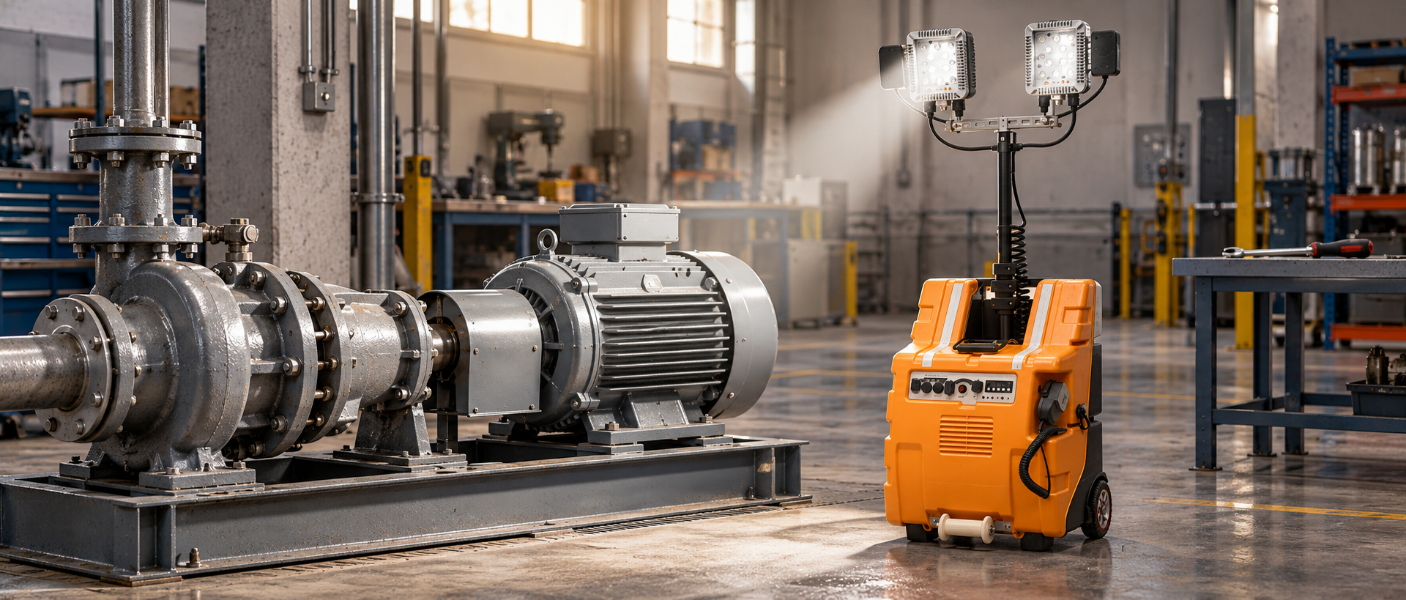
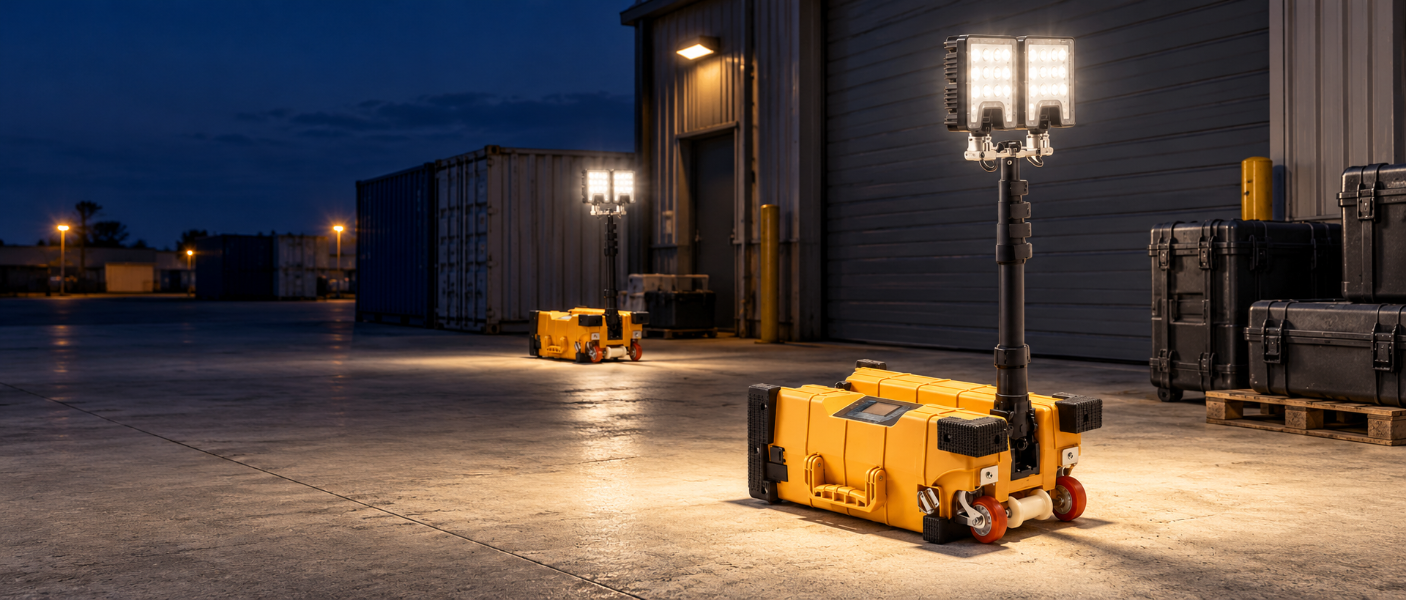
Portable lighting for close work, inspection and maintenance tasks that require a movable lamp near the operator.
- State the task distance and handling needs.
- Choose the power arrangement around the actual shift.
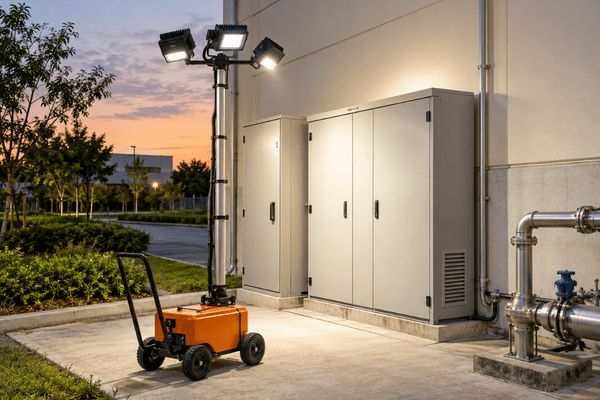
Industrial Emergency Lighting Systems
Lighting equipment for emergency operation and temporary response scenarios for which deployment requirements are defined.
- Describe the response location and transport method.
- Separate reserve power needs from routine operation.
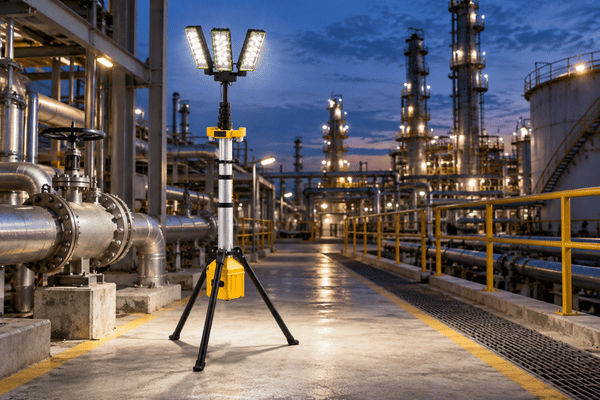
Explosion-Proof Lighting
Model specific lighting for classified hazardous locations, based on the applicable certificate and site conditions.
- Provide the gas or dust hazard and area classification.
- Match the model, markings and destination requirements.
Power and Mast Configurations
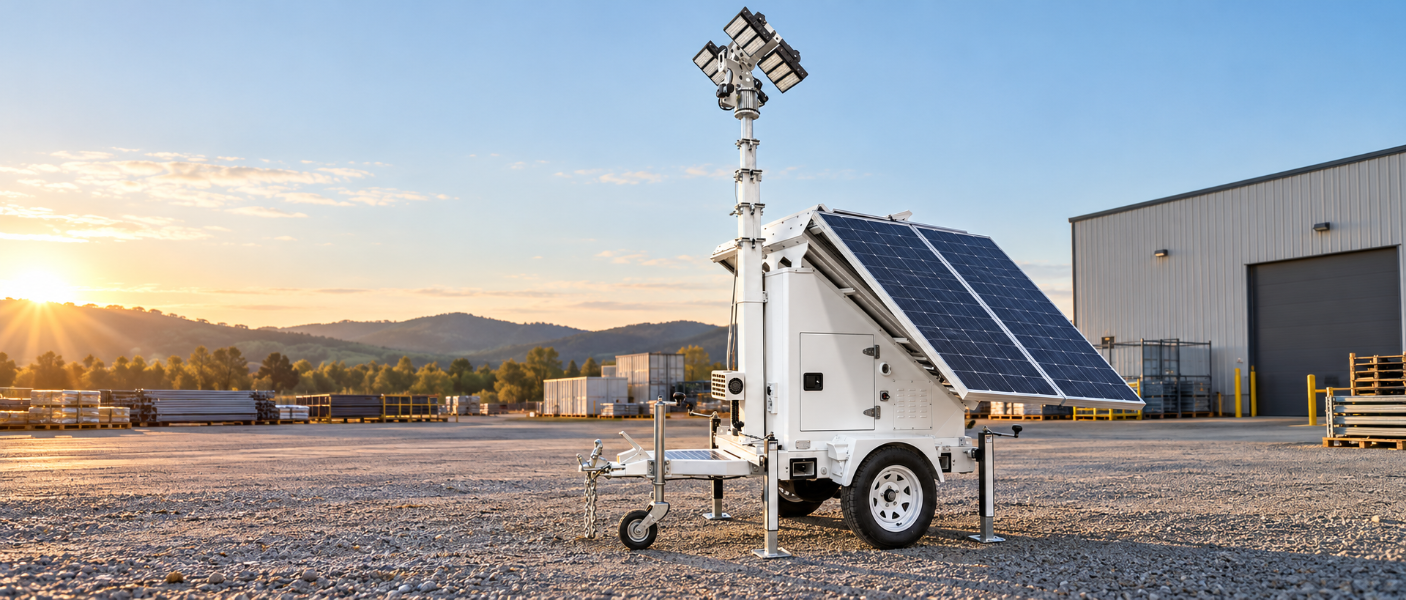
Compare the complete operating arrangement when choosing a mobile lighting equipment supplier. The trade-off between a diesel generator, site mains supply, battery system and solar-assisted configuration depends on the electrical connection, operating shift, replenishment access, handling needs and site restrictions, rather than the power-source label alone.
Site Access & Power Bottleneck Map
- No dependable connection: evaluate an independent power configuration and plan for replenishment.
- Restricted access: check the transport envelope before selecting an elevated tower.
- Occupied boundary: plan lamp aiming, placement and glare control before adding wattage.
- Classified area: resolve the hazardous-location requirements before choosing equipment.
Transport and deployment space are to be considered separately; a narrow access route can rule out an otherwise suitable configuration. Combustion-powered equipment also needs an appropriate outdoor operating location and exhaust planning, so review the CDC explanation of carbon monoxide hazards from fuel-burning equipment, the equipment instructions and the site rules before planning its position near workers or occupied spaces.
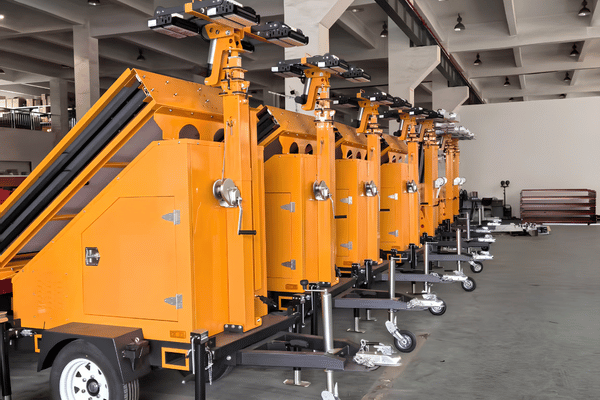
D955 Specifications at a Glance
Our D955 light tower provides a concrete starting point for a configuration discussion. The dimensions below describe the 7 m hydraulic-mast version with four 400 W lamps; identify the required version in your enquiry.
Pricing, Lead Times and Order Terms
As your mobile light tower supplier, we quote against the selected equipment, quantity and destination. Compare quotes on the same lamp, mast, power configuration and delivery scope, so the purchasing team can identify what is included, what has changed and what costs are still open on the project before the order can proceed.
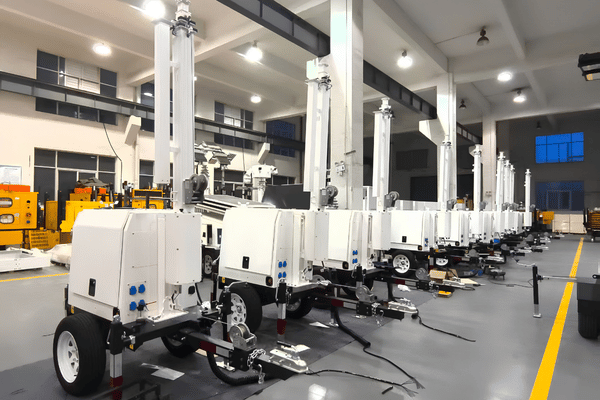
Manufacturing Support and Product Documentation
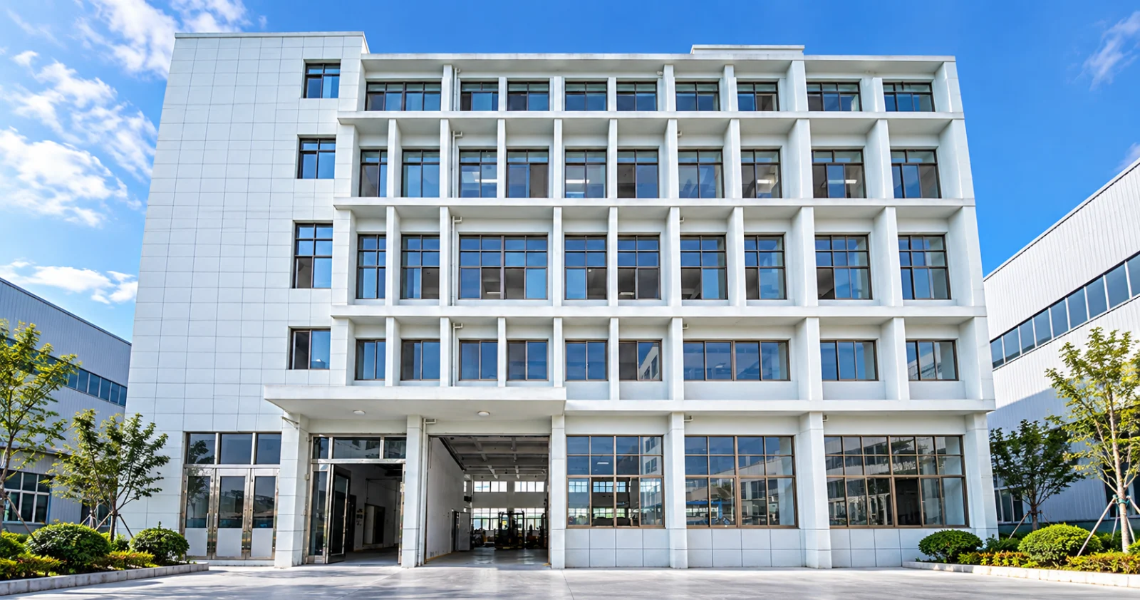
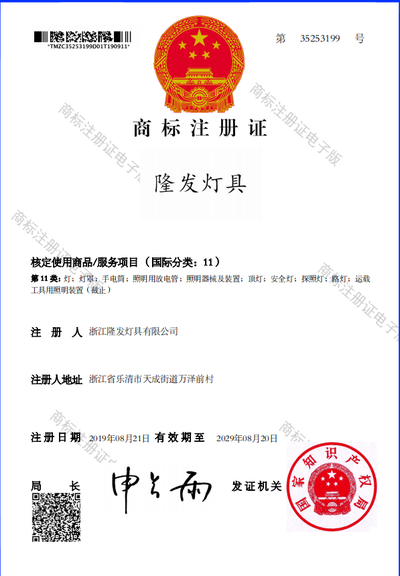
We are Zhejiang LONGFA Lighting Co., Ltd., established on February 21, 2013 in Yueqing, Zhejiang, China. Our business combines research and development, manufacturing, trade and service across industrial lighting, mobile lighting, explosion-proof lighting and emergency lighting.
Production and Configuration Support
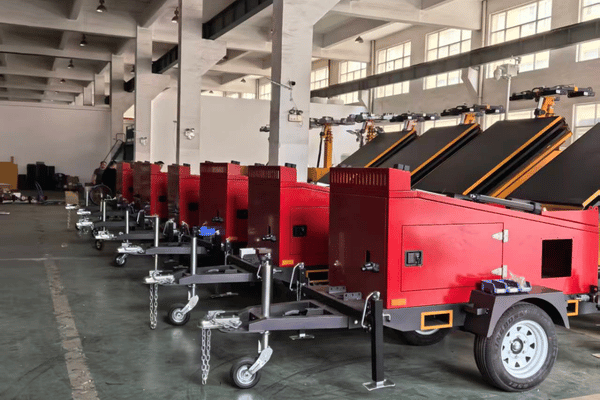
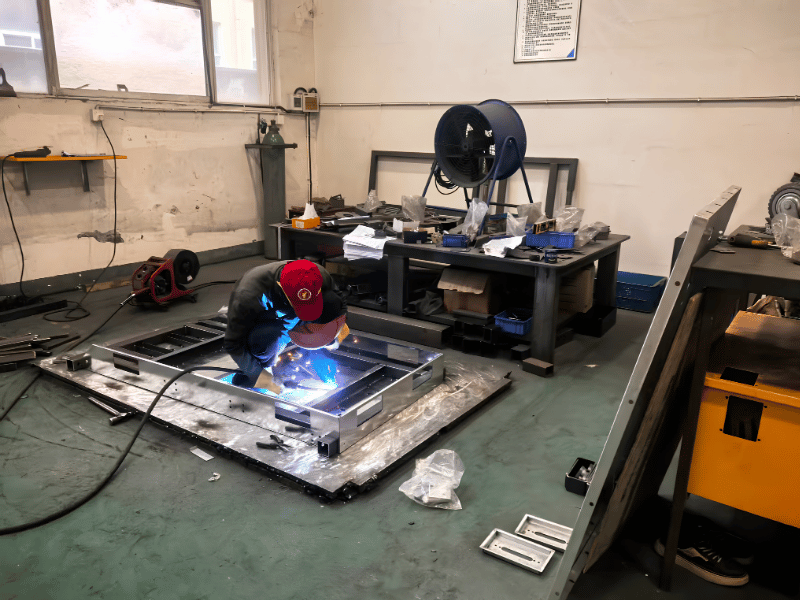
- Our production equipment includes cutting, bending and welding equipment.
- We provide product consultation, selection support and lighting solutions before an order.
- We coordinate product configuration and technical communication during project supply.
- We provide product-use consultation and after-sales problem handling under the agreed contract.
The work area, operating conditions and power supply should be the first considerations in selecting the lamp and mast combination and equipment.
— LFADJ project selection approach
Management System Certificates
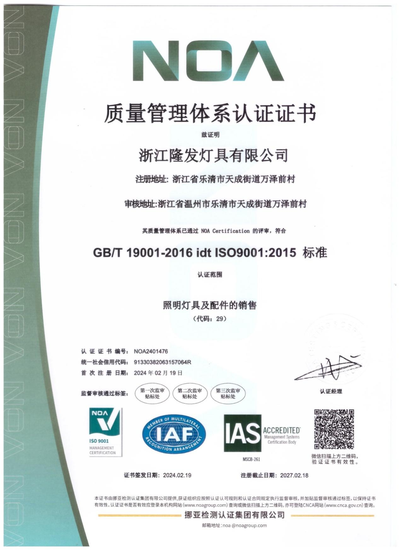
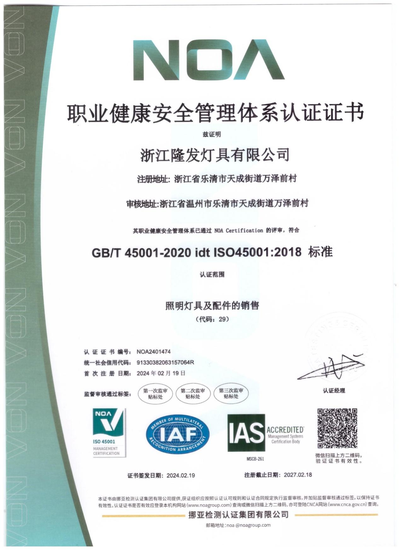
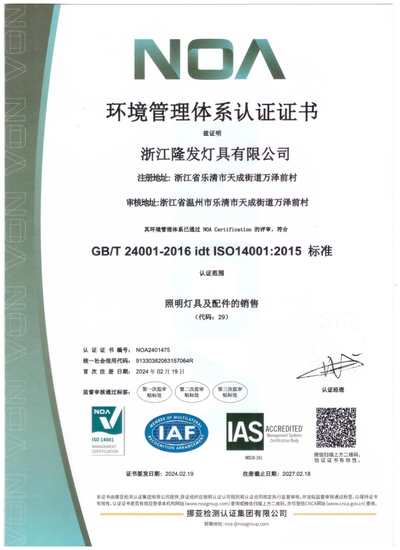
Our ISO management system certificates cover the sales of lighting fixtures and accessories. Review the certificate scope separately from a product’s technical approval and the operating conditions for the selected model.
Hazardous-Location Model Selection
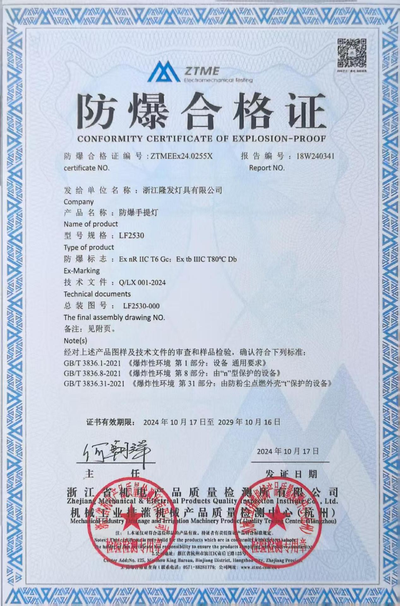
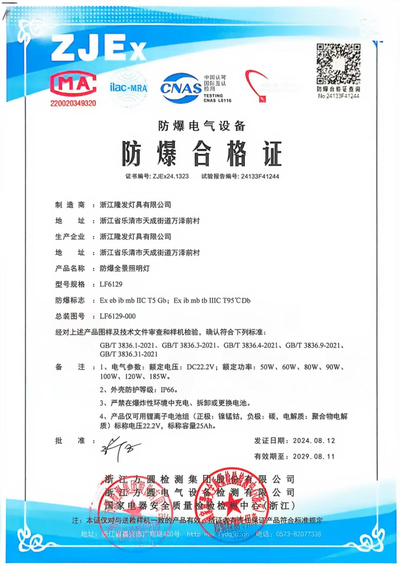
Our product documentation includes domestic explosion-proof certificates for LF2530 portable lamps and LF6129 panoramic lighting. Match the selected model’s certificate, markings, gas or dust conditions and destination requirements; OSHA 1910.307 illustrates why area classification and equipment suitability must be considered together.
From Lighting Brief to Project Supply
We work through the application and configuration with you to determine the supply package. Send your area drawing and engineering requirements to give the procurement, engineering and site teams a common set of requirements.
-
1.
Describe the work. Send the application, area drawing, task plane, operating shift and target illumination.
-
2.
Identify site limits. List power availability, access dimensions, deployment space and hazardous area conditions.
-
3.
Review product family and arrangements of lamp and mast and the source of power.
-
4.
Match the selected model to the relevant test records and approvals.
-
5.
Agree The Order – Confirm configuration, quantity, pricing, destination, production schedule and delivery scope.
-
6.
Plan Product Support – Agree product-use, maintenance, and after-sales service support under the contract.
Lighting Brief Route Card
Prepare Your Project Brief- Procurement: configuration, quantity, destination and order terms.
- Engineering: task illumination, lamp arrangement and electrical connection.
- Site management: transport, placement, ground conditions and setup access.
- Quality: model identity, certificate scope and destination requirements.
Industrial Lighting Supply Experience
In 2018, we provided a batch of mobile lighting equipment to the Housing and Urban-Rural Development Bureau of Shuangtaizi District, Panjin. The project adds government procurement supply experience to our industrial lighting business.
Energy and Industrial Sites
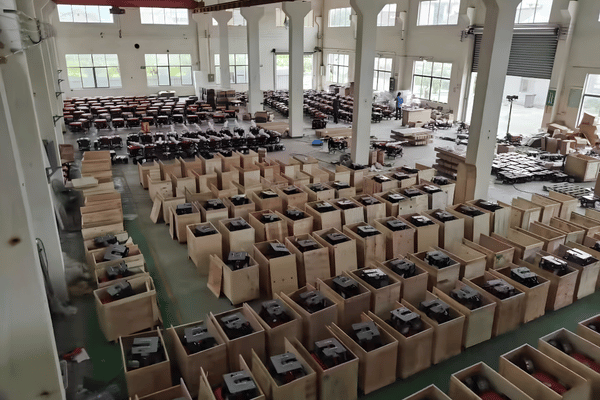
Our application scope includes electric power, and petroleum and petrochemical operations; metallurgy and other industrial production.
Transport and Infrastructure
We support lighting selection for railway, shipping, maintenance and temporary construction work.
Emergency Operations
We provide lighting equipment and selection support for public security, firefighting and emergency response.
Project Planning Tools and Configuration Limits
Using these tools, organize quotation information and verify basic project inputs prior to selecting equipment. Request a configuration quote after reviewing the dimensions and power inputs; a geometric fit is not a substitute for the selected model’s setup instructions.
Lighting Brief Builder
- Organize the application, the work area, the working shift, power availability and destination in one enquiry.
- Highlight missing inputs before requesting a quotation.
- Copy a structured brief for your project team.
D955 Footprint Checker
- Compare a rectangular space with listed transport dimensions and the deployed dimensions of the D955 7 m version.
- Example: a 3 m × 3 m rectangle accommodates the listed 2.65 m × 2.45 m footprint geometrically.
- Operating clearances, stability and site approval require a separate review.
Lamp-Load Energy Planner
- Estimate lamp energy based on the number of lamps, their rated watts and the operating hours.
- Four 400 W lamps operating for 8 hours use 12.8 kWh at the stated lamp load.
- Add auxiliary loads and system losses separately when sizing a power source.
Energy Demand Before Runtime Estimates
The U.S. EIA (www.eia.gov) distinguishes power in watts from energy in watt-hours. Lamp energy alone does not establish generator fuel use, battery runtime, solar recharge performance or a financial return, because auxiliary loads, operating conditions, the chosen equipment and the replenishment arrangement determine how a power source supports the actual shift.
Your application · Our configuration discussion
Start Your LFADJ Lighting Enquiry
Send your application, area drawing, site conditions, quantity and destination. We can help you with product configuration and the supply to meet your project requirements.
- Application, work area and required task illumination.
- Available power, operating hours and deployment constraints.
- Quantity, delivery destination and required documents.
Mobile Lighting Selection and Purchasing Questions
Work with the space and the task to determine setup. A tower raises the lighting arrangement for an area, while portable work lights can be positioned closer to inspection or maintenance work; a project may need both.
No, lamp aiming, optics, mounting height, spacing and the task plane determine the illumination reaching the work. Send a drawing and specify the illumination so the discussion can cover light where people work and power consumption.
Plan for a shared power considering the lamps, auxiliary loads and the starting demand of the equipment. Confirm the connections and limitations of the continuous output of the selected generator.
Compare actual circumstances (e.g. illumination, lamp, electrical load, setup, service needs). Moving to a led light system will not necessarily result in equal or better coverage or a reduced cost.
Review the environmental limitations, handling and storage instructions, maintenance needs, and the general site conditions for the selected model. Be specific about dust and moisture conditions, rather than relying on an ‘outdoor’ classification.
No; match the specific lamp and certification to the site’s classification and conditions. An explosion-proof rating and an ingress-protection rating are not interchangeable.
We accept orders from 1 unit.
Our D955 lead time is 45–60 days. Confirm the configuration, production schedule and destination-specific delivery arrangement with the quotation.
Our payment terms are a 50% deposit, with the balance paid before shipment. Sample orders follow the same terms as finished products.
Provide your application, work area, illumination, power supply, operating hours, access restrictions, number and destination. Include the area’s hazardous-location classification, if any, as well as the documents and approvals required.
Our ISO 9001:2015, ISO 14001:2015 and ISO 45001:2018 certificates cover the sales of lighting fixtures and accessories. Product certification and destination requirements are reviewed for the specific equipment.
When comparing a mobile light tower manufacturer, buyers reviewing portable lighting towers, portable light towers for sale or a diesel light tower for sale should specify the same power, mast, lamp and transport configuration, together with the operating shift, quantity and destination, so each quotation describes comparable equipment and delivery scope.