Get in touch with LFADJ Company

LFADJ · MOBILE WORK LIGHTING
Portable Construction Lights for Project Sites
Select portable construction lights for the work areas, power source and shift schedule. LFADJ supplies mobile mast lighting and rechargeable LED equipment for night construction, maintenance and temporary site works.
- Compare a mains-powered or generator-powered mast with two battery-powered configurations.
- Check the type of lamp, transport weight, charge time and protection rating of the enclosure before placing an order.
- Send site conditions and the quantity required for a configuration specific quote.
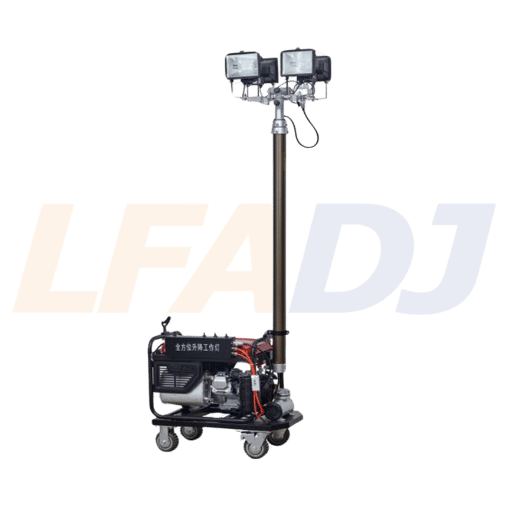
Construction Lighting for Changing Work Areas
The placement of portable construction lights should be based on task requirements, but also the routes people use to access the task. Poor lighting of access routes poses a trip risk, even if the task itself is clearly visible. Therefore, advance planning of portable work lighting is necessary across operating areas, walkways and exits, especially as the site changes.
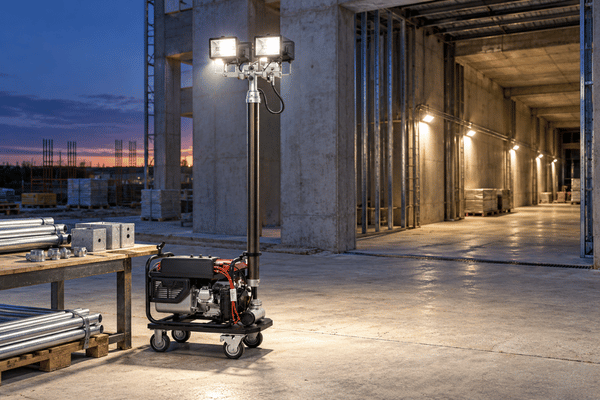
Outdoor repair and night construction
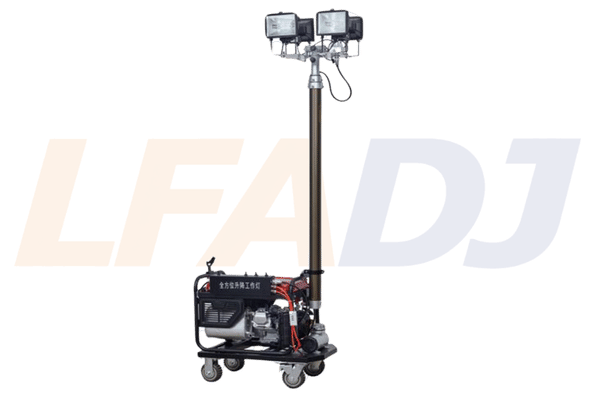
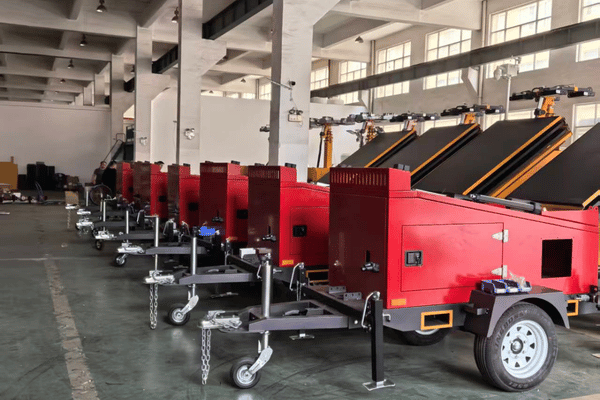
Consider the LF6110 when a raised mast and a wheeled base suit the work area. Its maximum lift height is 4.5 m; confirm ground conditions, clearances and the selected power arrangement before deployment.
Moving maintenance tasks
The LF6119 combines two LED heads with a battery and a transport case. Its 20 kg weight and folded dimensions belong in the carry-route assessment, especially where crews move between work zones.
Access-constrained temporary work
The LF6128 is the lighter option here at 15.6 kg. Check doors, stairs and storage space as well as the intended lighting position before choosing a rechargeable work light.
Buildings and extended routes
A local flood light can support a task without lighting every corridor and exit. For long routes assess a distributed temporary lighting system along with movable task lights.
Work-Zone Lighting Brief
- Task: repair, inspection, installation or general movement.
- Area: dimensions, obstructions, work height and access routes.
- Power: available supply, charging location and engine restrictions.
- Schedule: lighting hours, relocation frequency and time between shifts.
- Acceptance: required illumination, destination rules and who will check the installed arrangement.
Power and Light-Head Configurations
When comparing temporary work lights, consider the specification of the power system, separate from the lamp specification. LFADJ’s LF6110 has a halogen standard configuration; the LF6119 and LF6128 use rechargeable LED lighting.
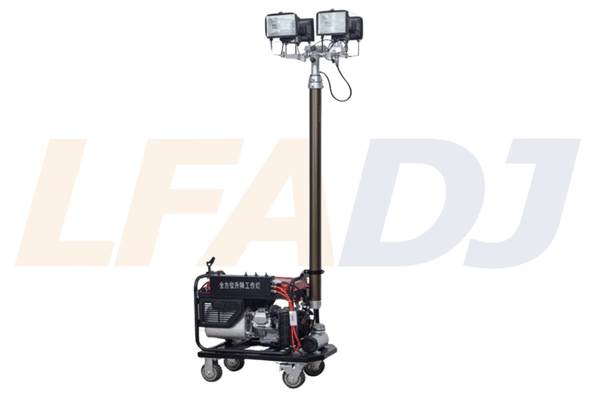
LF6110: generator or mains
- Standard lamps: 4 × 500 W halogen.
- Listed supply: 220 V / 50 Hz.
- Standard generator output: 2 kW; 5 kW is available on request.
- LED and metal-halide options require a configuration-specific quotation.
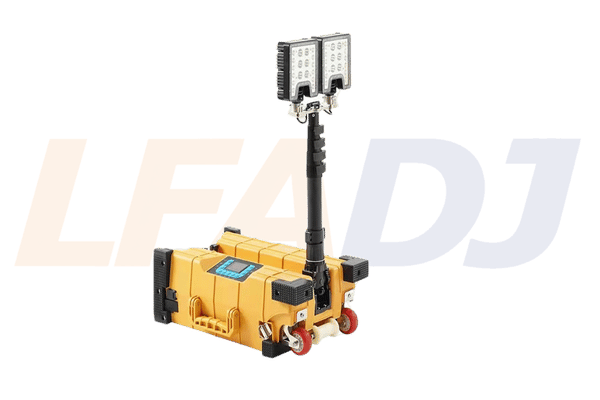
LF6119: battery-powered LED
- Two heads: 2 × 55 W.
- Battery: 21.6 V / 34 Ah.
- Listed cycle: 8 h lighting / 8 h charging.
- Cordless operation supports tasks away from a continuous supply cable.
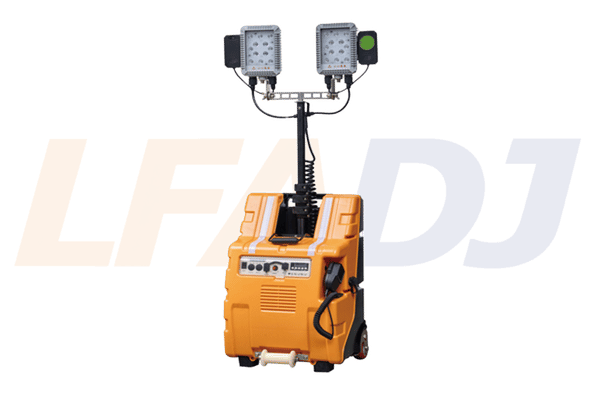
LF6128: compact LED configuration
- Two heads: 2 × 30 W, or 60W combined lamp power.
- Battery: 25.2 V / 22 Ah.
- Listed cycle: ≥8 h lighting / ≤6 h charging.
- Spot and flood lighting options support different task directions.
Stand and Beam Options
When considering a portable work light with stand, include the base footprint and the route from storage to the task. A tripod work light, a case-mounted mast and a wheeled mast have different handling arrangements. The three LFADJ models illustrated here use either a case or a wheeled base.
Positioning and adjustment
- Check the carry route before choosing: include thresholds, uneven surfaces, stairs and lift access.
- Compare light stands in their operating and folded positions, including room for people to pass.
- Illumination can be directed to the task by adjustable heads while checking glare and shadows from the operator’s position.
Moving and storing
- Inspect the stand before moving it. Check locks, supports, cables, and visible damage according to the operations manual.
- Lower and secure equipment as required by the model instructions before transport.
- For a tripod alternative, check the open-leg footprint rather than comparing folded length alone.
LFADJ Portable Work Light Specification Table
Examine the specifications to see exactly what you need before comparing prices. For LF6119 and LF6128 the listed lighting durations are not identified as full-power runtimes. Confirm lighting duration at the required brightness, battery condition and site conditions before final selection.
| Specification | LF6110 | LF6119 | LF6128 |
|---|---|---|---|
| Standard lamp power | 4 × 500 W halogen | 2 × 55 W LED | 2 × 30 W LED |
| Power system | 220 V / 50 Hz; generator or mains | 21.6 V / 34 Ah battery | 25.2 V / 22 Ah battery |
| Listed lighting duration | 13 h at full load with the listed fuel tank | 8 h | ≥8 h |
| Listed charging time | Generator/mains configuration | 8 h | ≤6 h |
| Weight | 60 kg (132.3 lb) | 20 kg (44.1 lb) | 15.6 kg (34.4 lb) |
| Folded/listed transport dimensions | 1350 × 500 × 800 mm (53.1 × 19.7 × 31.5 in) |
645 × 350 × 210 mm (25.4 × 13.8 × 8.3 in) |
365 × 330 × 620 mm (14.4 × 13.0 × 24.4 in) |
| Raised dimensions or mast height | Maximum mast height: 4.5 m (14.8 ft) | Extended: 645 × 350 × 1860 mm (25.4 × 13.8 × 73.2 in) |
Confirm the working height for the selected configuration |
| Enclosure protection | Confirm for the selected configuration | Head IP65 / case IP65 | Head IP65 / case IP54 |
| Additional model detail | 15 L fuel tank | Listed operating temperature: −20 to 40°C | Spot/flood lighting options |
Between-Shift Readiness
Review the charging windows available before the next shift. LF6119 lists equal lighting and charging periods, while LF6128 lists a shorter maximum charging period than the minimum period of lighting; neither figure alone proves continuous multi-shift availability.
- Set the required lighting hours for each task and include movement time.
- Confirm a suitable charging supply and the time available before reuse.
- Arrange reserve equipment when the planned lighting or charging window is insufficient.
Project Pricing and Delivery
A quote against a defined equipment package will allow you to evaluate the power system, accessories, transport and maintenance costs; the cheapest package is not always the best fit.
What sets the quotation
- Model, lamp type and generator or battery configuration.
- Quantity, required electrical version and supporting documents.
- Charging equipment, accessories, spare parts and packing requirements.
- Delivery destination, shipping arrangement and required arrival date.
Ordering terms
- Minimum order: 1 unit.
- Samples follow the same policy as finished products.
- Payment: 50% deposit, with the balance paid before shipment.
- Ask for the production and shipping schedule in the project quotation.
Compare operating requirements
Equipment powered by batteries gives you freedom from cords, but requires time be allotted for charging between tasks. Generator-powered equipment requires time be allotted for fueling, inspections and engine service. Mains-powered work lighting equipment requires an available supply and a protected cable route.
- Record energy or fuel consumption using the selected configuration and your operating schedule.
- Include moving, setup, charging and maintenance time in the comparison.
- Separate the equipment delivery date from site setup and acceptance.
Site Acceptance and Product Support
Check jobsite lighting with the equipment in its actual position and people performing the intended task.
Placement checks
A higher lumen rating does not always improve visibility because placement matters. Poor placement can create glare or shadows. A central, bright spot is not a substitute for checking the surrounding area.
Electrical and environmental checks
For a mains-powered temporary light, inspect the selected supply arrangement, lamp protection and cable routing. US temporary-wiring requirements address lamp damage, conductive locations and protection of flexible cords; the site electrical lead should assess the complete arrangement.
Model-specific support
LFADJ's LF6110 has a one-year whole-unit warranty. Confirm the selected model's maintenance arrangements, service response and on-site support scope in the supply contract.
Start with the task, the power arrangement and the next shift. Match the equipment to all three before placing the order.
— LFADJ selection guidance
Work-Area and Access Lighting Checks
- Define the task and area. Include work positions, storage or loading areas, stairs, corridors and exits as applicable.
- Select the appropriate requirement. Per US Construction Table D-3 in 29 CFR 1926.56, general construction areas are assigned 5 foot-candles and indoor warehouses, corridors, hallways and exit ways are also assigned 5 foot-candles. Other categories have different requirements.
- Measure the installed arrangement. Check relevant locations with suitable equipment, rather than calculating fixture quantity from lamp watts alone.
- Check shadows with the operator in position. Reposition heads where a body, structure or tool obscures the task.
- Keep the beam out of the operator's eyes. Review glare, colour recognition and nearby movement routes.
- Review loss of normal lighting. Plan emergency lighting where failure would create risk, and recheck the layout when work areas move.


Ordering and Supply
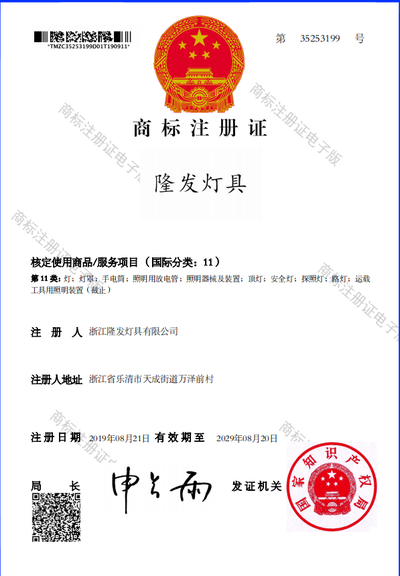
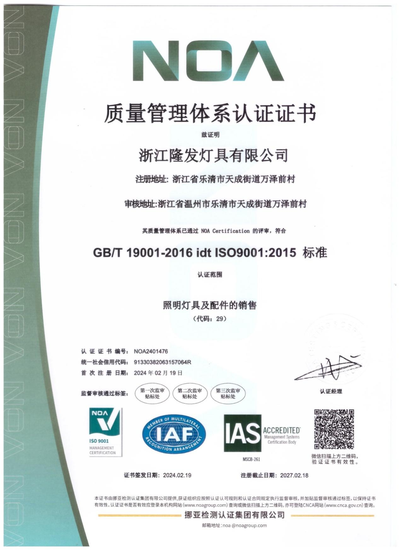
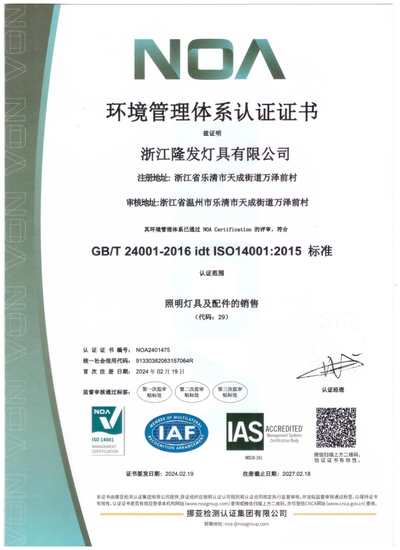
We use your application environment and operating requirements to discuss a lighting configuration with you. Ensure the model and accessories are consistent from the request for quotation through the purchase order.
- Share the site brief, including task, location, area, power and lighting hours.
- Shortlist models: compare handling, lamp type and energy source.
- Confirm the package: Specify the electrical version, accessories and what documentation (if any) you require.
- Review the quotation: verify quantity, price, payment, shipping, delivery schedule and service scope.
- Coordinate supply: agree the order configuration and delivery connection.
- Check on arrival: inspect the equipment on delivery and complete site acceptance before use.
Deployment Limits and Alternatives
Portable LED work lights and generator mast systems are not interchangeable across every site condition. Work out the selection limits for each before the equipment is shipped to the site.
Enclosed or partly enclosed work
Generators must not be operated within a building or partly enclosed space. Even if the space seems to be ventilated adequately, carbon monoxide can build up, and the generator must be placed outside and away from air intakes, in accordance with the site safety plan and operating instructions.
Hazardous locations
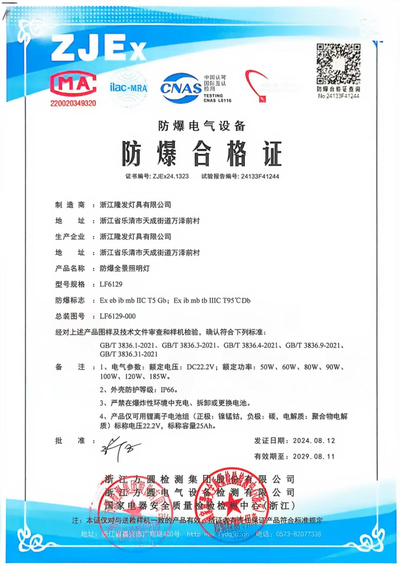
An IP rating is not a substitute for hazardous-location approval. Identify the hazard (gas, vapor, dust or fibers) and select equipment that is approved for that classification and application.
Continuous multi-shift operation
A rechargeable lamp requires a workable charging and reserve plan. When the next task starts prior to charging being completed, a different power solution or equipment should be considered.
Distributed site lighting
A single mobile floodlight can be the wrong choice for a long, obstructed corridor. Assess distributed fixtures or a construction string light system for route lighting, with portable LED work lights where needed.
Portable Construction Lights Planning Tools
INTERACTIVE SELECTION TOOLS-
Match lighting run time, battery recharge windows or generator refueling intervals against your site shift schedule. Verify whether a single unit or a backup rotation is required for continuous work.
-
Compare lamp power, mast height, power supply type and enclosure ratings across models side by side. Filter configurations by work-zone conditions and electrical requirements.
-
Assess unit transport weight, folded dimensions and wheeled or carry-case mobility against site access routes. Check clearance across stairs, doors and walkways before deployment.
Request Your Construction Lighting Configuration
Send your work area, power supply, shift hours, destination, and quantity required. LFADJ will discuss the model and configuration with you to quote for the equipment required for your location.
-
Have you selected a model? Include LF6110, LF6119 or LF6128 in your enquiry.
-
Still comparing? Send the completed Work-Zone Lighting Brief.
FAQ: Portable Construction Lighting
LF6119 and LF6128 use LED heads. LF6110 has a standard halogen configuration, with LED available as an option to specify in the quotation.
When determining the number of fixtures needed, the task, area, mounting position, obstructions, and applicable lighting requirements should be considered first. An LED temporary work light’s watts or lumen rating alone cannot determine the number of fixtures needed. The planned layout should be checked and the installed illumination measured.
LF6119 lists 8 h of lighting and LF6128 lists at least 8 h. Compare actual site and operating conditions with model specifications and include time needed for charging and a reserve plan for the next operation.
Check the light with the operator who is doing the task, and then position the head as required. Review whether the operator stands in the beam, and whether the lamp shines into adjacent workers’ eyes. Increasing the output of the light alone does not solve placement problems.
Review operating and folded size, weight, footprint of base, head adjustment, runtime and charging. A portable LED work light with stand should fit both the working position and the transport route.
No: LF6128 has a lamp head and case which are IP65 and IP54, respectively. LF6119 mentions IP65 for head and case. Select and use each model within limits of enclosure.
Send the destination, supply voltage, frequency, plug requirements and required product approvals. LF6110's listed supply is 220 V / 50 Hz, while the quoted charger input for a rechargeable unit must be checked separately from its battery voltage.
Yes, the minimum order is 1 unit. Samples follow the same policy as finished products.
Send a model or task brief, quantity, required configuration, delivery location and desired arrival date. This will allow us to agree on the supply package and provide the quotation and schedule.
Product-use consultation and problem handling are arranged around the supplied equipment and contract. LF6110 has a one-year whole-unit warranty; confirm response time, maintenance and on-site support for your order.