Get in touch with LFADJ Company

LFADJ · Industrial lighting
Portable Work Lights for Industrial Projects
LFADJ portable work lights bring adjustable lighting to equipment maintenance, night construction and emergency operations. Compare rechargeable case-mounted LED units with a generator-powered lifting system, then send your site conditions for a project quote.
- Two-head rechargeable lighting for mobile teams
- A 4.5 m lifting mast for the LF6110 system
- Model selection, configuration and supply support
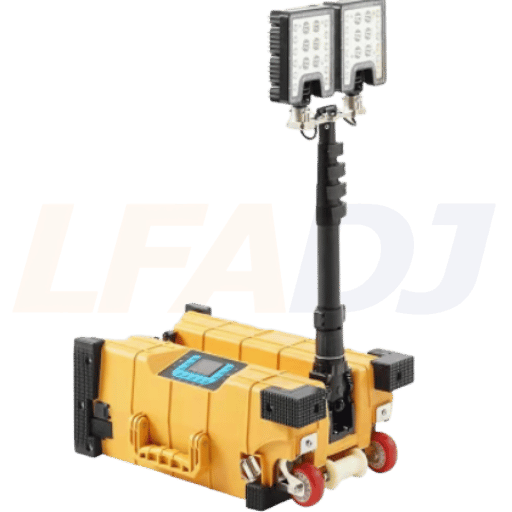
LFADJ Portable Work Light Models
Arrange lighting relative to the task, available power, and the route into the work area. LF6128 and LF6119 combine rechargeable power and two lamp heads; LF6110 places four lamp heads on a pneumatic mast for outdoor use.
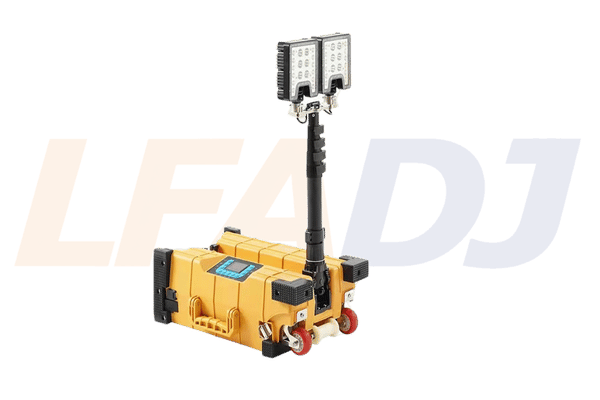
Rechargeable Portable Work Lights
LF6128 combines flood and spot lighting with a transport case, warning lights and a camera. Its 15.6 kg mass and 365 × 330 × 620 mm folded size help you assess loading, storage and movement between work positions.
- 2 × 30 W LED heads
- 25.2 V, 22 Ah battery
- Head IP65; case IP54
- Carry, roll or shoulder-transport arrangements
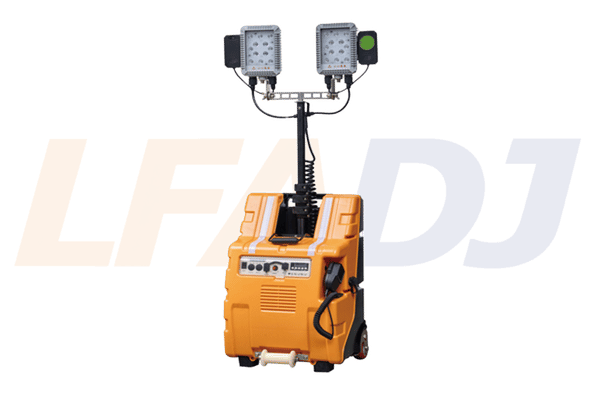
Portable LED Work Lights
LF6119 contains two adjustable LED heads, mounted in a case with an extension that brings the total height to 1,860 mm. Use this portable LED work light for elevated work. It has an integrated speaker and USB output.
- 2 × 55 W LED heads
- 21.6 V, 34 Ah battery
- Head and case IP65
- 20 kg equipment mass
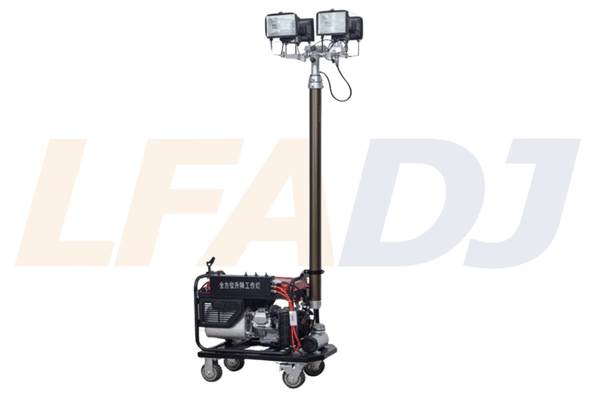
Portable Construction Lights
LF6110 uses a 4.5 m pneumatic mast and a generator power source for outdoor work areas. The standard lamps are halogen; request a separate LED or metal-halide configuration when the project calls for a different light source.
- Standard 4 × 500 W halogen lamps
- 2 kW generator; 5 kW option
- 15 L tank
- Mains supply and wireless control options
Model and Access Comparison
| Site requirement | Model to assess | Decision before ordering |
|---|---|---|
| Mobile lighting with recording and warning functions | LF6128 | Confirm lighting mode, camera use and recharge access together. |
| Raised two-head lighting with an integrated speaker | LF6119 | Allow room for the deployed base and 1,860 mm height. |
| Outdoor construction work lights on a lifting mast | LF6110 | Plan generator placement, lifting clearance and the 60 kg transport route. |
| Continuous walking inspection | A handheld work light or headlamp | These three area-light systems are not handheld lamps during use. |
Rechargeable and Generator Power Options
Match the shift to the output mode to gauge when the light can recharge or refuel, and send this information with the duration required, lighting mode and any additional loads; maximum brightness and maximum runtime are not interchangeable.
Power arrangements and configuration checks
| Power arrangement | Operating advantage | Planning constraint |
|---|---|---|
| Rechargeable LF6128 | Lighting without a trailing supply cable during battery operation | Listed continuous operation ≥8 h; charging ≤6 h. Confirm the output mode for the planned shift. |
| Rechargeable LF6119 | Case-mounted LED lighting with an elevated support | Listed operation 8 h; charging 8 h. Include speaker and USB use in the duty description. |
| Generator-powered LF6110 | A separate power supply at outdoor locations without mains access | Listed full-load operation 13 h; 15 L tank. Plan fuel, exhaust location and a safe refueling break. |
| Available mains supply | A route around battery-only duty limits when the chosen unit supports mains operation | Match voltage, frequency, connectors, cables and site protection to the exact configuration. |
Shift and Recharge Worksheet
Plan power before you move to the work area. Use a confirmed runtime at the required setting; LF6128 and LF6119 headline durations alone do not establish an eight-hour full-output duty cycle.
Shift and recharge planning inputs
| Planning example | Calculation | Result to act on |
|---|---|---|
| 10 h shift; verified 8 h usable runtime | 10 − 8 = 2 h | Arrange 2 h of backup lighting or an approved supply change. |
| 6 h recharge need; 4 h off-shift window | 6 − 4 = 2 h | The recharge window is short by 2 h; change the rotation plan. |
| Separate speaker, recording or USB use | Assess the combined duty | Use a runtime figure that includes the intended loads. |
Adjustable Lighting for Industrial Sites
Verify lighting from the working position, including shadowed areas from equipment or personnel. A high lumen rating doesn’t guarantee adequate illumination across the entire task plane, and additional output may create glare, which doesn’t necessarily solve a dark corner.
Work-Zone Measurement Record
| Record | Where to check | Decision |
|---|---|---|
| Task and target illuminance | The actual inspection, repair or construction surface | Set the requirement for the task and jurisdiction. |
| Minimum and average lux | A grid across the work area, including edges and obstacles | Compare the measured values and uniformity with the project criteria. |
| Head height and aiming | Each light position and angle | Adjust spacing and direction where shadows remain. |
| Glare and light trespass | Worker eye positions, approaching traffic and adjacent property | Re-aim, relocate or use suitable shielding before accepting the layout. |
| Mode and elapsed runtime | Start and agreed later points in the shift | Confirm that the working view remains adequate as the duty period progresses. |
| Loss of power | Access routes and the active task | Have backup lighting available before the primary supply ends. |
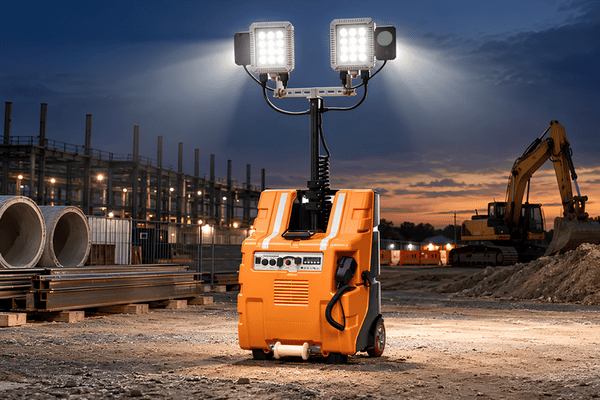
The FHWA nighttime work-zone checklist treats uniformity, task thresholds, aiming and disabling glare as separate checks. For U.S. construction, OSHA 29 CFR 1926.56 lists different minimums by activity, including 5 foot-candles for general construction area lighting; use the applicable task requirement when specifying the layout.
Point Lux and Area Coverage
LF6119 lists 5,000 lx at 5 m. That point value is not a substitute for a work-area grid: keep the measurement distance, head orientation, output mode and surrounding obstructions with the acceptance record.
Portable Work Light Specifications
When comparing LED construction work lights, consider the power source and physical size, as well as the model and accessories. Keep LED flood light output, battery capacity and generator rating separate; watts are electrical power, while lumen and lux describe different lighting quantities.
LFADJ model specifications
| Specification | LF6128 | LF6119 | LF6110 |
|---|---|---|---|
| Standard light source | LED | LED | Halogen |
| Lamp power | 2 × 30 W | 2 × 55 W | 4 × 500 W |
| Battery voltage | 25.2 V | 21.6 V | Generator system |
| Battery capacity | 22 Ah | 34 Ah | Generator system |
| Listed runtime | ≥8 h; specify mode | 8 h; specify mode | 13 h at full load |
| Listed charge time | ≤6 h | 8 h | Refueling arrangement |
| Equipment mass | 15.6 kg / 34.4 lb | 20 kg / 44.1 lb | 60 kg / 132.3 lb |
| Folded or transport dimensions | 365 × 330 × 620 mm 14.4 × 13.0 × 24.4 in | 645 × 350 × 210 mm 25.4 × 13.8 × 8.3 in | 1,350 × 500 × 800 mm 53.1 × 19.7 × 31.5 in |
| Extended height | Request layout | 1,860 mm / 73.2 in | 4.5 m / 14.8 ft mast |
| Head ingress rating | IP65 | IP65 | Specify environment |
| Case ingress rating | IP54 | IP65 | Specify environment |
| Illuminance point | Request photometric details | 5,000 lx at 5 m / 16.4 ft | Request photometric details |
| Generator and supply | Rechargeable system | Rechargeable system | 2 kW; 220 V / 50 Hz |
| Tank capacity | Not applicable | Not applicable | 15 L |
| Mast movement | Model-specific support | Case-mounted extension | Raise/lower ≤2 min |
| Additional functions | 8 MP camera, 32 GB storage, warning lights, USB output | 30 W speaker, MP3, Bluetooth, USB output | Wireless control; horizontal 360° and vertical 90° adjustment |
Project Pricing and Lead Time
We quote portable work lights against the selected model, lamp arrangement, quantity and destination. Send the installation conditions when requesting a quotation so we can address equipment and supporting items together.
Information for a project quotation
| Quote input | Effect on the project | Send with your enquiry |
|---|---|---|
| Light source and supply | Changes the lamps, power equipment and connections | LED or halogen preference; available voltage, frequency and plug |
| Duty period | Changes charging, backup and fuel planning | Hours per shift, required mode and off-shift charging window |
| Quantity and accessories | Changes the equipment package and packing scope | Units, recording/speaker needs and spare-item requests |
| Destination and freight | Changes transport arrangements and required documents | Country, delivery address, freight preference and target arrival date |
| Inspection and support | Defines acceptance and service responsibilities | Required checks, documents and maintenance expectations |
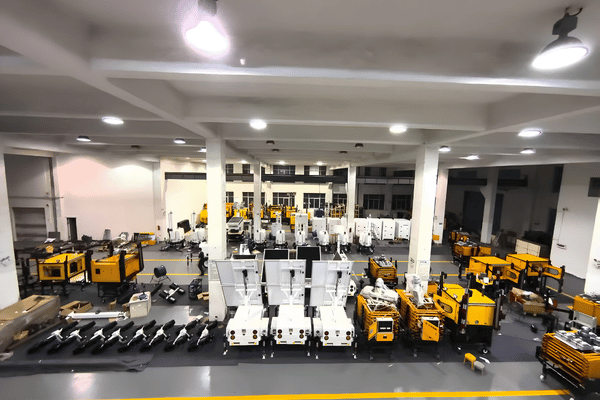
Handling Time in the Cost Comparison
Consider purchase price when creating an operating budget. For an illustrative schedule of 20 working days, two moves per day and ten minutes per move, handling totals 400 minutes, or 6 hours 40 minutes; use your own route and crew time to compare alternatives.
Compare the Same Scope
- Enter the measured power or fuel consumption at the intended setting.
- Include charging equipment, spare units, maintenance and transport.
- Keep quoted equipment cost separate from calculated running cost.
Order Schedule
We agree the configuration, supply schedule and scope of delivery in the project quotation. Show the required on-site date separately from dispatch, to ensure the preparation of equipment and the transit have their own milestones.
- Configuration review: model, light source, supply and accessories
- Order confirmation: quantity, acceptance requirements and commercial terms
- Supply and dispatch: agreed readiness date and packing scope
- Delivery: destination, freight arrangements and arrival target
Configuration Checks and After-Sales Support
Confirm the supplied mounting arrangement, electrical input and accessories against the order. A tripod work light and a case mounted light are not interchangeable, just because both are portable; the base, locking points and clearance must be right for the task.
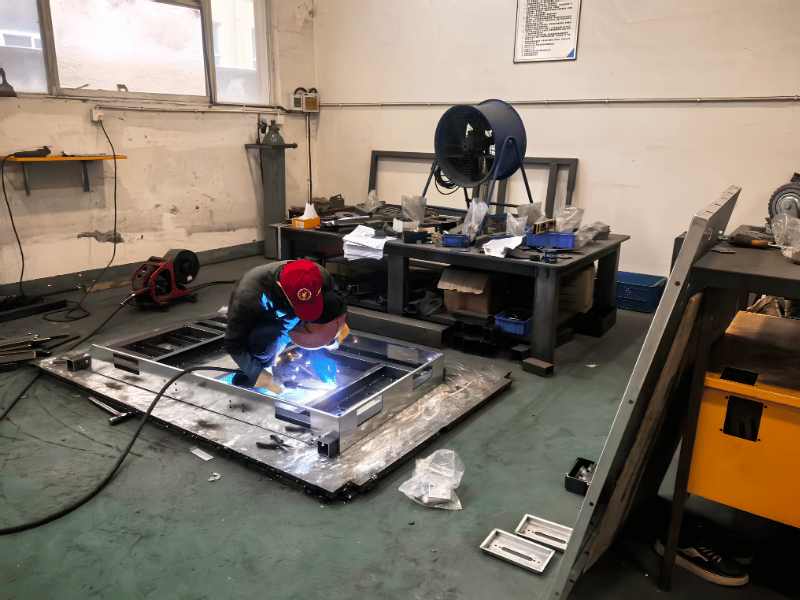
Order and Acceptance Checks
- Match the model designation, lamp type and quantity to the agreed configuration.
- Check supply voltage, frequency, charger and connector details.
- Define the runtime test with its brightness mode and auxiliary loads.
- Agree the illumination measurement positions and working conditions.
- Review instructions, applicable product documents and transport requirements.
Support for the Supplied Model
LFADJ provides product-use consultation and after-sales problem handling through its service arrangements. The LF6110 product material specifies a one-year whole-machine warranty; maintenance terms, response arrangements and on-site support for your order are agreed in the contract.
A Useful Service Enquiry
- Model and serial identification
- Photos or a short video of the issue
- Power source, operating mode and conditions when it occurred
- Order reference and delivery location



From Site Requirements to Supply
Start with the work area and the duty period. These inform model selection and lighting solutions, which we then incorporate into the supply communication.
-
1.
Describe the task.
Send the site type, work-area dimensions and required viewing detail.
-
2.
Set the operating duty.
Include hours, brightness needs, movement frequency and backup arrangements.
-
3.
Choose the equipment.
Compare the rechargeable units with the generator-powered option.
-
4.
Agree the package.
Confirm supply, controls, accessories, quantity and documents.
-
5.
Arrange supply.
Set the schedule, packing and destination in the order.
-
6.
Keep the configuration record.
Use the same model and duty details for acceptance and after sales enquiries.
Share the Constraints Early
Add a layout or site photos with your query. Restrictions such as a narrow access corridor, a short recharge window, or a constrained generator location may influence our selection before price becomes the determining factor.
We provide product consultation, model selection and lighting solutions based on your application environment and operating requirements.
— LFADJ service approach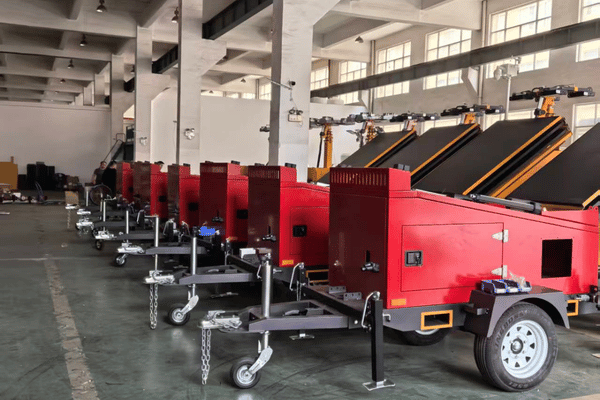
Portable Lighting Fit and Alternatives
Choose the lighting format for the working conditions, including restrictions that additional brightness cannot overcome. Reach, mass and power access become more critical than selecting the largest lamp package.
Alternatives for different lighting tasks
| Situation | Constraint | Suitable direction |
|---|---|---|
| Indoor or enclosed work | Combustion-generator exhaust creates a carbon-monoxide hazard. | Use suitable battery or mains lighting; keep combustion generators outdoors and away from openings that admit exhaust. |
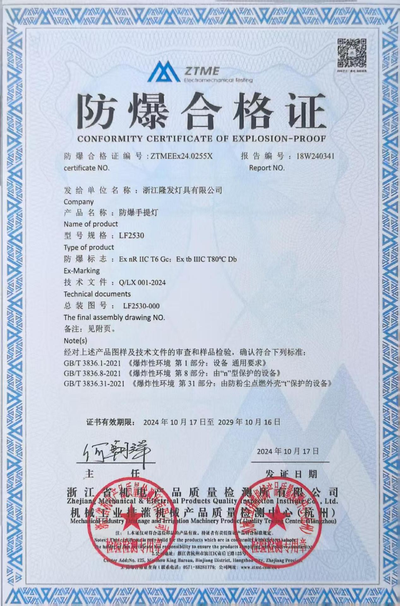
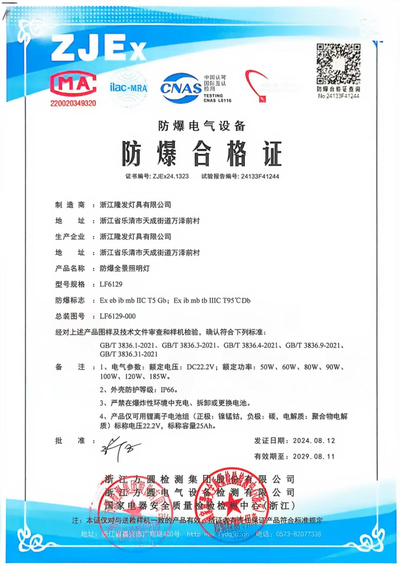
| Flammable gas or combustible dust zones | IP ingress protection is not a substitute for hazardous-location approval. | Select a model certified for the site's classification and applicable conditions. |
| Walking inspection and close access | A 15.6–60 kg area-light system cannot replace a handheld lamp in motion. | Pair area lighting with a suitable handheld work light or headlamp. |
| Paint matching or fine surface inspection | General flood lights do not necessarily provide the needed colour rendering or light geometry. | Specify the inspection task, colour-rendering requirement and working distance. |
| Existing tool-battery fleet | Matching nominal voltage does not establish connector compatibility. | Assess the actual battery interface and charger; retain a proven system where that reduces handling complexity. |
Portable Work Light Planning Tools
-
Launch Tool
Filter LF6128, LF6119 and LF6110 by power source, equipment mass, mast height and site access conditions.
-
Launch Tool
Calculate usable runtime, off-shift charging windows and unit rotation requirements for your shift schedule.
-
Launch Tool
Compare power or fuel consumption alongside crew setup and movement time across your project duration.
Request Your Portable Work Light Quote
Tell us where the portable work lights will be used. LFADJ will review the model, power requirements and supporting items.
- Application and work-area layout
- Required quantity and target duty period
- Voltage, frequency and access to charging or fuel
- Accessories, destination and required arrival date
Portable Work Light Questions
Start with LF6128 for its lighter case arrangement and recording functions, LF6119 for its raised two-head LED arrangement, or LF6110 for outdoor mast lighting. Match your selected model to the duty period and electrical supply as well as to the handling route.
Those two values should not be combined without a mode-specific test. As a comparison, Milwaukee's 2131-20 lists 2,500 lumens for 4 hours on high and 700 lumens for 13 hours on low with an XC5.0 Ah battery; ask for the intended LFADJ duty condition with your quote.
No. The listed point illuminance for LF6119 does not determine the minimum or average illuminance for a jobsite; consider the task plane and check for shadows and edges in the proposed layout.
These are portable area-light systems for placement at a work position. Use a handheld work light for continuous walking inspection, and assess the 15.6 kg, 20 kg or 60 kg equipment mass when planning transport.
No: LF6128 has IP65 lamp heads and an IP54 case, while LF6119 lists IP65 for both. Select for the actual exposure and follow the operating instructions, including the treatment of connections and charging equipment.
The listed LF6110 configuration is 220 V / 50 Hz. Send your site voltage, frequency and connector requirements before selecting mains operation or specifying the supply package.
Compatibility can not be assumed with voltage labels alone. Tool-battery interfaces, adapters and chargers are model specific; state your current platform when discussing equipment packages.
No. LF6128 and LF6119 list USB output functions; send the connector and power needs of the device you want to charge, including USB-C where required, so the interface can be checked.
Explain the destination and method of freight. Then describe the battery chemistry, battery marking and the documentation pertaining to the shipment. For lithium batteries, UN 38.3 test-summary requirements are different from a product’s lighting or ingress specs.
A tripod, while needing free space on the floor, raises the light. A hanging work light needs a rated suspension point. Be sure to check the supplied mount and locking arrangement for the exact model; within a manufacturer’s range, not every lamp fits every stand
A small cordless light may cover a short local repair; an industrial shift also requires a recharge plan, handling route and backup. Select against the duty and working view, not the retail category name.
Send model and quantity. Also include shift hours, available supply, delivery destination, work-area dimensions, environmental conditions and accessory requirements. These will help us better define configuration and supply scope.