Get in touch with LFADJ Company
Mobile Lighting System for Industrial Projects
Choose a mobile lighting system around the work area, operating hours and power available at your site. LFADJ offers diesel mobile light towers and solar surveillance options for construction, mining, equipment rental, and remote site lighting.
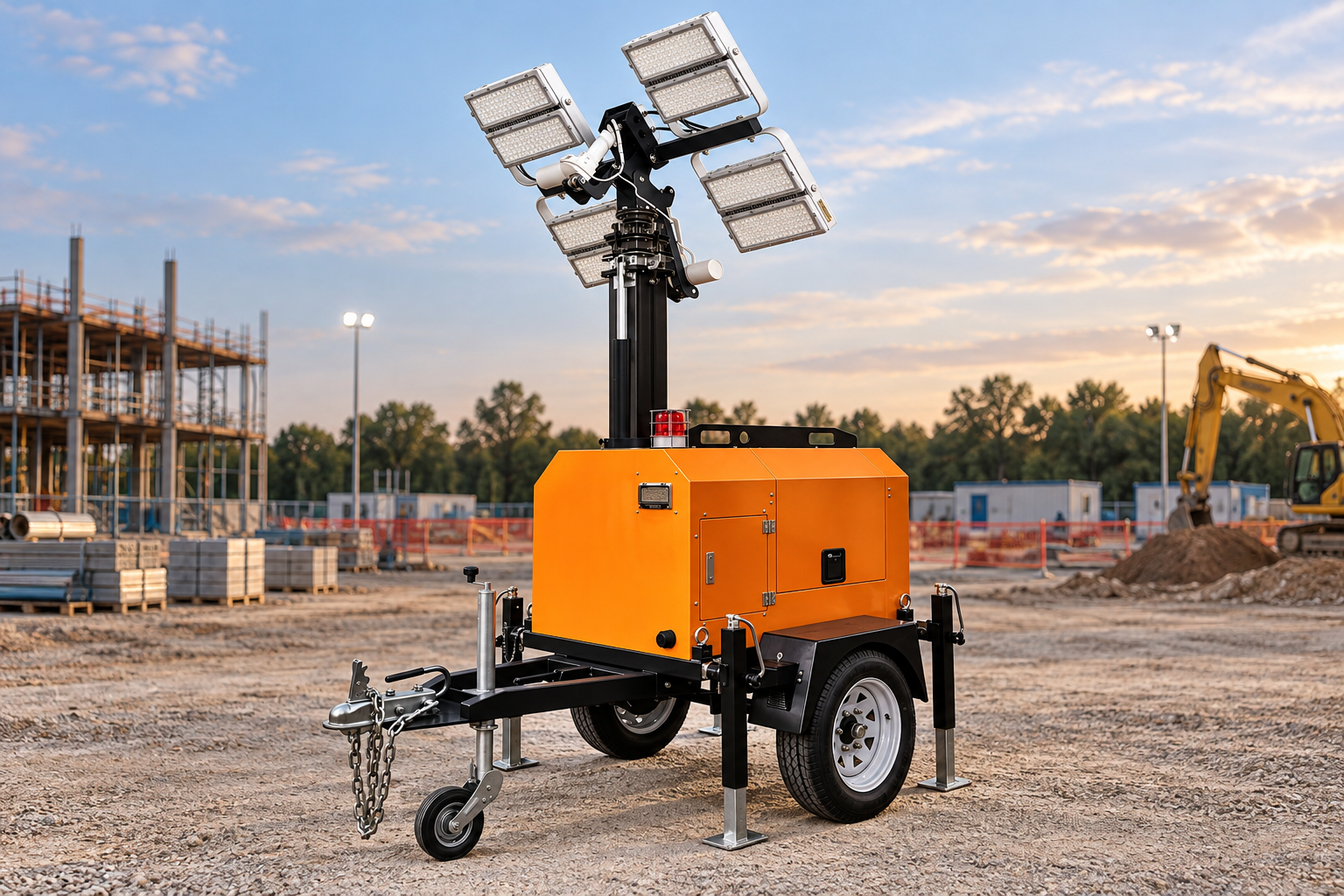
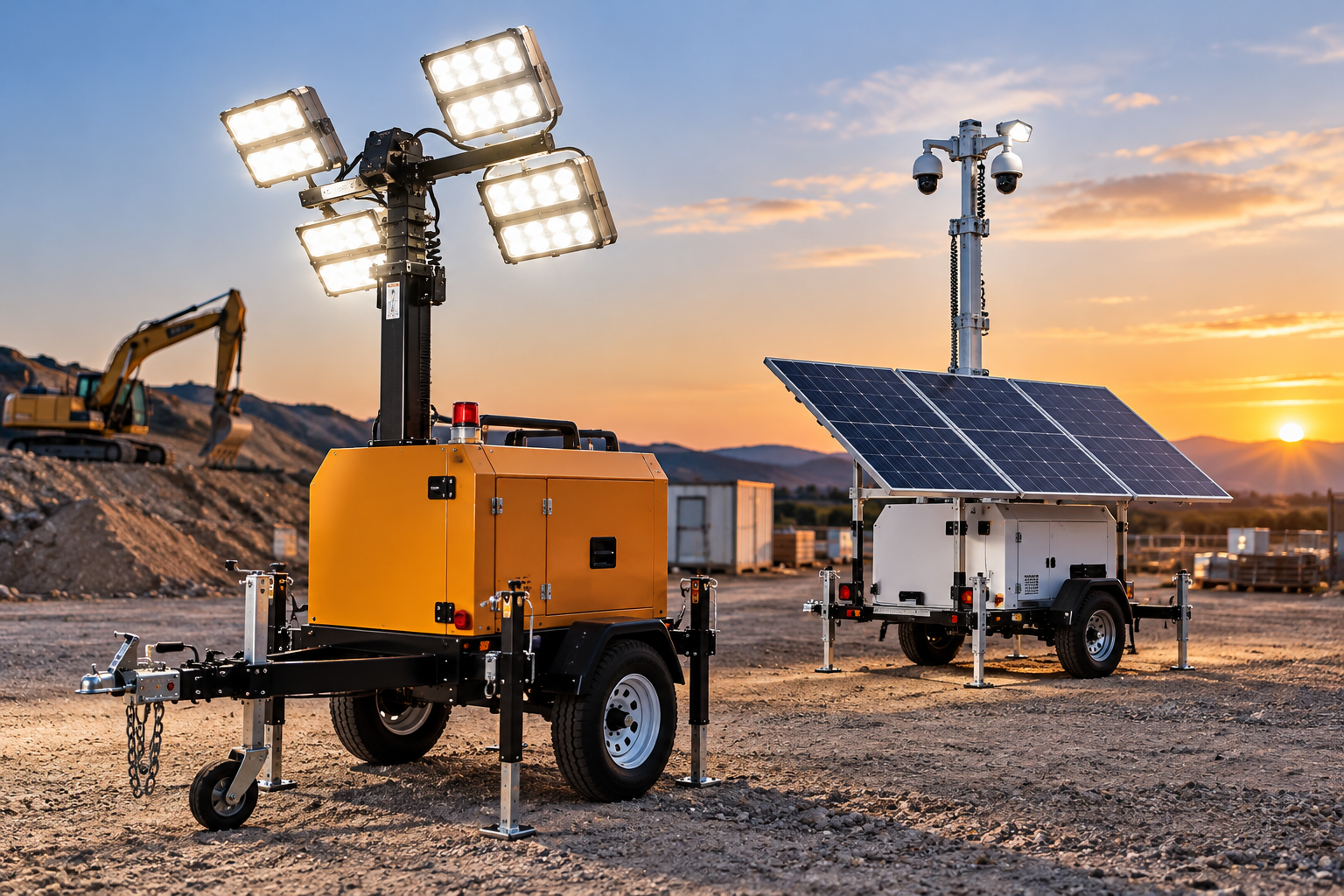
- D955 systems are configured with four LED floodlights and hydraulic mast lifting.
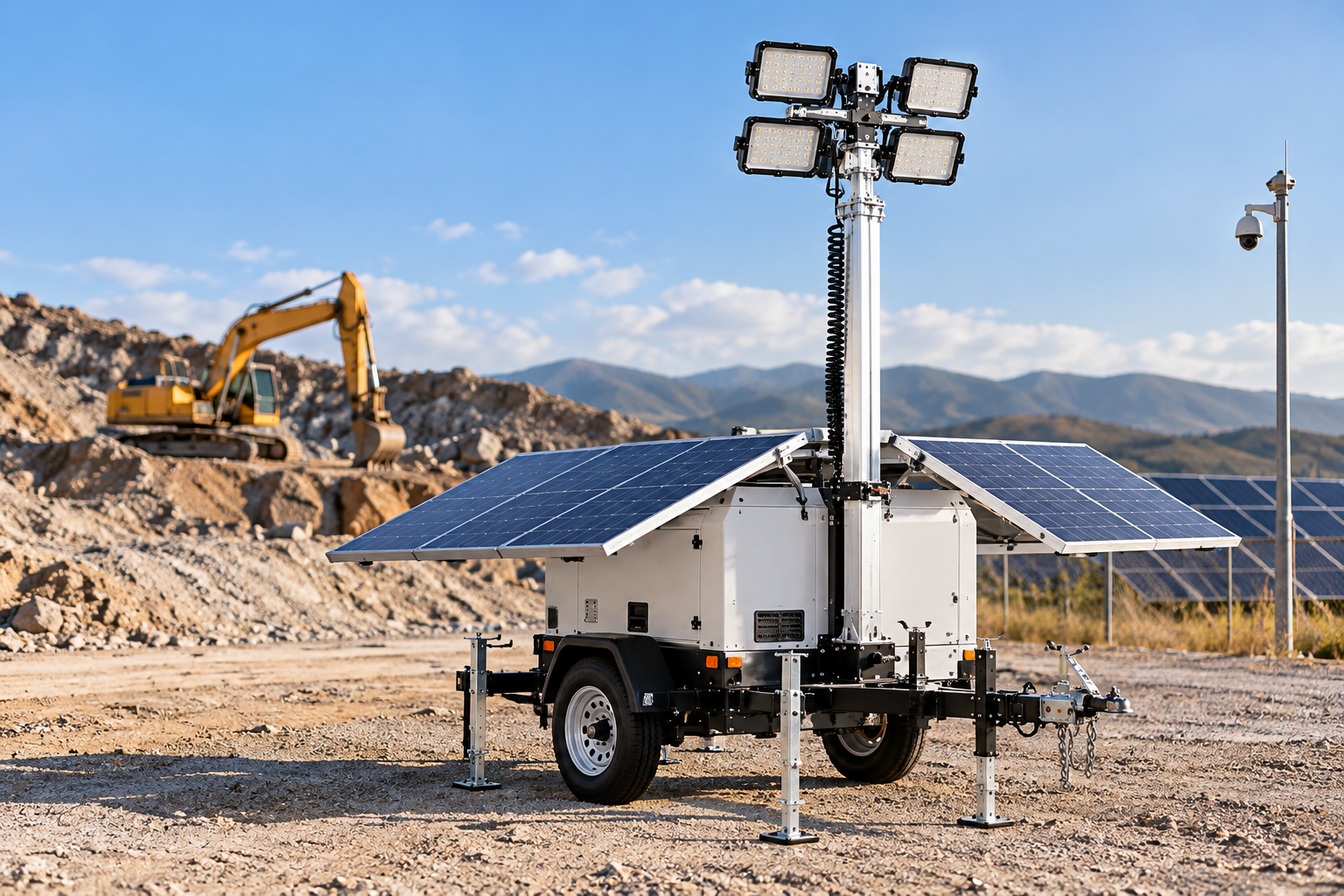
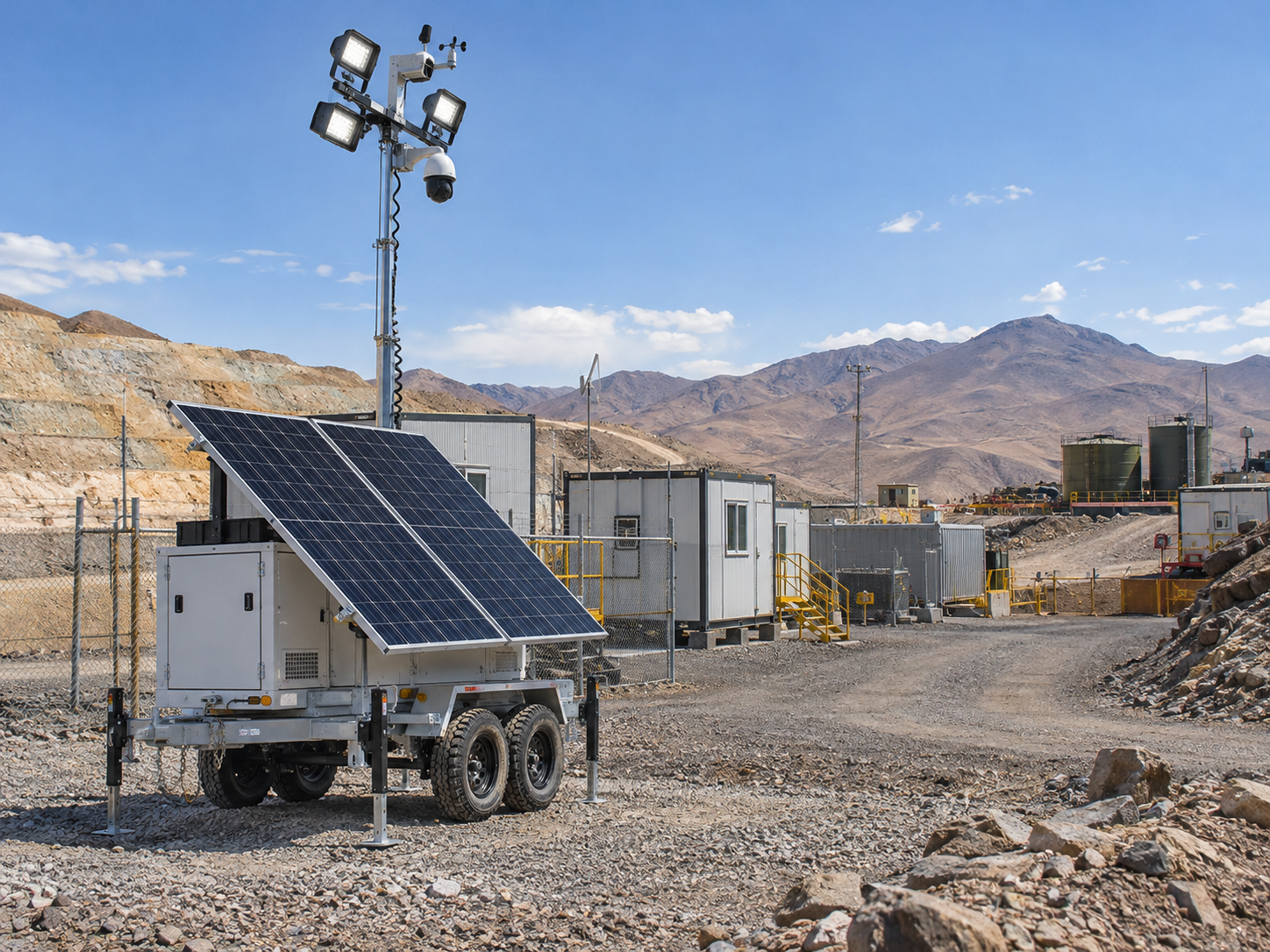
- S973 solar surveillance configuration with lighting and PTZ cameras
- Configuration, transport and commercial terms reviewed for your destination
Compare Mobile Lighting System Configurations
Our mobile lighting systems are configured for the way you manage your equipment, and the job at hand. Rental ownership may overlap construction and/or mining activity, so check the actual engine, lamp, and mast configuration before selecting a unit.
| Project or fleet need | LFADJ configuration | Lighting and mast | Input needed for selection |
|---|---|---|---|
| Construction and roadwork | D955 with Kubota Z482 | 4 × 300 W LED; 7 m mast | Task plane, traffic approaches, work-zone layout and shift hours |
| Mining and quarry operations | D955 with Yanmar engine | 4 × 400 W LED; 7 m mast | Work area, dust, access route and site operating requirements |
| Equipment rental fleets | D955 with Kubota Z482 | 4 × 300 W LED; 9 m mast | Hire applications, transport limits and maintenance arrangements |
| Surveillance with temporary lighting | S973 solar surveillance trailer | 4 PTZ cameras; 3 × 100 W dimmable LED | Camera duty cycle, connectivity, lighting schedule and solar location |
TECHNICAL SELECTION
One enquiry, a defined equipment scope
Our service includes assisting you in the selection of the best product for your application. Let us know if you require lighting only, lighting with Auxiliary Power, or a combined lighting and Monitoring system.
- SPEC 01 // MAST D955 includes hydraulic mast lifting with 340° rotation.
- SPEC 02 // CAPACITY Our D955 units include a 100 L fuel tank.
- SPEC 03 // SOLAR Our S973 includes 3 × 450 Wp solar panels.
- SPEC 04 // OPTICS The stated S973 configuration includes 4 PTZ cameras.
Temporary Mobile Lighting for Your Application
Start your lighting planning by considering the task that needs to stay visible. Once that is determined, account for people, vehicles, and equipment in the surrounding area. A portable LED light tower provides elevated area light; a work light or string light may still be needed to illuminate areas if equipment creates shadows.
Construction & Roadwork Light Towers
For construction site lighting, our D955 version provides temporary lighting solutions for the construction site. Define the work area and the approach direction of traffic to determine where the mast and each adjustable fixture should be directed.
- Send a sketch showing lanes, excavations and moving plant.
- Specify the task, working height and required illumination.
- Include glare control and a power-outage contingency in the site plan.
Mining & Quarry Light Towers
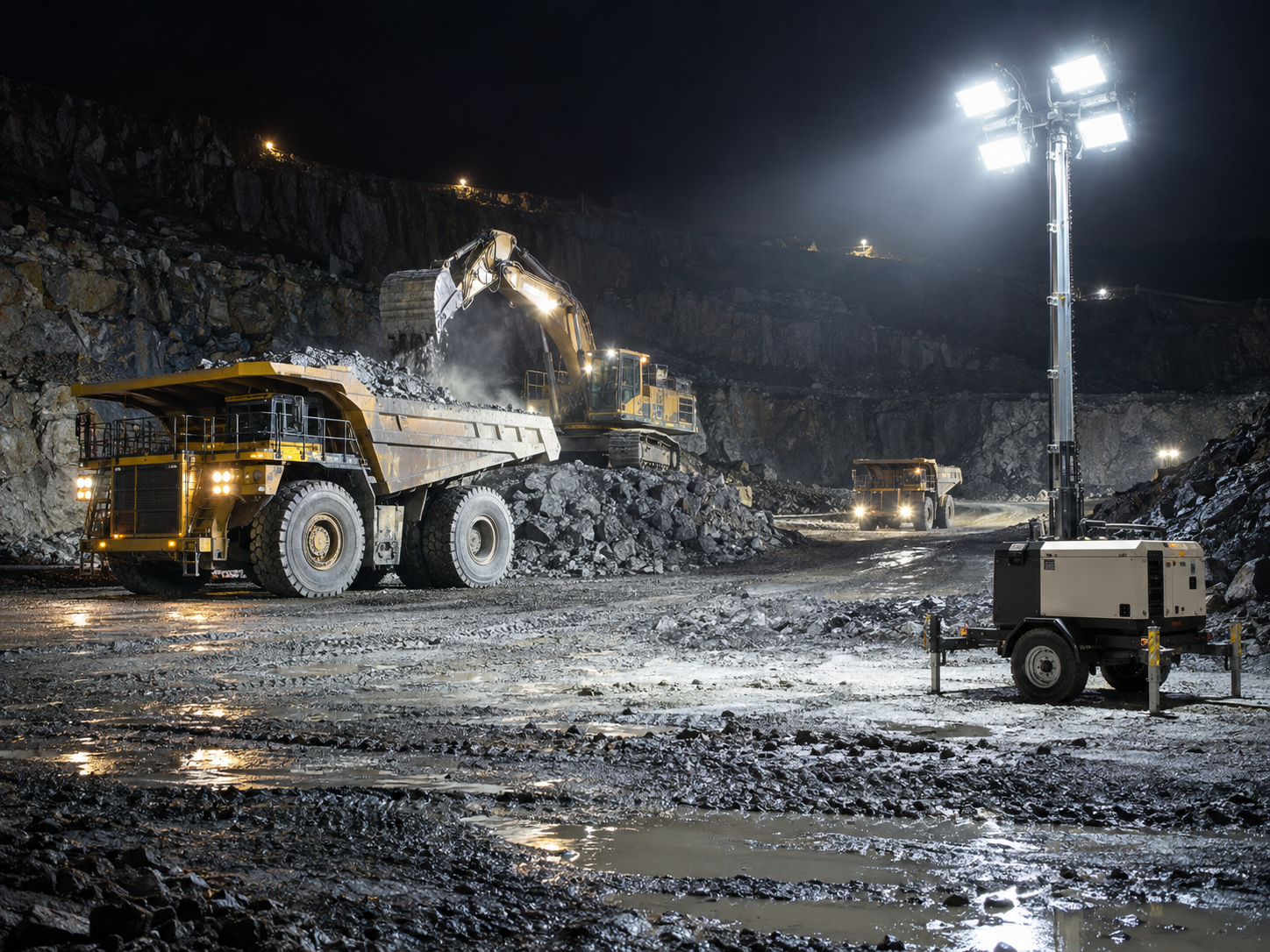
Our D955 mining version is available with 4 × 400 W LED lamps. In your planning for deployment, consider separate loading areas, maintenance tasks and vehicle routes as dust and equipment shadows may change lighting needs.
- Check ground conditions and the deployed footprint.
- Describe dust exposure and cleaning access.
- Confirm site rules for fuel, engines and hazardous areas.
Light Towers for Rental Fleets
For rental fleet supply, the D955 version has a 9 m mast and Kubota Z482 engine. A repeatable configuration helps your team organize handover, service and return checks across different construction projects.
- Agree the lamp, engine and mast specification in the order.
- Plan storage, refueling and scheduled maintenance between hires.
- Record damage, operating hours and missing accessories on return.
Mobile Surveillance Trailers
S973 supports projects integrating temporary lighting with monitoring and cameras. Cameras, network equipment and lamps have different schedules, so establish their loads separately before addressing continuous operation.
- Specify camera views and recording needs.
- Check network availability and responsibility for data services.
- Provide seasonal solar conditions and the lighting schedule.
Power Systems and Daily Operating Loads
The LFADJ D955 range uses diesel generation, while S973 integrates solar and battery storage with lighting and monitoring. Continuity depends on the power source and access for replenishment. A trade-off exists: diesel operation requires fuel and engine maintenance, while for solar operation a site-specific energy balance and a replenishment plan are required.
Compare the operating requirement, not just the power source
| System | Useful starting point | Requirement to resolve |
|---|---|---|
| Diesel generator lighting | Projects with an organized fuel supply and access for service | Actual load, refueling access, engine restrictions and noise requirements |
| Solar and battery lighting with monitoring | Remote locations with suitable solar exposure and a defined daily load | Seasonal generation, usable battery energy, reserve and recovery after cloudy weather |
| Existing mains power | Sites with a suitable available supply | Connection arrangement, protection and compatibility with the quoted unit |
Lighting and Monitoring Load Split
As a planning example, run three 100 W lamps at full power for 8 hours, and assume a separate 40 W monitoring load for 24 hours. The monitoring figure is for example only and not a camera system rating for S973.
The Energy Information Administration explanation of electrical energy provides the power-times-hours basis. A 5.12 kWh nominal battery does not necessarily deliver that full energy to the load, and the calculation above does not establish runtime.
Calculate your lighting and monitoring load →Lighting: 3 × 100 W × 8 h ÷ 1,000 = 2.4 kWh/day.
Monitoring: 40 W × 24 h ÷ 1,000 = 0.96 kWh/day.
Combined load: 3.36 kWh/day before conversion losses and reserve.
Specify the operating condition
- Record actual lamp settings: dimming changes consumption and light output.
- Include camera movement, communications, recording and any heaters in the load inventory.
- Allow for poor-weather recovery, battery operating limits and site access.
- Compare LED lighting to current metal halide equipment in terms of task illumination and measured input power; lumen rating does not describe site coverage.
Specifications, Transport Size and Deployment Space
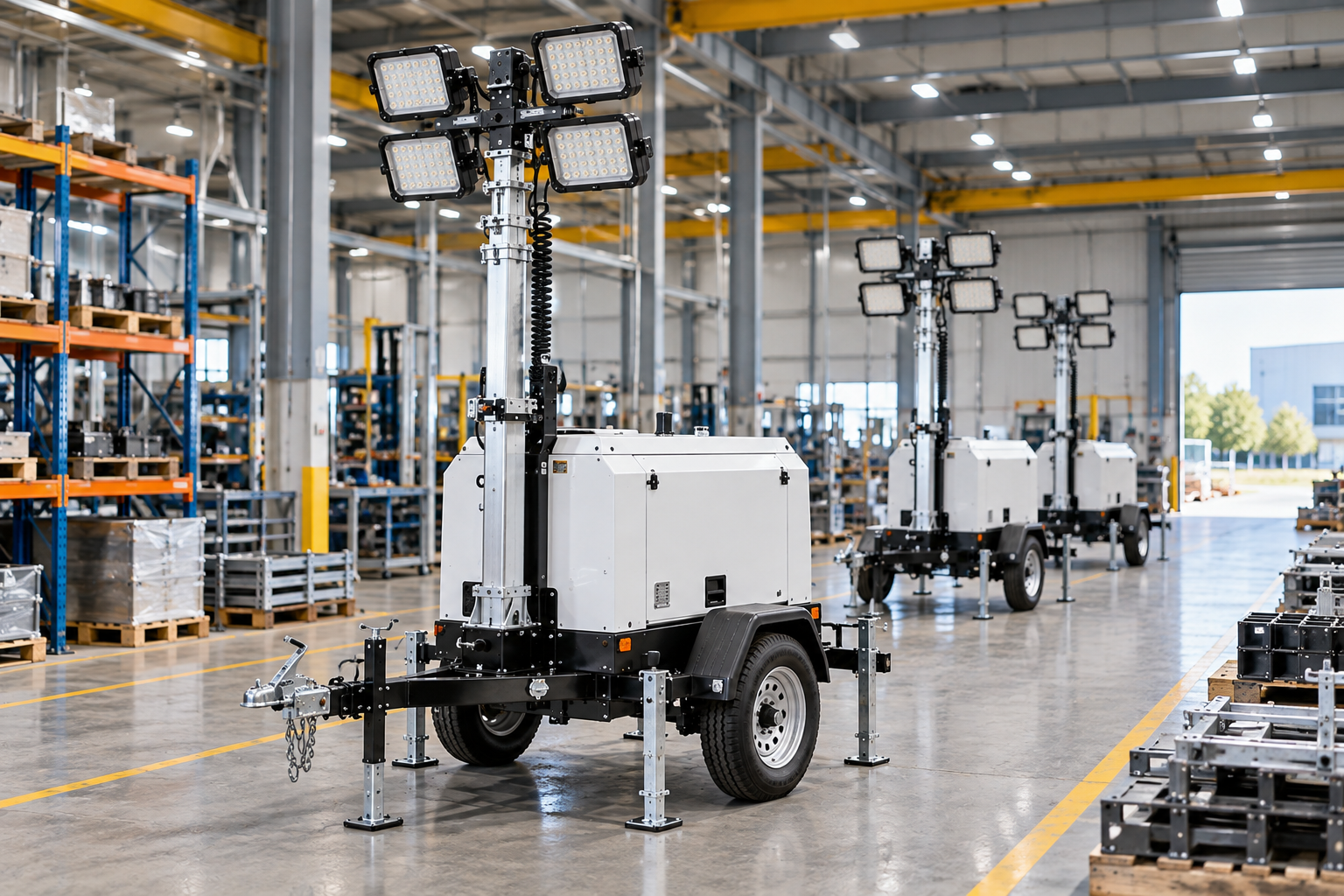
D955 and S973 provide model specific dimensions for transport and deployment. Note your choice of mast version before finalizing a trailer route, container loading, or storage bay assignment. Folded size and working size are not interchangeable.
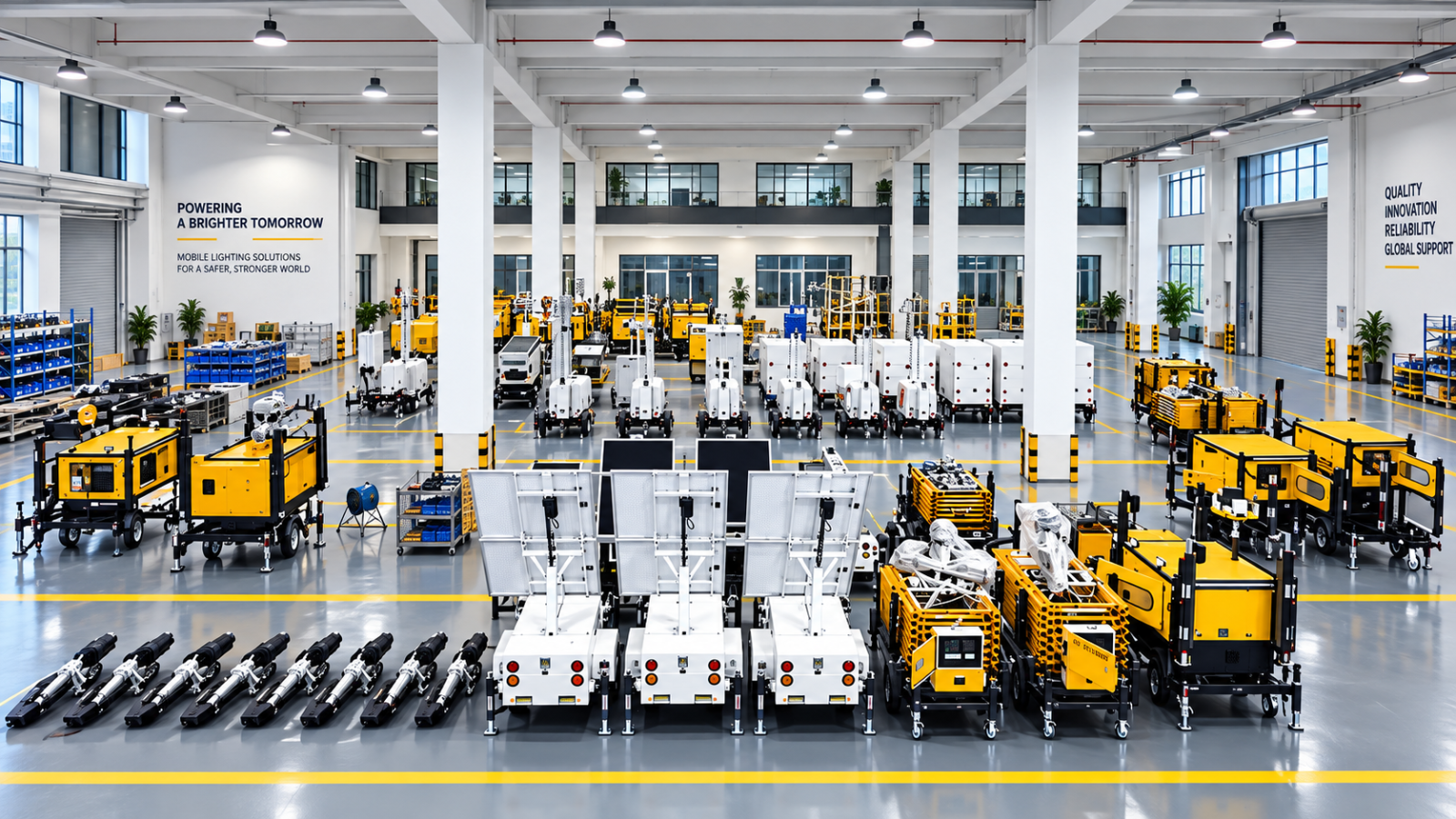
| Specification | D955 7 m configurations | D955 9 m rental configuration | S973 surveillance configuration |
|---|---|---|---|
| Lighting | Construction 4 × 300 W; mining 4 × 400 W | 4 × 300 W LED | 3 × 100 W dimmable LED |
| Mast / overall deployed height | 7 m mast | 9 m mast | 7,000 mm overall deployed height |
| Transport dimensions, L × W × H | 1,650 × 1,450 × 2,350 mm | 1,650 × 1,450 × 2,650 mm | 2,100 × 1,450 × 2,350 mm |
| Deployed dimensions, L × W × H | 2,650 × 2,450 × 7,200 mm | 2,650 × 2,450 × 9,000 mm | 2,650 × 2,450 × 7,000 mm |
| Weight | 1,050 kg dry; 1,150 kg wet | 1,050 kg dry; 1,150 kg wet | 800 kg |
| Fuel tank | 100 L | 100 L | Solar and battery configuration |
| Mast lifting / rotation | Hydraulic / 340° | Hydraulic / 340° | Confirm movement arrangement in quotation |
| Solar array and nominal battery | Diesel configuration | Diesel configuration | 3 × 450 Wp; 5.12 kWh at 25.6 V, 200 Ah |
Road use is a separate requirement
A towable chassis is not a substitute for destination road-use approval. Verify registration, trailer identification, towing equipment and related documents with your importer. Review the information in NHTSA guidance for US trailer buyers to understand why you must confirm the manufacturer of the trailer and check its certification prior to purchase.
Mobile Lighting System Price, Lead Time and Support
Your price for a mobile lighting system depends on options, accessories, and quantity ordered, as well as the destination. Compare quotations for the same lamp power, mast height, engine and monitoring scope, and transport requirements to ensure a lower price does not mean a different equipment package.
- Our minimum order is 1 unit.
- Our lead time is 45-60 days for the D955 configuration.
- Samples follow the same policy as finished products.
- Payment: 50% deposit; balance paid before shipment.
We provide product consultation prior to sale and assist in lighting and solution selection. We provide product-use consultation and problem handling after sale. Warranty duration, response time and on-site coverage are in the contract.
- State the destination and intended use when requesting support terms.
- Identify who will carry out routine maintenance on site.
- Agree spare parts and service responsibilities before ordering.
| Site constraint | What it changes | Information for the quotation |
|---|---|---|
| Infrequent service visits | Fuel, inspection and repair logistics may determine practical availability | Travel time, access windows and local maintenance resources |
| Several cloudy days | Solar generation may not replace the energy used each day | Location, season, measured loads and recovery strategy |
| Unreliable network connection | Camera power alone does not secure monitoring continuity | Coverage survey, recording needs and responsibility for connectivity |
| Limited working space | A unit that fits in storage may not have room to deploy | Clear ground area, overhead clearance and operating exclusion area |
Remote operating budgets place a premium on cost, but the cheapest equipment may not always be a good fit. Consider the total cost of the mobile lighting system over its useful life, including purchase, transport, fuel and/or charging, and maintenance, as well as site visits, using measured consumption and the intended load, rather than maximum runtime.
Check the daily load example before comparing power options →Quality and Project Requirements
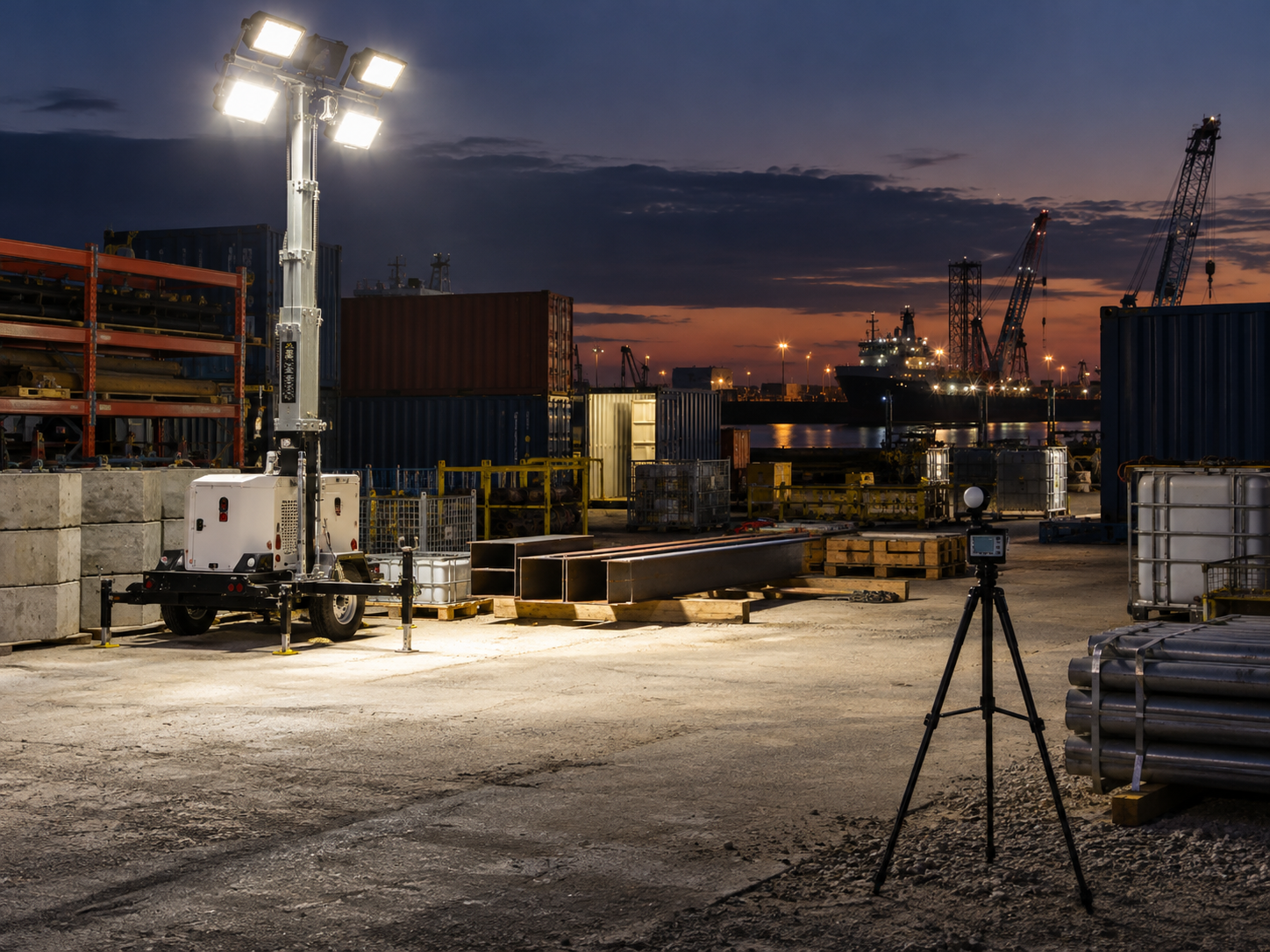
We discuss lighting requirements and determine if the product is a good fit prior to sale, with configuration adjusted for your operating environment. Have the supplied documents matched exactly to the product model and destination and check performance at the working position rather than treating lamp wattage as a compliance measure.
- Specify target illumination, measurement positions, uniformity and glare limits.
- Confirm the delivered engine, lamps, mast and electrical connections against the order.
- Check the operator instructions, site restrictions and inspection responsibilities.
OSHA 29 CFR 1926.56 assigns different illumination values to different listed work areas; your applicable project requirements determine the assessment.
- Confirm camera access control and software-update arrangements.
- Define recording, data retention, remote access and network ownership.
- Identify who maintains the camera, network and storage components.
NISTIR 8259A offers a starting point for acquiring connected devices. Use it to frame questions about the monitoring package, not as a product certification.
From Site Requirements to Supply
LFADJ combines industrial lighting manufacture, trade and service, and includes product consultation tailored to the application. Begin with your work site and operational schedule. Based on this information, we will review equipment configuration and supply.
-
Describe the job. Indicate the site layout, working hours, quantity, destination, and if monitoring or auxiliary power is required.
-
Define the configuration. We review lamp power, mast version, power source and relevant accessories with you.
-
Agree the quotation. Confirm equipment scope, lead time, payment, transport and support terms.
-
Prepare deployment. Assign site setup, operation, inspection and maintenance responsibilities before the equipment arrives.
Useful enquiry details
Project Configuration Enquiry →- Site dimensions and a sketch or photograph of the work area
- Lighting hours per shift and any continuous monitoring load
- Available power, fuel sources, and constraints on engines or noise
- Transport constraints, quantity and destination
Documented Industrial and Emergency Projects
Zhejiang LONGFA Lighting Co., Ltd. was established in 2013 in Yueqing, Zhejiang. LFADJ project records include mobile lighting and emergency equipment deliveries in China and Indonesia.
Ordos, China · 2018
We have completed the delivery of 68 mobile lighting units to a police project in Ordos. The delivery record concerned a historical project configuration.
Ya'an, Sichuan · 2024
We have completed the delivery of mobile emergency equipment to a project in Ya'an. This adds to our experience in supplying mobile equipment for emergency operations.
Indonesia · 2023
We have supplied 8 mobile light towers for an Indonesia project. The project record describes a separate configuration with 4 × 1,000 W LED lamps and a 9 m manually raised mast. The equipment list identifies a 6130 tower assembly.
- Project-specific equipment configuration
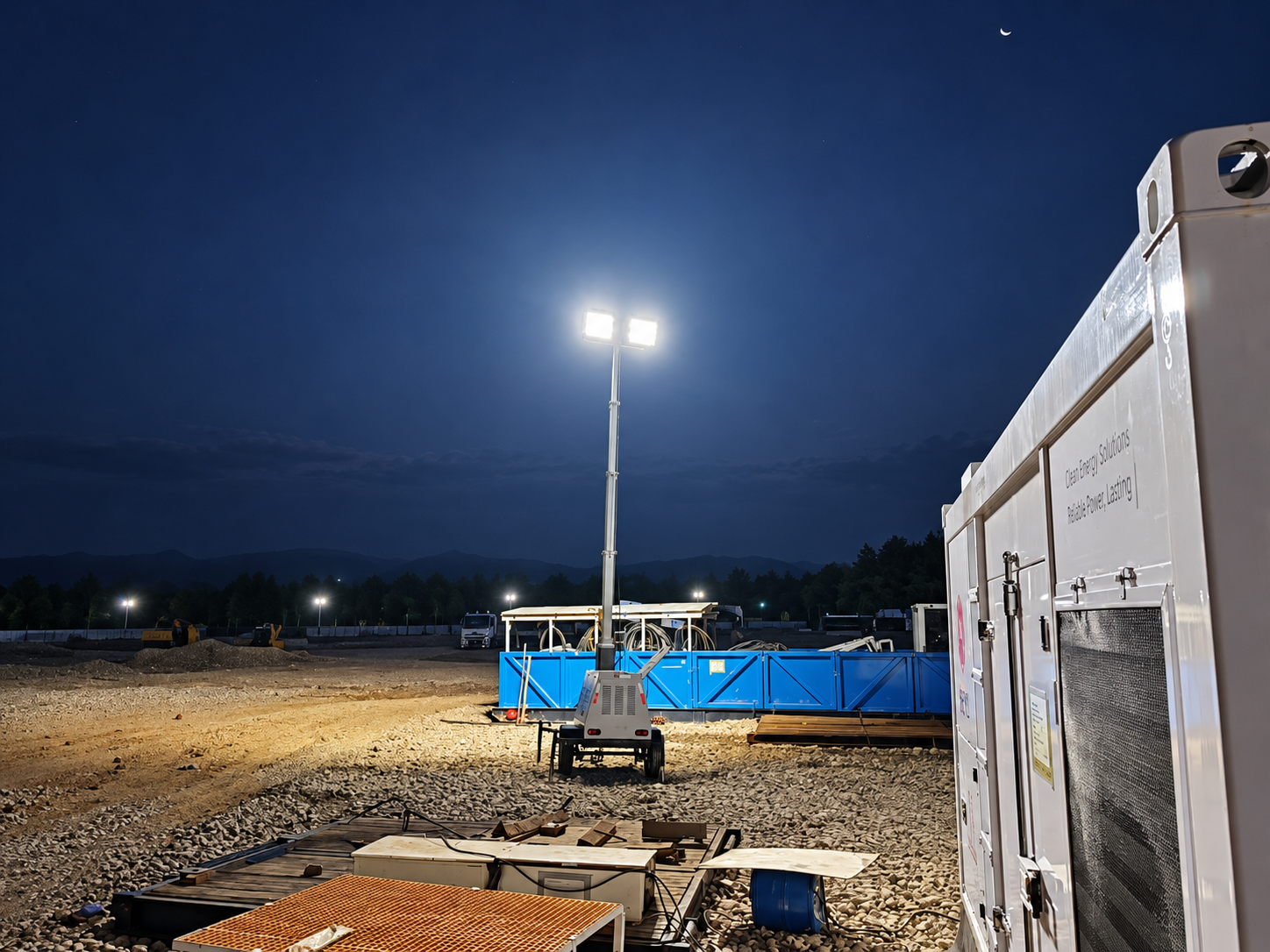
- Outdoor night-work application
- Delivery experience relevant to project supply planning
Operating Boundaries and Alternative Lighting
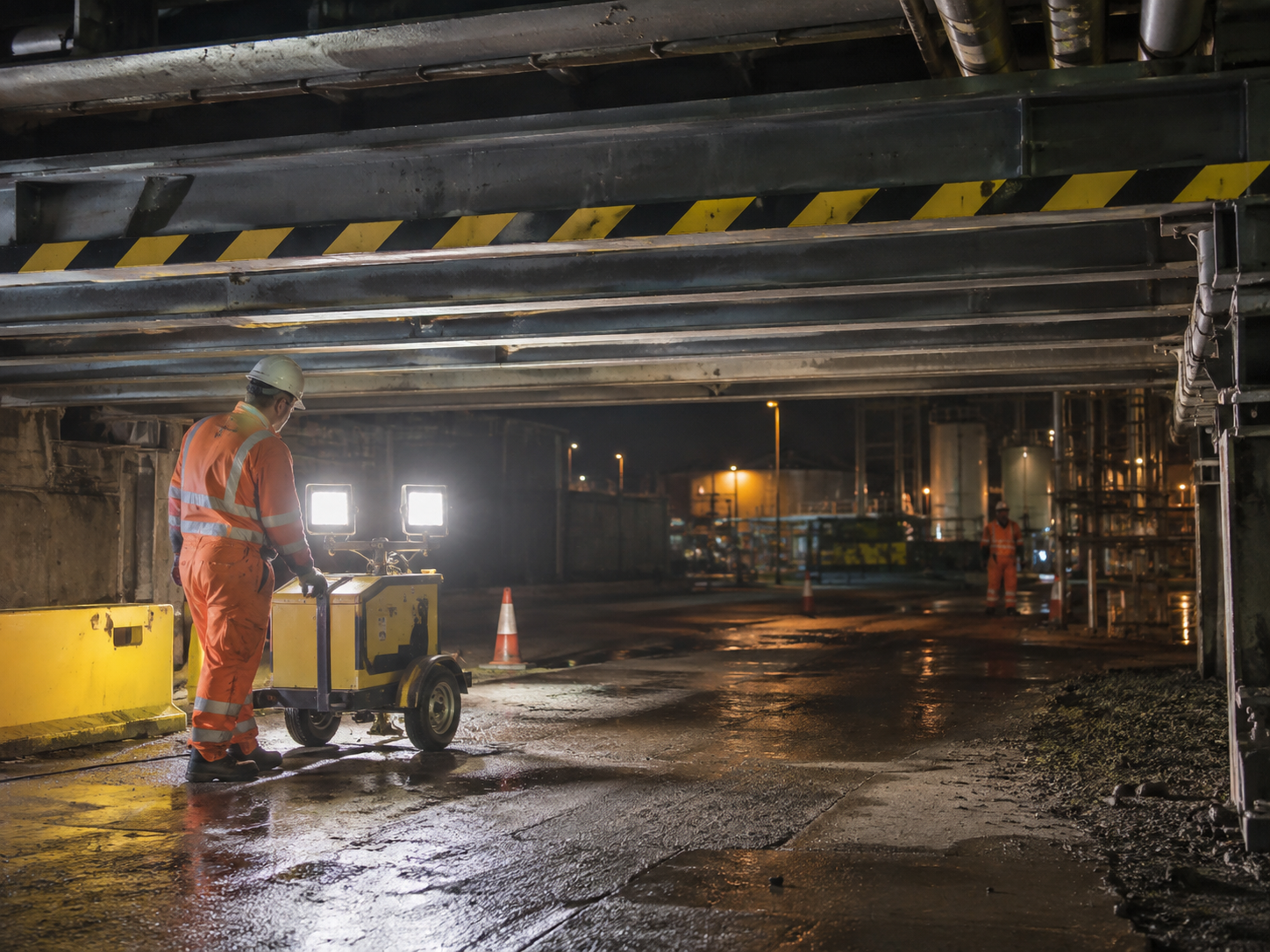
An elevated mobile lighting unit is the wrong choice if it cannot be placed, powered or serviced within the site’s operating limits. Identify the site’s operating limits before specifying mast height or lamp output.
-
Indoor or partly enclosed locations: diesel exhaust presents a carbon-monoxide hazard; review the OSHA guidance on fuel-burning equipment and the equipment instructions, and select a suitable alternative power arrangement.
-
Hazardous areas: specify the area classification and required product approval; a general industrial tower is not a substitute for a correctly rated lighting solution.
-
Restricted deployment space: include stabilizers, overhead clearance and the exclusion area in the layout, not only folded dimensions.
-
Close inspection tasks: portable work lights or a temporary work light can address shadows that elevated area lighting leaves behind.
-
Continuous monitoring without recovery access: resolve solar recharge, reserve, connectivity and intervention arrangements before selecting the system.
Mobile Lighting Systems Planning Tools
-
Daily Lighting and Monitoring Energy
Calculate daily power consumption for combined site lighting and monitoring loads across operating hours.
Access Tool
-
Compare LFADJ Equipment Configurations
Compare rated lamp power, mast height, power package, and dimensions across two equipment configurations.
Access Tool
-
Transport and Working Footprint
Evaluate stowed transport dimensions and deployed outrigger working footprint for site layout planning.
Access Tool
Mobile Lighting System Purchasing Questions
-
Which configuration should I request for construction or mining?
Start with the application table, then send your site layout and operating hours. The construction D955 uses 4 × 300 W LED lamps, while the mining configuration uses 4 × 400 W; the required illumination and deployment conditions still need a site-specific review.
-
Can a portable light tower generator power tools while its lights are on?
Verify that a power source has available output with the lamps operating for the exact configuration before connecting another load. A generator rating or socket label does not by itself establish spare continuous power with all lamps operating; running and starting loads must be taken into account.
-
Can I rent a light tower instead of buying one?
Local light tower rental can be compared to ownership using expected hire period, availability, and service arrangements. Equipment is available from LFADJ for purchase and rental fleet supply; an equipment quotation will not include local rental services, unless previously agreed.
-
Will the S973 keep monitoring through a few cloudy days?
Depends on actual monitoring consumption, lighting hours, usable battery energy, and seasonal solar input. Establish separate daily loads for lamps and the monitoring equipment, and agree a reserve and recovery plan for the location.
-
How can I avoid a constant maintenance headache at a remote site?
Before comparing headline autonomy for the equipment, tell us the window of access and the local service resources. The site equipment configuration and support will reflect the access window and local service resources.
-
How much area will one unit illuminate?
Coverage depends on lamp arrangement, mast position, aiming, obstructions and required illumination at the task. Send work area dimensions and lighting criteria; do not compare coverage figures unless measurement conditions are the same.
-
Are these mobile lighting units suitable for explosion-hazard areas?
Model-specific approvals and operating conditions govern the selection of a lighting product for a hazardous area. Classify the area, and advise on the applicable requirements.
-
What is the difference between solar-panel power and battery capacity?
The panel's rated generation power in Wp is defined under test conditions, and the energy storage capacity of a battery is defined in kWh. S973 has 3 × 450 Wp panels and a 5.12 kWh nominal battery. Neither figure defines the site's daily solar yield or operating autonomy.
-
What affects a mobile lighting system for sale quotation?
The main inputs are application, lamp power, mast version, engine or solar/battery configuration, monitoring scope, quantity and destination. State required accessories and transport documents so that quotations describe the same equipment package.
-
What are the minimum order and payment terms?
Our minimum order is 1 unit. Payment: 50% deposit; balance paid before shipment.
-
What lead time should I plan for D955?
Our lead time is 45-60 days for the D955 configuration. Confirm the configuration, shipment schedule and destination when placing the order.
-
What warranty and after-sales support are included?
Product-use consultation and after-sales problem handling service are included. The warranty period, service response and on-site support scope are stated in the contract for your order.