Get in touch with LFADJ Company

LFADJ / Mobile site lighting
Solar Light Tower for Your Next Project
Specify a solar light tower around the work your crew needs to finish. The LFADJ S975 combines 400 W of LED lighting, a 1.35 kWp solar array and a 5.12 kWh nominal battery in a mobile trailer configuration.
- Consider the lighting load, daily recharge, and site layout, simultaneously.
- Plan quantities, delivery and acceptance requirements before ordering.
- Request a configuration review for your location and operating season.
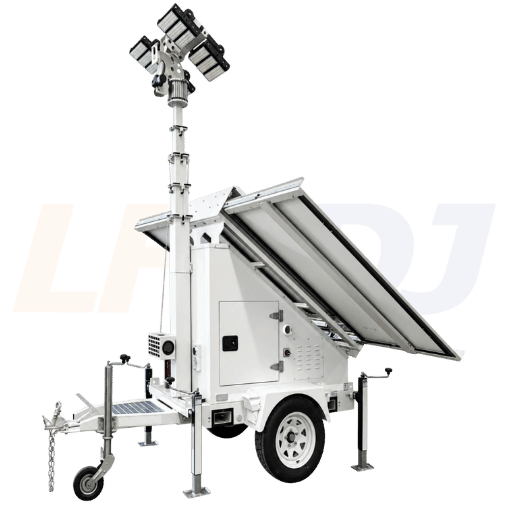
4 × 100 W
LED lamp configuration
A 400 W combined lamp load provides the starting point for shift energy planning.
3 × 450 Wp
Solar panel array
The 1.35 kWp rating describes peak panel capacity; daily energy depends on site conditions.
5.12 kWh
Nominal battery storage
LiFePO4 storage rated at 25.6 V and 200 Ah. Nominal capacity is distinct from usable energy.
LFADJ Solar Light Tower Configuration
Our S975 brings solar panels, battery storage, LED lamps and a lifting mast onto one trailer. We use your shift schedule and site requirements to discuss whether this configuration fits the job, including how the battery will recharge between shifts.
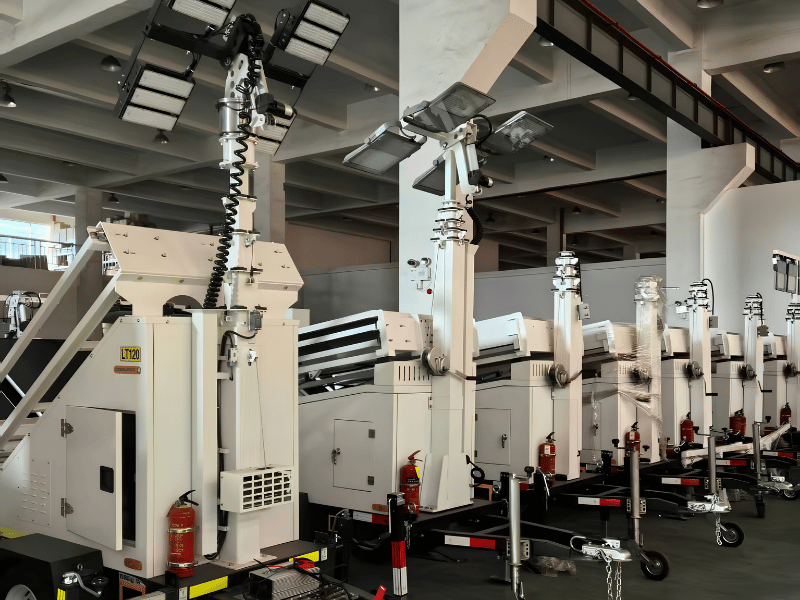
Portable lighting for changing work areas
A portable solar light tower can supply the lighting area where extending a permanent supply may be impractical. The tower position may need a support surface and a deployed-footprint check, and access may be restricted because of ground conditions.
Lighting without routine fuel delivery
Solar-powered operation can reduce reliance on fuel deliveries when the site’s energy balance supports the required duty. An undersized energy system risks a lighting interruption because clouds, shade, and seasonal variation of sunlight impact generation; therefore a recharge or backup plan should be included in the specification.
Configuration details to settle early
- Lighting: area dimensions and characteristics, tasks, illumination levels and operating hours.
- Power: Location, the operating season, charging access and the reserve required for adverse conditions are also power considerations.
- Trailer: transport route, handling equipment and destination towing requirements.
- Controls: required timer, dimming and/or monitoring functionality.
Solar Panels and Battery Storage
Limited recharging in the winter means batteries can run out of power before the end of a shift. Battery discharge limits and operating conditions determine how much energy is available for use; the US Department of Energy explains that energy storage involves losses when energy is converted for storage and retrieved for later use.
Lamp Energy Demand
At the S975's combined 400 W lamp rating, multiplying power by hours gives the lamp-only demand below. These figures exclude control loads, conversion losses and reserve, so they are planning inputs rather than runtime guarantees.
One tower at a constant 400 W lamp load
| Lighting period | Calculation | Lamp energy |
|---|---|---|
| 8 hours | 0.4 kW × 8 h | 3.2 kWh |
| 10 hours | 0.4 kW × 10 h | 4.0 kWh |
| 12 hours | 0.4 kW × 12 h | 4.8 kWh |
Temperature and recharge planning
Charging and operating temperature ranges are separate and their permitted ranges are not interchangeable. You should ask for the battery’s charging range and protection provisions, and cold weather operational concerns for your location. A general rating for ambient conditions will not provide these answers.
- Account for the working season and local shading when estimating daily solar generation.
- State consecutive low-sun days and the actions to be taken if the battery cannot recharge.
- Confirm ordered configuration of the external charger, input supply and connector.
Capacity is only one part of the check. A 5.12 kWh nominal rating is not a substitute for a full-shift runtime assessment. Ask for the usable capacity, discharge limits, losses and temperature conditions associated with the proposed operating duty. The trade-off is that a longer lighting period consumes more stored energy, whereas short winter days may leave less opportunity to replace it.
APPLICATIONS // FIELD DEPLOYMENT
LED Lighting and Mobile Deployment
Comparison of the same lighting task must be done prior to cost comparison. Lamp wattage does not determine coverage.
Positioning, beam direction, obstructions and glare all affect usable coverage. Working-area coverage needs particular attention near moving traffic.
Define the task on the ground
Send drawings or pictures of the site with the work zones, access ways, and nearby occupied areas. Indicate the required minimum level of illumination and uniformity. The lighting configuration will be evaluated against the required task.
Leave room to deploy
The listed deployed dimensions are 2650 × 2450 × 7000 mm. Check the working area around the trailer, overhead clearance and panel exposure before selecting a location.
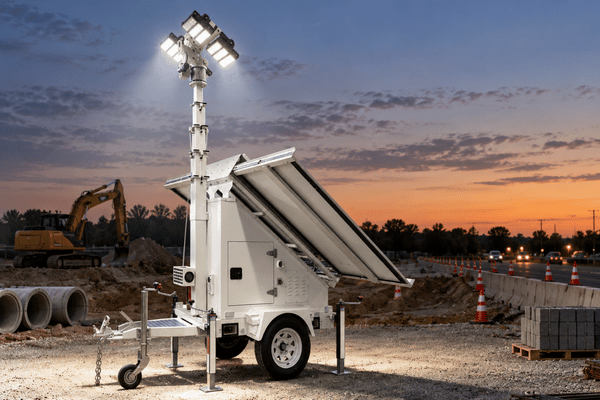
Construction sites and traffic interfaces
For a US project, OSHA 1926.56 lists different illumination levels for different activities, including 5 foot-candles for general construction area lighting. Other agencies may have varying requirements for roadway projects. Use the specific project requirements rather than vague coverages.
- Check if light levels are sufficient where work is done, including shadows behind equipment.
- Aim lamps so glare does not disturb operators, drivers and neighboring properties.
- Agree to the configuration of the mast, stabilization and weather limits before deployment.
S975 Technical Specification Table
The configuration table below is to be used for a comparative technical evaluation or a purchase inquiry. The final quotation will specify the equipment, accessories and acceptance requirements of the unit ordered.
| Item | Specification | Buyer check |
|---|---|---|
| Model | S975 | Match the model across quotation and documents. |
| LED lamps | 4 × 100 W | 400 W combined lamp rating. |
| Solar panels | 3 × 450 Wp | 1.35 kWp total peak rating. |
| Battery chemistry | LiFePO4 | Confirm charge and discharge conditions. |
| Battery voltage | 25.6 V | Battery rating, not an external charger input. |
| Battery capacity | 200 Ah | Pair with rated voltage when comparing storage. |
| Nominal battery energy | 5.12 kWh | Usable energy and reserve require separate review. |
| Color temperature | 5000 K | Review lighting requirements for the work area. |
| Transport dimensions | 2100 × 1450 × 2350 mm | Length × width × height; confirm packing allowance. |
| Deployed dimensions | 2650 × 2450 × 7000 mm | Check site clearance and the setup plan. |
| Unit weight | 800 kg | Confirm packed shipping weight and unloading method. |
Solar Light Tower Price and Lead Time
Project price quotations are issued for the number, destination and operating requirements specified. The scope of the equipment and the terms of delivery are quoted together. This allows the buyer to distinguish the unit price from the cost of delivery, destination charges and optional equipment.
ORDER & SCHEDULE PARAMETERS
Order quantity and payment
- Minimum order: 1 unit.
- Payment: 50% deposit; balance before shipment.
- Samples follow the same terms as finished products.
Production and arrival
For initial planning, allow a provisional production window of 30–35 working days after deposit and configuration approval. LFADJ will confirm the actual production schedule in your quotation; add transport, clearance and site delivery time when planning arrival.
Build a comparable cost scope
Compare complete arrangements
When two quotations are for different numbers of towers, operating hours, backup equipment, or site visits, ask the supplier to price the lighting configuration required for your work before basing a project saving on difference in unit price.
Account for changes during the project
For work that moves between sites or seasons, retain input costs. This allows the team to change the transport allowance, number of operating nights, charging arrangement, and service cost, without requiring a payback figure from a different installation.
Lighting Planning Tools
Use the calculators to make assumptions for your inquiry. Energy outputs are arithmetic scenarios. The cost comparison requires prices, and an equivalent lighting service for both alternatives.
Lamp energy calculator
Calculate shift energy demand from lamp power, operating hours and tower quantity.
Calculate lamp demandSolar recharge scenario
Assume daily solar generation and compare with an energy load entered by you.
Explore recharge inputsLighting cost comparison
Compare costs for the same number of nights for purchase and operation.
Compare project costsQuality Assurance and Project Support
We provide product consultation and configuration service for industrial lighting projects. Define the required documents, inspection items, and acceptance criteria in the purchase specification. This ensures that both parties work to the same scope.
Start with the light needed on the ground and the hours it must stay on. Then review the power supply and recharge plan against that duty.
— LFADJ project planning note01
Technical review before order
- Confirm lamp, solar panel and battery configuration.
- List destination-specific electrical, transport and documentation requirements.
- Agree the operating conditions for any requested runtime demonstration.
02
Support terms in the contract
- State warranty coverage for the supplied equipment and components.
- Agree on spare parts, remote assistance, and on-site support scope.
- Record response arrangements and responsibilities for maintenance.
03
Write a useful acceptance record
For any requested operating demonstration, record the initial battery condition, lamp setting, duration, charging inputs and ambient conditions alongside the result, so the buyer can distinguish a test of the agreed duty from a photograph of the lamps switched on.
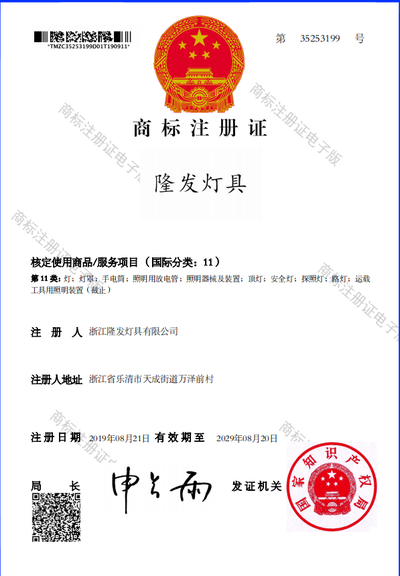
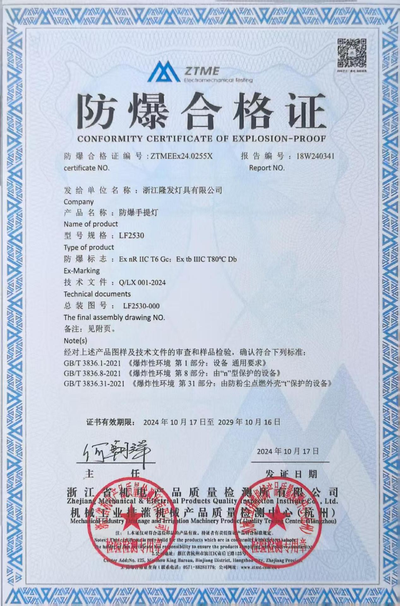
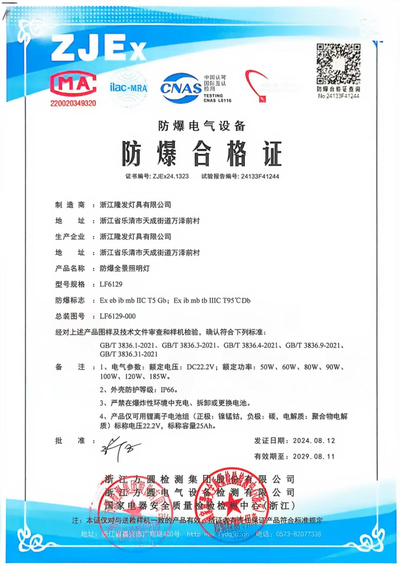
CERTIFICATION REFERENCE



Ordering Your Solar Light Tower
Send site reqs first; review proposed configuration and terms; finally review commercial terms. A clear scope between equipment supply, freight and site operations helps prevent gaps at handover.
Site-to-Quote Matrix
| Buyer input | Constraint to resolve | Quote or project item |
|---|---|---|
| Site manager: work zones, hours and season | Long winter shifts may coincide with limited recharge. | Lighting schedule, energy review and backup requirement. |
| Engineer: required illumination, layout and nearby traffic | Glare and shadows can restrict tower placement. | Lighting arrangement and agreed acceptance criteria. |
| Operations: minimum temperatures and charging access | Battery charging limits may differ from operating limits. | Battery conditions and any external charging provisions. |
| Procurement: destination, route and unloading equipment | Transport size, packed weight and local requirements affect delivery. | Packing, delivery terms and handling information. |
| Finance: utilization, service visits and local energy costs | A cheaper unit may require a different number of towers or visits. | Cost comparison using equivalent lighting service. |
Give the operating team a usable brief
Have night operations personnel indicate areas where lights must be kept on, when lighting can be reduced, available charging points and what action the crew will take when stored energy runs low, prior to comparing offers.
Separate dispatch from site readiness
Only part of the schedule is represented by the shipment date. The rest of the schedule needs to allow time for the receiving team to be ready for the equipment to support a working shift.
That includes time for unloading, checking, setting up, and accepting the project. Responsibilities for unloading, checking, setting up, acceptance and operating the equipment need to be defined before the working shift.
Four steps to an agreed order
-
Share the brief: The brief specifies location, application, quantity, daily hours, and due date.
-
Review the configuration: lighting, energy, controls, charging and documentation.
-
Confirm the order: The order is confirmed by agreeing to the scope, terms of payment, production schedule, delivery terms and acceptance requirements.
-
Prepare for handover: arrange unloading, setup responsibilities and operating support.
APPLICATIONS // OPERATING ENVIRONMENTS
Industries We Support
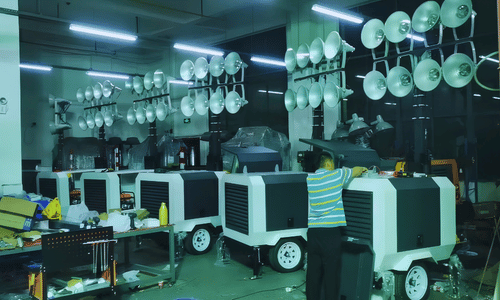
Zhejiang Longfa Lighting Co., Ltd., established in 2013 in Yueqing, Zhejiang, develops and supplies industrial, mobile and emergency lighting. LFADJ works with customers on product selection and lighting solutions for their operating environments.
Construction and infrastructure
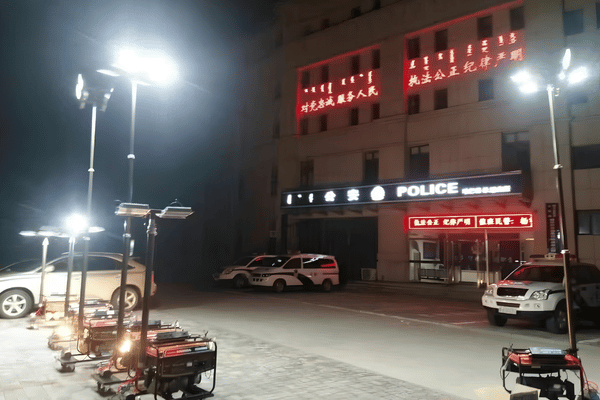
Changing work areas with temporary work zones, night construction and inspection activities require lighting planning that follows the crew's task.
Industrial maintenance
Temporary site operations and outdoor maintenance need consideration of access, charging and working time. Identify hazardous area requirements prior to selecting equipment.
Emergency operations
Temporary staging and support areas may require portable light where utility access is limited. For critical duties, plan for continuity of lighting if sunlight or stored energy is insufficient.
Solar, Battery and Diesel Lighting Choices
Solar powered lighting towers are one option to plan for temporary lighting, and externally charged battery equipment and diesel powered equipment are also options. When planning for mobile lighting towers, consider operating schedule and recharge opportunities. Solar power output is variable with location, season and weather.
| Site condition | Decision to review |
|---|---|
| Open site, useful sunlight, repeat night work | Review solar generation against nightly load and reserve. |
| Shaded location or several low-sun days | Assess external charging, more storage or another power arrangement. |
| Reliable electrical access between shifts | Compare externally charged battery lighting with solar equipment. |
| Long continuous duty with little recharge time | Review a generator or hybrid arrangement and its fuel logistics. |
| Traffic-sensitive or demanding visual task | Set illumination and glare criteria before comparing tower quantities. |
Review the power-source trade-offs
- Sites requiring uninterrupted light through an extended outage.
- Sites with charging temperatures outside the battery's permitted range.
- Areas with restricted deployment space, unusual wind exposure or limited access.
- Projects requiring model-specific hazardous-area approvals or destination certificates.
Choosing by lamp wattage alone is the wrong choice for a cost comparison: compare solar and diesel alternatives on the same working area, light levels and operating hours. FHWA's work-zone guidance emphasizes lighting design and glare control, which remain relevant regardless of the power source.
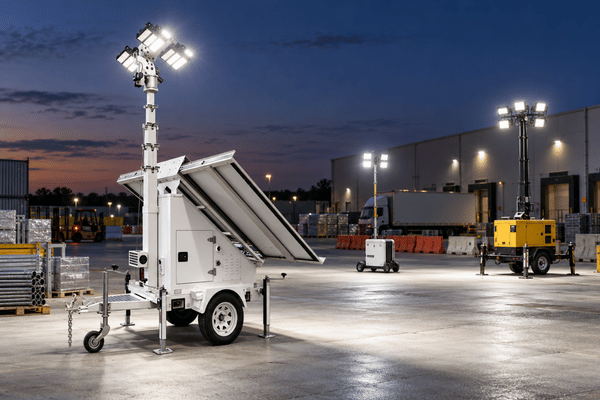
Plan the equipment around the site
Request a Solar Light Tower Quote
Tell us where the tower will work, what it needs to illuminate and how many hours the lights must remain on. LFADJ can then discuss the S975 configuration, order quantity and delivery requirements with your team.
- Site location and application
- Lighting area, duty hours and working season
- Quantity, destination and required arrival date
Frequently Asked Questions About Solar Light Towers
The S975 combines four 100 W LED lamps, three 450 Wp solar panels and a LiFePO4 battery rated at 25.6 V and 200 Ah.
The runtime is a function of the available battery energy, the lamp load, reserve settings, losses, and operating temperature. Indicate your required runtime and the relevant season, and the proposed configuration will be assessed for that runtime. Nominal battery capacity does not establish the runtime.
Lighting utilizes stored energy to support loads when solar energy is insufficient, but the reserve is finite. Continuous overcast conditions require an energy assessment and an agreed upon plan for charging or backup power.
The listed deployed dimensions are 2650 × 2450 × 7000 mm. Allow for safe access, panel exposure, clearances and the specified setup procedure in addition to that equipment envelope.
Consider the task, the illumination required and the site arrangement. There are numerous factors that limit the useful coverage of a light including glare, obstructions, and the direction of the lamp. Therefore, dividing the total site area by the advertised coverage figure does not guarantee the light will sufficiently illuminate the area.
Verify the trailer equipment and applicable registration, braking, coupling and lighting requirements for the destination, prior to arranging road transport.
Yes. The minimum order is 1 unit.
Samples follow the same terms as finished products. Payment is a 50% deposit with the balance before shipment.
Advise your location, application, quantity, work area, daily lighting hours, and required arrival date. Include required illumination levels, inspection documents, charging access and destination-specific requirements so the quotation covers equipment for the project.
Equipment needed for equivalent lighting, utilization and local costs should be included in your evaluation. Consider purchase or rental costs, fuel or electricity, service visits, transport, battery replacement, and backup arrangements.
A standard configuration should not be assumed to meet a hazardous area specification. Equipment should be assessed against the required classification and model-specific approval requirements prior to selection.
The scope of on-site work and the arrangements for response and cover are agreed in the contract. The terms and conditions of the contract should be reviewed to understand coverage of the supplied equipment, component responsibilities and exclusions relevant to the operating environment.