Get in touch with LFADJ Company
Telescopic Lighting Towers for Temporary Worksites
LFADJ telescopic lighting towers and mobile light towers provide adjustable LED lighting to construction sites, equipment maintenance and emergency operations. Consider the mast mechanism based on deployment frequency, effort required of the operator and site conditions and then match the lighting power source to your project.
- Manual winch, electric mast, hydraulic and pneumatic categories
- D951 and D957: 7.5 m masts; D955: 9 m mast
- Industrial lighting manufacturing, model selection and customized solutions from Zhejiang LONGFA Lighting Co., Ltd.
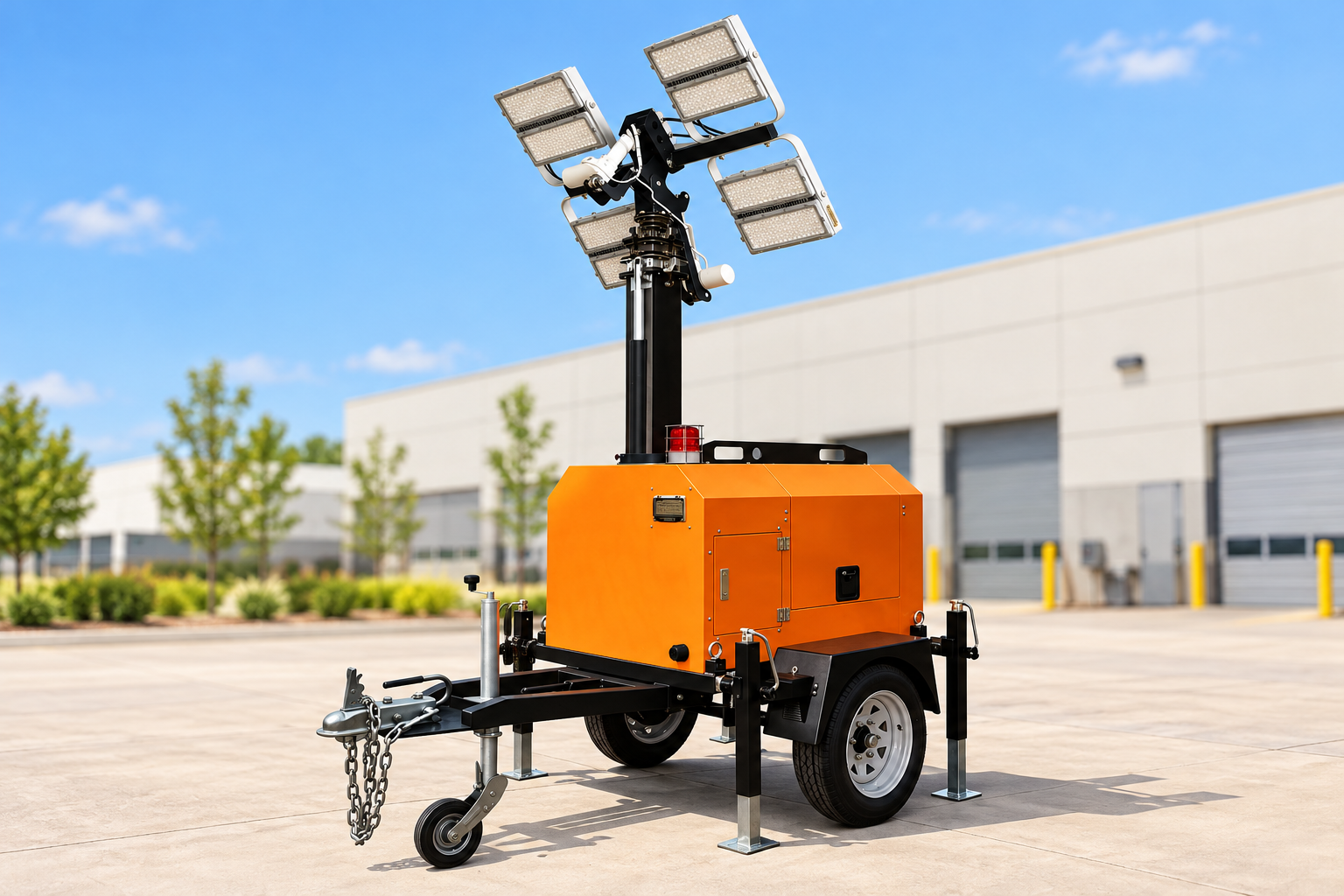
LFADJ Tower Range at a Glance
Before requesting quotations, decide on the mast type and electrical specification. An unsuitable supply can delay deployment even when the lamps meet your power requirement. Use consistent units when comparing ratings.[6]
7.5 m
D951 manual / D957 pneumatic mast
9 m
D955 hydraulic mast
4 × 400 W
LED lamps on D951 / D955 / D957
120 V / 60 Hz
Listed electrical configuration for these models
Telescopic Lighting Tower Product Families
Manual lifting, powered mast movement and lamp supply are independent configuration choices. An electric actuator does not necessarily supply the lamps; check how the lights receive power. Mast height should be selected based on the work-plane and glare.[1]
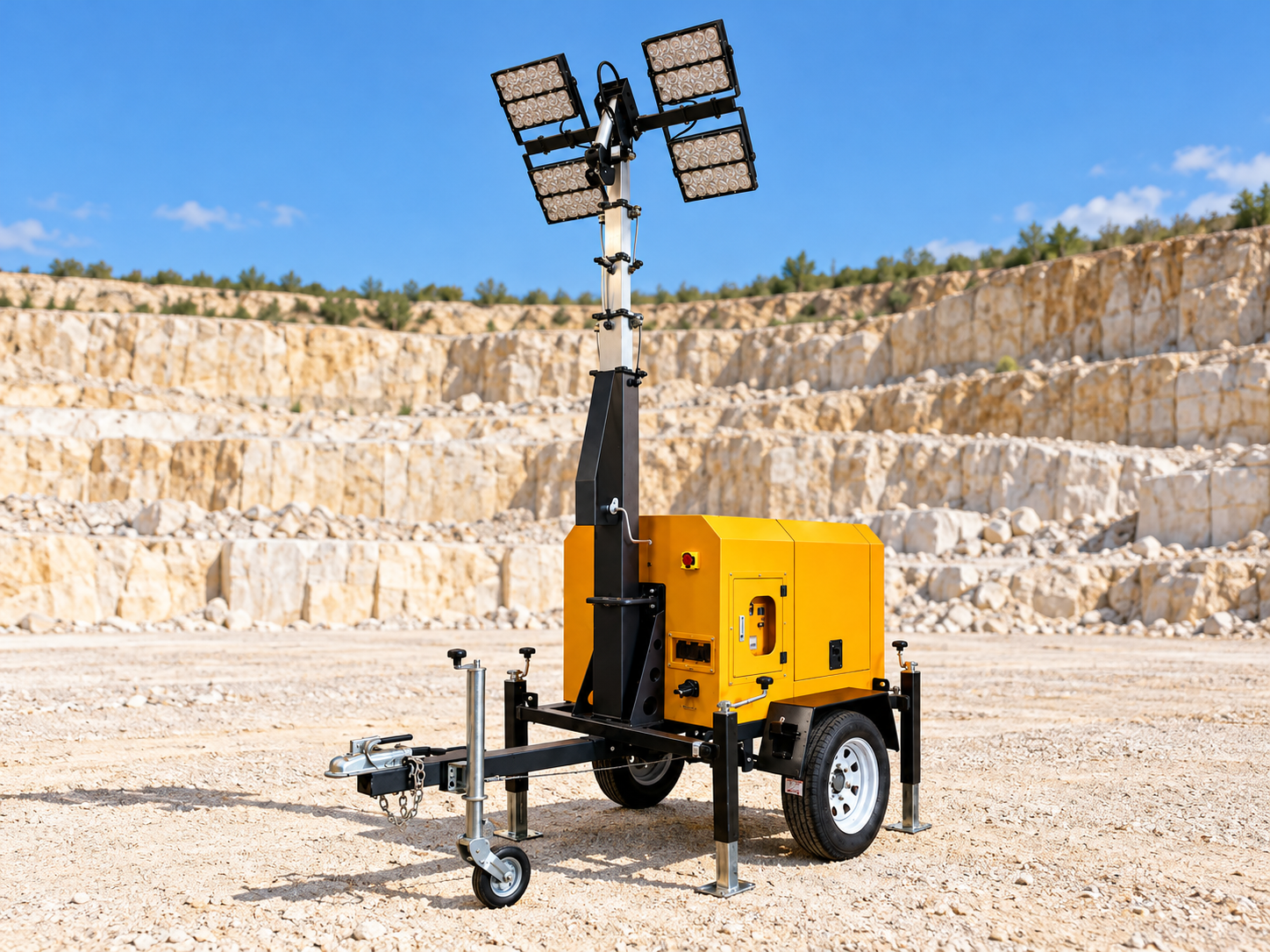
Manual Winch Light Towers
Choose hand-operated lifting when the crew can manage the deployment effort and the mast stays in position between adjustments. LFADJ D951 combines a 7.5 m manual mast with 340° rotation.
- Match operator access to the winch and locking procedure.
- Check the cable, guides and lowering instructions before each deployment.
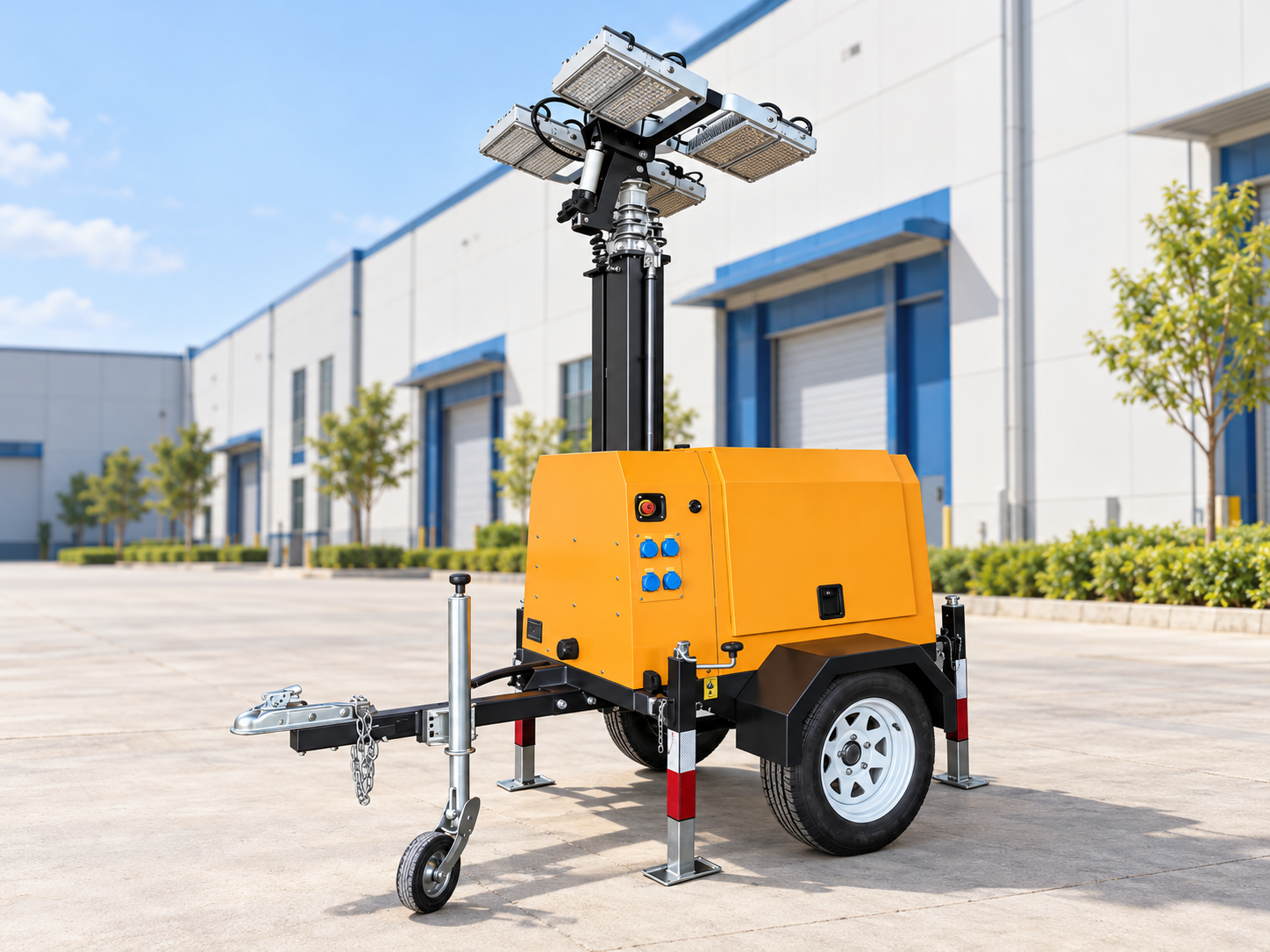
Electric Mast Light Towers
Consider electric mast lifting when repeated raising and lowering makes manual effort a project constraint. Specify the actuator supply, controls and lamp power source as separate items in your enquiry.
- Describe deployment frequency and the required working height.
- Include the voltage available for the mast drive and the lighting system.
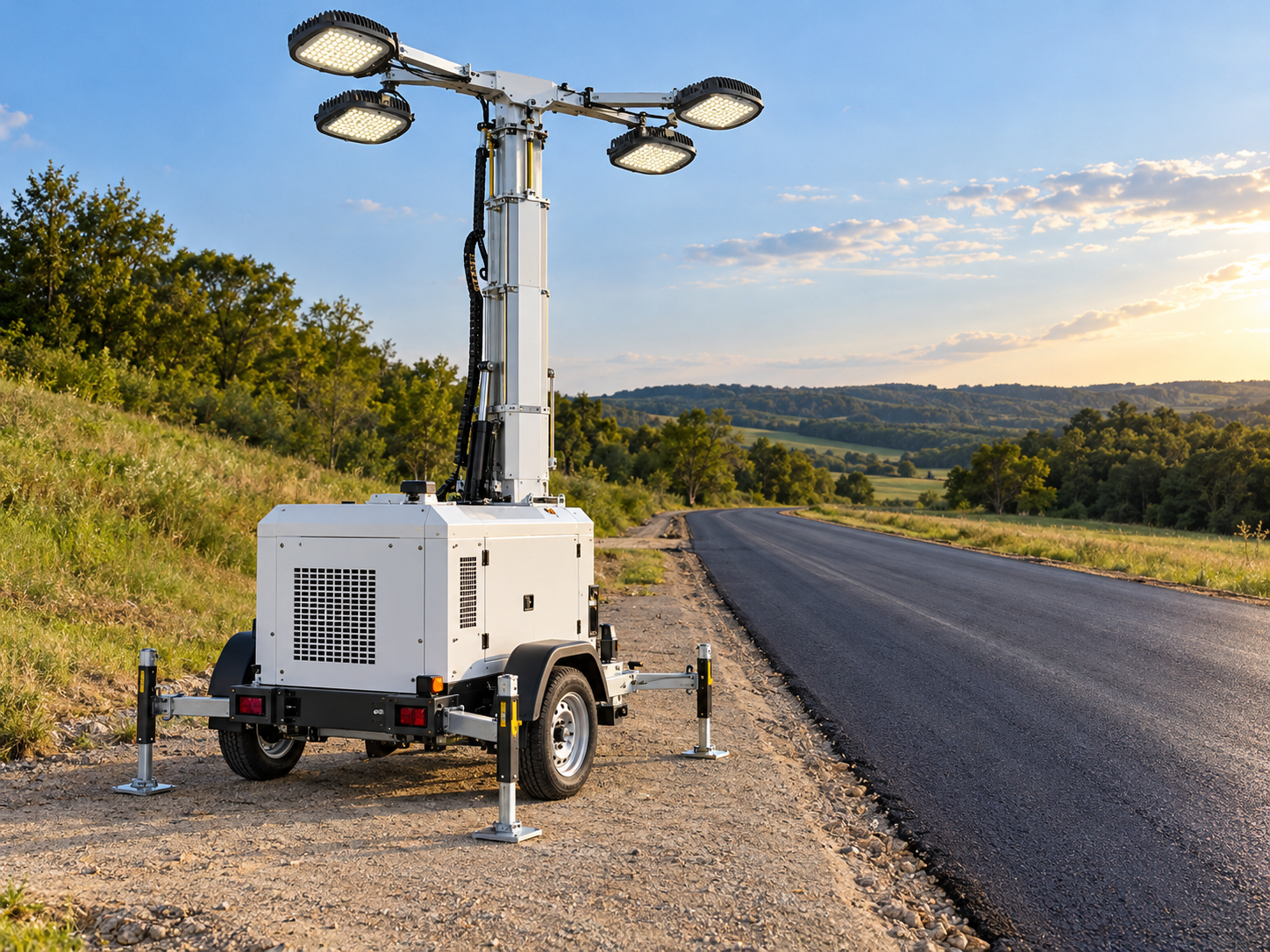
Hydraulic Light Towers
Use the hydraulic category when frequent deployment and the lifting arrangement matter to your site workflow. LFADJ D955 has a 9 m hydraulic mast and 340° rotation.
- Include service access for the hydraulic system in the site plan.
- Choose the transport-height variant before arranging shipment.
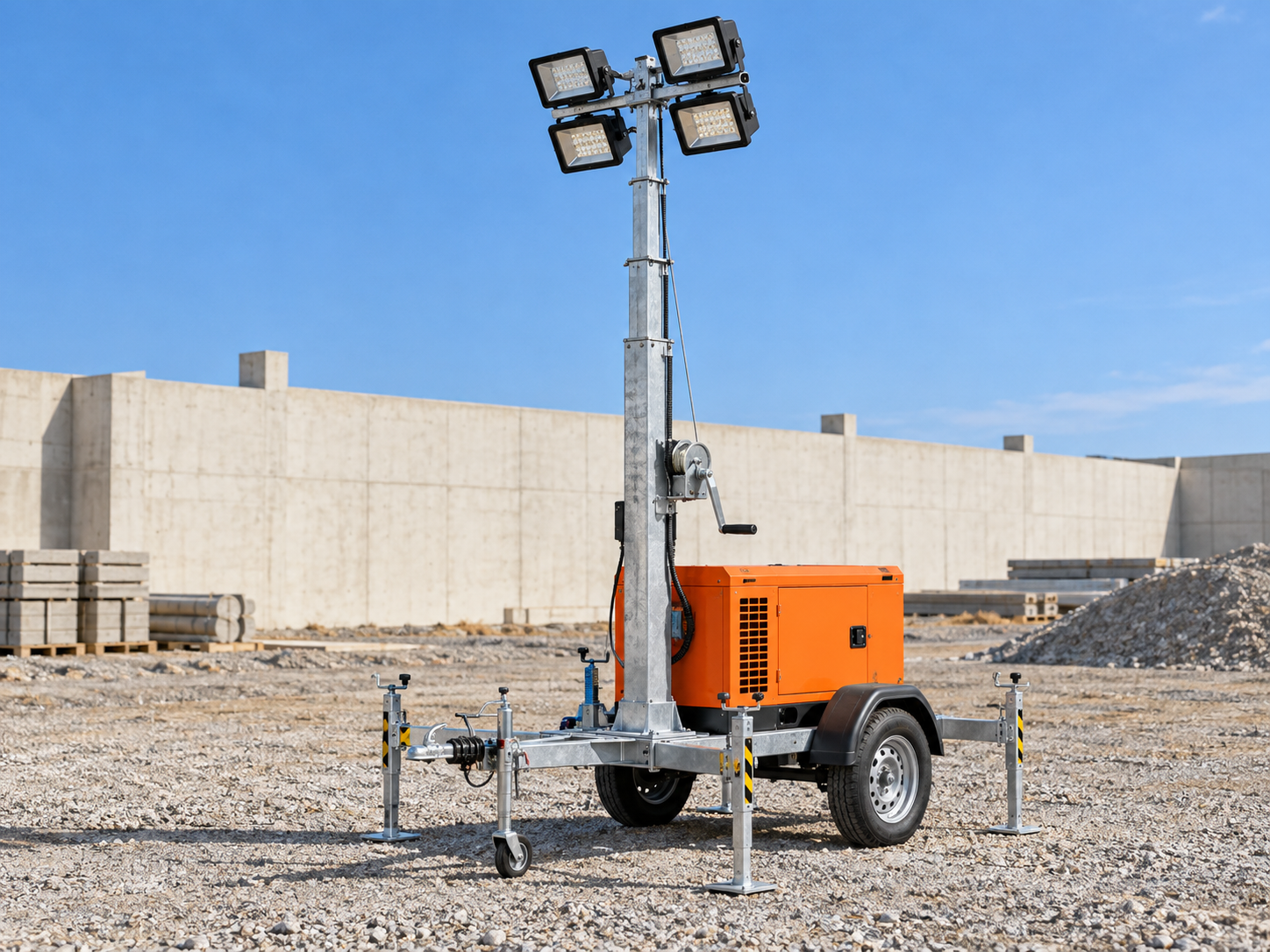
Pneumatic Telescopic Lighting Masts
Choose a pneumatic telescopic mast around its air-system configuration and deployment requirements. LFADJ D957 provides a 7.5 m mast with 340° rotation.
- Define the air supply, control arrangement and operating environment.
- Include lowering and air-system maintenance instructions in the equipment handover.
Mast–Power Fit Matrix
| Mast choice | Deployment question | Separate power question | Maintenance focus |
|---|---|---|---|
| Manual winch | Can the operator handle the lifting and locking procedure? | Which source runs the lamps? | Winch, cable, guides and locks |
| Electric mast | How often is powered lifting needed? | What supplies the actuator and what supplies the lights? | Drive, wiring, controls and lowering procedure |
| Hydraulic mast | Does the deployment cycle justify a powered hydraulic system? | How are the hydraulic drive and lamps supplied? | Fluid system, hoses, seals and service access |
| Pneumatic mast | Does the air-system configuration suit the application? | What is the air supply and the lamp supply? | Air connections, controls and mast seals |
Chassis, Canopy and Service Access
Our D951, D955 and D957 configurations use carbon-steel canopies. For an outdoor job site, canopy construction and access to service points belong in the same equipment review. A compact stored chassis does not establish the space needed to deploy a towable configuration.
-
Chassis: match the trailer or mobile base to movement within the site and the approved transport arrangement.
-
Stabilizers: reserve the deployed support footprint rather than judging space from the stored chassis alone.
-
Service access: leave room for inspections, refuelling and the maintenance procedure.
-
Plan access for engine oil and filter checks under the model maintenance instructions.
-
Environment: provide rain exposure, dust, ambient temperature and corrosive conditions in the enquiry.
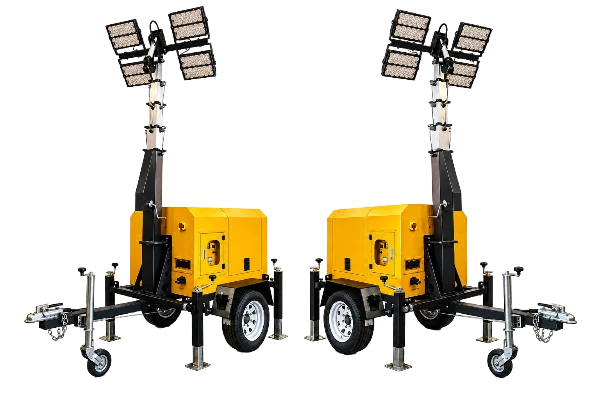
Steel canopies should not be treated as a full weather or corrosion protection rating.
Reserve the full mast movement path alongside service access.[3]
The equipment should be designed to allow easy access for crews to perform maintenance between shifts.
Send site conditions to LFADJ for configuration.Lighting Power and Electrical Configuration
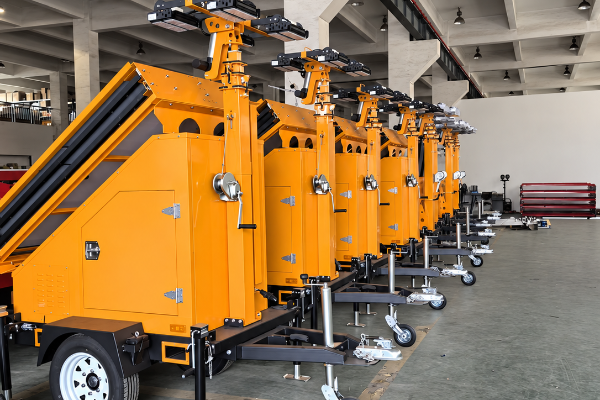
Our D951, D955 and D957 diesel light tower configurations list 120 V, 60 Hz and 2.4 kW generator output. Generator ratings cannot be compared without the lighting load and other connected equipment. Keep combustion equipment outdoors with exhaust away from air openings.[2]
Keep Lighting and Auxiliary Loads Separate
-
Identify the lamp load and simultaneous nonlighting equipment loads.
-
List the running and starting requirements of connected tools.
-
Match voltage, frequency, outlets and protective devices to the destination.
-
Review the generator instructions for the intended operating load.
Model Specifications and Transport Fit
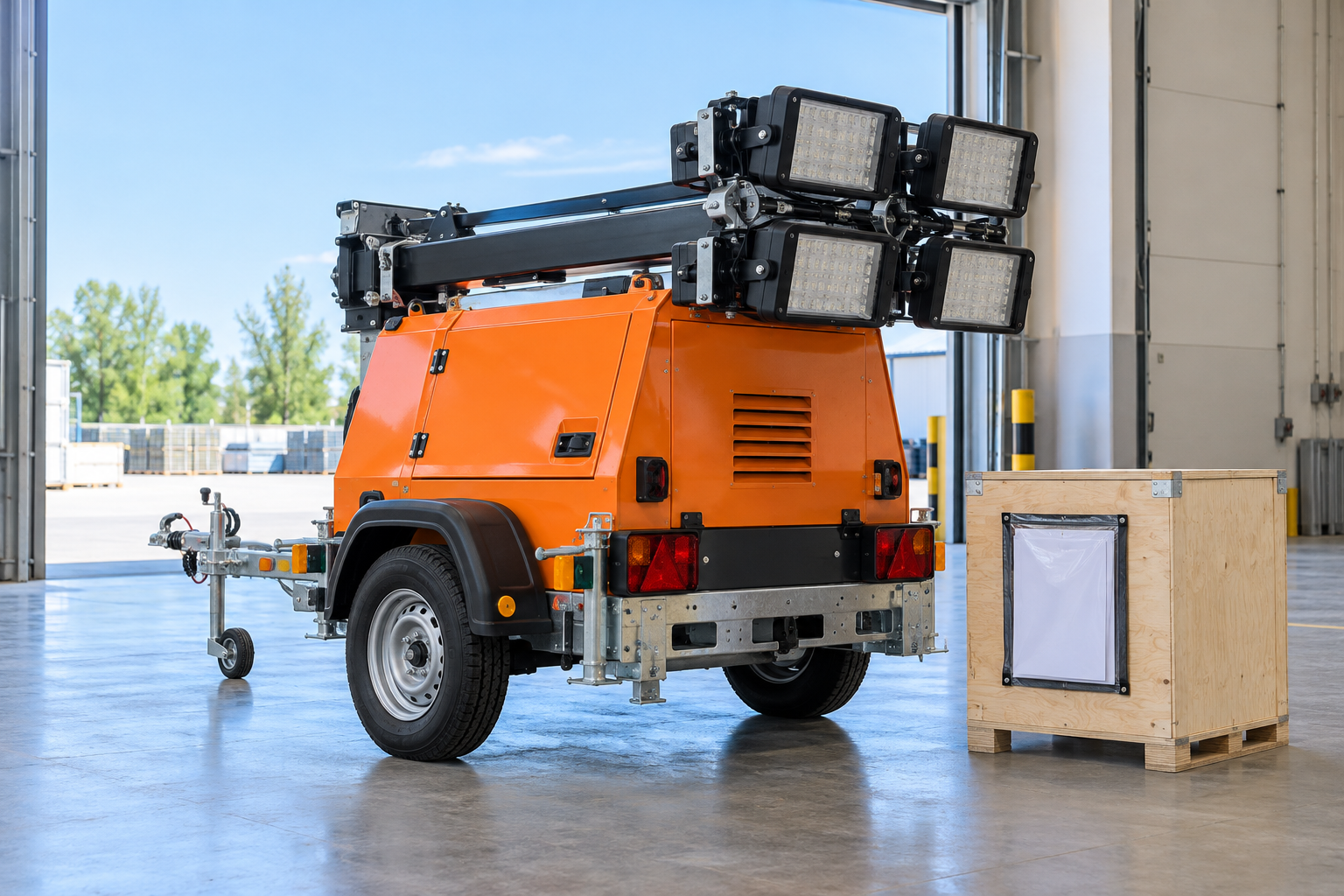
Use one specification table to compare mast mechanism, electrical configuration and shipping dimensions. LFADJ D951 and D957 have a listed transport envelope of 1650 × 1450 × 2350 mm; check access openings and the packing arrangement against that envelope.
| Specification | D951 | D955 | D957 |
|---|---|---|---|
| Mast lifting | Manual winch | Hydraulic | Pneumatic |
| Mast height | 7.5 m | 9 m | 7.5 m |
| Mast rotation | 340° | 340° | 340° |
| Lamp quantity | 4 | 4 | 4 |
| Power per LED lamp | 400 W | 400 W | 400 W |
| Voltage / frequency | 120 V / 60 Hz | 120 V / 60 Hz | 120 V / 60 Hz |
| Generator output | 2.4 kW | 2.4 kW | 2.4 kW |
| Fuel tank capacity | 100 L | 100 L | 100 L |
| Dry / wet weight | 1050 / 1150 kg | 1050 / 1150 kg | 1050 / 1150 kg |
| Transport size, L × W × H | 1650 × 1450 × 2350 mm | 1650 × 1450 mm footprint; 2350 mm height for 7 m variant, 2650 mm for 9 m variant | 1650 × 1450 × 2350 mm |
| Canopy | Carbon steel | Carbon steel | Carbon steel |
Height Is Only One Part of Site Fit
- Check the mast’s full movement path and operating position for overhead obstructions.
- Separate transport height from extended mast height.
- Confirm support placement and ground suitability before deployment.
- Keep the model manual and final configuration with the site’s equipment records.
Pricing, Delivery and Operating Cost
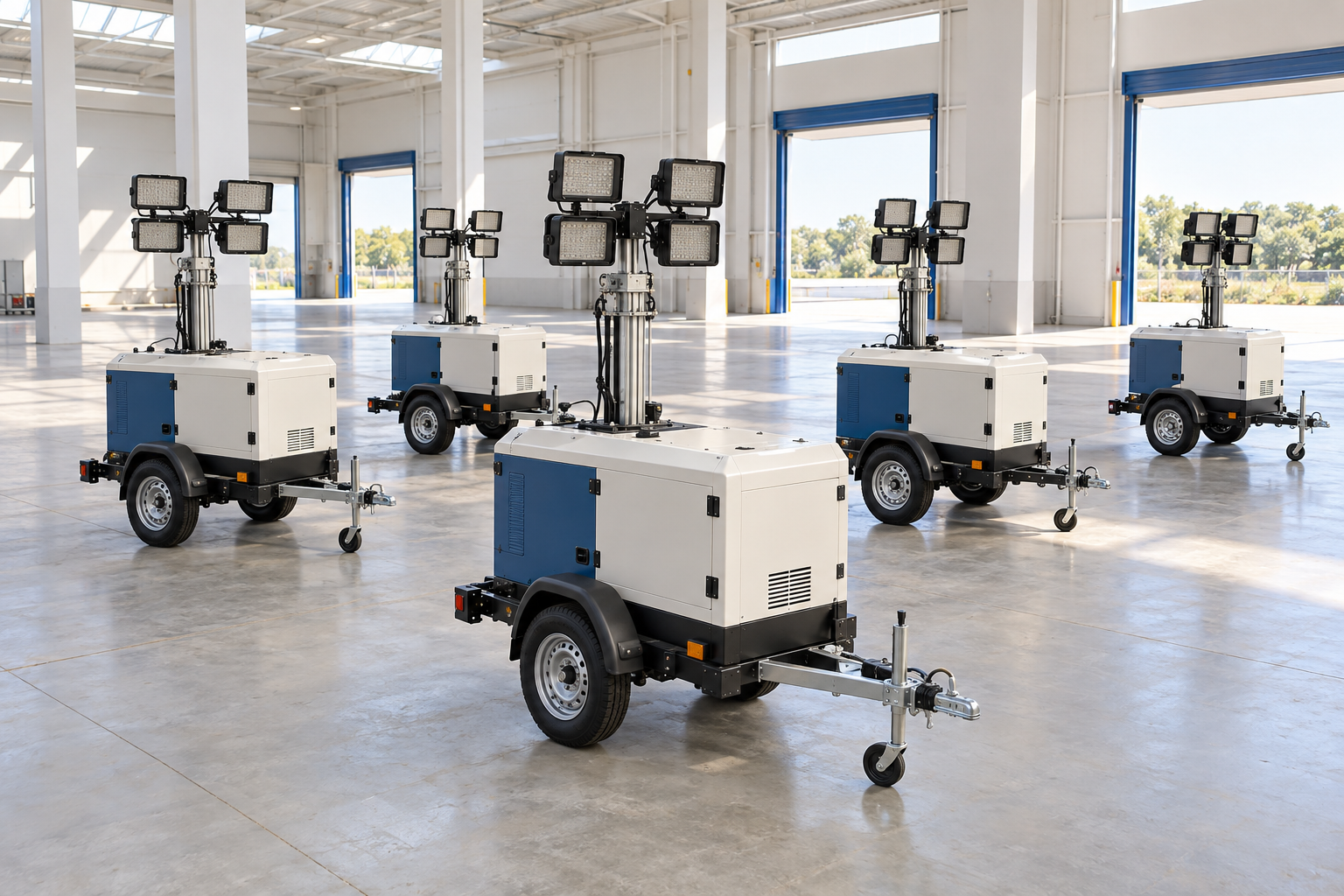
Telescopic lighting towers cost depends on the mast drive, lamp package, power configuration, quantity and delivery scope. LFADJ delivery time for the listed configurations is 45–60 days.
A Comparable Quotation Includes
- Model, mast mechanism and height variant
- Lamp quantity, electrical supply and connected-load requirements
- Transport dimensions, packing and destination
- Required documents, commissioning information and support scope
- Delivery schedule and commercial terms
Shift Cost Worksheet
Refuel labor and fuel delivery add costs after the acquisition cost. Procurement needs a comparable equipment package, while finance needs the hours, fuel price and service costs behind the proposed operating budget.
Planning formula: period cost = acquisition + operating hours × fuel rate × fuel price + service cost + shift labour.
The Shift Cost Worksheet calculates an undiscounted planning total from your inputs. A low annual usage changes the trade-off between purchase price and running cost. Compare the two options over the same usage period and duty cycle.
Quality Management and Equipment Documents
LFADJ operates with ISO 9001:2015 quality, ISO 14001:2015 environmental and ISO 45001:2018 occupational health and safety management-system certifications. These apply to company management systems; select model approvals for the actual equipment and destination. A missing model document introduces acceptance risk, as the certification scope follows the equipment and application.
Engineering Review
-
Confirm the mast, lighting and power configuration.
-
Identify the model-specific manual and wiring information.
-
Specify any required inspection or test documentation.
Procurement Review
-
Match the model designation across the quotation and documents.
-
Define acceptance requirements before ordering.
-
Agree warranty, maintenance and service scope in the contract.
Lacking operation and wiring manuals creates challenges during servicing of a used light tower. Provide the required equipment information in your LFADJ query to facilitate handover of the equipment with its operation information.
From Site Requirements to a Lighting Configuration
We provide product and type consulting as well as lighting solutions with respect to the operating environment and project requirements. The Site-to-Quote Worksheet helps keep the engineering review and purchasing brief in alignment.
“Review the deployment space, the power supply and the lighting task together before choosing the mast.”
LFADJ Engineering Team · selection guidance
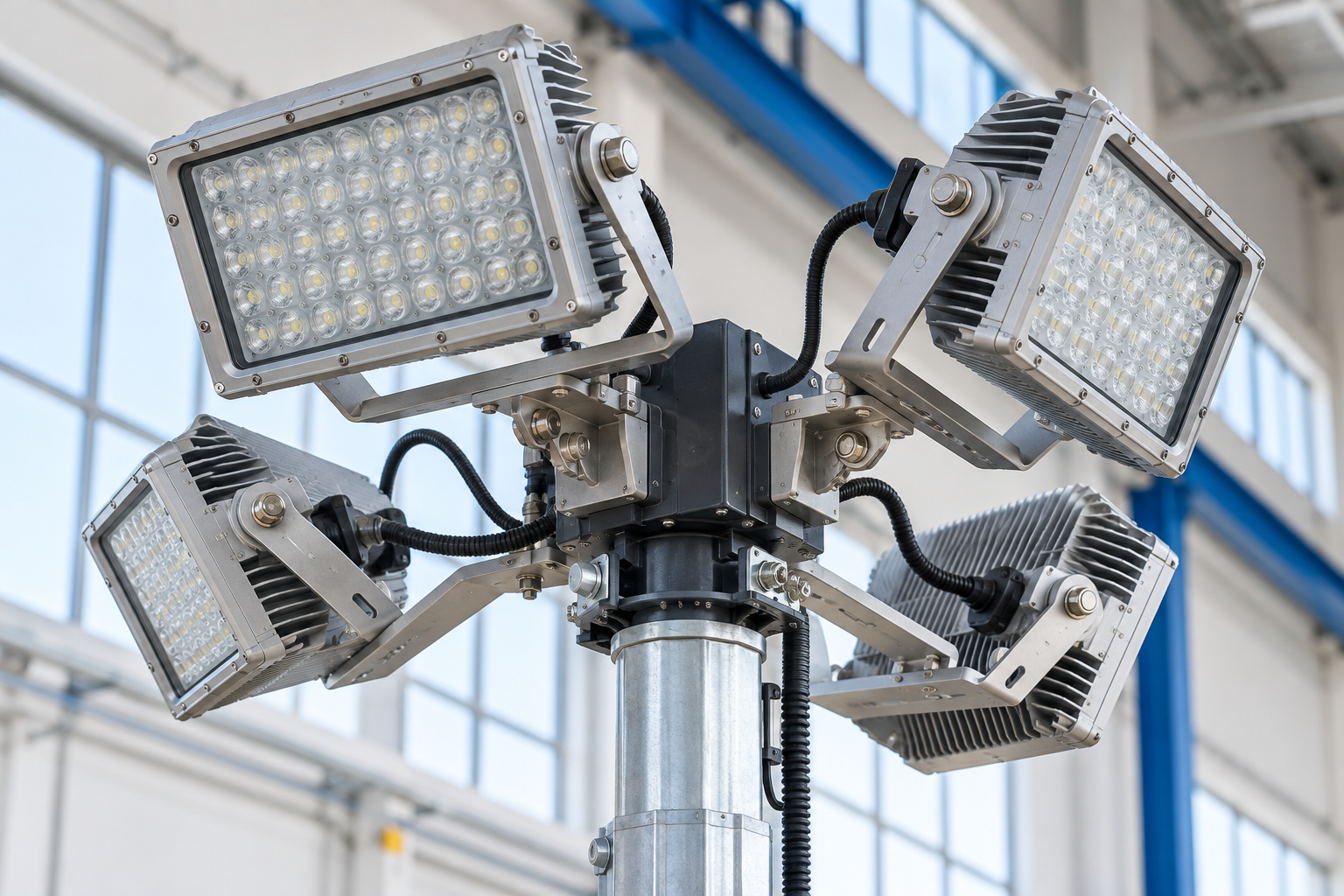
-
1
Describe the work: work area, tasks, operating hours and required lighting level.
-
2
Define deployment: mast height, movement frequency, available ground and overhead conditions.
-
3
Match power: lamp supply, actuator or air supply and additional loads.
-
4
Confirm delivery: destination, transport access, required documents and acceptance scope.
Site-to-Quote Worksheet
| Provide this input | Include these details | Decision it supports |
|---|---|---|
| 01Site layout | Work zones, access routes, traffic direction and obstructions | Lamp placement and glare review |
| 02Ground and mast path | Support locations, ground conditions, overhead lines and obstacles | Deployment feasibility |
| 03Lighting target | Task-plane lux or foot-candles, working area and uniformity requirements | Photometric layout |
| 04Power and duty cycle | Voltage, frequency, hours, connected loads and refuelling access | Electrical fit and operating budget |
| 05Delivery and handover | Destination, access dimensions, dates, manuals and acceptance documents | Supply scope and site readiness |
Application Fit and Lighting Layout
More mast height does not always work better for nighttime roadwork lighting. Task illuminance, glare and shadows require special checks, especially where construction traffic passes the work area.[1]
| Application | Selection focus | Input to send LFADJ |
|---|---|---|
Night construction and roadwork |
Work-plane illumination, traffic-facing lamp aim and support footprint | Site plan, traffic direction and task lighting requirement |
Industrial maintenance |
Access, obstructions and available electrical supply | Work locations, supply specification and equipment movement plan |
Remote outdoor operations |
Self-contained power, refuelling access and service support | Duty cycle, fuel logistics and environmental conditions |
Emergency field operations |
Transport readiness and controlled deployment | Access route, ground conditions and operational lighting tasks |
| Bottleneck | Consequence | Resolve before selection |
|---|---|---|
Transport opening |
A tower reaches the site but cannot enter the work zone. | Compare opening dimensions with the stored configuration. |
Support footprint |
The stored footprint fits while deployed stabilizers do not. | Review ground and support positions. |
Lamp aim and shadows |
High light output leaves glare or poorly lit tasks. | Assess task-plane layout and traffic-facing aim. |
Additional electrical loads |
Connected tools exceed the intended operating configuration. | List simultaneous and starting loads. |
Refuelling and service access |
Routine work interrupts the operating schedule. | Plan fuel delivery, service space and responsibilities. |
Temporary industrial and field lighting applications can be supported by the LFADJ portable lighting towers. Send the layout and conditions for a review of the configuration.
Prepare Your Site RequirementsConditions Requiring a Different Lighting Approach
A mobile light tower should not be used where its deployment or power arrangement does not suit the conditions. Resolve these conditions before specifying a telescopic mast.
-
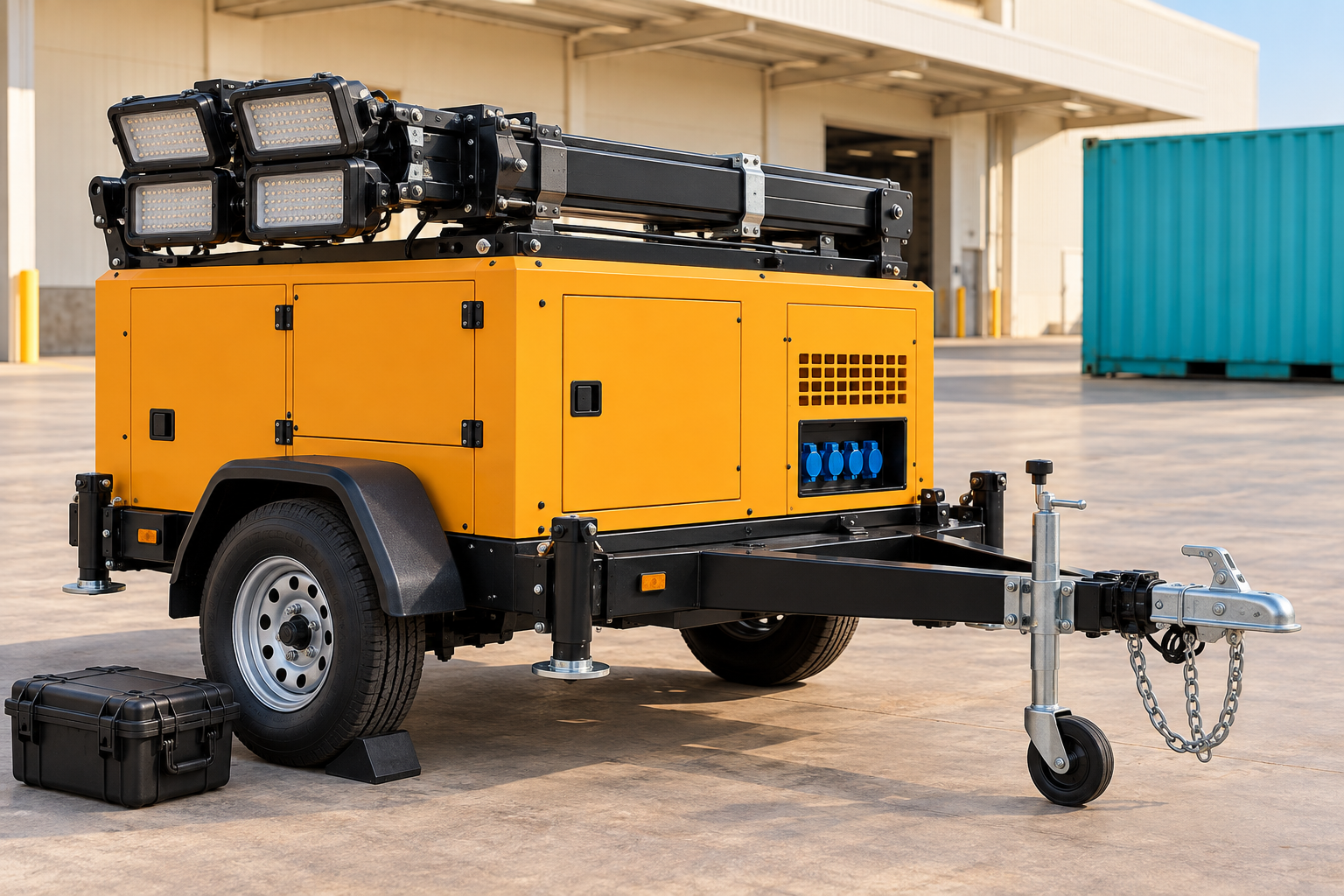
Indoor or poorly ventilated locations:
combustion-powered equipment presents a carbon-monoxide risk; select a suitable lighting approach and keep combustion engines outdoors with exhaust away from openings.[2]
-
Hazardous atmospheres:
an industrial lighting tower is not interchangeable with an explosion-proof model approved for the specific hazard.
-
Unsafe mast path:
overhead power lines or obstructions require a safe site plan before raising equipment.[3]
-
Automatic escape lighting:
temporary scene lighting is not a substitute for an emergency escape system that operates when primary lighting fails.[4]
-
Fixed solar or permanent lighting projects:
choose equipment around that power and installation requirement rather than assuming a diesel trailer belongs in every project.
Professional Tools & Calculators
LFADJ Model Comparison Tool
Evaluate and compare technical specifications across our telescopic lighting tower range to select the optimal solution for your site.
Access ToolShift Cost Worksheet
Calculate period costs and operational expenditures based on fuel rates, service intervals, and acquisition parameters.
Access WorksheetLighting and Dimension Converter
Instantly convert lux, lumens, and physical dimensions to ensure strict compliance with project engineering requirements.
Access ConverterFrequently Asked Questions
Which mast type should we choose?
Start with deployment frequency, operator effort and the available drive or air supply. Use the Mast–Power Fit Matrix to separate those requirements from lamp power.
Does an electric mast mean the lamps run without diesel?
No. Mast actuation and lamp supply are separate.
Which documented models have a 7.5 m or 9 m mast?
Our D951 manual and D957 pneumatic configurations have 7.5 m masts. D955 has a 9 m hydraulic mast.
Can generator output be used for other equipment?
Check the model's outlet ratings, lighting load and simultaneous tool loads before connecting equipment. The generator rating alone does not establish available auxiliary power with all lamps running.
How do we choose the lighting level for a construction site?
Use the task and local requirements, then assess the proposed layout. For US construction, OSHA 29 CFR 1926.56 Table D-3 lists 5 foot-candles for general construction area lighting; different activities have different requirements.[5]
How do lux and foot-candles compare?
One foot-candle equals 10.76391 lux using the NIST conversion factor. The Lighting and Dimension Converter converts units without selecting a task-specific lighting threshold.[6]
Which manuals should be included with a used or replacement tower?
Identify the model-specific operation, maintenance and wiring information before purchase. Include the mast lowering procedure and the selected drive-system instructions.
What should we inspect on a manual winch tower?
Follow the model manual for the winch, cable, guides, locks and supports. Include access for those checks in the deployment plan.
How does portable light tower rental cost compare with buying?
Compare the same equipment scope and period of use, including transport, operating expenses and service responsibilities. Use your actual rental proposal or purchase quotation rather than a generic daily rate.
What is the delivery time?
Our delivery time for the listed configurations is 45–60 days. Include your destination and required arrival date when requesting a quotation.
Are company management certifications explosion-proof product approvals?
No. Management systems and model-specific explosion-proof approval cover different subjects; a hazardous-area application needs equipment documentation matching the actual hazard and operating conditions.
What should we send for a quotation?
Send your mast preference, site layout, lighting target, power conditions, operating hours, quantity and delivery destination. LFADJ uses these inputs for product selection and technical communication.