Get in touch with LFADJ Company
LFADJ Industrial Mobile Lighting
Diesel Light Tower for Industrial Projects
Specify a diesel light tower around your work area, night shift and transport route. LFADJ supplies mobile lighting configurations for outdoor construction, equipment maintenance and emergency operations, with mast, LED light and generator requirements agreed for your project.
- Manual winch, hydraulic and pneumatic mast configurations
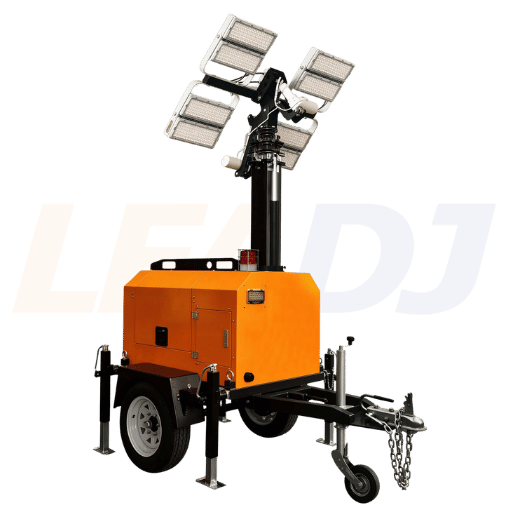
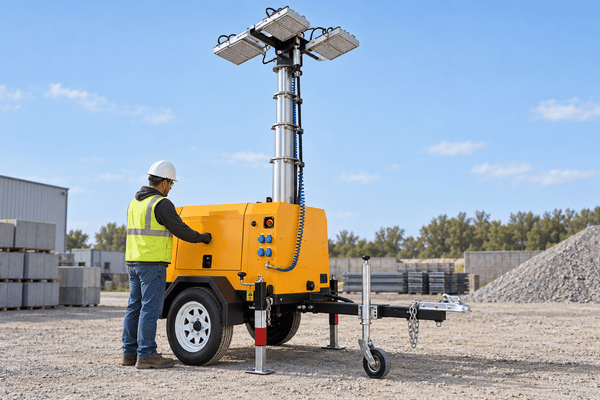
- D955: four 400 W LED lights with a 7 m hydraulic mast
- Project quotations based on configuration, quantity and destination
SYSTEM SPECIFICATIONS
Diesel Light Tower Configurations
Repeated moves, uneven access and long shifts place different demands on a portable diesel light tower. We offer three mast configurations so your team can choose the lifting arrangement alongside the lighting and power package.
01 D951: Manual Winch
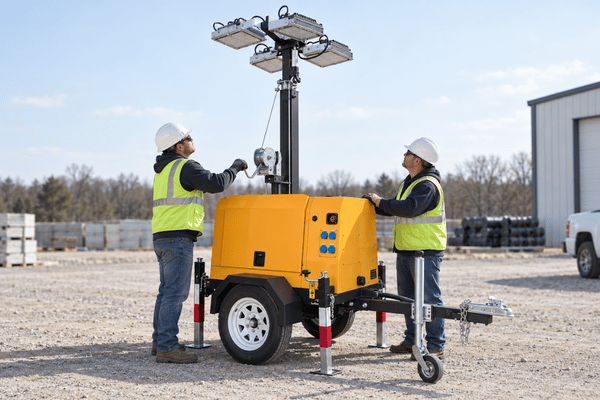
Our D951 range uses a manual winch mast. Include the frequency of relocation and the crew’s lifting procedure in your brief, so the proposed setup works for regular handling.
02 D955: Hydraulic Lift
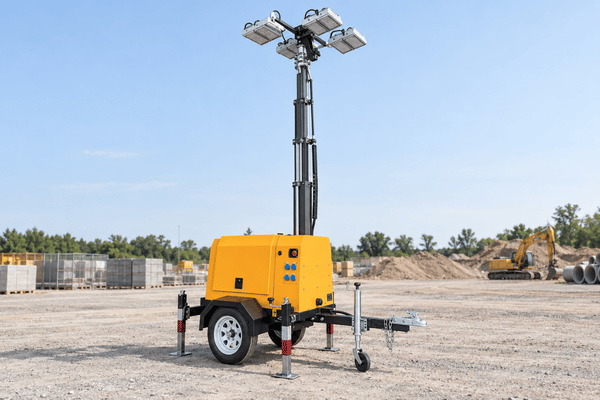
Our D955 configuration features a 7 m hydraulic mast with four LED floodlights. It gives buyers a defined starting point for checking deployed space, lamp arrangement and transport dimensions.
03 D957: Pneumatic Mast
Our D957 range uses a pneumatic telescopic mast. Discuss the air supply, controls and setup procedure for the proposed equipment configuration.
LED Lighting for Your Work Area
A bright lamp specification will not tell you how evenly a light tower will illuminate a work area. Lumen output, the distribution of the lamp beam, aiming and obstructions will influence the useful light reaching the work; total wattage of a lamp fixture is not a substitute for lighting planning.
Site-to-Configuration Matrix
Site constraint
What it changes
Include in your quotation brief
Detailed work beside a wider access area
One average reading can conceal a poorly lit task
Work zones, task descriptions and the required illuminance at each zone
Structures, stockpiles or parked equipment
Shadows can require a different tower position or another unit
A marked site sketch, obstruction heights and proposed tower positions
Adjacent traffic or occupied premises
Bright lights can create glare in adjacent travel lanes
Traffic directions, nearby windows and limits on spill light
Long shifts with limited fuel access
Fuel access can interrupt a night shift
Operating hours, expected generator load and refueling windows
Sockets serving additional equipment
Auxiliary tools compete with lighting for generator capacity
Running watts, starting demand and simultaneous loads
Noise-sensitive boundary
Generator noise can prevent use near sensitive areas
Required noise limit, measurement distance and operating load
Restricted delivery or setup space
Transport and operating dimensions are not interchangeable
Access width, height restrictions and usable ground footprint
Diesel Generator and Towable Trailer Configuration
A diesel generator light tower must supply its lamps and any agreed auxiliary equipment. Starting demand can exceed running demand, so matching only the steady load can leave too little capacity when another motor starts.
Engine, Output and Connections
- Specify generator duty, rated kW or kVA, voltage, phase and frequency.
- List every auxiliary load, its starting demand and the intended starting sequence.
- State the required socket type, outlet protection and cable arrangement.
- If your fleet has a preference for a particular engine manufacturer, e.g. Kubota, include it in your request.
Towable Trailer and Site Access
- Give the delivery route, towing interface and handling equipment available on arrival.
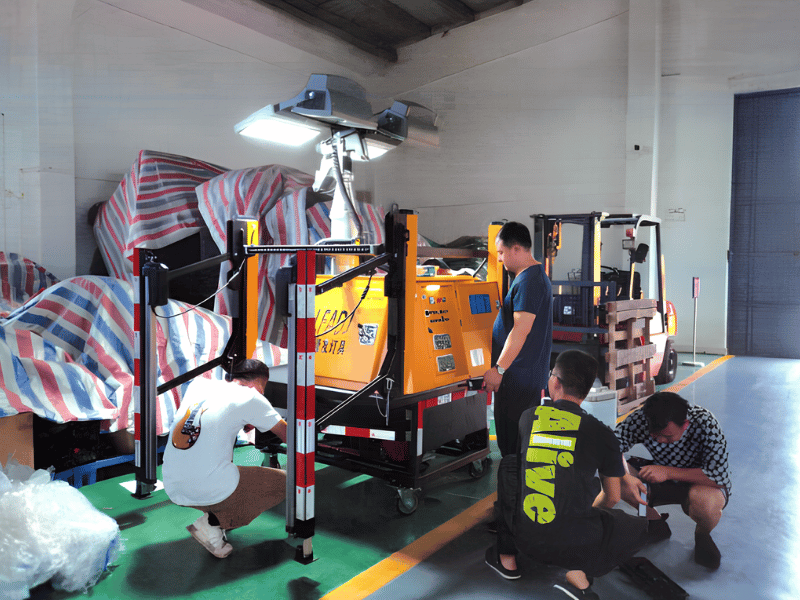
- Consider the stowed and deployed dimensions of equipment in relation to the work zone and access constraints.
- Specify road-use requirements separately from movement inside the jobsite.
- Include the destination’s engine and import documentation requirements.
View Access Specs
D955 Diesel Light Tower Specifications
LFADJ’s D955 hydraulic configuration has four LED lights rated at 400 W each and a mast rotation of 340 degrees. Access problems occur because the deployed supports need more space than the stowed trailer. Use the following dimensions to compare delivery access and the space required after deployment.
D955: 7 m hydraulic mast configuration
| Item | Configuration | Purchasing implication |
|---|---|---|
| Model | D955 | Identify this configuration in the quotation |
| Lighting | Four LED floodlights | Check beam arrangement for the task |
| Lamp power | 400 W per lamp | 1,600 W combined lamp input; generator capacity is a separate specification |
| Mast | 7 m hydraulic mast | Plan the lifting position and overhead space |
| Mast rotation | 340° | Position the trailer with the required aiming direction in mind |
| Transport dimensions | 1650 × 1450 × 2350 mm | Length × width × height in transport configuration |
| Operating dimensions | 2650 × 2450 × 7200 mm | Length × width × overall height when deployed |
| Container loading | 4 units / 20 ft; 8 units / 40 ft | For this configuration; finalize the packing arrangement with the order |
| Delivery lead time | 45–60 days | Agree the schedule and freight arrangements in the quotation |
Diesel Light Tower Price and Lead Time
Keep in mind the purchase price does not include fuel or maintenance. Attractive unit prices may cover different engines or mast or trailer packages. Compare bids for the same lighting, operating hours and scope of delivery before awarding the contract.
Build a comparable quotation
| Cost item | Information to align |
|---|---|
| Equipment | Lamps, mast, engine, generator, controls and trailer |
| Delivery | Quantity, packing, destination and included freight scope |
| Operation | Load-specific fuel consumption, fuel price and annual operating hours |
| Maintenance | Engine manual, planned service items and local support arrangements |
| Commercial terms | Payment schedule, warranty scope and delivery milestones in the offer |
Compare the Costs Your Site Will Actually Incur
Our quotation comparison tool allows you to add equipment and freight costs, in addition to fuel and service costs, for the period you select. This gives you the opportunity to evaluate the trade-off between a lower purchase price and a higher operating cost, without taking a position on whether or not the quote represents better lighting.
- Use the same currency and annual hours for both quotes.
- Enter consumption at comparable loads.
- Review excluded costs, including downtime and financing, separately to avoid a gap between the modeled cost and your project budget.
Quality Assurance and Project Documentation
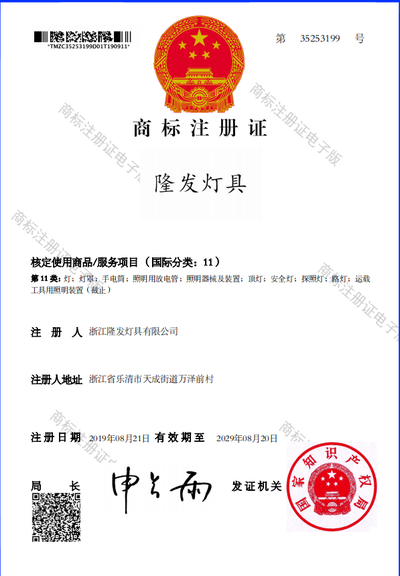
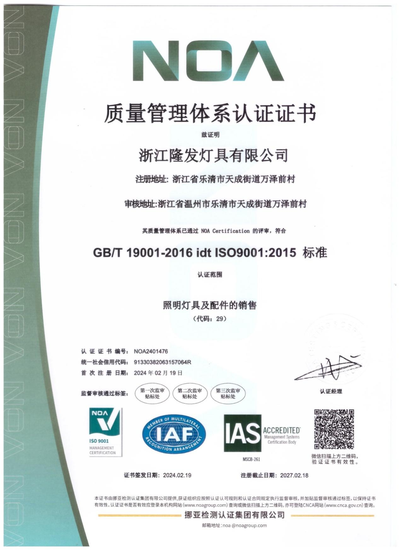
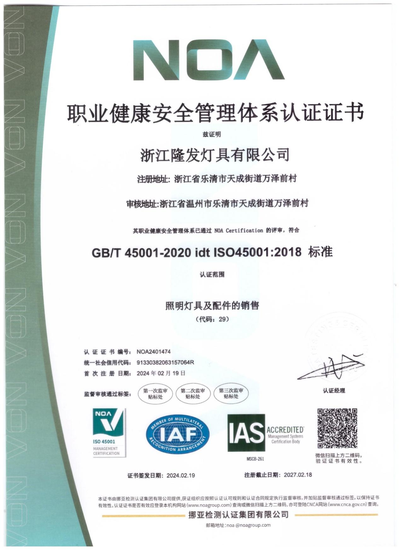
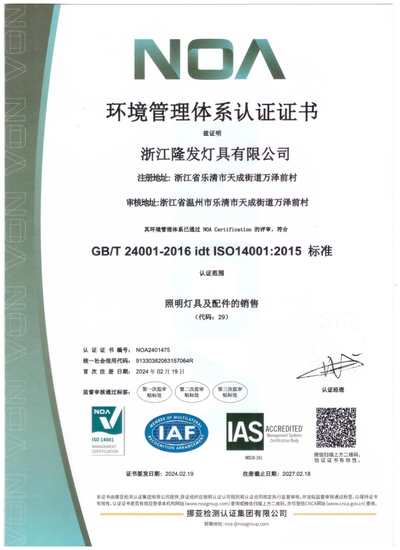
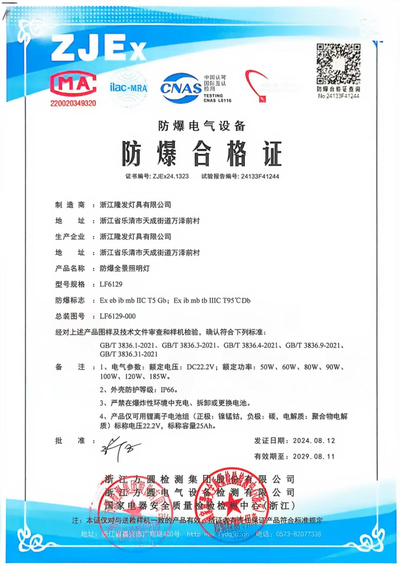
LFADJ is a trademark of Zhejiang LONGFA Lighting Co., Ltd., established in Yueqing, Zhejiang, in 2013. We provide product selection and lighting configuration support for industrial production, maintenance, night construction and emergency work.
- Configuration agreement: Identify the model, mast, lighting, engine and electrical interfaces in the technical offer.
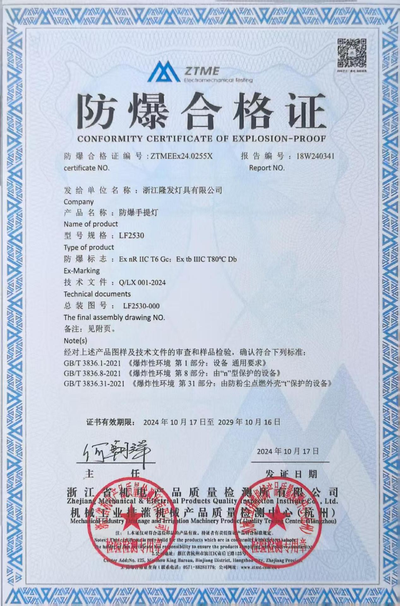
- Project documents: specify drawings, product test documents and destination-related paperwork needed for acceptance.
- Service agreement: define warranty coverage, maintenance responsibilities and support arrangements in the contract.
Match the light to the task, then match the generator, mast, and transport arrangement to the site.
Operating Requirements Belong in the Brief
Give your team the instructions for setting up, fueling, and maintaining the ordered equipment. In accordance with OSHA’s portable-generator guidance, generators should be operated outdoors, with appropriate electrical connections, and shut down and cooled before fueling.
“Before refueling, shut down the generator and allow it to cool.”
— OSHA, Using Portable Generators Safely
Ordering: From Site Brief to Delivery
Based on your application environment and your lighting requirements, we will discuss a mobile light tower configuration.
-
Describe the site: send the work area, tasks, lighting targets and operating schedule.
-
Select the package: discuss mast operation, lamps, generator output, outlets, and trailer.
-
Align the offer: agree quantity, destination, documents, commercial terms and delivery arrangements.
-
Prepare for use: coordinate receipt, operating information and after-sales contact under the contract.
Mobile Lighting Project Experience and Case Studies
Discuss a Similar Configuration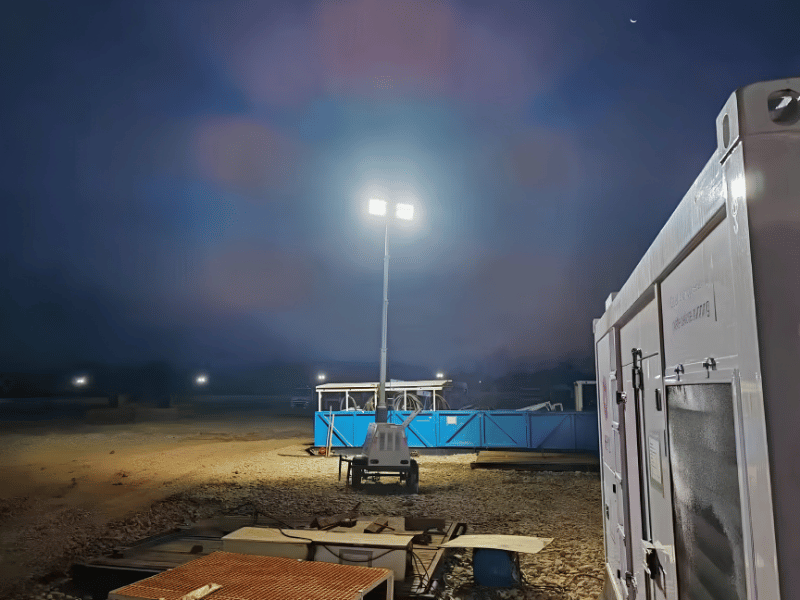
Indonesia: Eight Mobile Lighting Towers, 2023
We supplied eight mobile lighting towers for an Indonesia project in 2023, configured with four 1000 W LED lights and a 9 m manual mast. This project configuration is separate from the D955 hydraulic specification shown above.
- Quantity: eight towers
- Light arrangement: 4 × 1000 W LED per tower
- Mast: 9 m, manual operation
Night Construction
Use task locations and traffic routes to plan where lighting equipment can stand without obstructing work or creating glare.
Industrial Maintenance
Include equipment shadows, work height and auxiliary power needs so the proposed light and power package fits the maintenance task.
Emergency Operations
Define access, expected operating hours, and fuel logistics, prior to selecting a mobile lighting arrangement for temporary outdoor work.
Diesel, Solar and Grid-Powered Lighting
The most practical power source depends on location and how the equipment is replenished. Diesel provides independence from a mains power source; electrical supply, battery charging and solar power recharge call for different operating plans.
Choose by operating constraint
| Option | Suitable brief | Constraint to resolve |
|---|---|---|
| Diesel | Outdoor remote work with planned fuel access | Exhaust, refueling, engine service and site noise |
| Grid-powered | Work with a suitable, dependable electrical supply | Available circuit capacity and safe cable routing |
| Battery or solar | Work where local exhaust or engine noise is undesirable | Required output, stored energy and a dependable charging or recharge plan |
| Hybrid | A duty cycle that can benefit from alternating power sources | Battery capacity, control strategy and the actual engine-running schedule |
RESOURCES // INTERACTIVE PLANNING TOOLS
Diesel Light Tower Planning and Comparison Tools
-
Diesel Light Tower Shift and Refuel Planner
Estimate shift runtime and refueling intervals from usable fuel, retained reserve and expected generator load.
-
Diesel Light Tower Quote Cost Comparison
Compare two quotations across equipment, freight, fuel and planned service costs under matching operating hours.
-
D955 Transport and Setup Envelope
Check stowed transport dimensions against deployed footprint and overhead clearance before site delivery.
PROCESS // PROJECT QUOTATION BRIEF
Request Your Diesel Light Tower Quote
Send LFADJ your site layout, quantity, and destination to start configuration and pricing discussions. Include your shift length, mast preference and electrical requirements to help tailor the offer to the use case of the tower.
- Work area and lighting target
- Operating hours and fuel access
- Quantity, destination and delivery needs
SPECIFICATIONS // TECHNICAL Q&A
FAQ: Diesel Light Tower Questions
Send the dimensions of the work area, the lighting task, the duration and frequency of the shifts, the number and destination. Include the mast preference, any additional electrical loads, access to the site, and the project documents, as applicable.
Coverage will depend upon the desired illuminance, distribution of the beam, positioning of mast and obstructions. Provide us with a lighting target and site plan to help us understand the actual task.
Estimate operating hours from usable fuel after reserve divided by consumption at the intended load. For a planning example only, 60 L available after reserve at 2 L/h gives 30 hours; those inputs are illustrative, not D955 specifications. Use the shift planner with the fuel allowance and load-specific consumption supplied for your configuration, then check whether refueling fits your shift schedule.
This is dependent upon the agreed capacity of the generator and the outlet configuration. List the running demand of all loads and motor starting demand, and indicate which loads will be operated simultaneously.
This is dependent on the local jurisdiction and the task being performed. In the US, OSHA 1926.56 lists 5 foot-candles for general construction area lighting, with different values for other listed activities; use the category that applies to your work. 1
Compare values taken under the same load and measurement conditions, including the measurement distance from the equipment. Give us your limit and indicate the schedule during which lighting will be operated so we can determine noise level requirements.
No. The 2023 project used four 1000 W LED lights and a 9 m manual mast, while the D955 configuration here uses four 400 W lights and a 7 m hydraulic mast.
Compare expected equipment utilization, rental costs, transport, fuel and maintenance. Determine if you have the capacity to support the equipment. A short project duration and regular fleet utilization may influence the buying decision differently.