Get in touch with LFADJ Company
Electric Mast Light Towers: How to Compare Lift Systems

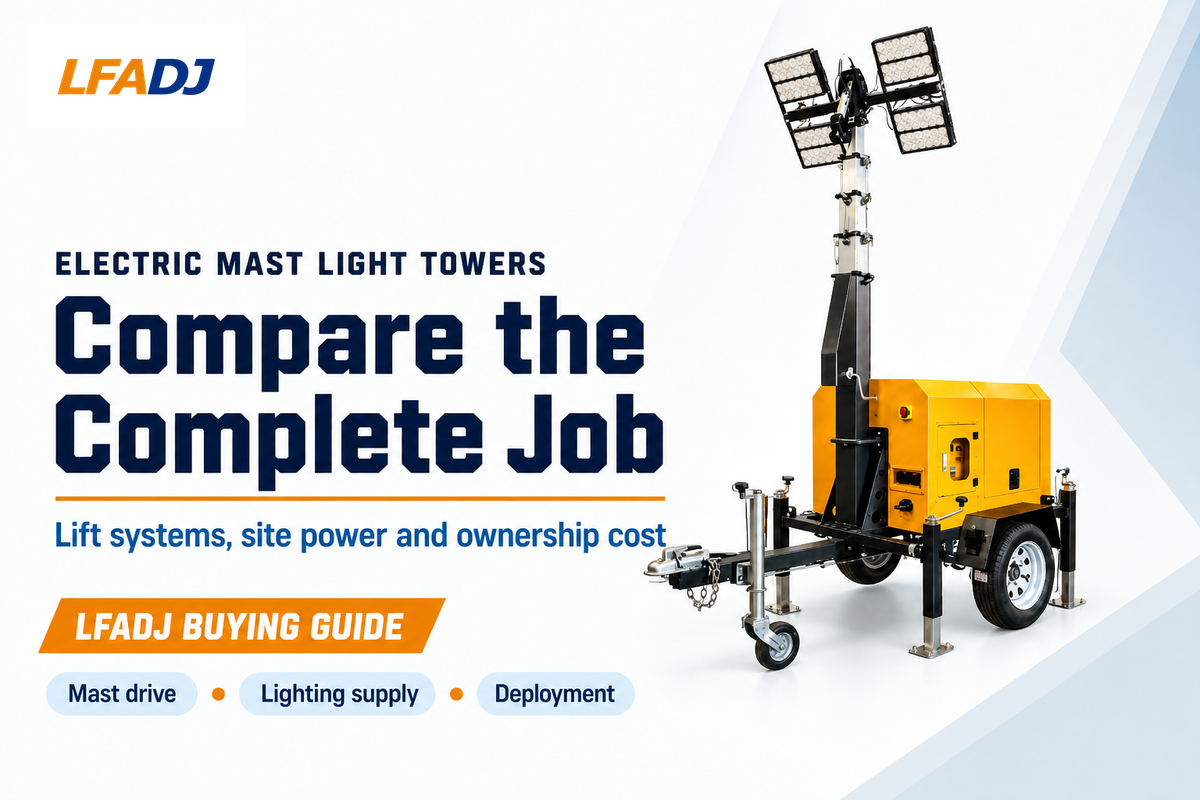
An Electric Mast Light Tower with powered mast actuation raises and lowers its lighting assembly with electric lifting. The term ‘electric’ describes the lifting system; it doesn’t by itself define what powers the lamps. A diesel generator, an external connection or a battery system can supply the lighting on a powered-mast tower.
That distinction affects purchase decisions. A button-operated mast may reduce cranking, but the site still needs suitable ground, sufficient clearance and a workable power supply. Compare the complete job: delivering useful illumination, moving between work areas and returning the equipment to transport condition. This guide gives seven checks for that comparison to procurement teams.
Mobile light towers are designed to position high-intensity electric lamps above outdoor work areas. On construction sites, the lifting arrangement needs to correspond with the work sequence and the space available. A compact footprint helps access, while portability also depends on handling and transport preparation.
Quick buying check
Specify the mast mechanism and lifting supply separately from the lighting power source. Compare complete deployment cycles under the same lighting requirements. Ask for model-specific holding, recovery and inspection instructions before approving an order.
Electric Mast or Electric Light Tower? Read the Specification Correctly
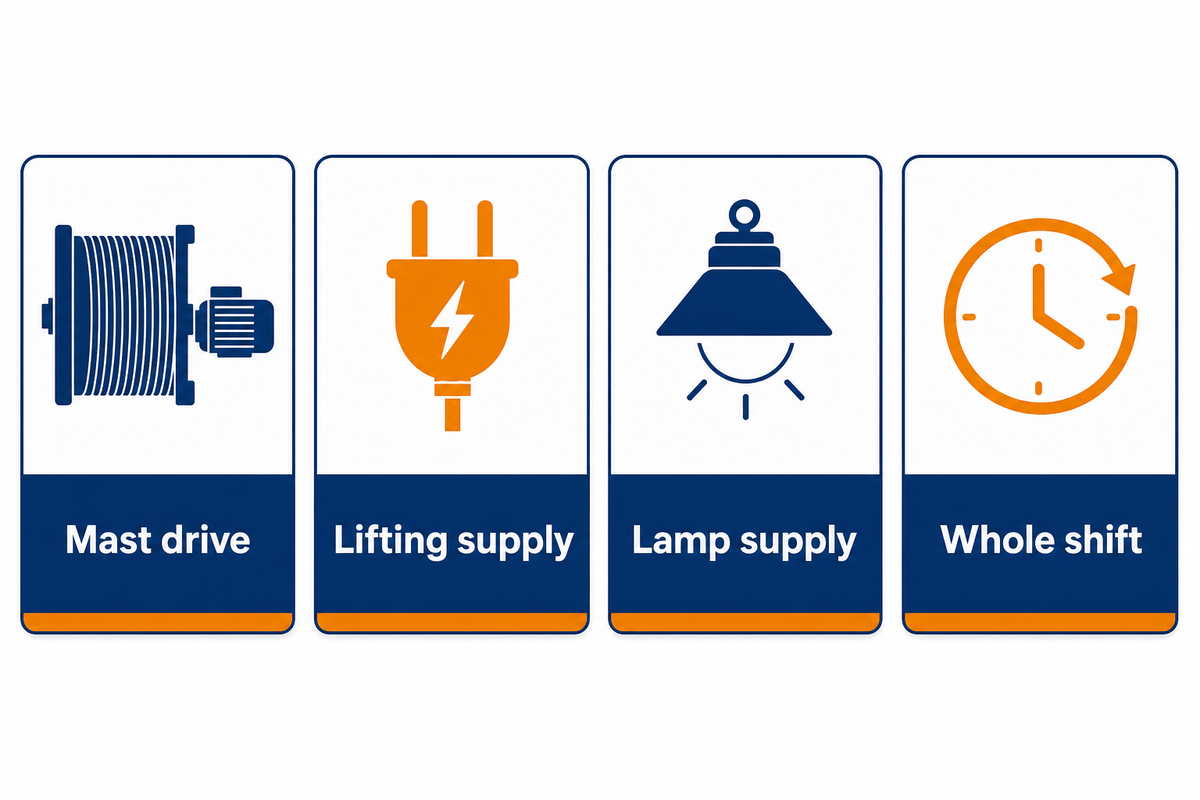
An electric mast light tower features powered lifting. An electric light tower may use externally supplied electricity for its lamps. Consider the actuator, the lifting supply and the lamp supply as separate fields. This ensures that an engine-powered model isn’t incorrectly taken as an engine-free lighting system. A manual mast isn’t confused with powered lifting, either.
Use the 4-Layer Mast-to-Shift Map
Start with the actuator. An electric winch pulls a cable. An electrohydraulic arrangement powers a hydraulic pump. The pneumatic system uses compressed air. Identify the lifting supply. That includes any batteries, motors or compressors. Identify the lamp supply. The Energy Information Administration distinguishes electrical power from energy consumed over time so record both for the intended shift. Finally, check the whole shift: That includes the frequency of relocation, access, and charging or refueling, and the work the light tower is supporting.
Two published configurations show the importance of making these distinctions. The specifications for Generac’s MLT4060KV state an electric winch, and diesel power. The Axiom ELT-4320 technical table lists a manual winch alongside electric LED lighting. These show different configurations rather than that all masts use the same drive.
What are the different types of light towers?
Light towers can be classified by the type of lifting mechanism, energy source or the mode of transport. Manual, electric winch, electrohydraulic and pneumatic describe mast actuation. Diesel, externally powered electric, battery-powered, solar and hybrid describe lighting energy. Towable, trailer-mounted and compact cart designs describe transport. These classifications must be kept separate when offers are compared and interpreted.
The matrix separates these classifications. A balloon diffuser is another lighting option, but it describes light distribution rather than a mast drive. Permanent lighting has a different purpose of installation from temporary lighting.
| Dimension | Type | What to compare |
|---|---|---|
| Mast drive | Manual winch | Cranking effort, cable and brake inspection |
| Mast drive | Electric winch | Motor supply, duty limit and holding design |
| Mast drive | Electrohydraulic | Pump supply, cylinder and hydraulic circuit |
| Mast drive | Pneumatic | Air supply, seals and locking arrangement |
| Lighting energy | Diesel generator | Load, fuel capacity and service access |
| Lighting energy | External electric supply | Input voltage, frequency and connection |
| Lighting energy | Battery | Usable energy, charging and dimming |
| Lighting energy | Solar or hybrid | Charging conditions and operating modes |
| Transport | Towable trailer or compact cart | Route, handling equipment and deployed footprint |
Just because a supplier offers a lower-cost manual mast doesn’t mean that supplier has offered an equivalent powered-mast tower. Decide whether powered lifting is a required function or option before comparing prices. LFADJ’s diesel-powered mobile tower range is a separate place to compare complete generator configurations.
Specification capsule: Generac publishes a 15-second raising or lowering claim for its MLT4060KV electric mast. Axiom lists 120/240 V, 60 Hz and a manual winch for its ELT-4320. Those manufacturer-specific fields illustrate separate lifting and lighting choices; none establishes a universal deployment time or a specification for an LFADJ model.
Electric Winch, Electrohydraulic and Pneumatic Masts Compared
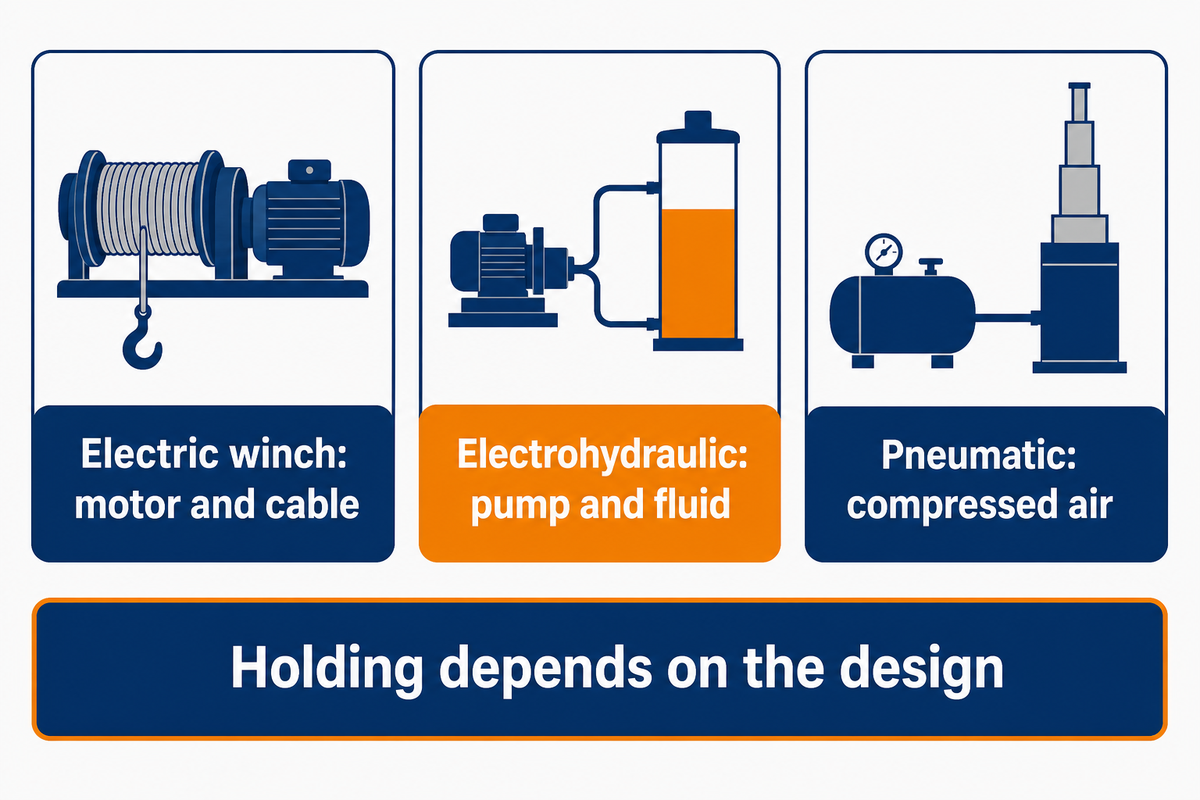
Compare mast systems based on the motions generated, the components required and how they hold the load. Mechanisms, such as Electric winches, electrohydraulic and pneumatic, have various service requirements. A purchase decision also needs the exact model’s duty limits and recovery arrangements; the mechanism name alone does not answer those questions.
An electric winch adds a motor and controls to a lifting cable arrangement. Inspection still includes the cable path, pulleys, and connections and holding components identified by the manufacturer. Powered actuation removes hand cranking; that doesn’t remove mechanical wear and electrical maintenance requirements.
An electrohydraulic mast uses an electrically driven pump to move fluid through a hydraulic system. Items such as cylinders, hoses, fittings and the specified fluid become service items. Pump power and lamp power may have varying supply requirements. Ask which circuit operates the pump rather than assuming a tower’s advertised lighting input describes its lifting circuit. General machinery guidance in ISO 14118:2017 addresses several energy sources, while leaving specific-machine protection to the relevant design assessment.
The published configurations of LFADJ include the D951 with manual lifting, the D955 with hydraulic lifting, and the D957 with pneumatic lifting. Keep the lamp and engine specifications for each model on a separate comparison sheet. An electric-mast offer requires the same treatment as the configuration of the tower in question, rather than inheriting the figures from a different tower.
A pneumatic telescopic mast uses compressed air. Its holding behavior depends on whether and how the mast sections lock. Will-Burt’s published pneumatic locking-mast description, for example, says its locking collars permit extended holding without air pressure.
What the remote maintenance crew can inspect and support is the more pertinent question. A rugged enclosure won’t substitute for access to a cable, seal or control connector. Compare the spare parts list with the service resources available at the jobsite, particularly when equipment has to remain at remote jobsites.
A hydraulic alternative may be acceptable for a powered lift. Hydraulic fluid may not be acceptable for a different project. Put that in the request. Likewise, avoid ranking mechanisms as universally more durable or safer without a comparison of the actual designs and duty.
Measure the Whole Deployment Cycle
Measure a complete relocation cycle before valuing faster mast movement. This includes positioning, clearance checks, stabilization, light adjustment, power connection and preparation for transport. Record operator involvement separately from the time elapsed. Compare equipment at an equivalent lighting result, because the value of equipment that can be relocated quickly is limited if the final placement creates work areas that are dark or have excessive glare.
Josh Nickell’s American Rental Association guidance on selecting light towers includes overhead clearance, outrigger space, and leveling and positioning lights. Setting the mast is one part of that. Use the model’s procedure to set the test sequence, rather than interpreting a general article as an operating manual.
| Observed constraint | Trial check | Purchasing consequence |
|---|---|---|
| Access or traffic-control wait | Separate waiting from equipment operation | A faster mast may leave elapsed time unchanged |
| Ground and outrigger preparation | Use the prescribed footprint and leveling procedure | Compare site readiness before lifting speed |
| Power-cable preparation | Include connection and safe routing in the boundary | Compare the full supply arrangement |
| Repeated manual cranking | Record effort and operator acceptance | Assess powered assistance independently of payroll |
| Light aiming or glare correction | Finish at the agreed lighting result | Reject time comparisons that deliver different illumination |
Consider a hypothetical road-maintenance crew relocating a tower a few times over the course of a night shift. One candidate completes mast travel in 15 seconds; another takes longer. Crew members must still travel to the position, set up their work area and put their power cables in place. If traffic control delays both pieces of equipment the same, then the faster lifting motion may release very little crew time. A useful trial starts with a defined ready-to-move condition and ends with the required work area illuminated. It also records the return to transport condition. The purchasing team can then see whether the difference affects the shift schedule, physical effort or only a short movement within the process.
Record how much cranking, reaching and repeated handling each option requires. NIOSH’s ergonomic-program guidance identifies mechanical assistance as an engineering control and recommends testing an intervention before full implementation. So trial operator effort with each option rather than assume an injury-reduction percentage for powered masts.
Give crews the model-specific procedure before comparing the two different types. A vertical mast still requires its prescribed clearance and stabilization, even if the raising control is within easy reach.
What should be done before towing a light tower?
Follow model-specific procedures to prepare a light tower for towing. That normally involves the designated stowed mast position, secured lighting assembly, retracted supports and the trailer checks specified for the unit. Confirm the coupler, tires, lights, brakes where fitted and load limits. Never use an operating position as a transport position.
If the supplier’s demonstration doesn’t include stabilizing or packing away the tower, request to see the missing portion. For larger-scale route and placement planning, use LFADJ’s construction and road work lighting guide .
Trial capsule: A 15-second mast movement is something different from a complete, several-minute, relocation. For a hypothetical trial, record operator-minutes as well as elapsed minutes, then repeat under the same power connection and light positioning. Include setup and pack-down so a fast raising demonstration does not conceal slower transport preparation.
Match the LED Light Tower to Its Power Supply
Match the required LED light tower input to the available supply, and then confirm the illumination that’s been delivered to the work area. Lamp watts describe electrical power; lumen output describes emitted light. Neither figure alone sets tower quantity, glare or battery runtime. These depend on the intended operation mode and light distribution, and the site conditions.
A generator rating is not automatically spare power for tools. The lamps, auxiliary equipment and relevant operating limits must fit the approved electrical arrangement. For an external connection, describe the supply route, voltage and frequency, and the connectors. A portable LED light system that’s working beside a socket may require a different arrangement at a distant work site.
Evaluate an energy-efficient lamp against the required illumination, rather than treating low wattage as the whole result. Likewise, evaluate a zero-emission claim against the whole power arrangement and operating mode. An electrically operated mast can be on the same tower with a combustion engine.
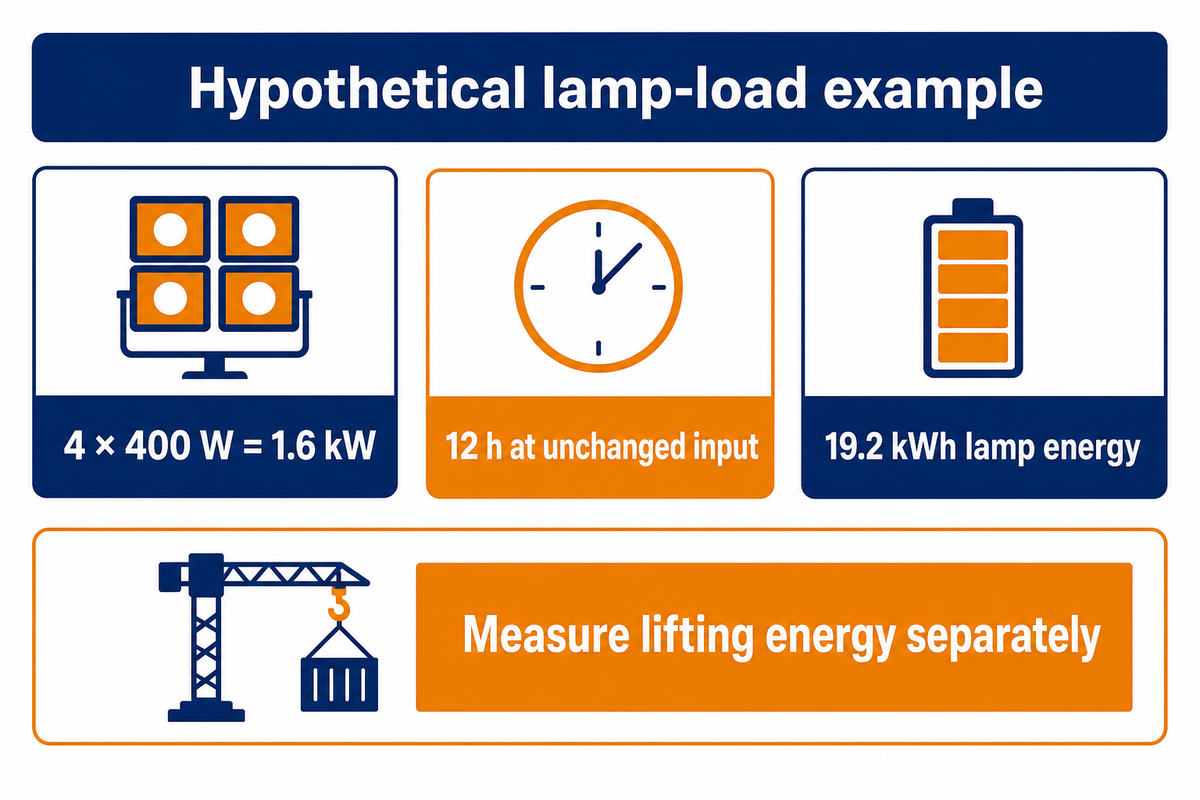
Take a hypothetical lighting load of four 400 W lamps operating at unchanged full input for a 12-hour shift. The lamp load is 4 × 400 W = 1,600 W, or 1.6 kW. Lamp energy is 1.6 kW × 12 h = 19.2 kWh. Assuming the inputs stay the same, changing the mast drive will not change the lamp-energy calculation. The mast motor, controls, standby loads and conversion losses belong in separate measurements. A battery’s nameplate energy also does not represent the energy available at the lamps after accounting for operating reserves and losses. This example sizes no particular product and promises no runtime; it shows which energy terms a comparison must keep separate.
The calculation uses the Energy Information Administration’s definition of power and Energy over Time. A solar light tower adds a charging constraint: available sunshine and charging conditions matter alongside overnight power needs. Extended runtimes should be compared at the light level required to perform the task.
When judging glare, keep mast height and aiming conditions the same. Odeh, El-Rayes, and Liu (2009) report that variations in the set-up of the night work zone tower affect glare. Check glare on site at the planned mast height and aiming, with the lamp heads actually supplied. For U.S. construction, it’s recommended to check the illumination requirements for each task in 29 CFR 1926.56.
Energy capsule: Four assumed 400 W lamps draw 1.6 kW and use 19.2 kWh over 12 hours at unchanged input. A different lifting mechanism doesn’t reduce that lamp-energy term. Compare useful illumination and glare first, and then measure lighting and lifting and power conversion consumption to evaluate total operating costs.
Price the Mast Upgrade Without Counting False Savings
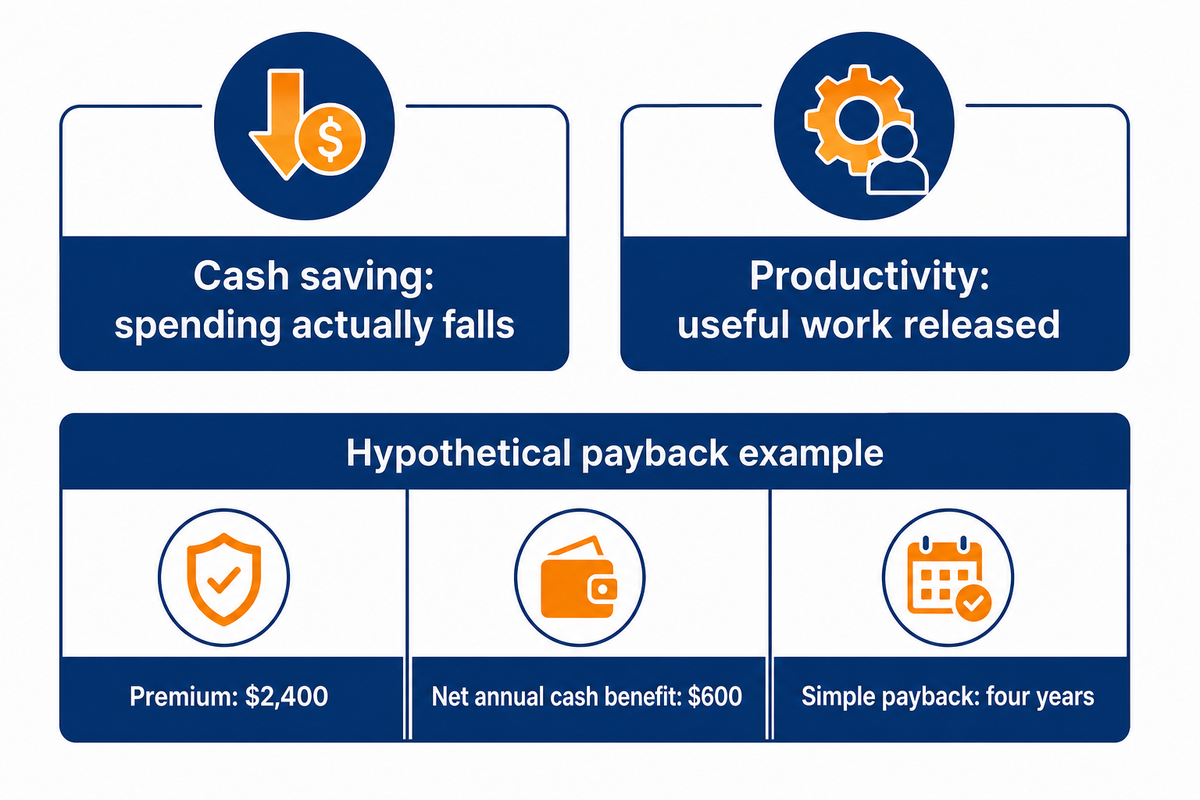
Assess the benefits of an electric mast upgrade against an equivalent baseline by incorporating the extra cost of the upgrade and the benefits the operation can recover. Consider separate effects on expense and productivity. Include service costs and lifting energy, and retain the same lighting task in both cases. Faster movement doesn’t always mean a cash payback.
Apply the Whole-Cycle Premium Test
Get comparables for the same required functionality and lighting duty. Then measure the complete cycle and identify which saved operator time changes spending or useful output. Finally, subtract additional recurring costs. The U.S. Department of Energy’s Economic Analysis Methodology balances baseline and improved cases considering incremental investment and later costs. The department’s building code method offers a comparison and isn’t a light tower return on investment study.
Cash saving
- Identify spending that will actually fall.
- Deduct extra recurring costs.
- Keep the supporting budget and trial records.
Productivity benefit
- Identify useful work released by saved time.
- Allow for work that still needs the same crew.
- Record the benefit without calling it reduced payroll.
The UK Government’s Efficiency Framework makes a similar distinction between savings due to lower spending and productivity gains, without lower spending. In the case of a fleet, additional work completed is valuable and should be included in a separate part of the business case from a reduced wage bill.
Suppose a hypothetical powered-mast option costs $2,400 more. A trial is assumed to release eight paid operator-minutes per relocation across the whole crew, not eight minutes for each person. At 200 relocations per year, that’s 1,600 minutes, or about 26.7 hours. If every released hour genuinely avoids $30 of spending, the annual gross saving is $800. Assume another $200 per year in incremental service and drive costs: the net is $600, giving a simple payback of $2,400 ÷ $600 = four years. If the same crew remains paid for the same shift and no other spending falls, that $800 isn’t a cash saving. Rework the decision around productivity or effort instead.
Simple payback doesn’t account for the effects of discounting, later replacement costs, and residual value. They should be accounted for in a more thorough analysis. Faster control systems may make a tower quieter to operate during lifting or easier to use, but those benefits need their own trial rather than an invented reduction in fuel consumption. For a more thorough analysis of utilization, see LFADJ’s rental-fleet planning guide.
Cost capsule: With hypothetical inputs of a $2,400 premium and $600 annual net cash benefit, simple payback is four years. The result changes if 200 annual relocations are unrealistic or the assumed $30 hourly spending isn’t avoidable. Keep productivity benefits separate and assess later service, replacement and residual value before ordering.
Plan Inspection and Power-Loss Recovery
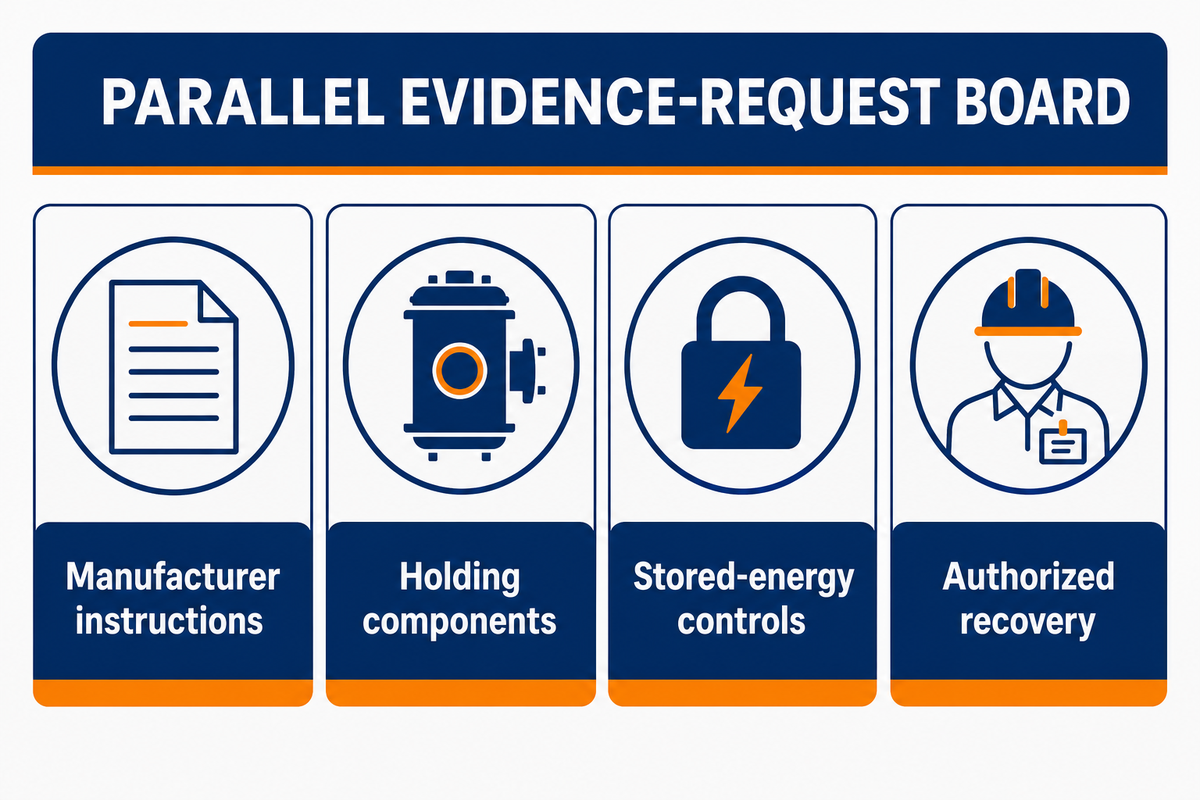
Approve the inspection and power-loss recovery arrangements for the same tower model prior to use. A mast’s holding components, stored energy and controls determine what happens when power is lost. Operators need the manufacturer’s instructions and appropriate training. An equipment supplier’s general instruction to release a valve, disengage a winch or let a pneumatic mast descend is inadequate.
“For instructions specific to the brand and model, refer to the product manual.”
The WorkSafe report on a 2013 mobile lighting-Tower collapse states that a mast was not correctly aligned, its locking pin only partly engaged, and deployment instructions weren’t available. The report recommends providing instructions and double-checking engagement of locking mechanisms. A power lifting control shouldn’t replace those checks.
ISO 14118:2017’s public scope includes unexpected startup associated with electrical, hydraulic and pneumatic supplies, stored energy such as gravity, and external influences. It does not prescribe the protective means for each specific machine. Ask what design controls pertinent energy sources and what authorized personnel do in the case of a failure of that supply.
What are the maintenance requirements?
Maintenance requirements follow the particular mast, lighting, and power systems fitted to the tower. A winch arrangement requires checks on the cable and holding component listed in its manual. Hydraulic or pneumatic equipment adds its specified fluid, hose, seal, or air-system tasks. Lamps, wiring, batteries and diesel engine have separate schedules. Follow the manufacturer’s intervals and inspection criteria for that arrangement.
A field-maintenance discussion on an Allmand tower exemplifies the reporting issue. One lamp wouldn’t light. Replies distinguished LED drivers from metal halide bulbs and their associated components. An anonymous report isn’t a verified failure rate study. Its teaching point is, when reporting a failure, identify the subsystem and provide the exact model. For example, not every lighting fault should be reported as a mast failure.
If a supplier’s component offers a back-up lowering feature, request the applicable manual section and a controlled demonstration by authorized personnel. Don’t test an improvised recovery method below a raised assembly. Replacement-parts availability and access for inspection matter as much as a button’s convenience.
When considering remote locations, include the cost and availability of spare parts and the location of the most proximate qualified service personnel in the comparison.
Inspection capsule: The historical WorkSafe report describes mobile lighting towers typically reaching 7-12 meters, with significant risk of falling objects when unsecured. That range describes the report’s context, not an operating limit for a purchased tower. Check the approved height, loading and wind limitations of the model you’re using, as well as locking and transport instructions.
Turn Your Requirements into a Comparable Manufacturer Quote
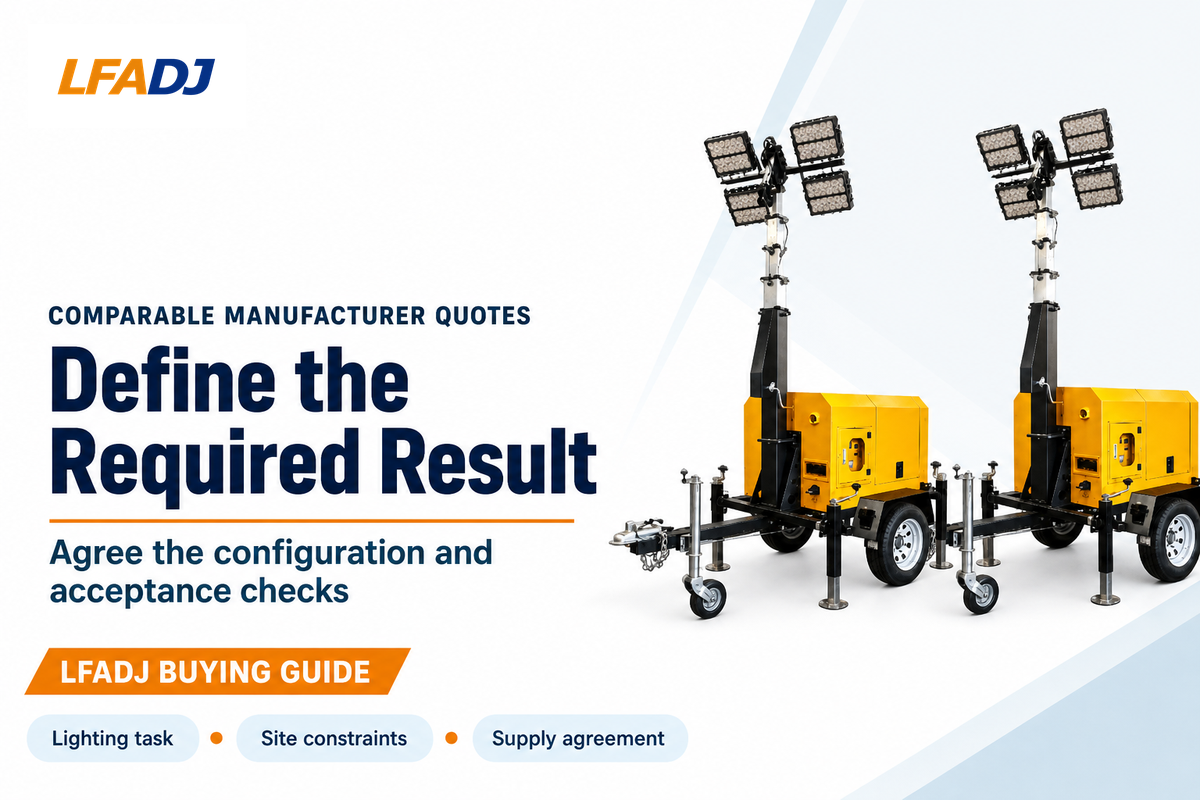
A comparable manufacturer quote identifies the required lighting result, mast function and power arrangement for the site condition. Attach these requirements to the quote, and agree how they’ll be verified at the time of acceptance. Company management system documents and product-related evidence for the supplied tower should be treated differently.
The best mobile option for frequently moved equipment can be different from equipment kept in one location for months. Inform procurement for what use case the quote should be valid.
State the job requirement before defining each component. The performance-based approach in U.S. Federal Acquisition Regulation 11.002 is a good method example, although its legal application is restricted to federal procurement. A private purchaser can require a specific means when the operating environment justifies it. The reason should be disclosed to consider other means.
| Requirement | Record in the request | Decision and acceptance check |
|---|---|---|
| Lighting task | Work areas, target light levels and glare constraints | Compare a lighting plan and agreed site verification |
| Mast function | Required powered motions and usable height in m | Confirm the offered drive and model procedure |
| Lifting supply | Voltage in V, battery or compressor arrangement | Check lifting operation with the specified supply |
| Lamp supply | Input in V and Hz, lamp load in W | Verify connection and operating mode |
| Deployment | Complete-cycle boundary and operator involvement | Run the agreed trial without omitted tasks |
| Site and loading | Ground, clearance, approved payload and wind conditions | Match model limits and deployment instructions |
| Recovery and service | Holding design, recovery procedure and service access | Review manuals, training and spares |
| Transport | Stowed dimensions in mm, mass in kg and handling route | Check shipping and destination handling requirements |
| Supply agreement | Included equipment, delivery, warranty and evidence | Agree configuration-specific documents and acceptance terms |
A certified quality management system is about how an organization manages its processes. It does not certify a lighting tower. ISO’s guidance on attestations of conformity clearly describes management system certification and product certification as distinct certification types. Identify the model, requirements, testing scope and limitations, and any assumptions regarding a product’s suitability for a hazardous environment.
LFADJ is a brand of Zhejiang LONGFA Lighting Co., Ltd., established in Yueqing, Zhejiang, in 2013. We offer industrial, mobile lighting, and customized lighting products and solutions. For an electric-mast inquiry, send the operating environment, lighting requirements, available supply and relocation pattern. The scope of service, terms of warranty and delivery commitments will be in the agreed supply contract.
A buyer working in mining operations may also need the site restrictions described in our mining and quarry lighting resource. Indicate the site-specific approvals; a general industrial-lighting description doesn’t provide explosion protection.
Key takeaway
Choose an electric mast against a defined lighting task and complete deployment cycle. Confirm its lifting supply, holding design and recovery instructions, then compare the incremental cost with recoverable benefits. Keep management-system credentials separate from the supplied model’s product evidence.
Review LFADJ Electric Mast Light Towers for the product inquiry, or send your project requirements so we can discuss the configuration and documents needed for your application.
Frequently Asked Questions
How long will an electric light tower run?
Electric light-tower runtime lasts as long as the supply on a mains connection; on fuel, one rental listing for a diesel LED tower gives up to 200 hours on a single tank.
A mains-connected unit relies on a suitable continuous supply rather than a fuel tank. A battery model depends on usable stored energy and lamp demand. Diesel and hybrid configurations add their own fuel, charging and service constraints. Compare stated runtimes using matching light output and conditions; a dimmed-mode figure does not describe full-output performance. Mast actuation alone does not determine lighting duration.
How many light towers do I need?
Enough to hold the required light level across each work area, such as OSHA’s minimum of 5 foot-candles for general construction area lighting on U.S. sites; count them from the lighting plan.
Use the site’s dimensions, task-specific light levels, obstructions and permitted tower positions to develop a plan. Check dark areas, shadows and glare for workers and nearby traffic. Manufacturer coverage figures need their stated measurement conditions to be useful. A lumen total or mast height alone cannot establish the number of units needed. Plan multiple towers around the work fronts and permitted stationary positions, then check the resulting illumination across an irregular large area.
Do light towers need to be grounded?
The required grounding and bonding arrangement depends on the tower’s electrical system and applicable rules.
Use the manufacturer’s electrical instructions and have a qualified person assess the intended connection. A generator serving its own equipment differs from a supply connected to other distribution equipment or a structure. Do not assume that every tower needs the same earth-rod arrangement, or that an electric mast establishes compliance. Confirm the protective devices, cables and bonding required for the actual installation before energizing it.
Can an electric mast tower be used indoors?
An electric mast does not establish indoor suitability; the complete power and equipment arrangement must be suitable.
Check the power source, clearances and electrical requirements for the location. OSHA’s portable-generator safety reminder says never to use a portable generator indoors. Powered lifting does not remove engine-exhaust hazards.
What should I consider when buying an LED light tower?
Match the lighting result, site supply, mast operation and transport requirements before comparing complete offers.
Start with the actual task and operating environment, including any restrictions on noise, emissions or equipment approvals. Ask for the light distribution at the proposed height and aiming position, then confirm the electrical input and full-shift supply arrangement. A diesel engine suits a different power situation from an externally connected unit; a hybrid LED light tower adds operating modes that must be compared consistently. Check the mast drive, holding features and model-specific recovery instructions. Include the deployed footprint, route access and handling equipment in the comparison. Request the inspection schedule, spare-parts availability and agreed service terms. Finally, put the included configuration and acceptance checks into the quotation. Deciding which light tower is right for a project means checking its documented requirements and ownership cost, rather than selecting the largest isolated specification.
Related Reading
References & Sources
- Help Your Contractor Customers Choose The Right Light Towers Josh Nickell, American Rental Association, 2022.
- Step 4: Implement Your Ergonomic Program National Institute for Occupational Safety and Health.
- Measuring electricity U.S. Energy Information Administration.
- Field experiments to evaluate and control light tower glare in nighttime work zones Odeh, El-Rayes and Liu, 2009; university research abstract.
- 29 CFR 1926.56: Illumination Occupational Safety and Health Administration.
- Energy and Cost Analysis Methodology U.S. Department of Energy.
- The Government Efficiency Framework HM Treasury and Government Finance Function.
- Petroleum Safety Significant Incident Report No. 06/2013 WorkSafe, Western Australia.
- ISO 14118:2017: Prevention of unexpected start-up International Organization for Standardization, public scope.
- 11.002 Policy U.S. Federal Acquisition Regulation.
- Attestations of conformity ISO Committee on Conformity Assessment.
- Portable Generators: Public Service Announcement Occupational Safety and Health Administration.
LFADJ · COMPANY & TECHNICAL CONTEXT
Practical lighting guidance for real project conditions
LFADJ shares product context, application notes, and selection checks to help project teams compare industrial lighting options with the right site details in view.
What LFADJ covers
LFADJ focuses on industrial lighting and tailored lighting solutions for teams planning, specifying, or operating demanding work environments.
- Product context: mobile lighting, light towers, explosion-proof lighting, emergency lighting, and related industrial lighting equipment.
- Project context: application conditions, target illumination, runtime, site constraints, and product configuration questions.
- Decision support: use the information here as a starting point, then confirm final specifications against the actual installation and local requirements.
Industrial lighting
Application guidance
Project enquiries
NEXT STEP
Have a site question?
Send the operating environment, lighting target, expected runtime, and any drawings or photos you have. The existing enquiry form is ready for a focused discussion.
Start an enquiry Or use the LFADJ contact page