Get in touch with LFADJ Company

Light Towers for Rental Fleets
Equip your rental business with light towers for rental fleets that need repeatable setup, clear specifications and a workable service plan. LFADJ supplies the D955 diesel lighting tower with 4 × 300 W LED fixtures, a 9 m hydraulic mast and configuration support for your operating requirements.
- Compare lighting, generator and transport specifications before ordering.
- Plan equipment handover, return checks and scheduled service together.
- What is your destination? What are your site requirements and quantities for a project quotation?
Specifications
4 × 300 W LED
Four floodlights for temporary site illumination
9 m hydraulic mast
340° mast rotation
2.4 kW generator
120 V / 60 Hz specified configuration
45–60 days
Delivery period; order scope agreed in the quotation
D955 Diesel Light Tower for Fleet Orders
We supply the D955 as a portable diesel light tower for temporary outdoor work and mobile lighting requirements. Its Kubota Z482 engine, carbon-steel canopy and one-piece welded chassis give fleet buyers a defined equipment configuration to assess against their jobs, transport arrangements and workshop practices.
Lighting and mast
Four LED heads sit on a hydraulic mast with 340° rotation. Specify the task, working area and obstructions so the proposed aiming and mast arrangement can be assessed for the light your customer needs.
Power and connected loads
The power available will influence the jobs a light tower can serve. The portable light tower generator rating, lamp demand, receptacle ratings and remaining auxiliary capacity are separate quantities. List all external loads in the brief.
Define the simultaneous load
A 2.4 kW generator can be undersized for a hire that adds power tools because lighting already uses part of its capacity.
Send LFADJ your equipment list to discuss a configuration for those specific loads.A fleet-ready light tower needs a defined job, a repeatable handover and a service plan that the depot can carry out.
For a rental fleet light tower order, we discuss the lighting configuration and technical requirements with your team, prior to finalizing the supply arrangement. Match voltage and frequency to the destination, and confirm the electrical protection and simultaneous-load arrangement for the equipment you want to connect.
- Procurement: identify the quantity, delivery destination and configuration to be priced.
- Operations: identify the jobs the unit must illuminate and the available setup area.
- Workshop: ID the service access, consumables and docs needed for your handover.
Rental Jobs and Lighting Requirements
Start with the work your customers perform at the job site after dark. A good lighting brief describes the task plane, dimensions and the surrounding activities and the length of a shift; using wattage alone is insufficient for an illumination plan.
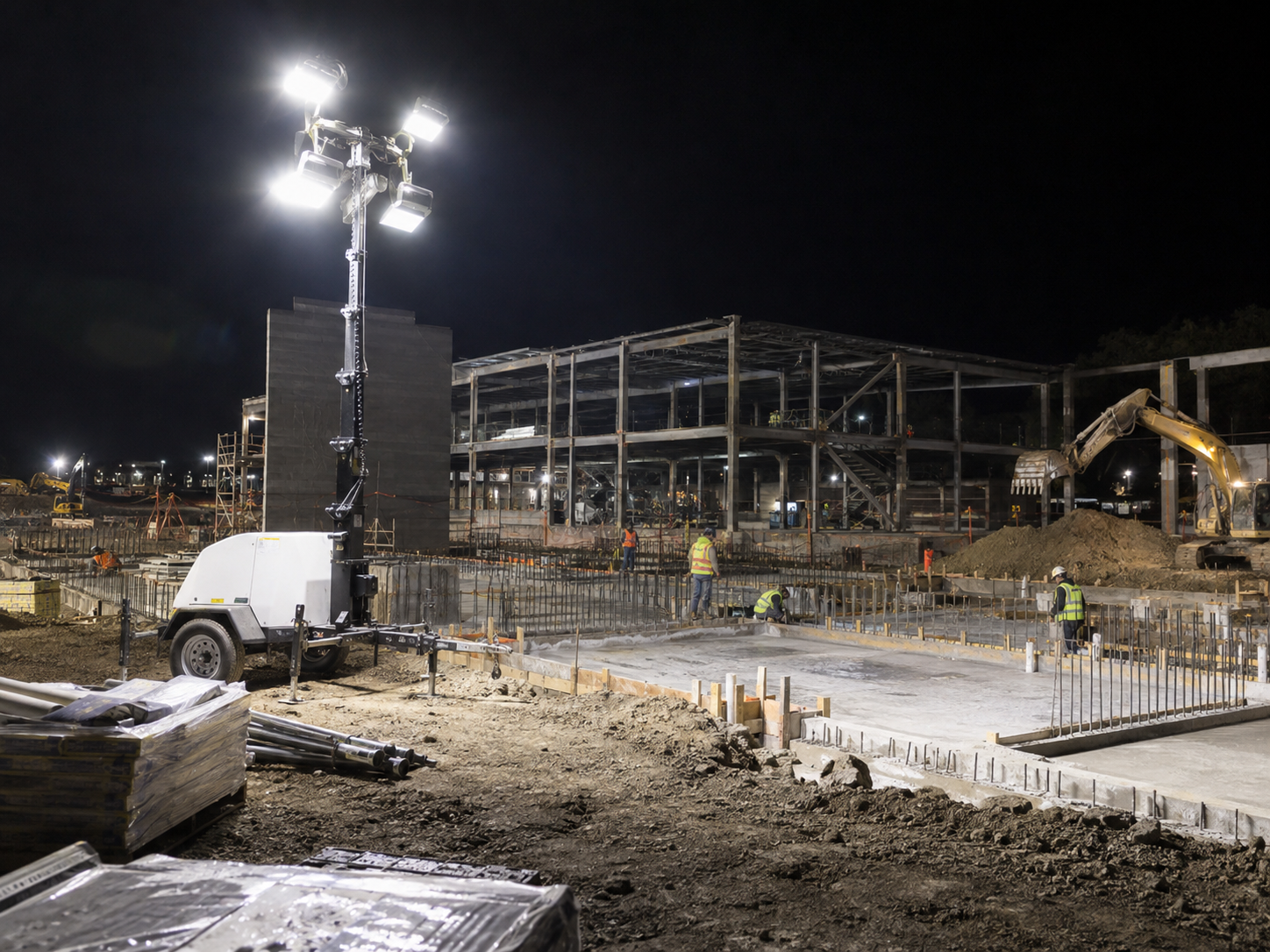
Construction and night maintenance
Identify excavations, access routes, machines and changing work fronts. Task lighting and general area lighting can require different aiming, so include obstacles and the space available for stable deployment.
Yards and parking lots
Show vehicle routes, pedestrian crossings and loading areas on the layout. Avoid assuming that a bright central patch delivers adequate illumination at the edge of the working area.
Event setup and temporary parking
Noise limits can rule out a convenient deployment of diesel near neighbors or an audience. Is the work event setup, public access or overnight parking, and what operating hours are permitted?
Emergency operations
Specify access, deployment time, fuel support and operator availability. A mobile lighting solution for an open work area needs a different plan from lighting near occupied buildings or enclosed spaces.
| Site input | Decision it informs | Useful material to send |
|---|---|---|
| Task and required illuminance | Fixture aiming, placement and quantity | Work description and target light levels |
| Area, obstacles and access | Usable setup positions and transport route | Dimensioned drawing and site photographs |
| Shift, noise and power | Power-source suitability and operating plan | Hours, restrictions and available electrical supply |
For a U.S. construction project, use the appropriate task category in OSHA 1926.56. Compare light distribution and the application as well as electrical input; the DOE luminaire guidance explains why comparing unlike products without considering these differences can lead to the wrong lighting choice.
Light Tower Fleet Maintenance and Turnaround
D955
600 hours
The D955 engine oil service interval is 600 hours. That interval is not interchangeable with the schedule for mast, lighting, electrical and transport-component checks; use the supplied engine and tower manuals to set the actual program.
Record the return.
Obtain the hour-meter reading, report the symptoms, and document any visible damage prior to the unit joining the available fleet. A clear defect record prevents the next dispatcher from assuming an unresolved defect is normal operation.
2. Inspect before release.
Follow the manual for fluids, leaks, lamp assemblies, cables, mast components and transport equipment. An engine that starts does not establish that every light and permitted electrical function works.
3. Complete scheduled work.
Use the meter history and calendar requirements to arrange the relevant service. Group machines with similar service timing when estimating workshop workload.
4. Handover the operating limits.
Explain deployment, shutdown and the checks expected from the renter. Record unresolved defects separately and remove affected equipment from service until the required repair or inspection is complete.
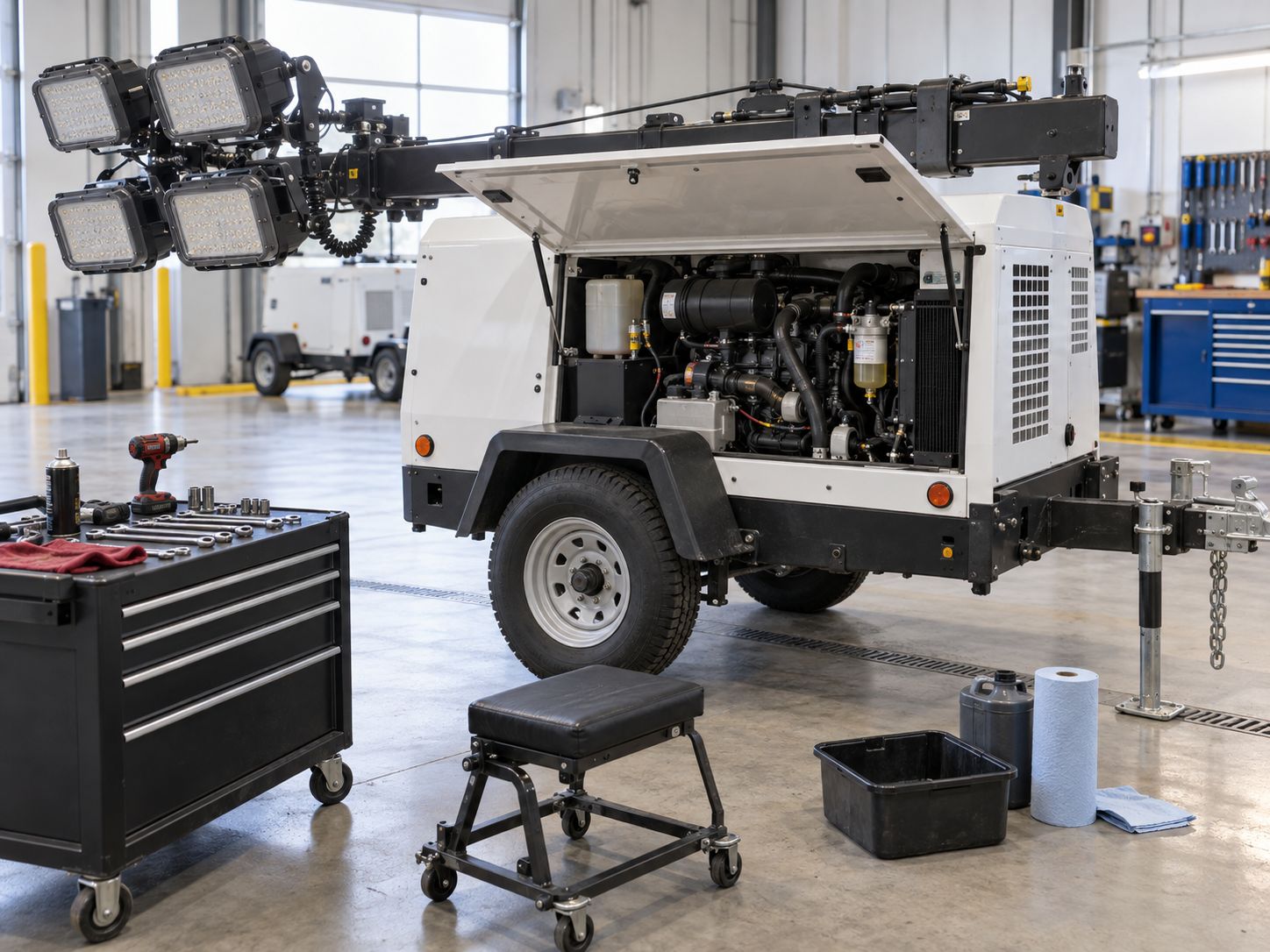
Turnaround bottlenecks to plan around
| Hidden constraint | Fleet consequence | Planning response |
|---|---|---|
| Service events cluster after long hires | Workshop hours become the availability limit | Forecast due work before accepting the next dispatch |
| Parts need model identification | A small repair waits for the correct component | Keep model, serial and component details with each asset |
| Defects are reported only at collection | The next booking has no repair allowance | Request an operating report and reserve inspection time |
Service Resources & Planning Options
A long oil interval does not necessarily reduce the work needed between hires. Maintenance access and clear operating instructions still affect the equipment choice, as described in Atlas Copco’s light-tower selection guidance and in the American Rental Association’s contractor selection advice.
D955 Specifications and Transport Planning
Use the configuration below to compare an order with your existing fleet. The 7 m and 9 m versions have different transport heights; choosing the taller mast does not necessarily change the stated transport length or width.
| Item | D955 specification | Order consideration |
|---|---|---|
| LED fixtures | 4 × 300 W | Assess photometrics for the proposed layout |
| Generator output | 2.4 kW | Confirm simultaneous lamp and auxiliary loads |
| Nominal electrical configuration | 120 V / 60 Hz | Match destination and connected equipment |
| Engine | Kubota Z482 | Use the supplied engine manual and identification |
| Mast | 9 m, hydraulic | Include overhead clearance and deployment space |
| Mast rotation | 340° | Plan fixture aiming from the intended setup position |
| Engine oil service interval | 600 hours | Separate oil service from other required checks |
| 7 m version transport size | 1650 × 1450 × 2350 mm | Length × width × height |
| 9 m version transport size | 1650 × 1450 × 2650 mm | Length × width × height |
| 9 m version working size | 2650 × 2450 × 9000 mm | Length × width × height |
| Dry / wet weight | 1050 kg / 1150 kg | Plan handling for the actual loading condition |
| Canopy and chassis | Carbon-steel canopy; one-piece welded chassis | Include inspection and cleaning in depot procedures |
| Container quantities | 4 units / 20 ft; 8 units / 40 ft | Confirm the shipment and packing arrangement |
Transport size and road use
Dimensional fit is one aspect of transport planning. Confirm towing equipment, load limits, securing arrangements, and the road requirements at the destination for the actual configuration, before dispatch.
Fleet Pricing, Lead Time and Order Scope
Our D955 delivery period is 45–60 days. We prepare the quotation around quantity, configuration and destination, with the applicable delivery arrangement set out for the order.
- Equipment scope: lighting configuration includes the version of the mast, power options, and accessories requested.
- Supply scope: unit quantity, packing, shipping destination and required delivery timing.
- Support scope: manuals, parts requirements, technical communication and contract service terms.
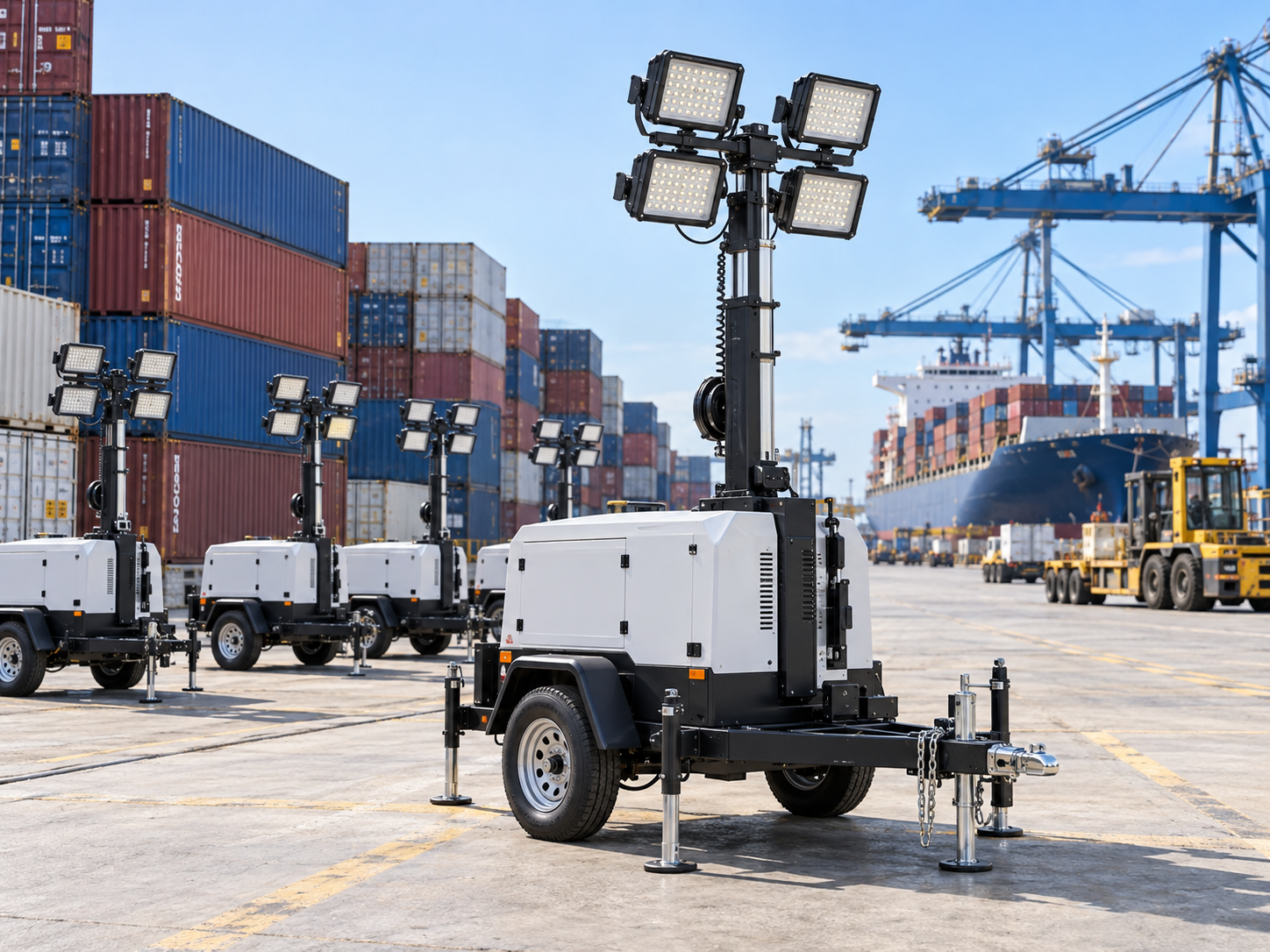
Compare cost per operating hour
The lowest purchase price does not always mean the lowest total cost of ownership. Refueling access means more work and scheduling. How widely the purchase cost is spread depends on annual utilization.
Illustrative fleet budget
Assume an annual ownership allowance of 1,000 currency units and annual energy, service, repair and transport costs of 2,000. At 1,000 operating hours, the combined 3,000 annual cost equals 3.00 per operating hour; these are hypothetical inputs, not D955 prices or operating results.
Use the same currency and cost scope for both offers.
Separate operating hours from booked or billable rental hours.
Add financing, tax, insurance and revenue analysis separately when evaluating profit.
The trade-off is practical: a lower capital outlay buys less if the proposed configuration cannot serve your regular jobs. Before comparing a diesel light tower for sale with another offer, ensure lighting requirements, service scope and the included costs are aligned in each quotation.
LFADJ Project Support and Documentation
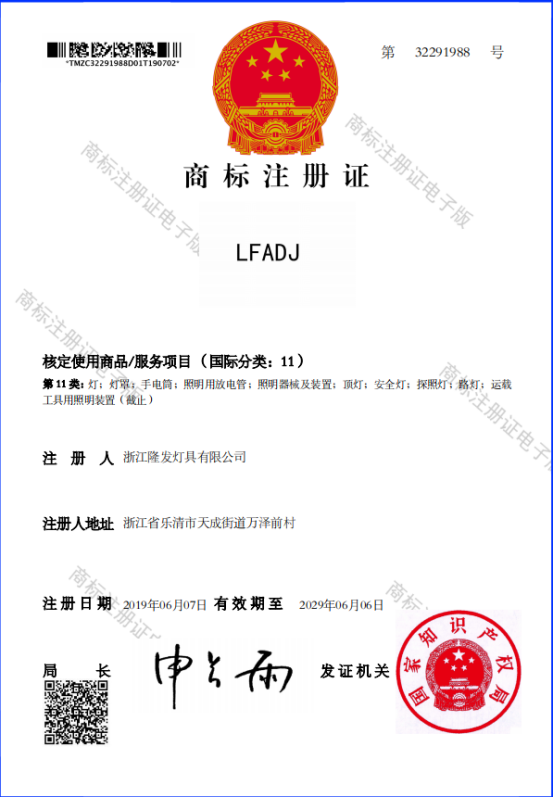
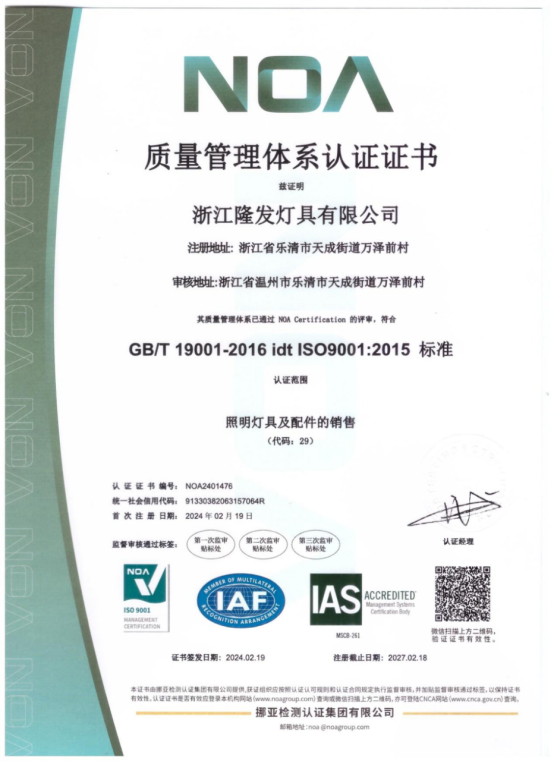
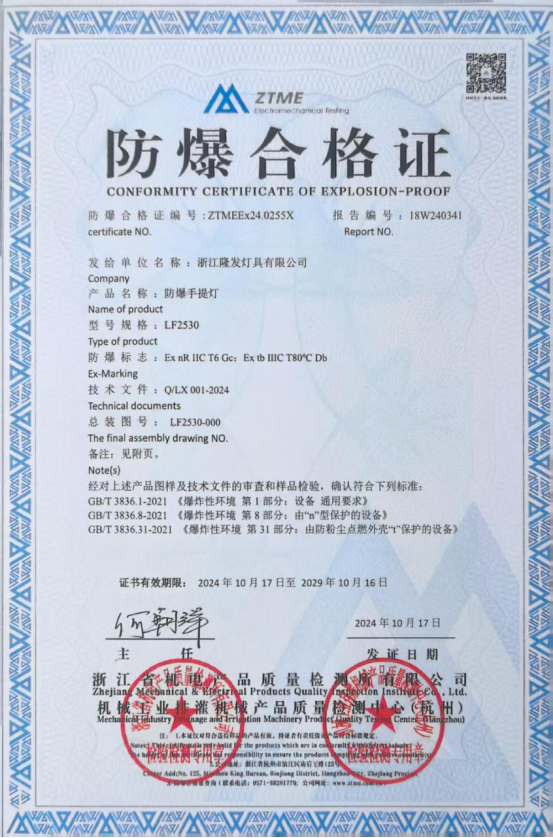
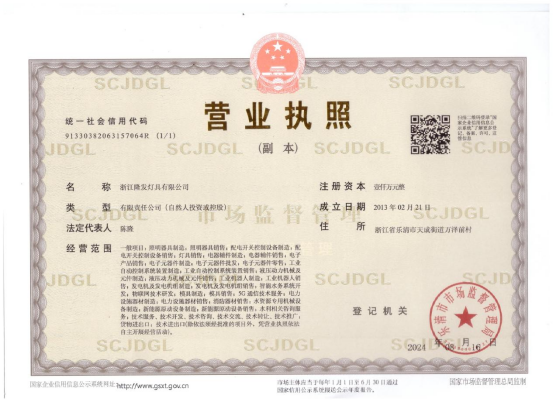
Zhejiang LONGFA Lighting Co., Ltd. was established in 2013 in Yueqing, Wenzhou, Zhejiang. We combine industrial lighting development, manufacturing, trade and service, with mobile lighting among our product areas.
We provide product consultation, selection support and lighting-solution discussions based on the application and operating requirements. Bring the site layout, expected duty and electrical requirements into the configuration conversation.
We align configuration and technical communications for the project and offer product-use advisory and after-sales services. Maintenance obligations, warranty period, and response and on-site support arrangements are defined in the contract.
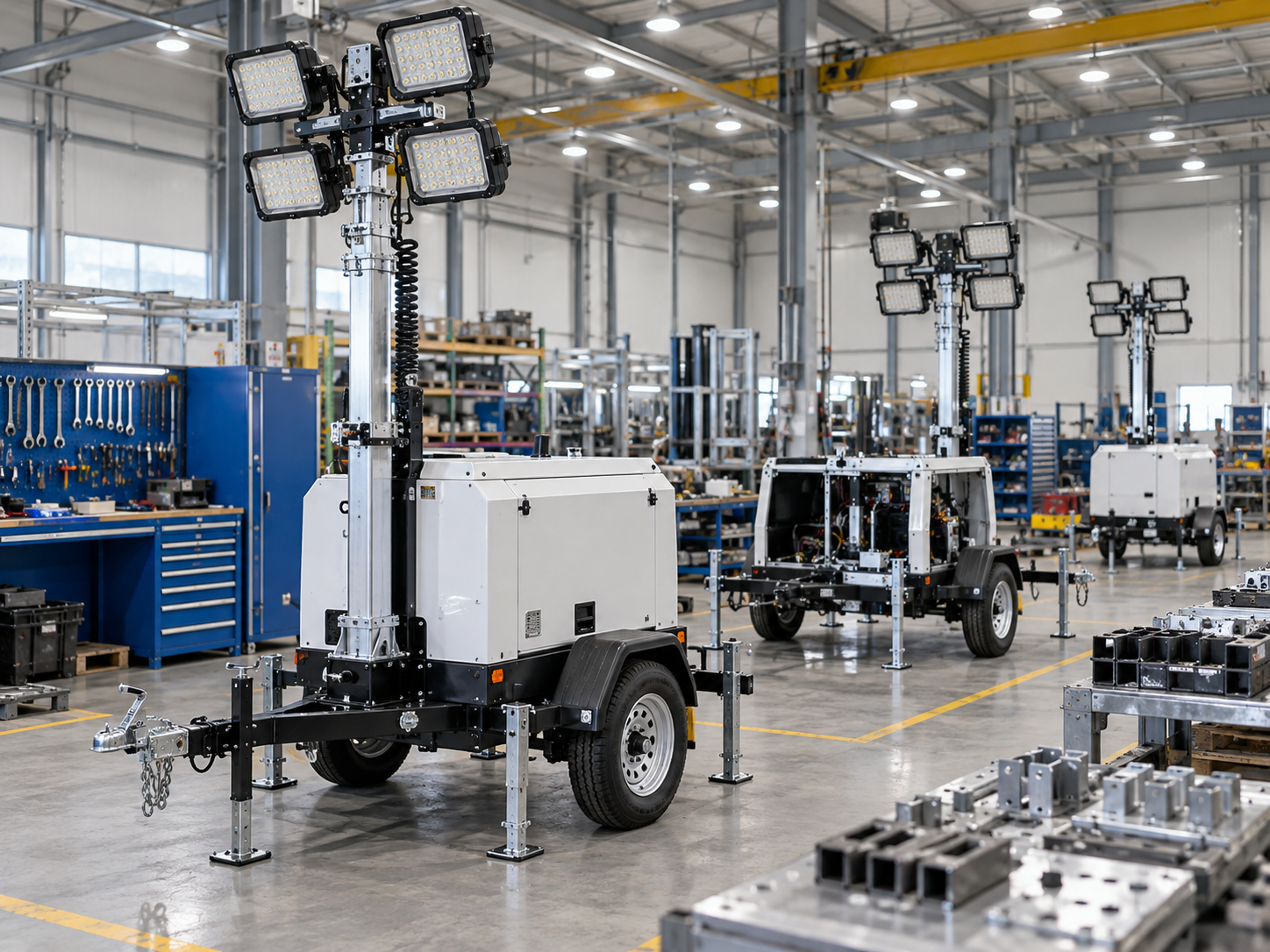
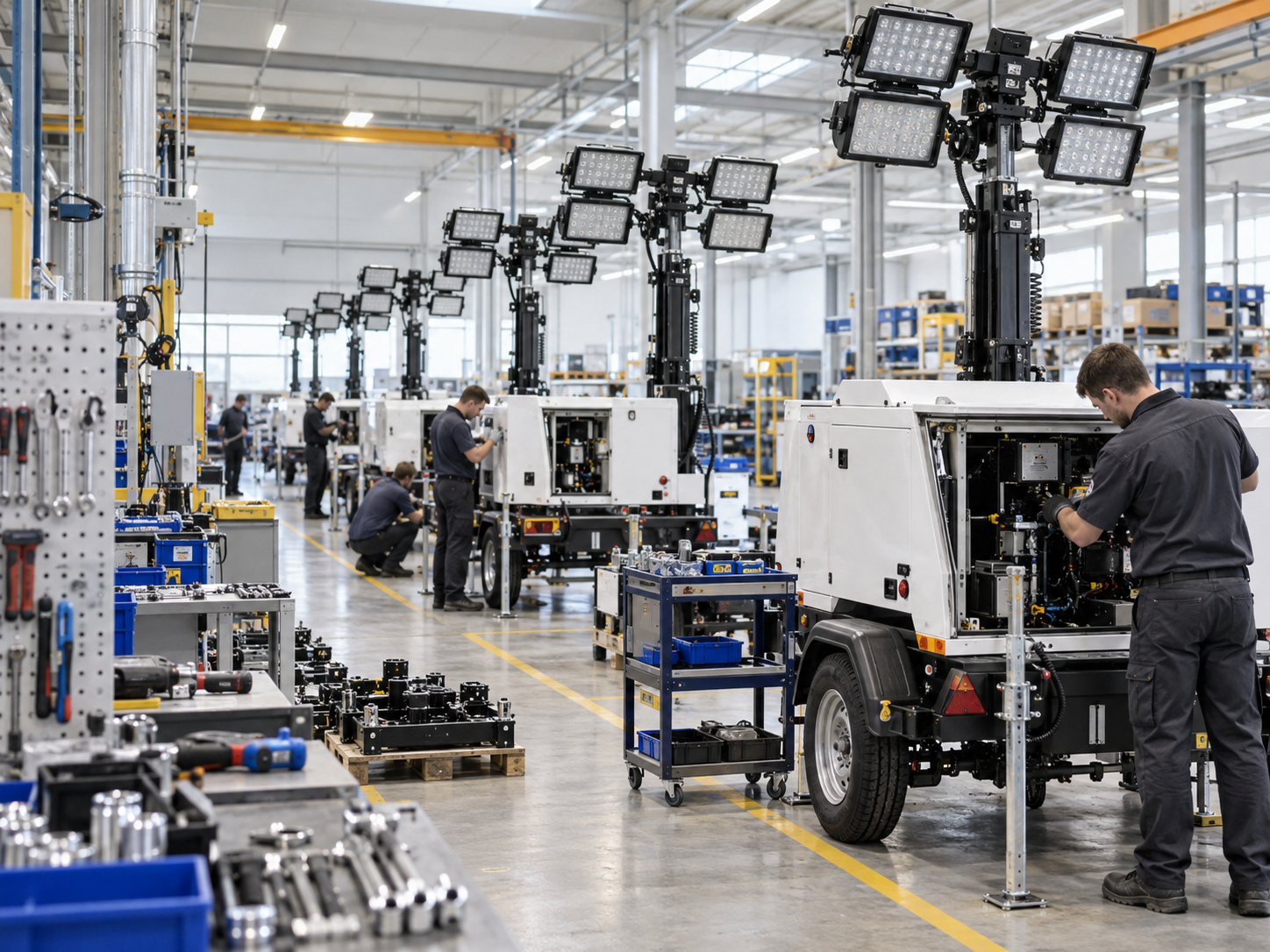
Information that makes support easier
- Asset identity: model and serial numbers, the supplied configuration and engine identification.
- Operating record: hour-meter readings, service history and the conditions when a fault appeared.
- Document scope: agreed manuals, parts information and model-specific documents required at the destination.
- Electrical details: include connected loads, receptacle layout, and protective devices, with a qualified person checking the applicable requirements.
For US construction use, OSHA 1926.404 outlines specific provisions for electrical circuit protection and grounding. Review the proposed design against the actual installation and conditions of use; generator rating alone does not resolve this question.
Process
From Fleet Brief to Delivery
Submit your application requirements to LFADJ to illustrate an identifiable configuration in the quotation. The same brief can assist procurement, operations and maintenance to evaluate the proposal without working with different assumptions.
Describe the fleet workload
List the regular jobs, shift lengths, operating environment and required quantity. Include seasonal peaks if they change your planned utilization.
Share site information
Send area dimensions, photographs, obstacles and target illumination. Identify noise-sensitive boundaries and any mains power available.
Discuss the configuration
Review mast height, lighting, electrical needs and transport arrangements. Resolve optional features and destination documentation before comparing prices.
Review the quotation
Check equipment scope, delivery period, packing, payment and service terms. Retain the agreed configuration with the order record.
Coordinate supply
Confirm the delivery destination and receiving arrangements. Plan unloading and inspection with the equipment weight and transport configuration in mind.
Prepare the fleet handover
Allocate the asset record, operating instructions and maintenance schedule before first hire. A reliable dispatch process relies on the depot as well as the machine.
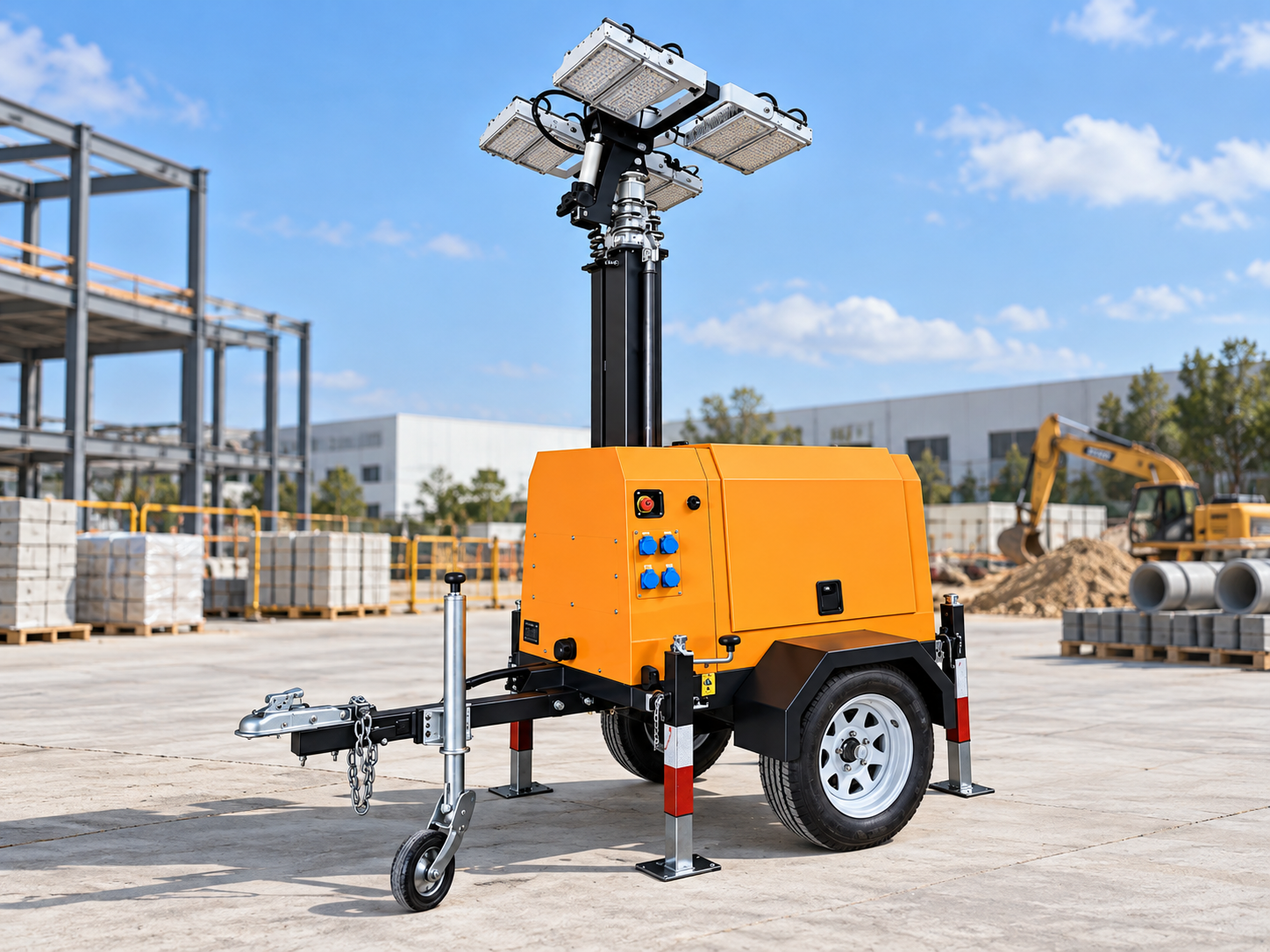
D955 Product View
D955 product configuration showing the lamp assemblies, mast, canopy and transport chassis. Request a configuration review with LFADJ to match the product view and specification to your intended application.
Diesel, Battery and Mains Power Trade-offs
The trade-off between power sources starts with the site and shift. Diesel can work away from a mains connection, but it is the wrong choice for the job if it cannot meet noise, exhaust or operating restrictions.
|
Diesel
|
Useful when
Outdoor work needs an independent power source |
Constraint to resolve
Fuel access, exhaust placement, noise and engine maintenance |
|
Battery
|
Useful when
A quiet operating period is a priority |
Constraint to resolve
Usable runtime at required light output and recharging access |
|
Mains-powered lighting
|
Useful when
A suitable power supply is available |
Constraint to resolve
Supply capacity, protection and safe cable routing |
Keep the comparison consistent
Unlike a headline runtime comparison, a useful operating plan illustrates the output and duty cycle your customer needs. Lower output operation, different battery modes or reduced lighting periods can make headline hours look comparable when the delivered job is different.
Planning & Analysis Tools for Rental Fleets
Fleet maintenance workload planner
Estimate maintenance hours and schedule routine servicing for your mobile light tower fleet.
Open Tool
Fleet ownership cost comparison
Compare purchase scenarios, energy costs, and operating requirements to calculate true ownership costs.
Open Tool
Fleet inquiry brief builder
Configure your lighting specifications and generate a structured inquiry brief for accurate procurement.
Open Tool
Rental Fleet Light Tower Questions
An appropriate unit can perform the repeated tasks and is supported by your depot. Review performance of lighting and consider setup and service access, transport, and operator instructions to determine which configuration your staff can hand over and maintain.
This depends on illuminance, the geometry of the work area, obstacles, mounting height, and aiming. Send a diagram and task description. Dividing the site area by a headline coverage figure can miss shadows and dim edges.
No. For the job, a certain light level is required at the work plane; wattage describes electrical input and does not establish that level.
For U.S. construction, OSHA Table D-3 lists 5 foot-candles for general construction area lighting and other levels for specific tasks. It is not a universal threshold for all sites.
No. It identifies service of engine oil for the configuration described. Light tower fleet maintenance needs the full engine and tower instructions rather than one service number. Requirements for daily checks, defects, calendar limits, and other components differ and need to be addressed separately.
It depends on the electrical configuration and the simultaneous load. Specify the equipment you wish to connect and verify there are adequate auxiliary outputs with the lamps energized; socket markings do not indicate spare generator capacity.
The stated transport height is 2350 mm for the 7 m version and 2650 mm for the 9 m version, with 1650 mm length and 1450 mm width for both. Check the full travel configuration and your handling route before selecting a version.
- What is the operating mode?
- What lighting output is available?
- What is the usable fuel or battery capacity?
- What conditions was the test conducted under?
Exhaust, air intakes, and noise as well as the operating instructions of the equipment all must be considered regarding placement. If the intended location does not allow for the above, consider an appropriate mains-powered arrangement or battery.
Record all operating hours, customer reported faults, visible damage, and all work completed before release. Retain identification and service history. Equipment with unresolved safety defects needs to be set aside and not available to rent.
Quantity, configuration of mast and lighting, electrical requirements, accessories, packing and destination shape the quotation. Give the equipment requirement and the desired scope of delivery to enable comparison of offers.
The delivery period is 45–60 days. Tell us the required quantity, configuration and destination so the quotation can state the applicable order schedule and delivery arrangement.
- Mention the desired quantity, destination and regular applications.
- Give approximate length of shift and lighting requirements.
- Mention electrical requirements and transport requirements.
- Add requested documents and complete the inquiry brief to organize what still needs to be addressed.