Get in touch with LFADJ Company
Explosion Proof Lighting for Industrial Projects
Explosion-proof lighting involves evaluating the location, substances involved, the required protection method and the function of the light. LFADJ routes these inputs across the fixed LED, flood, portable, hazardous-location, and emergency lighting families before proposing a candidate model.
-
1 unit
Minimum order; single pieces are accepted.
-
Sample policy
Sample units are priced the same as finished products.
-
Payment terms
50% deposit, with the remaining balance paid before shipment.
-
Classify
Start with the project’s Class/Division or Zone documentation and identify whether the hazard involves gas, vapor, dust, or fibers.
-
Configure
Add ambient range, voltage, mounting, coverage, ingress, corrosion, and emergency-function requirements.
-
Match documents
Check the certificate, test report, marking, and instructions for the exact model and configuration offered.
Explosion Proof Lighting Matched to Your Hazardous Area
The risk to the project increases when a light fixture is selected based on wattage, enclosure appearance or an “explosion-proof” label, before the classified location is known. The same product description cannot qualify a light fixture for all classes of flammable gases, groups, dusts, fibers, temperatures, vapors, liquids, ambient and area conditions, and jurisdictions.
Under OSHA 1910.307, flammable gas and vapor, flammable liquids, combustible dusts, and ignitable fibers are distinct classification inputs, and equipment must be approved for the location where it is used.1 Hazardous-area lights are designed for specific protection conditions, so we use the classification provided by the responsible project team rather than creating or replacing the area-classification study.
Engineering teams may know the area is hazardous but still lack the group, temperature code, or ambient range needed for selection. Because those inputs define the permitted configuration, LFADJ resolves the gap by matching the supplied classification to exact-model markings and documented conditions.
The wrong choice can fail inspection or delay a project; a model-specific certificate and marked ambient range provide the proof point for review.
-
Area system
Provide the applicable Class/Division or Zone designation. We keep the two systems distinct instead of using a shortcut conversion.
-
Hazard type
State whether the concern is gas or vapor, combustible dust, or another classified material. A gas-location approval does not automatically establish dust suitability.
-
Temperature and ambient
Share the required temperature code and the minimum and maximum ambient conditions. Both affect the acceptable marked configuration.
Selection boundary: weather resistance, ingress protection, and corrosion resistance matter, but none of them substitutes for the required hazardous-location approval.
Each request is routed to a fixed LED explosion-proof light fixture, an LED explosion proof flood route, a portable family, an emergency family, or a hazardous-area configuration before model-level inputs are verified.
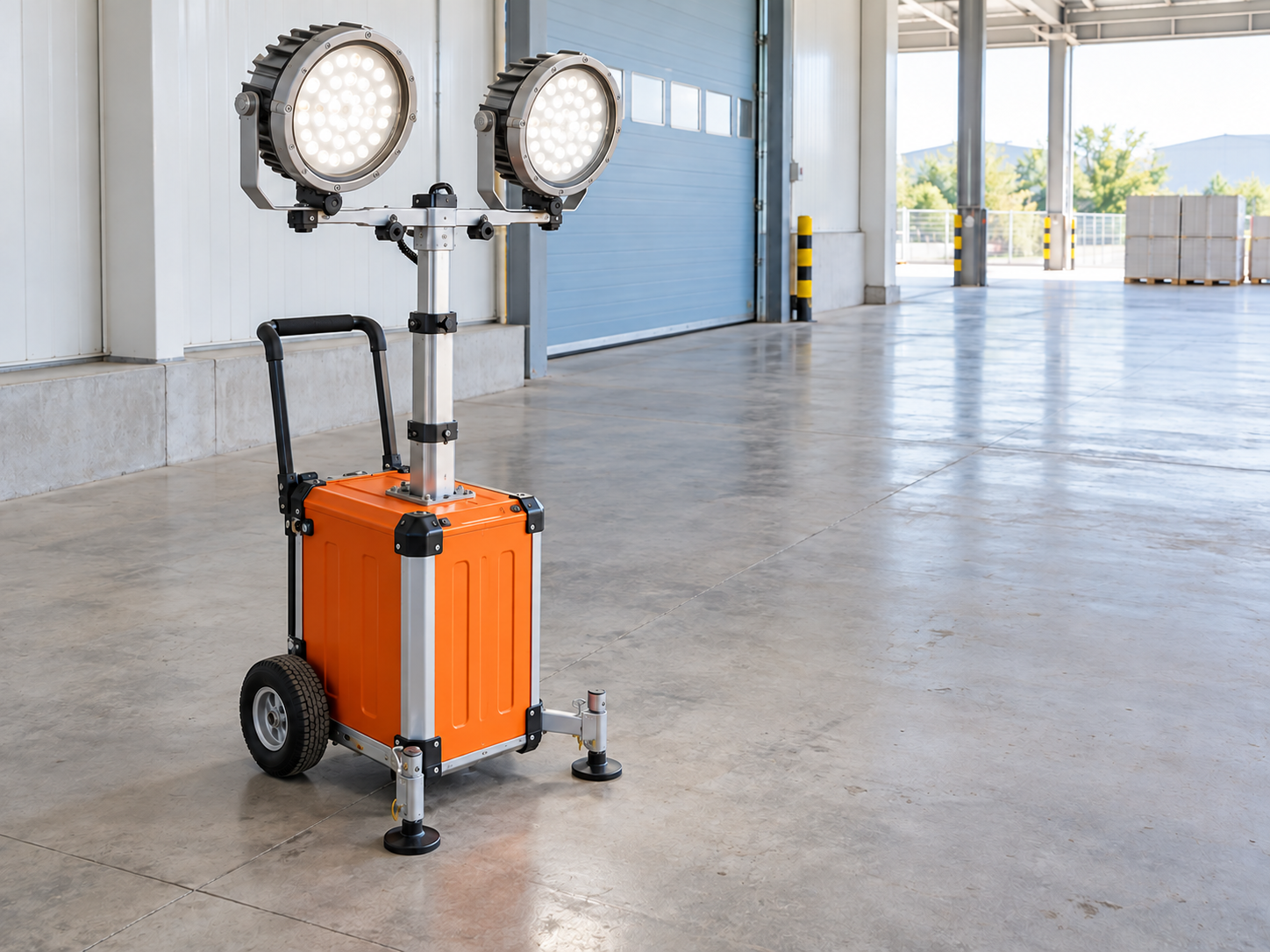
An explosion proof flood light points toward broad-area coverage, while a portable explosion proof light points toward movable task lighting. For explosion proof lighting for hazardous locations, the final hazardous location lighting classification and exact-model evidence still control suitability.
A wall light, pendant light, adjustable area light, or explosion-proof high bay light can serve a different distribution and access need. “High bay” is an installation and photometric route, not evidence that the product is approved for every hazardous environment.
-
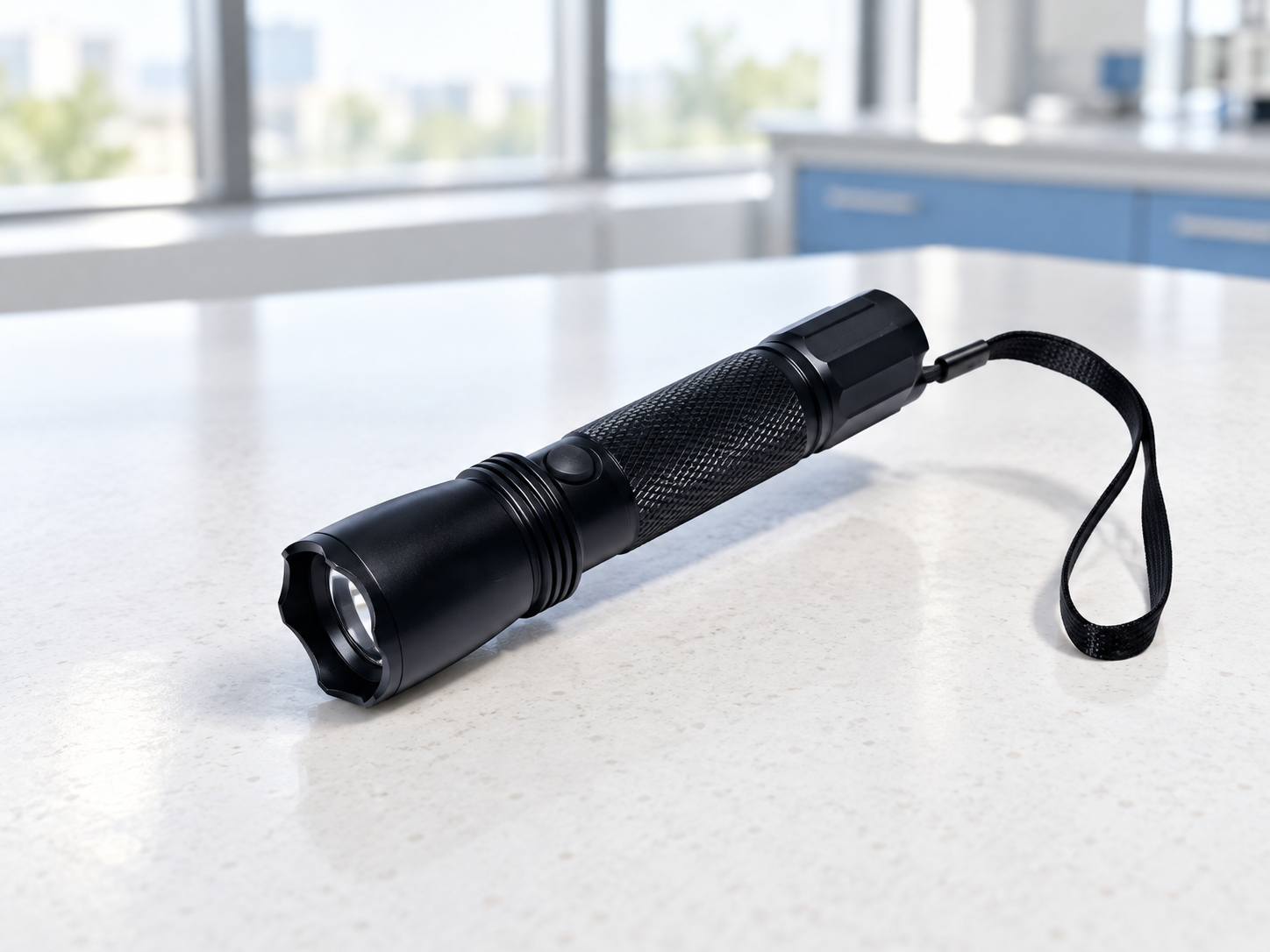 Review emergency-lighting options
Explosion-Proof Emergency Lights
For projects that define a loss-of-power, backup, response, or escape-lighting function. Emergency duration, charging, control logic, mounting, and the applicable hazardous-location marking must be specified separately.
-
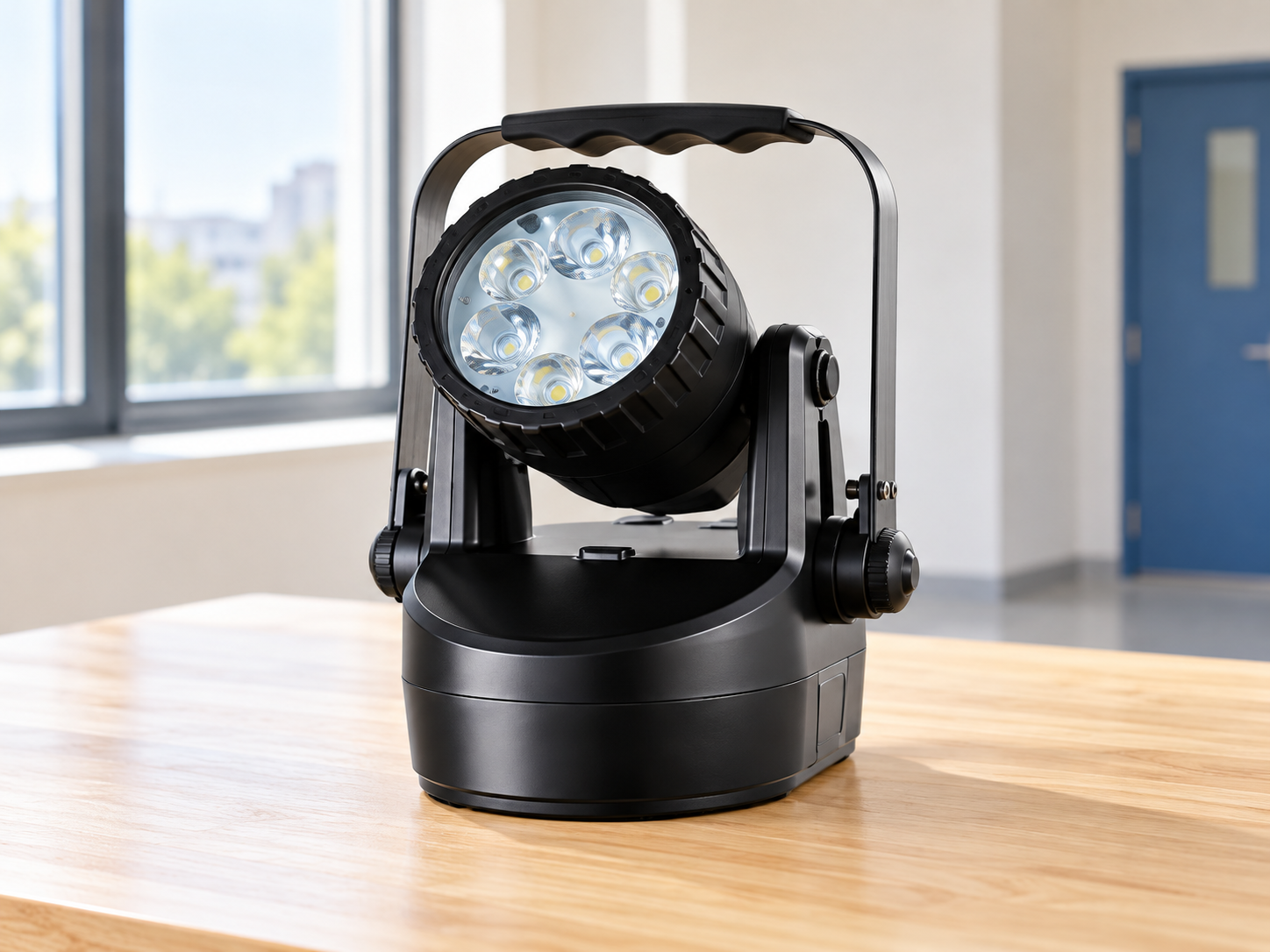 Browse hazardous-location lighting
Hazardous Location Lighting
For buyers beginning with classified-location conditions rather than a single fixture format. This route is useful when gas or dust conditions, temperature code, corrosion, washdown, or installation constraints lead the decision.
-
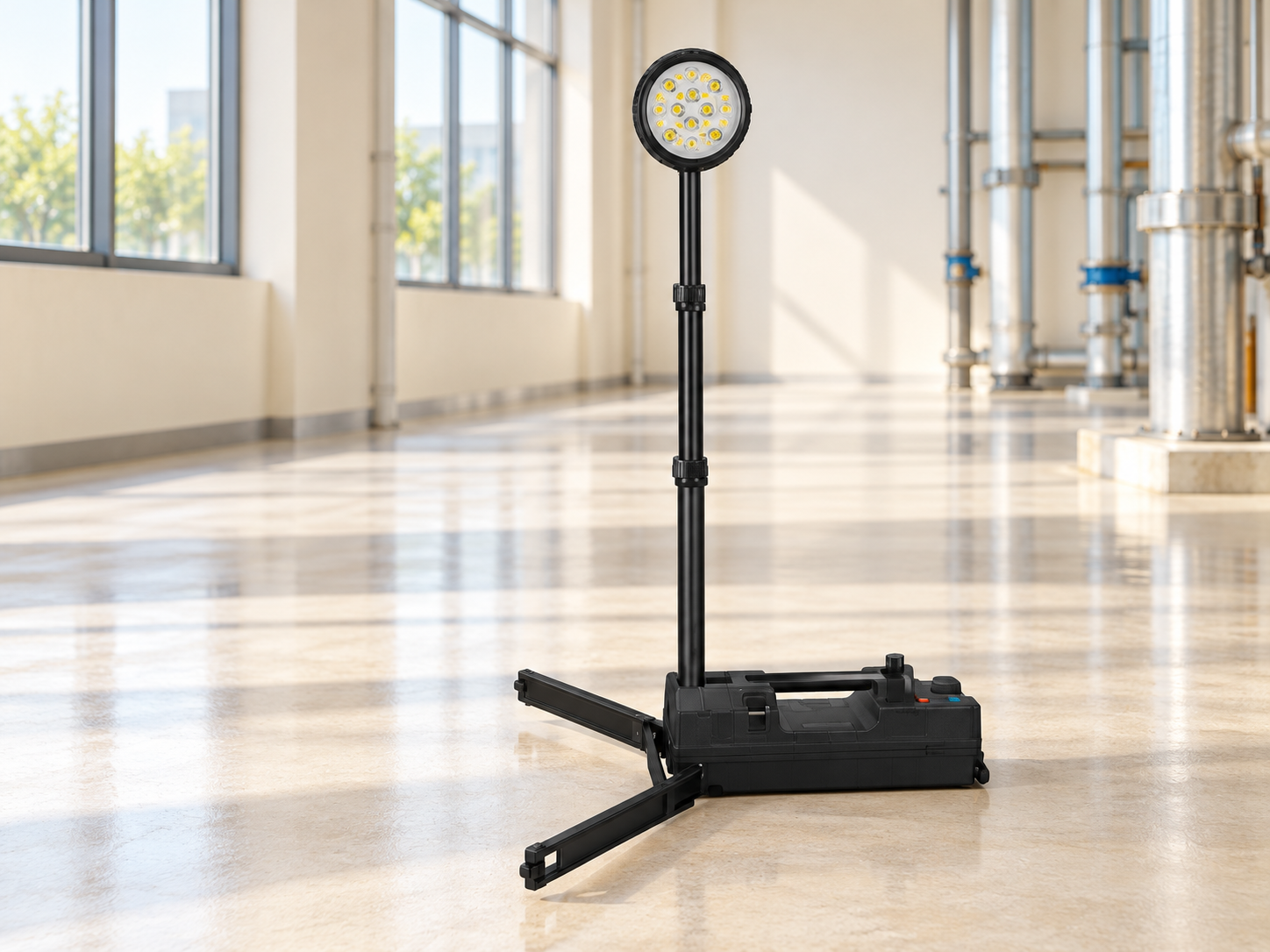 Explore LED flood-light routes
Explosion-Proof LED Flood Lights
For wide-area coverage around yards, process areas, loading points, structures, and exterior work zones. Mounting height, beam distribution, aiming, glare, target illuminance, and environmental exposure belong in the request.
-
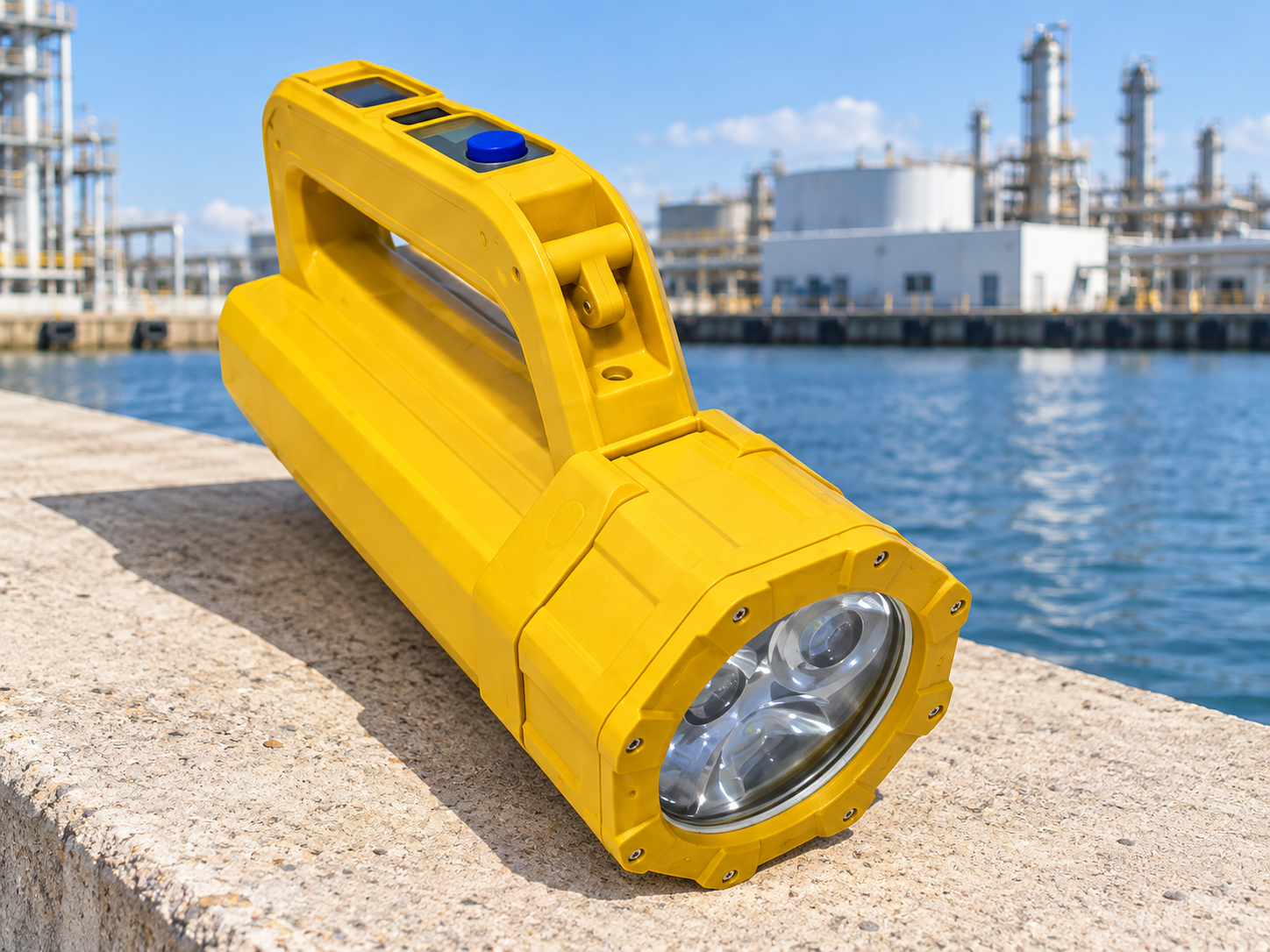 Compare portable lighting options
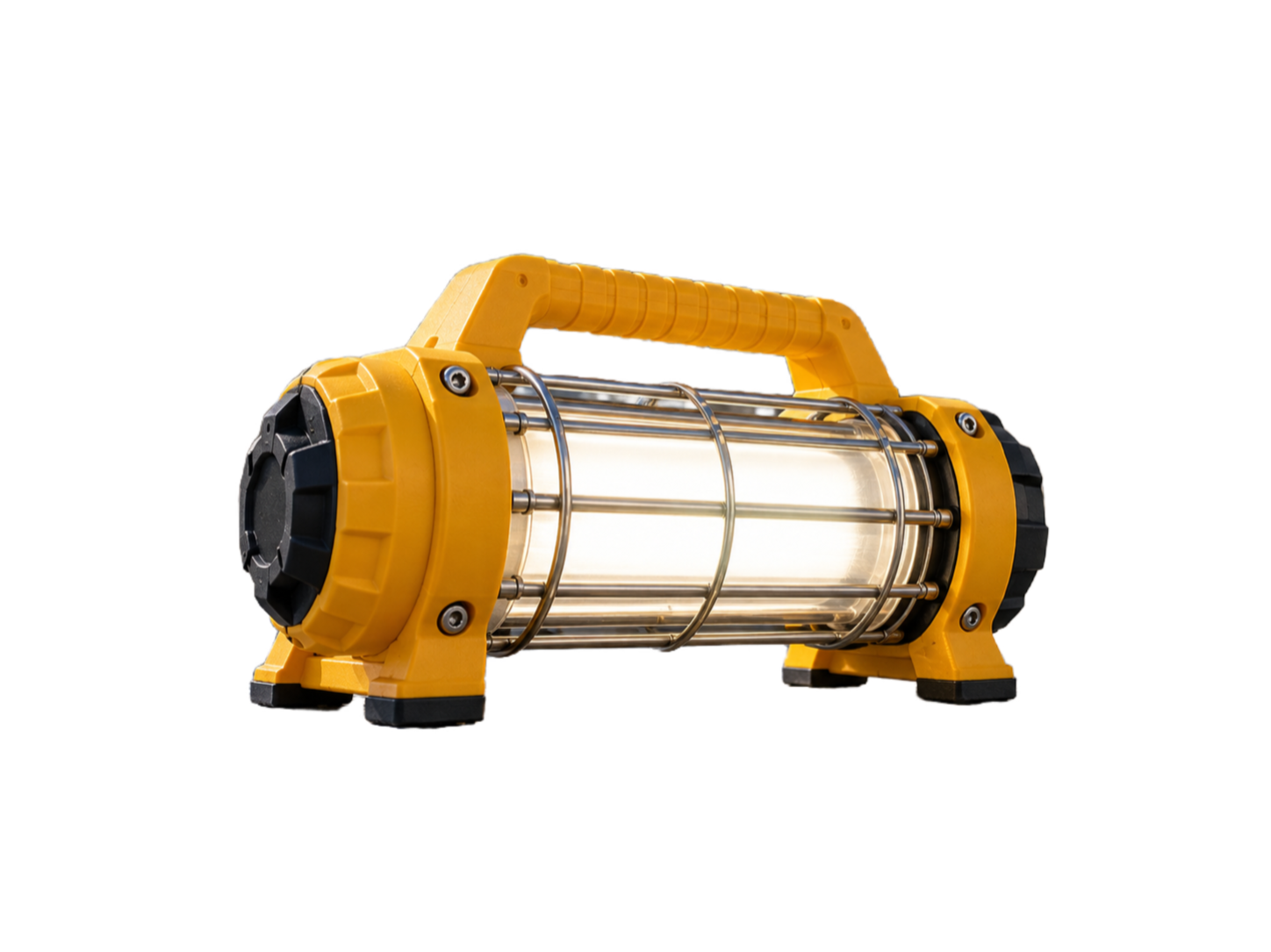
Portable Explosion-Proof Lighting
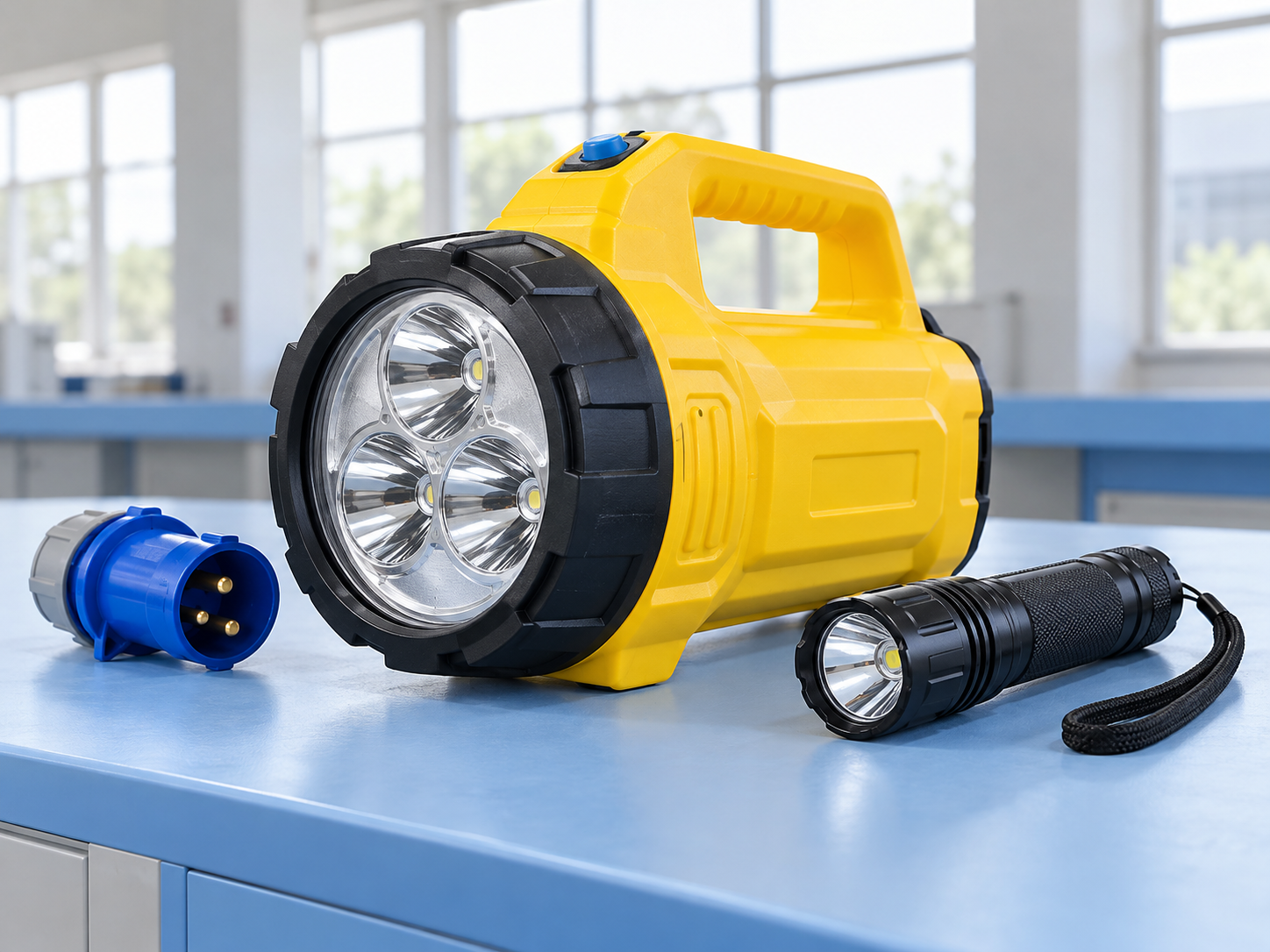
For inspection, maintenance, shutdown, confined-work, and temporary tasks where the light moves with the job. Cable, connector, power source, handling, runtime, placement, and temporary-installation requirements need review.
-
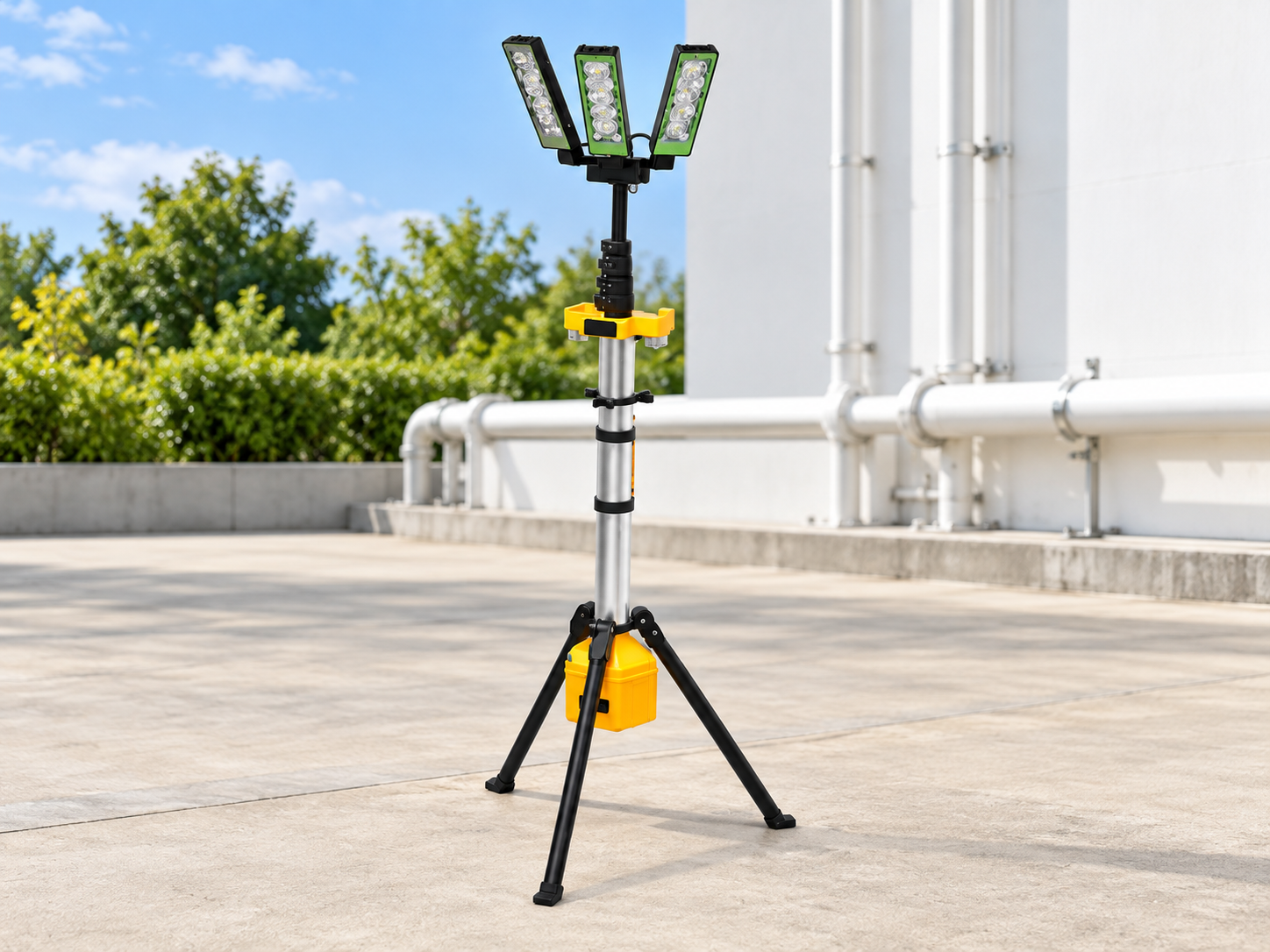 Review fixed LED lighting
Explosion-Proof LED Lights
For fixed LED lighting where the mounting form, electrical input, environmental exposure, and photometric duty are already understood. LFADJ uses the exact configuration, not the family name alone, for document matching.
Lighting Routes for Industrial and Emergency Operations
Coal, petroleum and petrochemical, electric power, metallurgy, railways, shipping, aerospace, venues and public safety don’t create a single, universal lighting specification. A refinery gas area, a Class II dust location and a Class III fiber location require different justification even if all three require industrial illumination.

| Operating situation | Likely product route | Inputs that remain open |
|---|---|---|
| Process-area or plant-wide fixed lighting | Hazardous location lighting or fixed explosion-proof LED lights | Classification, substance group, T-code, ambient range, voltage, mounting, optics |
| Outdoor yard, loading, tank, or structural coverage | Explosion-proof LED flood lights | Mounting height, aiming, coverage boundary, glare, corrosion, wind and ingress exposure |
| Inspection, shutdown, repair, or temporary work | Portable explosion-proof lighting | Power source, cable/connector, handling, runtime, temporary installation and work-zone controls |
| Emergency response or loss-of-normal-light scenario | Explosion-proof emergency lights or portable response lighting | Required function, duration, activation, coverage, charging and system acceptance criteria |
| Exit route or escape-lighting duty | Project-specific emergency-lighting review | Egress function, illuminance, duration, redundancy, testing and local requirements |
Jurisdiction and listing route
A U.S. project may name the NEC and require a specific UL listing path, while another jurisdiction may specify a different scheme. These names are RFQ requirements, not claims that every LFADJ light carries every approval.
Hazardous-location suitability does not by itself prove emergency or exit-lighting performance. U.S. exit-route requirements address lighting and operating safeguards as separate functional obligations.4
Project Inputs That Determine the Correct Configuration
Inputs that don’t include pertinent info result in comparing apples to oranges quotes. Two lights may appear similar, but their markings, ambient limits, optics, mounting arrangements, and document packages may vary; we identify missing inputs instead of guessing. 1
| No. | RFQ input | Why it changes the decision |
|---|---|---|
| 01 | Class/Division or Zone | Defines the applicable hazardous-location system and protection requirements. |
| 02 | Gas, vapor, dust, or fiber | Separates hazard types that cannot share an assumed approval. |
| 03 | Group and temperature code | Connects the identified substance to equipment marking and maximum surface-temperature limits. |
| 04 | Ambient temperature range | Checks that the offered configuration is marked for the installation environment. |
| 05 | Voltage and frequency | Determines driver, wiring, and project electrical compatibility. |
| 06 | Mounting and cable entry | Affects mechanical arrangement, aiming, entries, fittings, and installation instructions. |
| 07 | Mounting height and coverage | Guides lumen output, the photometric file, distribution, spacing, and target illumination on the work plane. |
| 08 | Ingress and corrosion exposure | Adds environmental requirements without confusing them with explosion protection. |
| 09 | Normal, temporary, or emergency duty | Separates continuous lighting, maintenance work, response, and egress functions. |
| 10 | Required certificates and reports | Sets the document scope that must match the exact product offered. |
| 11 | Quantity and delivery destination | Defines quotation, packing, shipment, and destination-document scope. |
| 12 | Drawings or project specification | Reveals installation, acceptance, and coordination requirements not visible in a product name. |
Photometric inputs are configuration inputs
Lumen output, beam pattern, glare, color temperature, and mounting geometry describe different parts of the lighting result. If the project calls for 5000K, an adjustable mount, or an enclosure that must withstand a defined environment, state those requirements rather than accepting a generic catalog description.
Use the same input set across suppliers.
That keeps technical and commercial comparisons on the same basis.
Commercial Terms for Project Planning
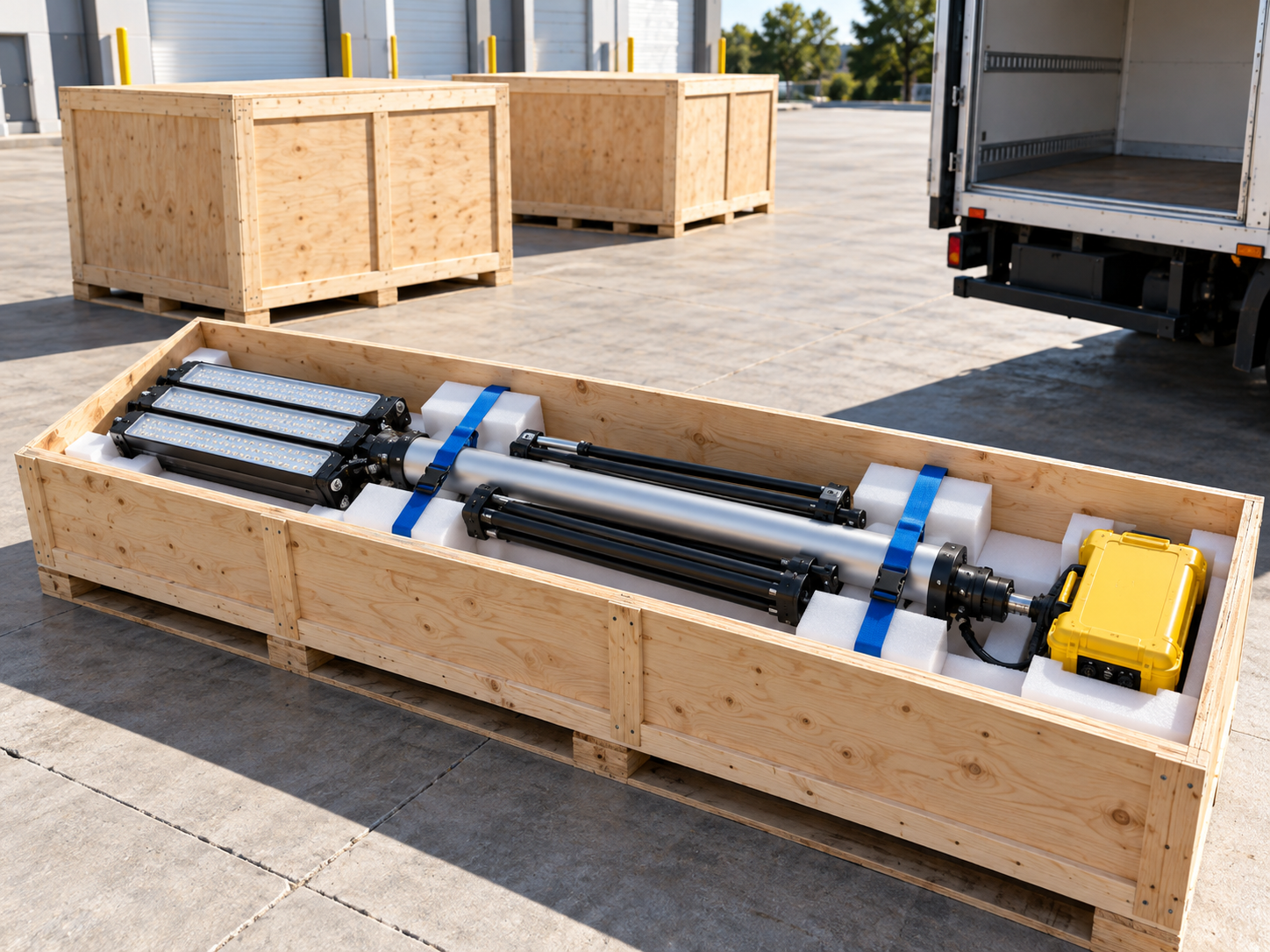
Price follows the product family, exact configuration, scope of documents, quantity, packaging, shipping and delivery requirements, not a public price list. We set the production and delivery timing in the quote when the requirements are reviewed.
-
Minimum order
TERM 01LFADJ accepts 1 unit, which supports evaluation orders and replacement needs without forcing a larger batch.
-
Samples
TERM 02Sample units are priced the same as finished products, so the evaluation unit follows the finished-product commercial basis.
-
Payment
TERM 03Payment uses a 50% deposit, with the remaining balance paid before shipment.
Quote comparison framework
SPEC VERIFICATION // 01-03-
01
Compare the same hazardous-area classification and exact approval scope.
-
02
Compare voltage, mounting, optics, accessories, cable entries, and emergency functions.
-
03
Compare the same certificate, report, packing, destination, and shipment scope.
Certificates, Test Reports and Exact-Model Matching
Certificate confidence depends on the object covered, the exact model and configuration, and the applicable conditions of the documents. A management-system certificate, a product certificate, a component certificate, and a test report address different questions.
-
LFADJ’s supplied company file lists ISO 9001:2015, ISO 14001:2015, and ISO 45001:2018 management-system certifications. We present these as management-system evidence, not as product hazardous-location approval.
-
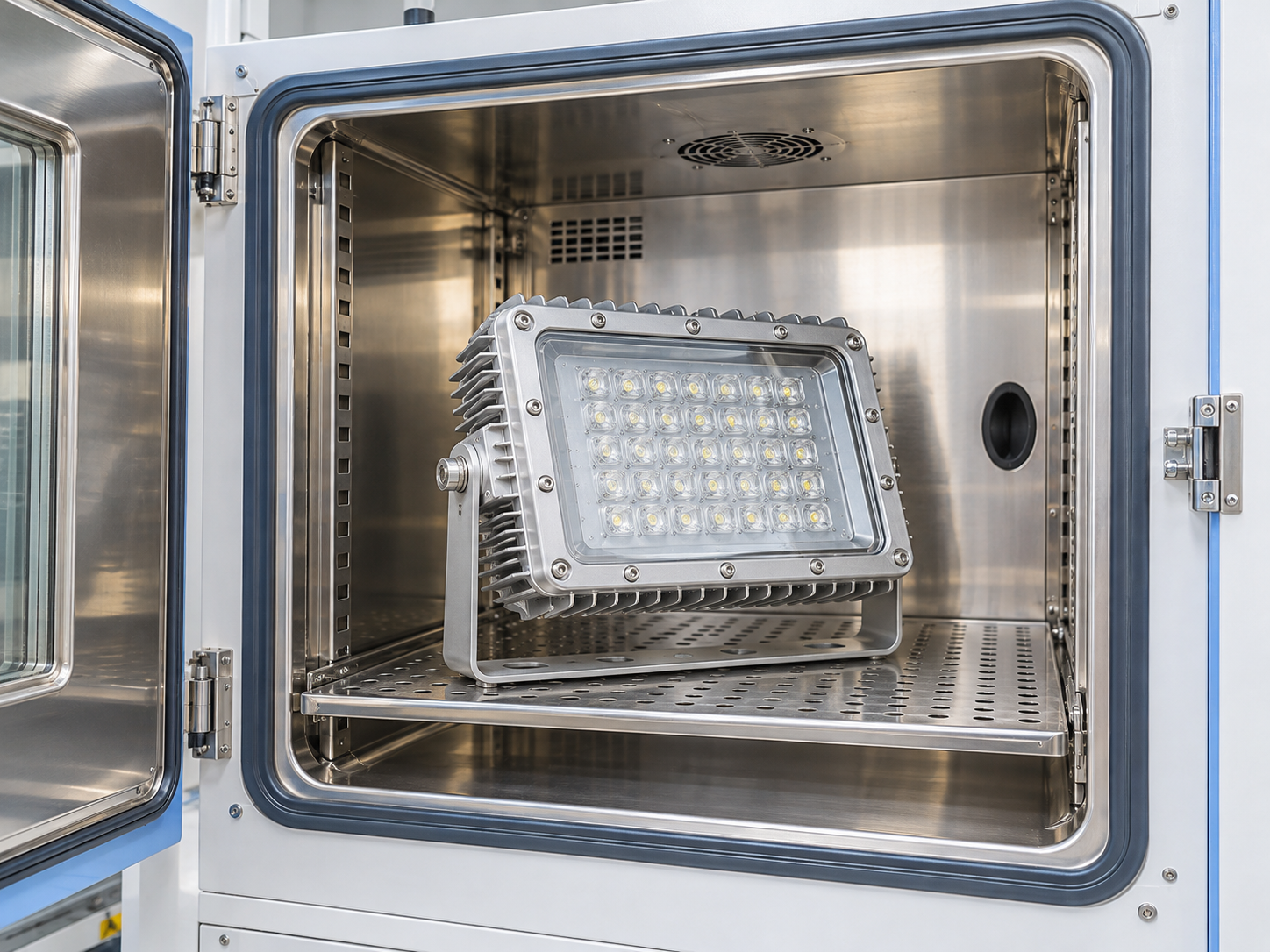
The supplied file identifies explosion-proof certificates for product categories including portable and panoramic lighting, plus test reports covering mobile, lifting, explosion-proof, portable LED, and emergency lighting products. We check which document belongs to the proposed model.
-
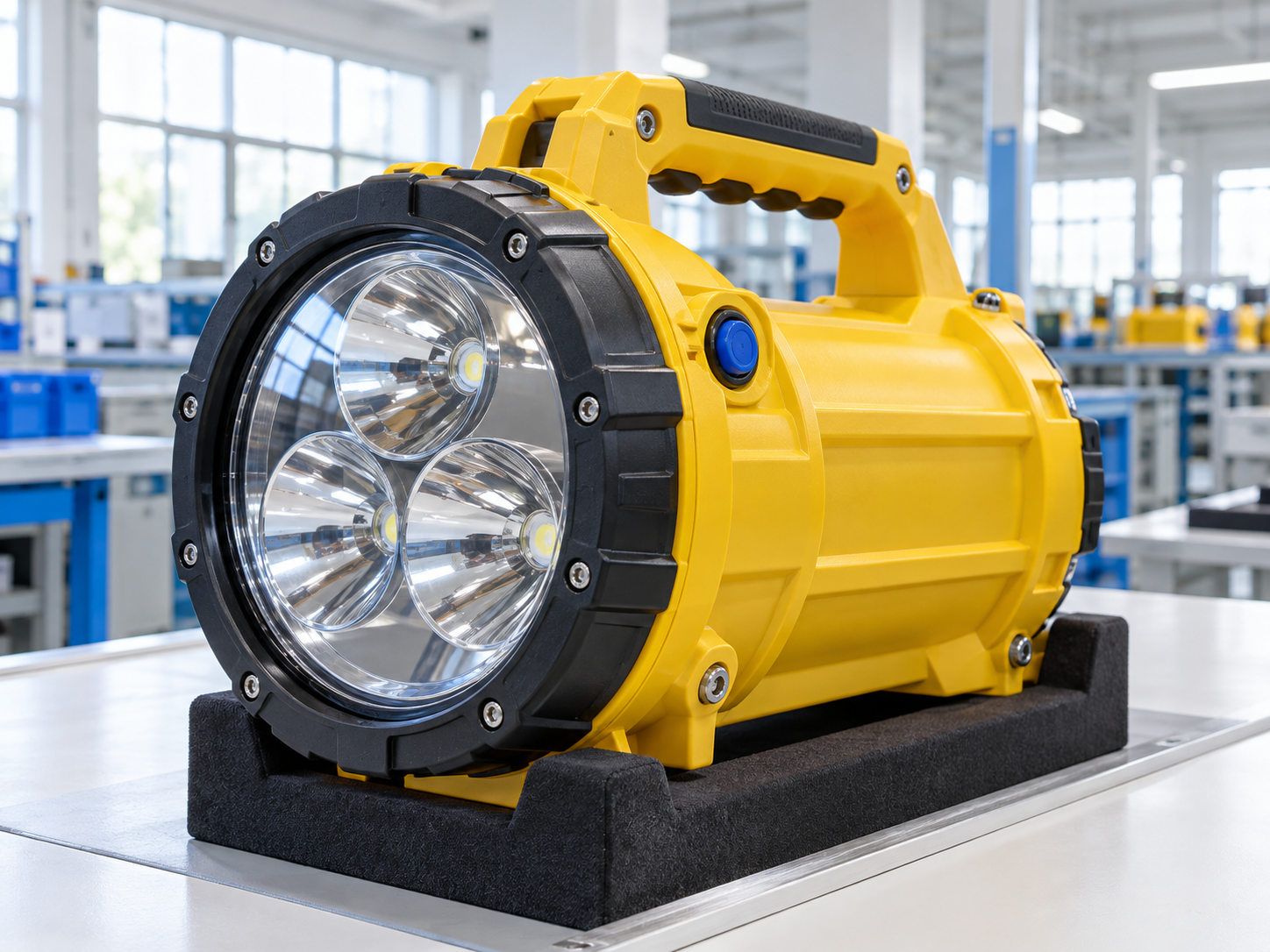
For each order, we align the offered model, marking, applicable conditions, certificate or report, and installation instructions before the document package is treated as order evidence.
The IECEx equipment scheme describes conformity assessment for equipment, components, and assemblies.2 Requesting a document by title alone is not enough; the certified object and delivered configuration must align.
Procurement may receive a product-family certificate without proof that it covers the ordered configuration. A family title is not a substitute for exact-model scope, and a component report does nothing for a complete-equipment claim unless the issuing document says so.
Send the model, required jurisdiction, and project classification.
Build a Document Match RequestExplosion-Proof Lighting Project Route Map
The route map aligns engineering input to procurement without implying a product selection completes the process for approval of installation. We keep product matching, installation responsibility and commercial handover clearly differentiated.
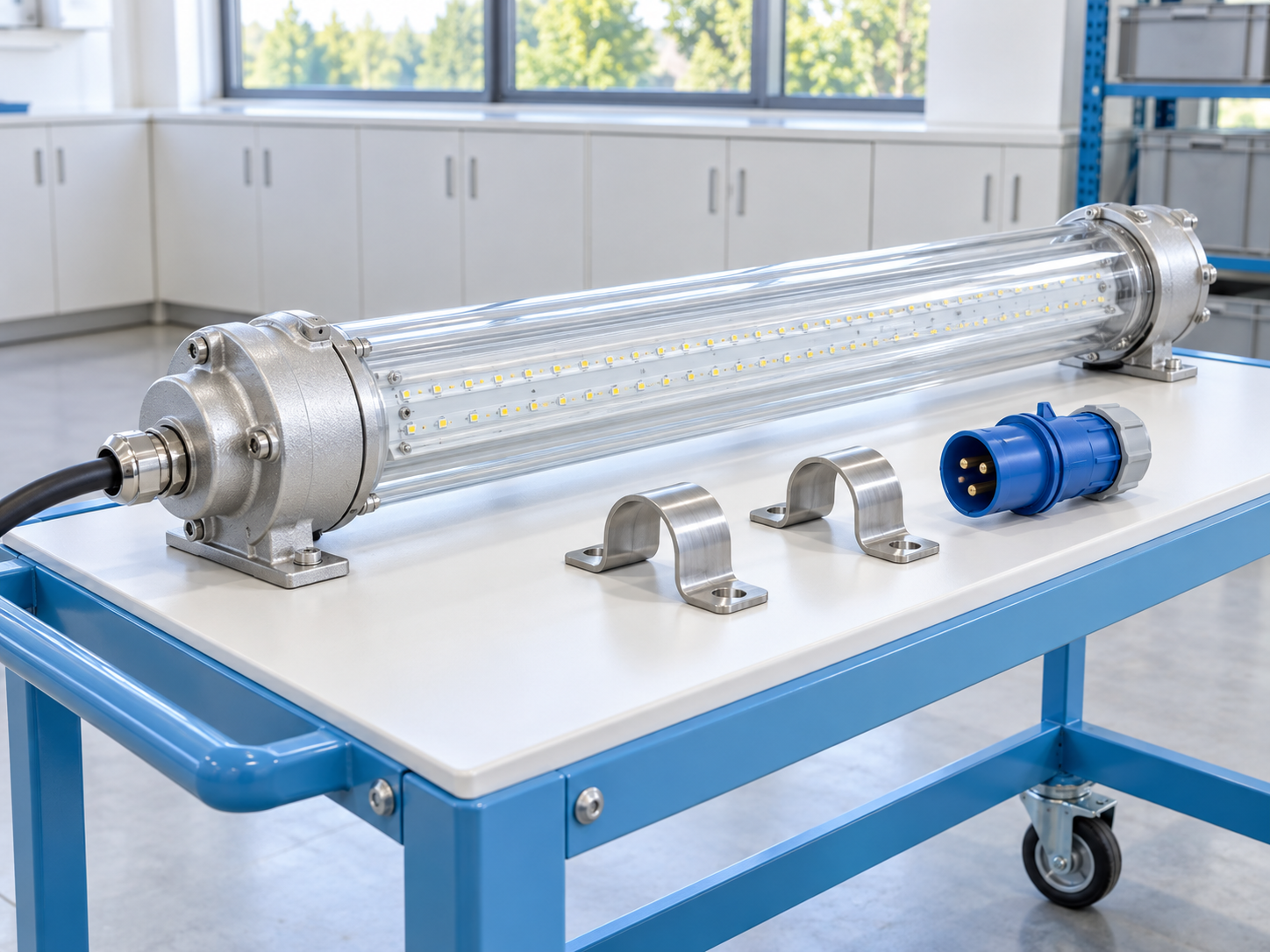
“A useful quotation starts when the classified location and operating task are clear. Product family, exact model, documents, and installation responsibility should then remain linked through the handover.”
-
Your team provides the documented hazardous-area system, substance type, group and temperature class, and ambient conditions.
-
We refer your request to fixed LED lighting, flood, portable, emergency and higher power hazardous-area lighting.
-
We review quantity, destination, mounting, entries, optics, environment, operating duty, and temperature limits.
-
We match the proposed model with the relevant marking, certificate or report and installation documents.
-
The designer and installer confirm the installation design and wiring, and competency to perform the final inspection and local acceptance.
-
We supply the connection, the agreed documents and support in line with the contract.
Supply Support Across the Project Cycle
LFADJ combines research and development, manufacturing, trade, and service for industrial, mobile, explosion-proof, and emergency lighting. Service paths are defined and do not take the form of an open-ended commitment.
-
For each request, we provide product consultation, selection support, and a lighting-solution discussion based on the application environment, operating requirements, and lighting needs.
-
During supply, we carry out product-configuration and technical communication, then coordinate scheme implementation and supply connection against the confirmed project requirements.
-
After delivery, we provide product-use consultation and after-sales issue handling through the service network. Maintenance, warranty period, response time, and onsite support follow the specific contract agreed by both parties.
Conditions That Need Engineering Review
Some projects cannot be closed from a category name or a short product list. 3 We route the conditions below into technical review before a model and document set are treated as final.
-
Area classification documentation is incomplete or inconsistent.
-
Gas and combustible dust risks may exist in the same work area.
-
The required gas/dust group or temperature code is unknown.
-
Ambient temperature falls outside a proposed model's marked range.
-
Corrosion, washdown, vibration, impact, and marine environment exposure change the enclosure duty.
-
Voltage, frequency, controls, or emergency logic are non-standard.
-
Portable equipment is to be used with temporary power, cables and connectors.
-
One project requires documents for more than one jurisdiction.
-
Emergency escape performance must be demonstrated at system level.
-
Installation design, sealing, wiring and grounding, and initial inspection are unresolved.
The next step is to provide the missing classification, substance, environmental, installation, or functional requirement. The solution is not to select a larger light and assume the safety gap has closed.
Explosion-Proof Lighting Engineering Tools
-
Hazardous-Area Input Checklist
Consolidate zone classification, gas or dust group, temperature class, and site electrical parameters prior to luminaire selection.
-
Exact-Model Document Match Builder
Generate a structured verification request to match product certificates, test reports, and installation manuals against exact ordering codes.
-
Explosion-Proof Lighting Project Route Summary
Map out the technical execution path from hazardous-location input verification to compliance review and final luminaire specification.
Explosion Proof Lighting FAQ
When is explosion proof lighting required?
The controlling project classification determines the required equipment protection. Start with the area-classification drawing or specification and the actual gas, vapor, dust, or fiber hazard, then match the exact equipment marking and installation requirements.
How do I choose hazardous location lighting?
Provide the classification system, hazard type and group, temperature code, ambient range, voltage, mounting, photometric duty, environment, quantity, destination, and required documents. That input set lets the supplier compare configurations on the same technical basis.
Are ordinary LED bulbs explosion-proof?
No. Installing an LED bulb in an existing enclosure does not establish that the complete modified fixture is approved for the hazardous location; the complete configuration and its permitted modifications must be verified.
How do gas and dust approvals differ?
Gas/vapor and combustible-dust hazards use different classifications and protection concepts. OSHA 1910.307 distinguishes explosionproof, dust-ignitionproof, and dust-tight equipment, so one label cannot be extended to a different hazard type without evidence.1
Can Class I Division 1 be treated as the same as Zone 1?
No. Class/Division and Zone are separate classification systems with their own markings and acceptance routes; use the system named by the project rather than relying on a shortcut conversion.
Can a Division 2 light be installed in a Division 1 location?
Do not assume it can. The exact equipment approval must match the classified location and the project's accepted installation method.
Does IP66 mean a fixture is explosion-proof?
No. An IP rating describes ingress protection, while hazardous-location approval addresses ignition risks and location-specific suitability. A project may require both, but one does not replace the other.
Can one certificate cover every model in a product family?
Do not assume it does. Check the certified object, exact model or ordering code, configuration, marking, applicable conditions, and current document status against the item offered.
How do a full equipment certificate, component certificate, and test report differ?
They document different objects and assessments. A component document or test report should not be presented as complete-equipment certification unless the issuing document explicitly provides that coverage.
Which product family fits temporary maintenance work?
Portable explosion-proof lighting is the first route to assess, but power source, cable and connector, handling, runtime, temporary installation, and the classified-location requirements remain part of the decision.
Does explosion-proof approval prove emergency or exit-lighting performance?
No. Hazardous-location approval addresses ignition protection; emergency and exit-lighting duties add functional requirements such as activation, duration, coverage, testing, and system reliability.
What affects explosion proof lighting price?
Price follows the family, exact configuration, approval and document scope, voltage, mounting, optics, accessories, quantity, packing, destination, and delivery requirements. Use the same RFQ inputs when comparing suppliers.
Can I order one unit or a sample?
Yes. We accept 1 unit, and sample units are priced the same as finished products.
What should I include in an RFQ?
Include the site/application, classification, gas or dust, group, T-code, ambient range, voltage, mounting, coverage target, operating duty, quantity, destination, required documents, and any project drawings or specification files.