Get in touch with LFADJ Company
Mining Light Tower for Mining and Quarry Projects
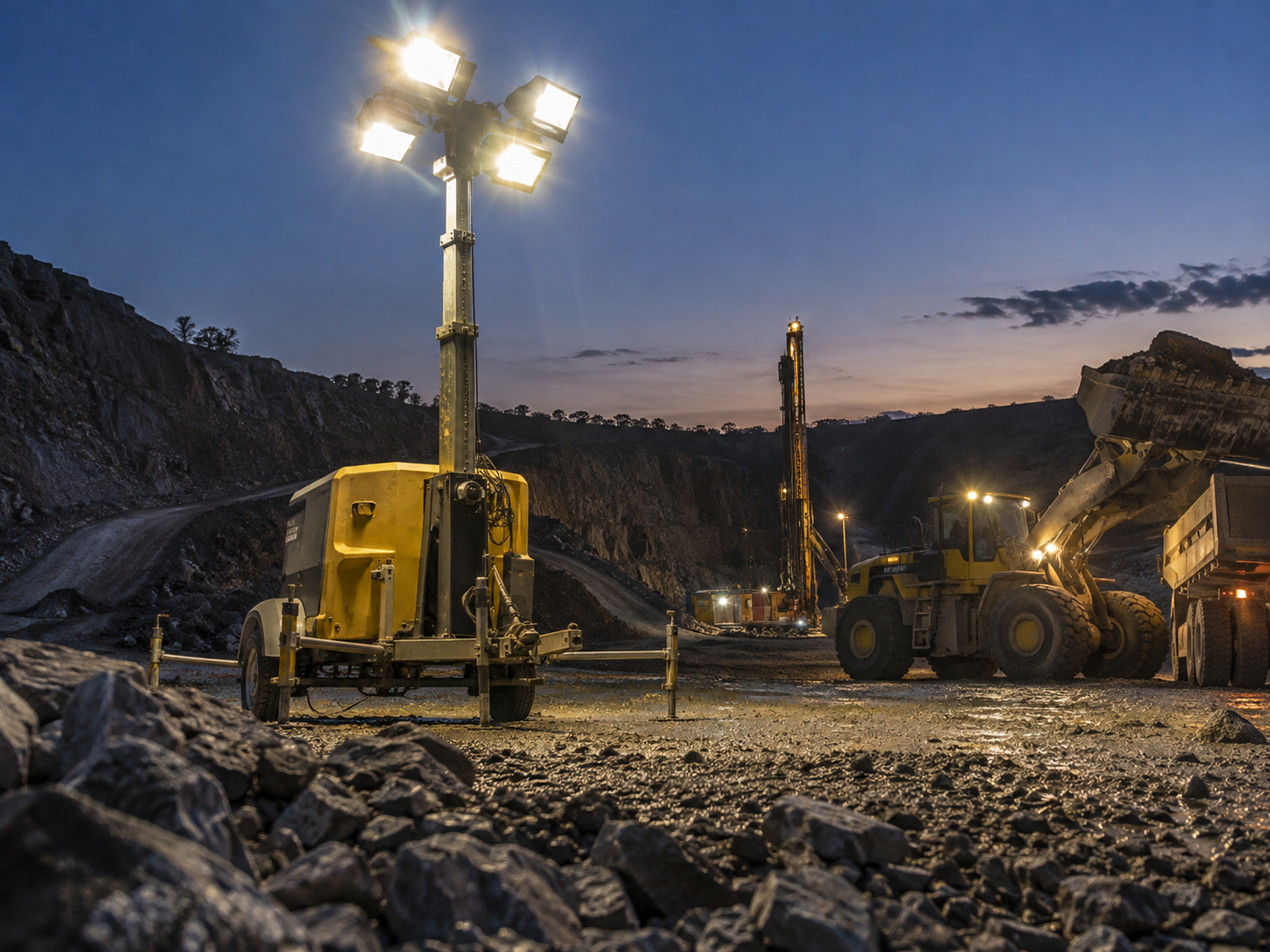
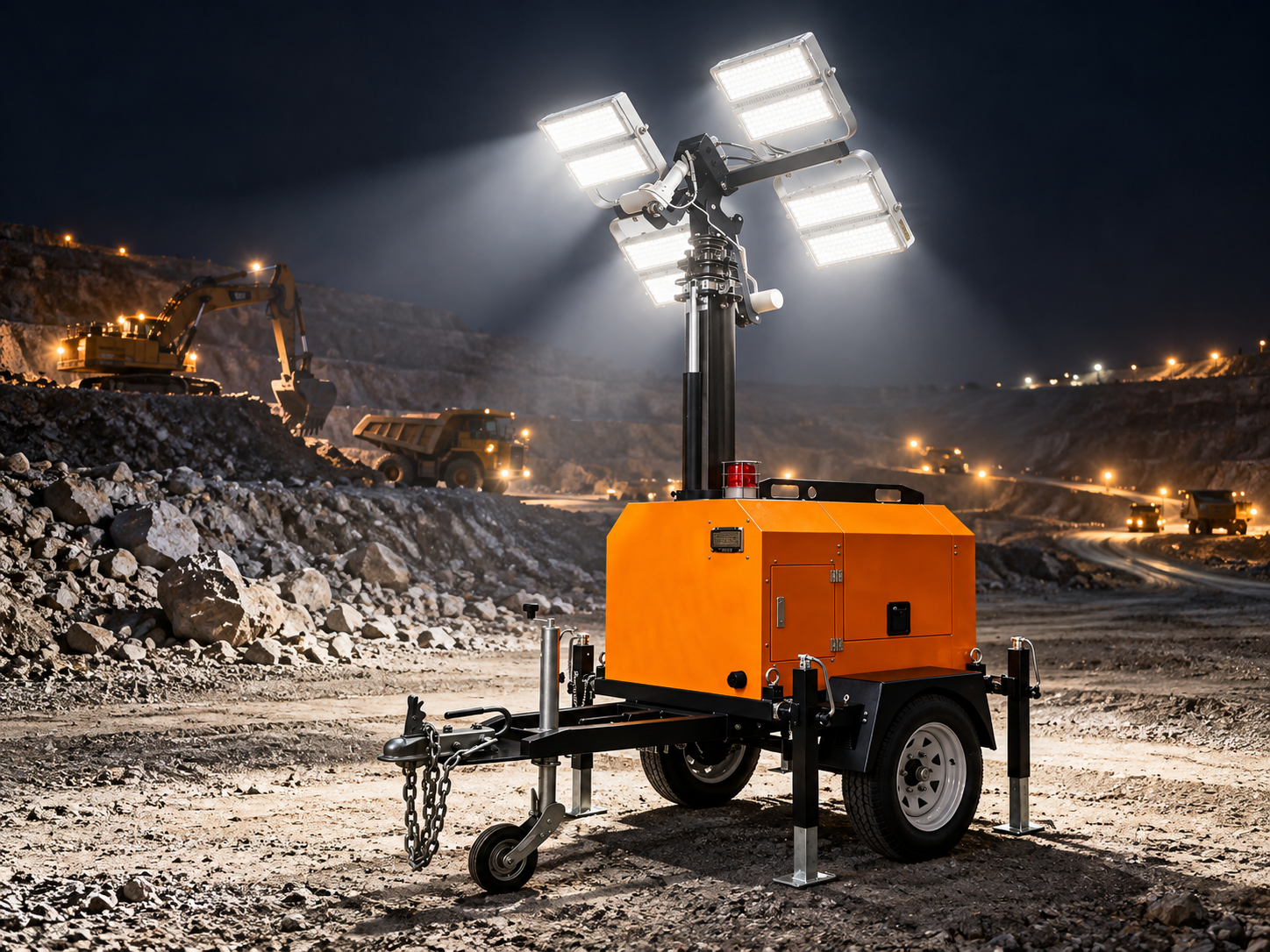
Describe a mining light tower for the kind of work your crew must do, the places it must reach, and the shift it must support. LFADJ furnishes mobile lighting systems to outfit temporary industrial work sites, and D955 LED light tower systems for surface mine and quarry projects.
- 4 × 400 W LED package for the D955 mining configuration
- 7 m hydraulic mast with 340° rotation
- Configuration support for your site, quantity and destination
D955 at a Glance
The LFADJ mobile light tower uses its compact transport form and raised mast for different tasks: transporting between work areas and positioning light above nearby equipment. Fuel usage must be coordinated with the lighting load and operating conditions to establish operating hours.
Start with a site brief. Send a layout or site photos, the night task, shift hours, target illumination, available power and delivery location.
4 × 400 W
LED lamp package
7 m
Hydraulic mining configuration
100 L
Fuel tank capacity
45–60 days
D955 lead time
Mine Site Lighting for Changing Work Areas
A light tower in quarry work directs a light into a working face and may serve to illuminate a quarry loading area, maintenance pad, or a temporary access way. Glare from the light tower must be assessed from the operator’s view position.[1]
| Work area | Visibility problem to check | Information for selection | Site acceptance check |
|---|---|---|---|
| Loading face and dumping point | Truck bodies and stockpiles block light | Vehicle heights, travel paths and changing face position | Check the working face and driver views with equipment present |
| Maintenance pad | Chassis shadows hide the repair task | Work plane, access side and any local task lights | Inspect both the surrounding area and the repair point |
| Haul roads and junctions | Glare and abrupt light-level changes | Approach directions, turning points and neighbouring lighting | Assess approaches and mirrors, not only the ground below the tower |
| Walkways, stairs and controls | Small obstacles or controls remain hard to see | Pedestrian route, steps and control locations | Check the task surface and route transitions |
-
Define the light level
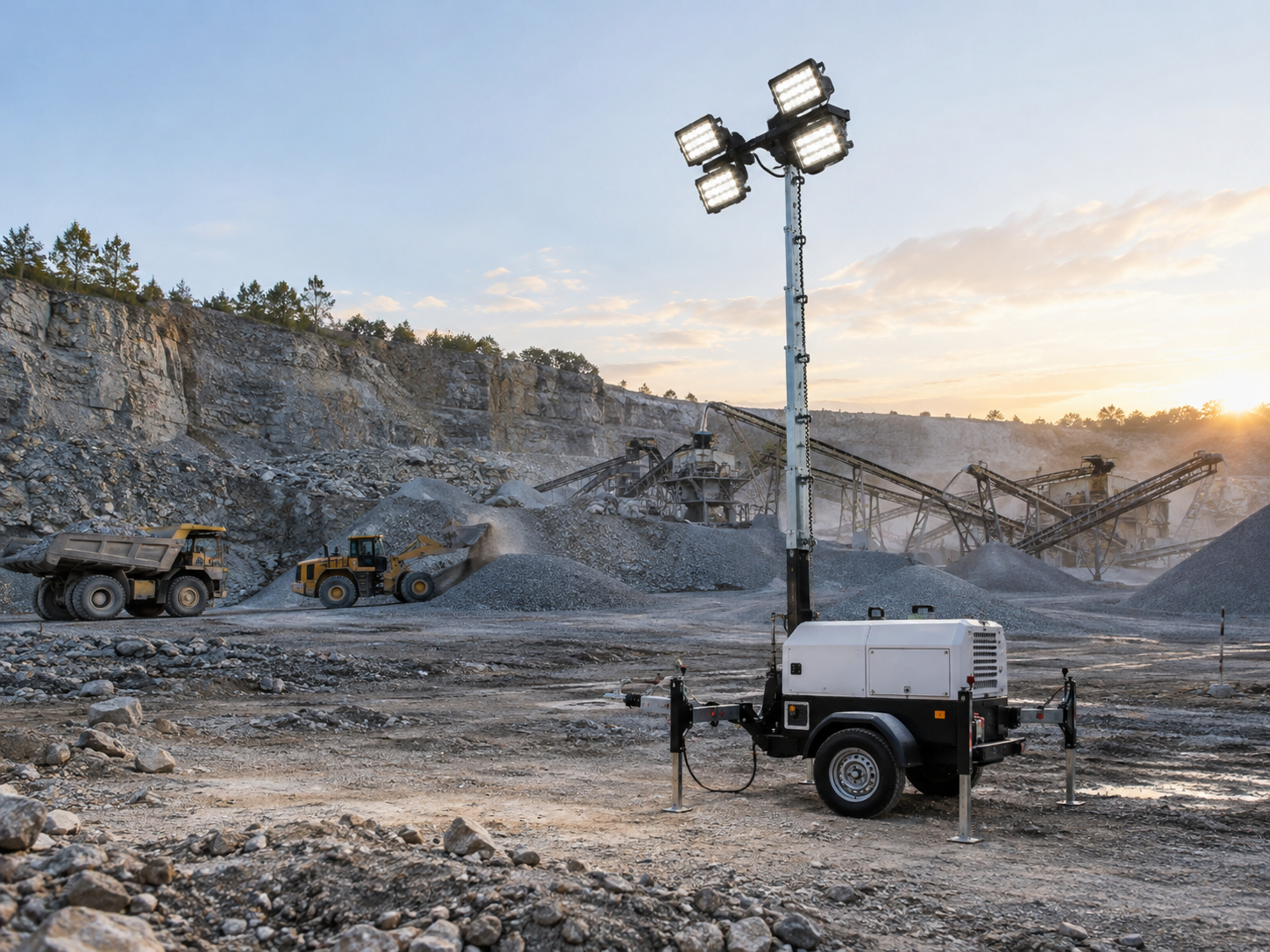
Identify the targeted lux level, the reference plane, and the boundary of the area to be defined. Average and minimum illuminance are not interchangeable claims for coverage. Larger claims of coverage area do not imply better task lighting.
-
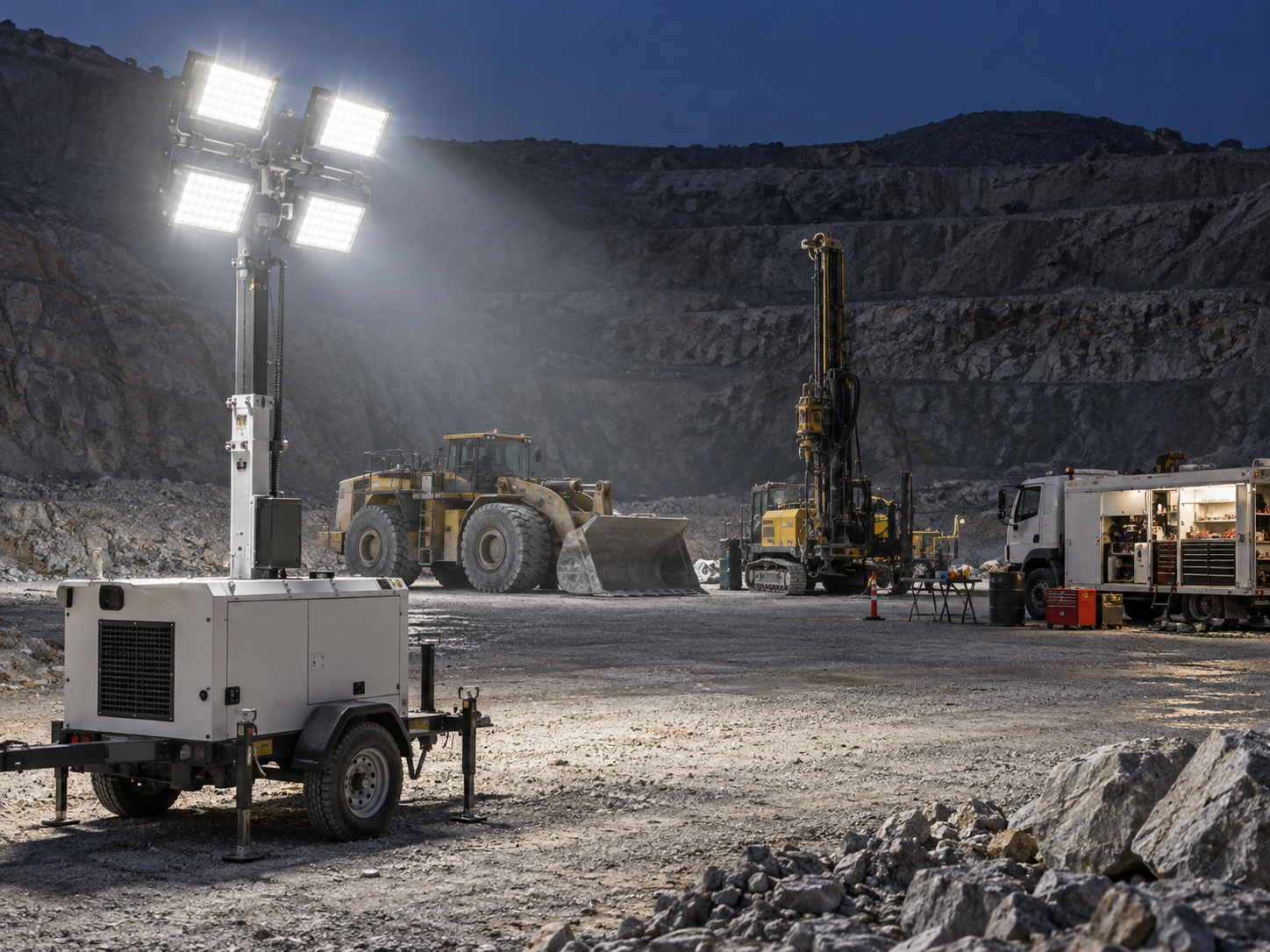
Check distribution
One floodlight setting can suit a clear pad but leave shadows around mining equipment. A luminaire layout needs review after the work face or equipment positions change.
-
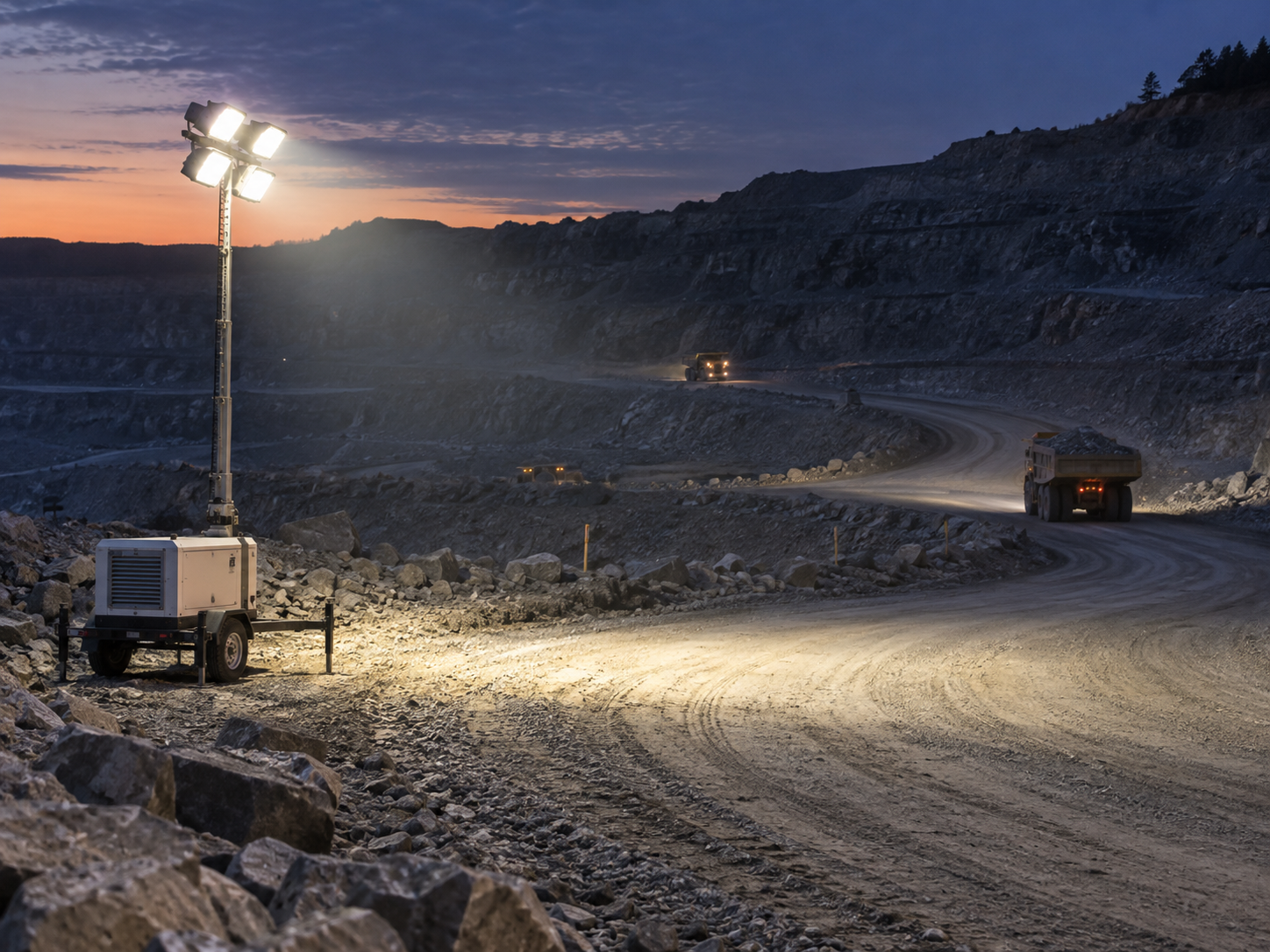
Plan for interruption
Decide how work stops or continues if a light fails or a tower needs refuelling. Put that decision into the site’s night-work plan.
LFADJ Mining Light Tower Configurations
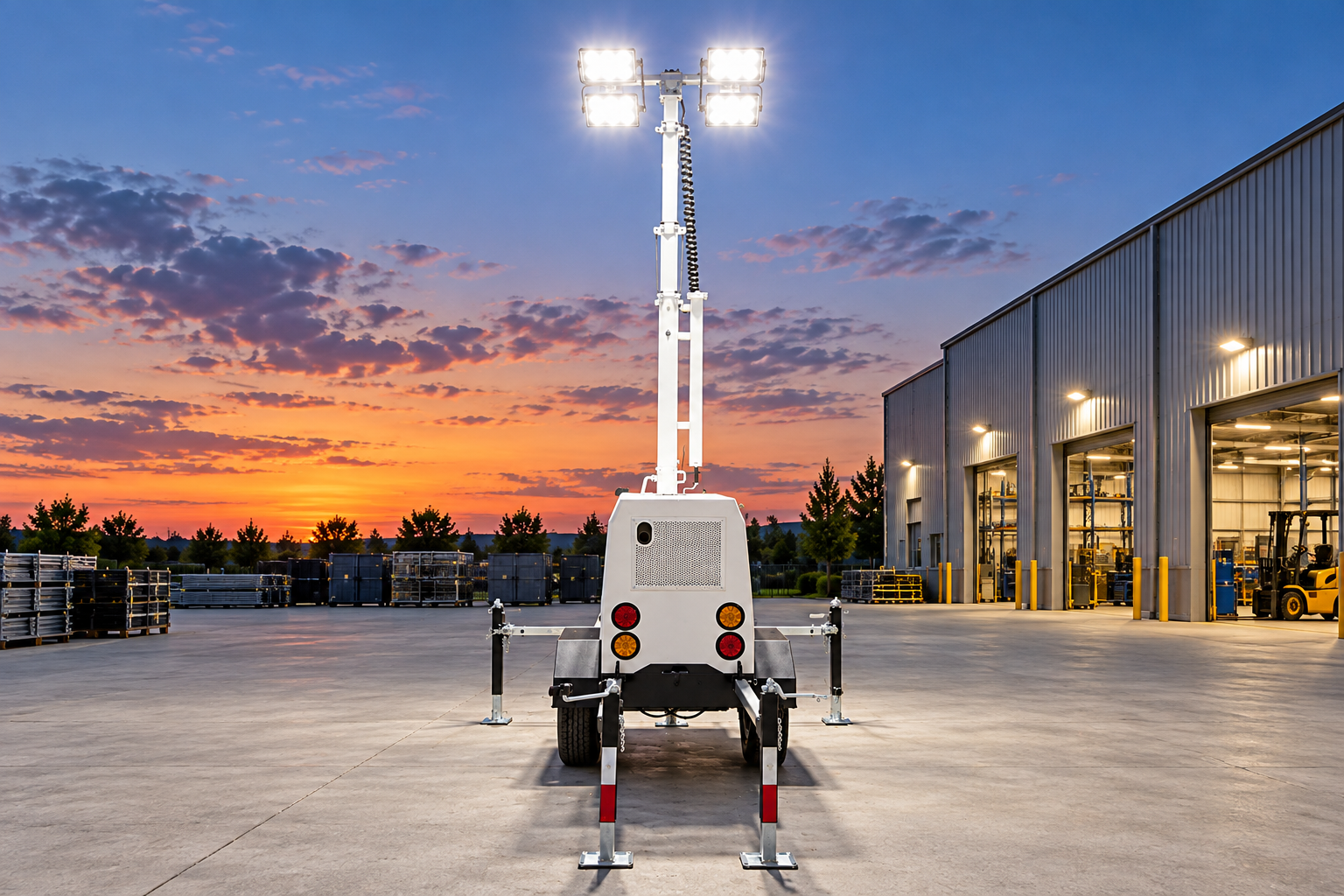
When obtaining a price quote, specify the combination of engine and mast that best fits your need. The D955 packages below are separate offerings, and a taller mast does not imply the same engine, dimensions or performance.
The trade-off with more height is deployment space. It changes the installation envelope and can change shadows and aiming, whereas useful coverage also depends on the optics and aiming.
| Selection point | Mining configuration | Separate hydraulic configuration |
|---|---|---|
| Lamp package | 4 × 400 W LED | 4 × 400 W LED |
| Mast | 7 m hydraulic mast | 9 m hydraulic mast |
| Engine | Yanmar; model to be specified in the quotation | Kubota Z482 |
| Next selection step | Check task coverage and the transport envelope below | Confirm the complete package and its matching dimensional drawing |
System Configuration
Mast, Lighting and Transport Options
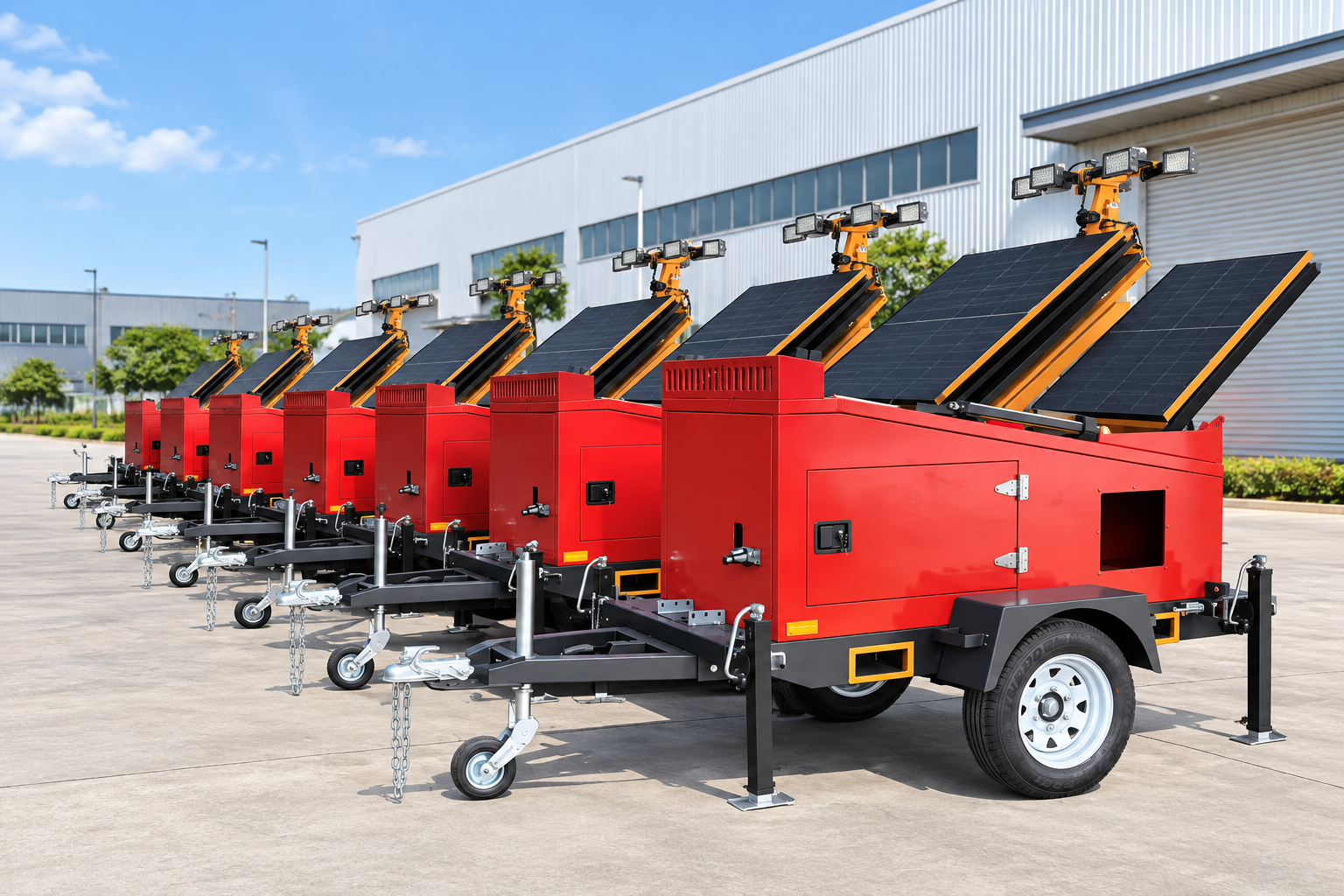
Service access affects the time spent on routine maintenance. Discuss the arrangement of diesel engines, generators, and other parts as one lighting system, especially when the equipment will be placed far from a service base.
-
D955 · 4 × 400 W LED lighting
The D955 package uses four LEDs rated at 400 W each. Compare fixture output and distribution at the task, rather than choosing on lamp wattage alone.
-
7 M / 9 M MAST Hydraulic lift
Select a 7 m or separate 9 m package to suit the site brief. Operators need the supplied procedures for raising, lowering and securing the mast.
-
340° ROTATION Directional positioning
The mining configuration provides 340° rotation. Aim the lamps to limit direct glare toward drivers and neighbouring work areas.
-
CARBON-STEEL Body and chassis
A carbon-steel canopy and welded chassis form the mining package. Match maintenance and corrosion care to dust, moisture and the site's exposure.
-
TRAILER-MOUNTED Transport planning
Consider the towing vehicle, access route, and destination when identifying the vehicles to be used. Trailer-mounted light towers still require the correct coupling, braking, and road-use arrangements for the supplied unit.
-
SYSTEM ASSEMBLY Maintenance access
Consider access for routine maintenance when planning. Durability and LED lifespan are affected by the complete assembly and operating conditions and not LED technology alone.
D955 Mining Light Tower Specifications
Transport clearance and deployed footprint are different checks. Use the 7 m mining configuration below for early logistics planning, then confirm the ordered unit's drawing before arranging transport or allocating a deployment pad.
| Item | Specification | Planning meaning |
|---|---|---|
|
LED lamp package
|
4 × 400 W | Fixture power, not a coverage guarantee |
|
Mast height
|
7 m / about 23 ft | Hydraulic mining configuration |
|
Mast rotation
|
340° | Aiming range |
|
Fuel tank
|
100 L | Capacity; runtime requires load-specific fuel data |
|
Transport length
|
1650 mm / 64.96 in | Lowered transport envelope |
|
Transport width
|
1450 mm / 57.09 in | Lowered transport envelope |
|
Transport height
|
2350 mm / 92.52 in | Lowered transport envelope |
|
Working envelope
|
2650 × 2450 × 7200 mm / 104.33 × 96.46 × 283.46 in | Length × width × height; allow additional site clearance |
|
Weight
|
1050 kg dry / 1150 kg wet | Confirm the supplied unit and transport load |
|
Container loading
|
4 units / 20-foot container; 8 units / 40-foot container | Confirm packaging and the final loading plan |
9 m dimensional option: the mining product range also lists a 1650 × 1450 × 2650 mm transport envelope and a 2650 × 2450 × 9000 mm working envelope. Specify the engine alongside this dimensional option and request a matching drawing with your quotation.
Mining Light Tower Price and Lead Time
Our D955 lead time is 45–60 days. The mining light tower price depends on the agreed engine and mast package, quantity, requested equipment and delivery destination; the quotation confirms the supplied scope and delivery schedule.
- Send the required quantity and preferred package.
- Identify destination, transport arrangements and site-specific equipment needs.
- Separate equipment price, freight, and site operating costs when making a comparison.
Minimum order
Our minimum order is 1 unit.
Payment terms
We require a 50% deposit, with the balance paid before shipment.
Supply scope
The quotation identifies the package and quantity and gives the delivery terms and conditions.
| Fleet cost input | Scenario A | Scenario B |
|---|---|---|
| Fuel consumption per tower | 1.0 L/h | 0.8 L/h |
| Fuel at $2/L | $144.00 | $115.20 |
| Fleet service visits per shift | 3 visits × 20 minutes | 6 visits × 20 minutes |
| Visit labour at $30/hour | $30.00 | $60.00 |
| Fleet maintenance allowance | $12.00 | $12.00 |
| Selected operating-cost subtotal | $186.00 | $187.20 |
Shift Logistics Cost Card
Fuel delivery takes time, and a lower fuel bill does not always solve the service-access problem. Consider other options to meet the same lighting task and compare their fuel consumption before selecting a fleet.
The hidden cost is access time
In this LFADJ planning example, Scenario B uses less fuel but costs $1.20 more per shift in this example because it needs more service visits. Count travel and service time consistently; a visit may cover several towers.
- Site manager: record visits and travel time alongside litres consumed.
- Finance: add the purchase, freight, financing, replacement and disposal costs when doing a full ownership comparison.
- Procurement: request fuel data at the actual lamp load and proposed duty cycle.
The subtotal shown does not consider capital cost, depreciation, or downtime, or any other cost of ownership. Alter the assumptions to fit your site before evaluating alternatives.
Quality Documentation and Project Support
Zhejiang LONGFA Lighting Co., Ltd. was established in 2013 in Yueqing, Zhejiang, China. LFADJ brings product development, manufacturing, trade and service together for industrial, mobile and emergency lighting projects.
-
Quality management
ISO 9001:2015 quality management system certification.
-
Environmental management
ISO 14001:2015 environmental management system certification.
-
Workplace health and safety
ISO 45001:2018 occupational health and safety management system certification.
Certification scope matters. These certifications concern company management systems; they do not establish hazardous-area approval or mine-specific acceptance for the D955.
-
Our pre-sale service includes product consultation, model selection and lighting solutions.
-
During ordering, we discuss the selected equipment and technical requirements.
-
The conditions for warranty, response time, maintenance and on-site support are defined in the contract.
From Site Brief to Tower Delivery
-
01
Describe the work.
Share the mine or quarry location, night tasks, site layout and required delivery date.
-
02
Define illumination.
State the target lux, work plane, boundaries, operating hours and existing lighting.
-
03
Match the package.
Discuss engine, hydraulic mast, lamps, power supply and destination requirements with LFADJ.
-
04
Review the quotation.
Agree quantity, supplied equipment, lead time, transport and support terms.
-
05
Prepare deployment.
Allocate ground space, service access and a plan for interruptions before the units arrive.
-
06
Check the installed result.
Evaluate task visibility, glare and shadows under site conditions using the agreed acceptance plan.
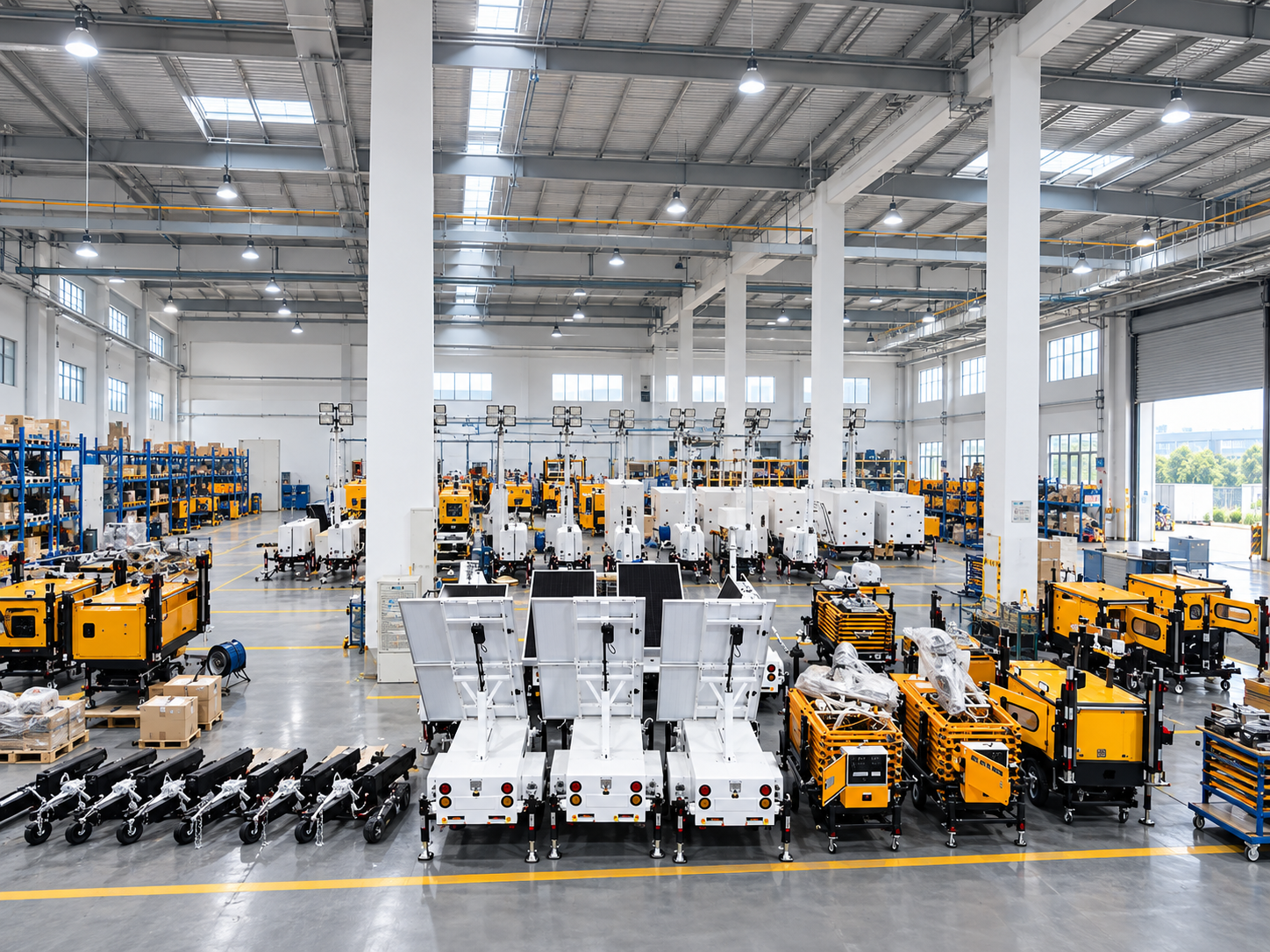
Our configuration discussion starts with the application environment, operating requirements and lighting needs. Those inputs help us propose a package that the buyer can assess against the site brief.
Useful attachments: a marked-up site plan, photos from driver and pedestrian viewpoints, access dimensions, power details and your required equipment list.
Mobile Lighting Supply Experience
Indonesia project · 2023
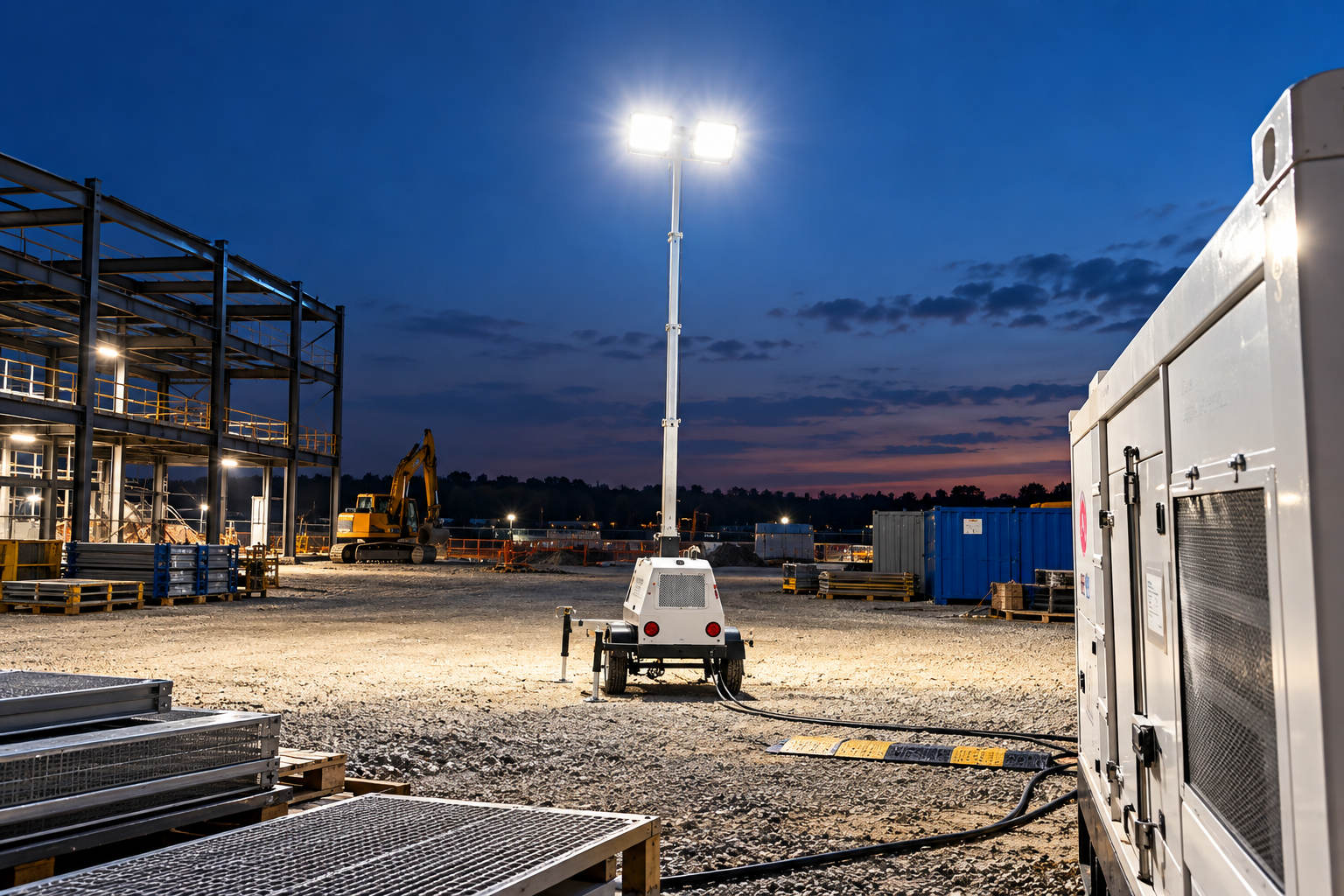
LFADJ supplied eight mobile lighting towers to an Indonesia project in 2023. The supplied package used 4 × 1000 W LEDs and a 9 m manual mast.
- Demonstrates an overseas mobile-lighting supply project.
- A different package from the D955 hydraulic options on this page.
- Ask about supply arrangements for your destination and selected package.
Operating Conditions and Alternative Lighting
Consider the expected use and the power and service availability before selecting diesel mobile lighting for mining operations. A short project may change the case for buying a tower.
Compare runtime with lamp power, illuminance and battery or fuel assumptions in view. A long published runtime does not necessarily cover a full output shift, and reduced output hours and full output hours are not interchangeable. To compare the proposed duty cycle with a rival, ask for the output setting used in each runtime.
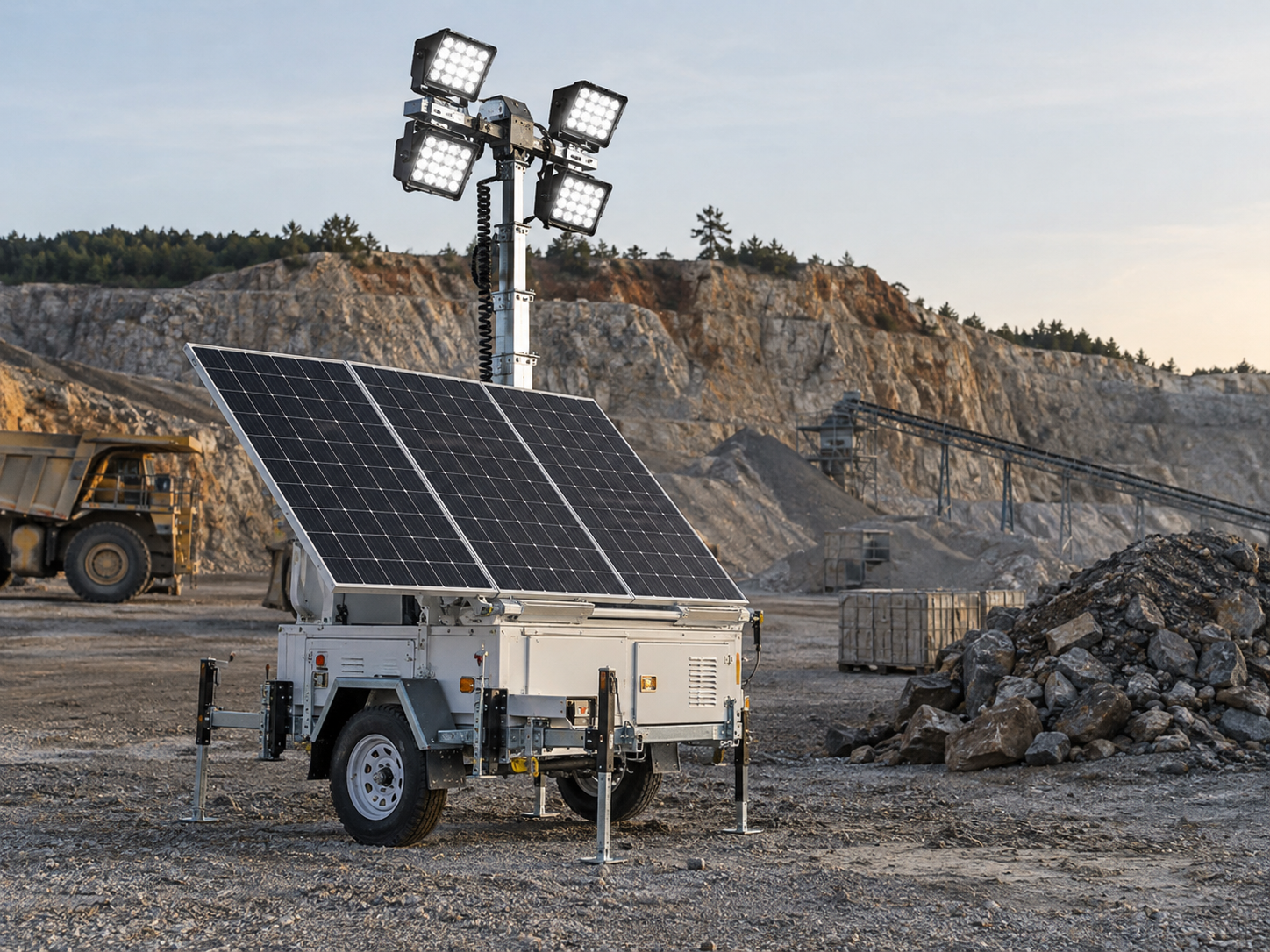
Special conditions need a separate review. Underground mining lights and hazardous-location equipment have different selection requirements. Do not treat an outdoor mine lighting application or company management certification as evidence of explosion-proof approval.
Match the power approach to the job
| Approach | When to consider it | Trade-off to resolve |
|---|---|---|
| Diesel light tower | Moving work areas without a suitable power connection | Fuel access, noise, engine service and site emissions rules |
| Electric light tower | Work areas with a suitable, protected supply | Cable routes, supply capacity and loss-of-power arrangements |
| Battery or hybrid lighting | Jobs with charging access or a defined low-noise period | Usable runtime at the required output and recharge opportunity |
| Solar lighting | Locations where energy recovery can support the duty cycle | Worst-season sunlight, battery reserve and panel space |
| Fixed lighting or light tower rental | Permanent work zones or short-duration projects | Installed infrastructure versus rental availability and terms |
-
Dust and dirty covers affect the light reaching the work area.
-
Temperature, altitude and wind limits belong to the specified package and operating instructions.
-
To maximize useful shift time, plan maintenance and replenishment around the lighting task without deferring required inspections.
Mining & Quarry Light Towers Interactive Tools
-
Shift Operating Cost Comparison
Estimate and compare shift fuel and operating expenses across mining light tower configurations.
-
D955 Configuration Comparison
Review and compare technical specifications between 7 m Yanmar and 9 m Kubota D955 light tower models.
-
Transport Envelope Estimator
Calculate unit transport dimensions and container loading capacity for quarry site deployment.
Frequently Asked Questions
Specify the required task illumination and provide a layout showing obstructions, work areas, and vehicle routes. Tower count requires a lighting layout and a site check. Area divided by a headline coverage figure will not account for shadows and glare.
Provide the designer vehicle heights, access routes, mast positions and illumination criteria for each task, and then review the results with equipment in place at night, prior to accepting the tower count.
Yes, the purpose of mobile equipment is relocation. Lower and secure as instructed, use the specified transport method, and reevaluate ground conditions and lamp aiming for each position.
The mining package pairs a 7 m hydraulic mast with a Yanmar engine. A separate D955 package pairs a 9 m hydraulic mast with a Kubota Z482; request a quotation identifying the complete combination.
Good distribution, manageable glare, stable deployment, and a duty cycle that supports the work matter alongside the LED light output. Check against site tasks rather than assume all portable lighting towers are the same.
The mining configuration has a 100 L tank. Request fuel consumption and runtime for the selected package at the specified lamp load; tank size alone is insufficient.
Suitability is determined by the equipment and its rated operating limits. Send requirements for temperature, altitude, dust, rain and corrosion as well as wind conditions to assess the equipment against them.
In the absence of a controlled site comparison, it is not possible to assess the true productivity impact of the tower. Check completion of tasks, interruptions and downtime under equivalent operating conditions and assign improvement to the tower only after such verification.
This page does not establish that approval. Define area classification and the required product certification for evaluation.
Send the number needed, their destination, how many shifts they will work and the shift hours, power availability, and the tasks to be lit. A site plan, target illumination and transport constraints will help more than lamp wattage alone.
Yes. Our team is ready to review your project and provide product and system recommendations based on your workspace and lighting needs. The supply and service terms will be agreed for the order.