Get in touch with LFADJ Company

Mobile Surveillance Trailer for Temporary Site Security
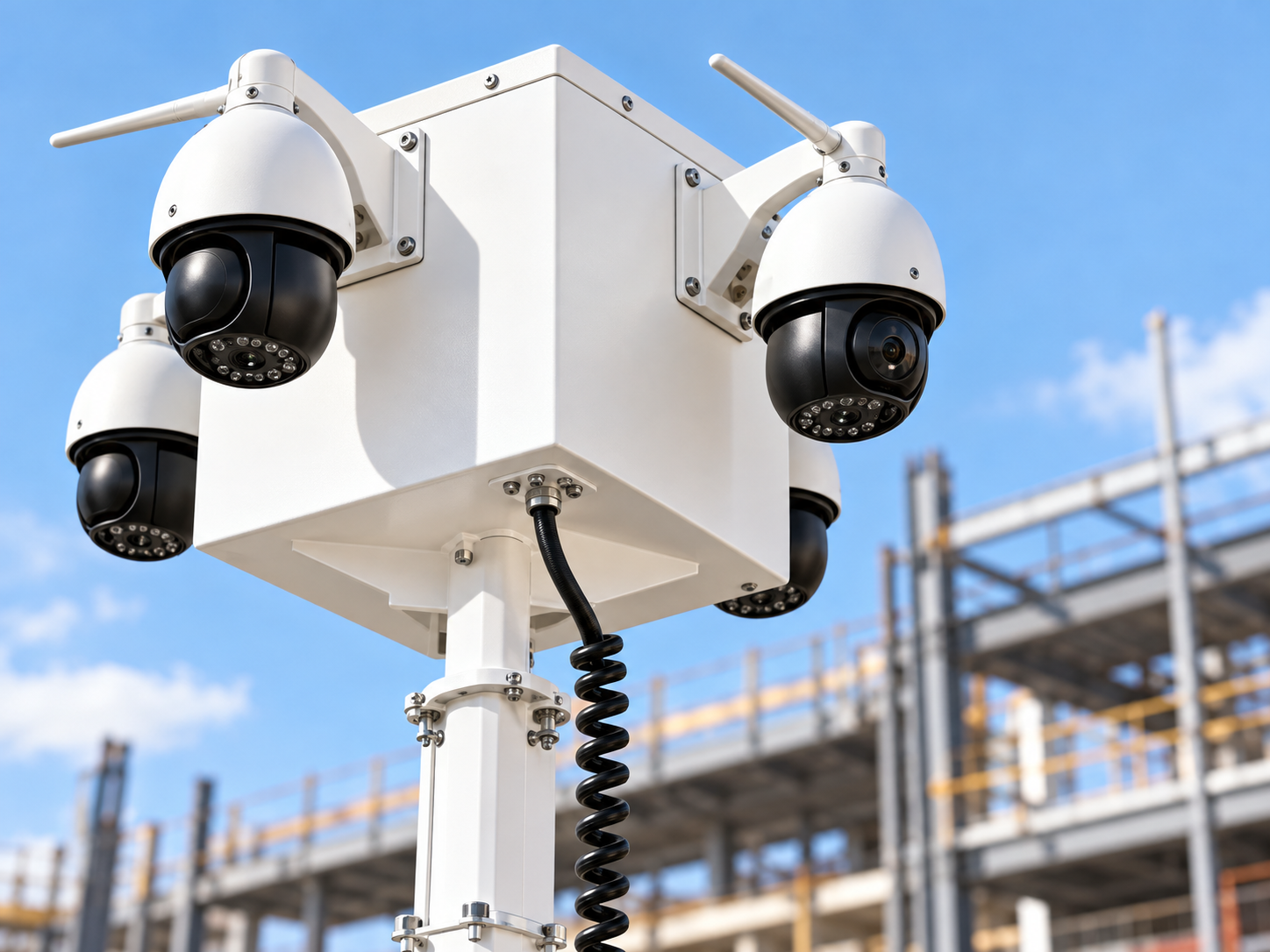
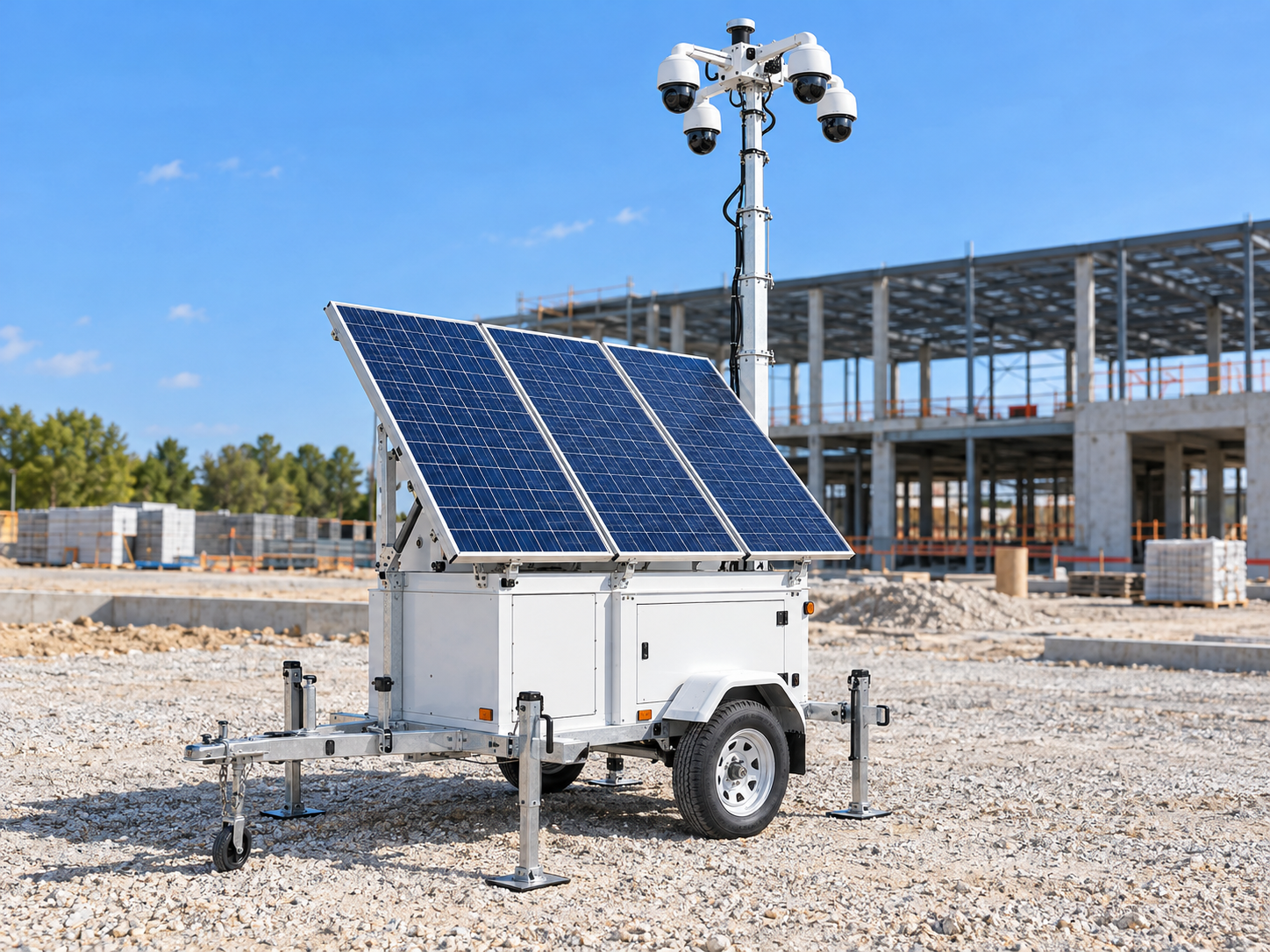
Specify a mobile surveillance trailer around the area you need to see, the power available and the people responding to alerts. LFADJ supplies the S973 with 4 PTZ cameras, 3 × 450 Wp solar panels and a 5.12 kWh nominal battery for project configuration discussions.
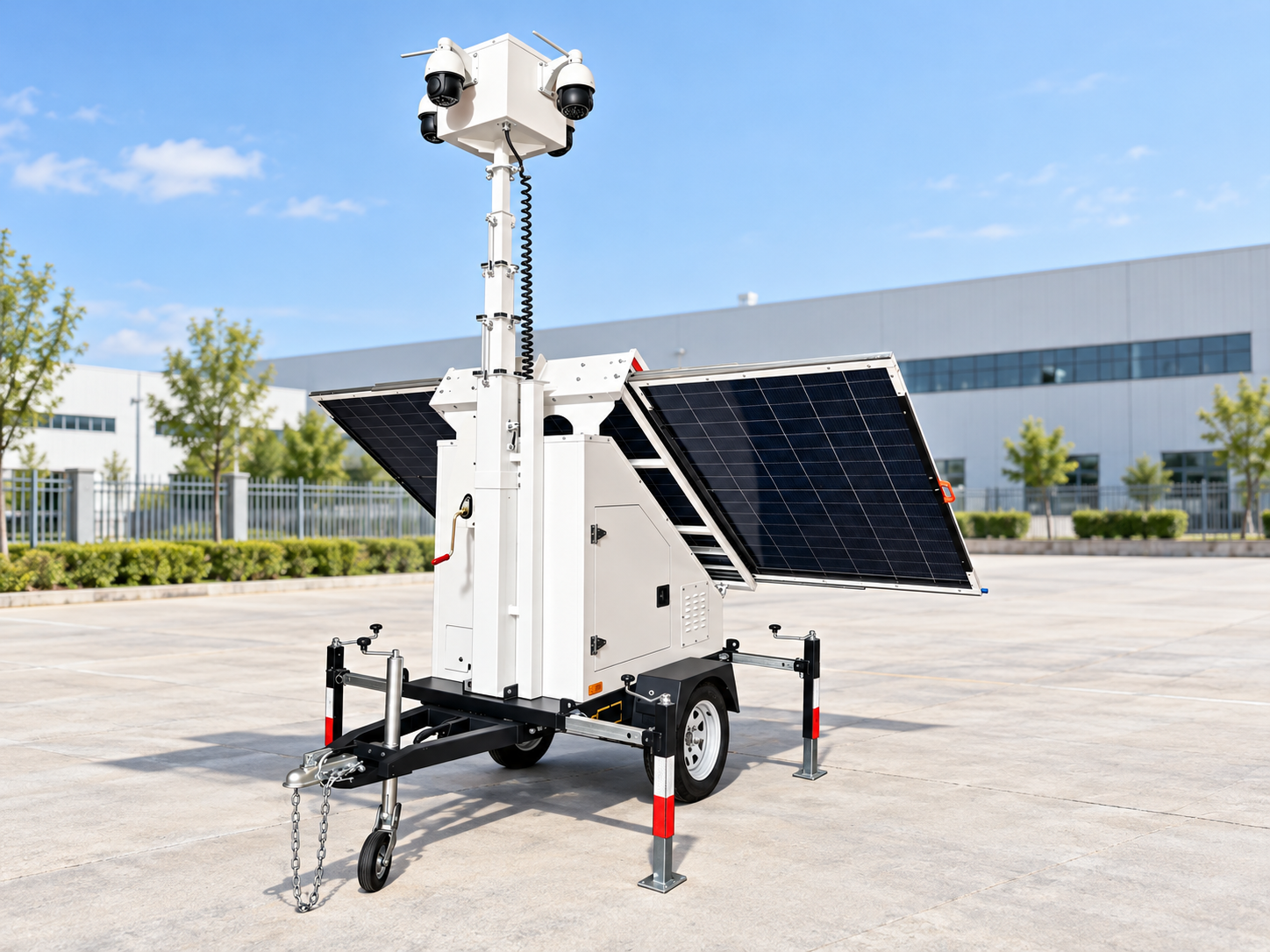
Mobile Surveillance for Changing Sites
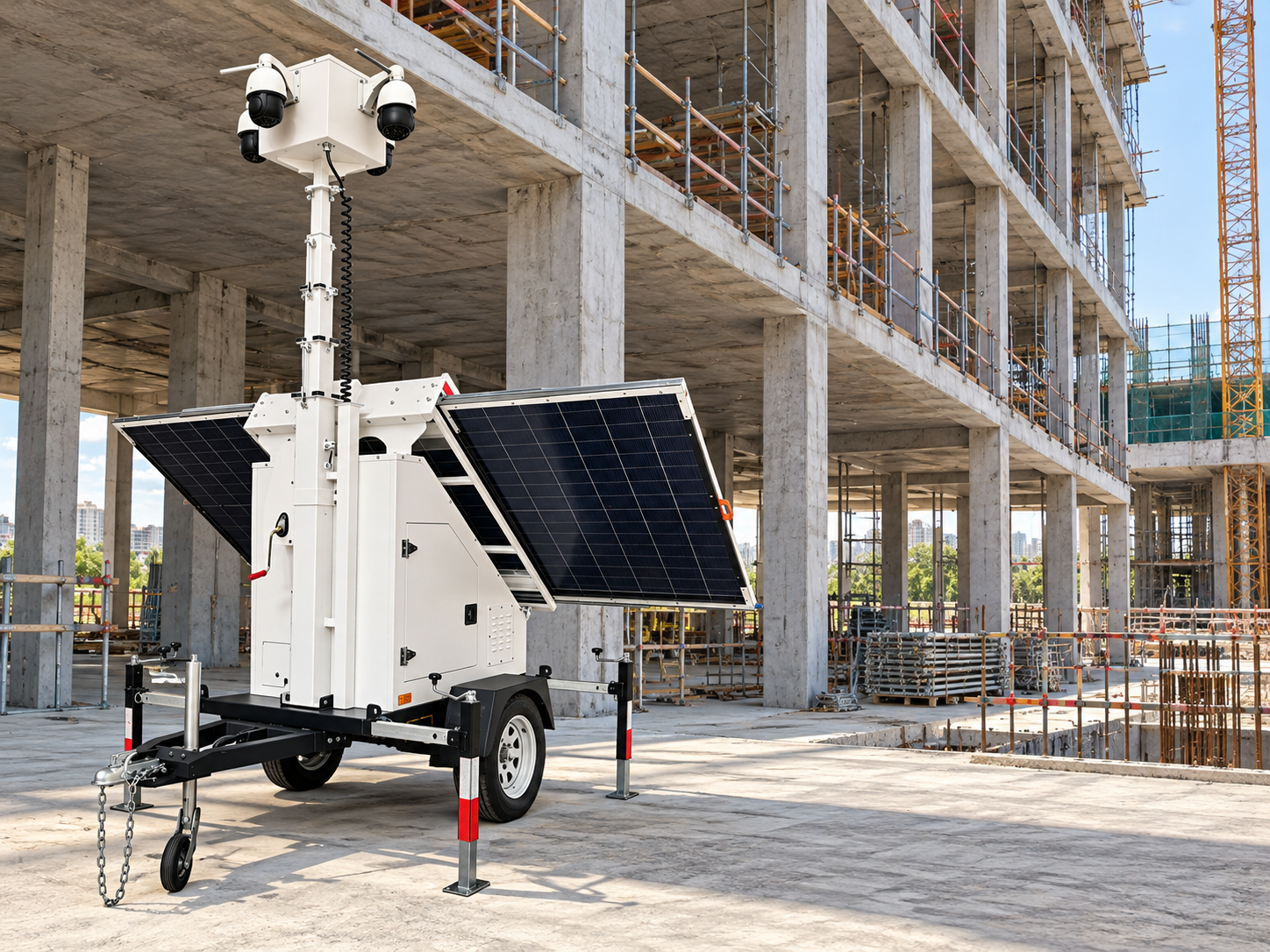
A construction site changes as work progresses, so its cameras should follow the at-risk areas. Mobile security trailers provide an elevated position for a camera without requiring a permanent camera pole for every work location.
-
Construction and laydown areas
Identify the equipment, materials, and tools that need to be monitored after the crew has left the site. Separate a wide view of the job site from a close view of a gate, fuel store, loading point, etc.
-
Parking lots and temporary access
Mark entry lanes, pedestrian routes and parked vehicles on your site plan. Backlighting, moving headlights and obstructions affect the visibility required for each security camera.
-
Events and temporary operations
Plan for the location of camera viewing positions around access points, and take into consideration queuing and the equipment’s working area. Camera relocation, cable routes and the response team are as important as the initial camera positioning.
-
Remote utility and storage sites
Consider access to service, shade and cellular coverage when evaluating off-grid configurations. A solar-powered trailer still requires an energy budget and a maintenance plan.
Site-to-Configuration Map
Turn the site plan into a configuration brief
| Site requirement | Information to send | Configuration decision |
|---|---|---|
| Watch changing work areas | Marked plan, obstacles and relocation points | Camera view directions, PTZ presets and trailer position |
| Review an incident later | Recording hours and retention days | Recorder, storage capacity and export workflow |
| Receive a useful alert | Events of interest and response contacts | Detection rules, notification route and escalation |
| Operate away from grid power | Location, shade, equipment loads and service access | Solar yield, usable battery energy and backup plan |
More cameras do not always eliminate blind spots. A PTZ camera looking in a particular direction may not be looking at the incident that is of interest. Axis’s Atlanta customer story is an example of overview cameras and PTZ views serving different purposes; send us your coverage drawing so we can understand your viewing requirements.
Discuss Your Site LayoutCamera, Recording and Connectivity Configuration
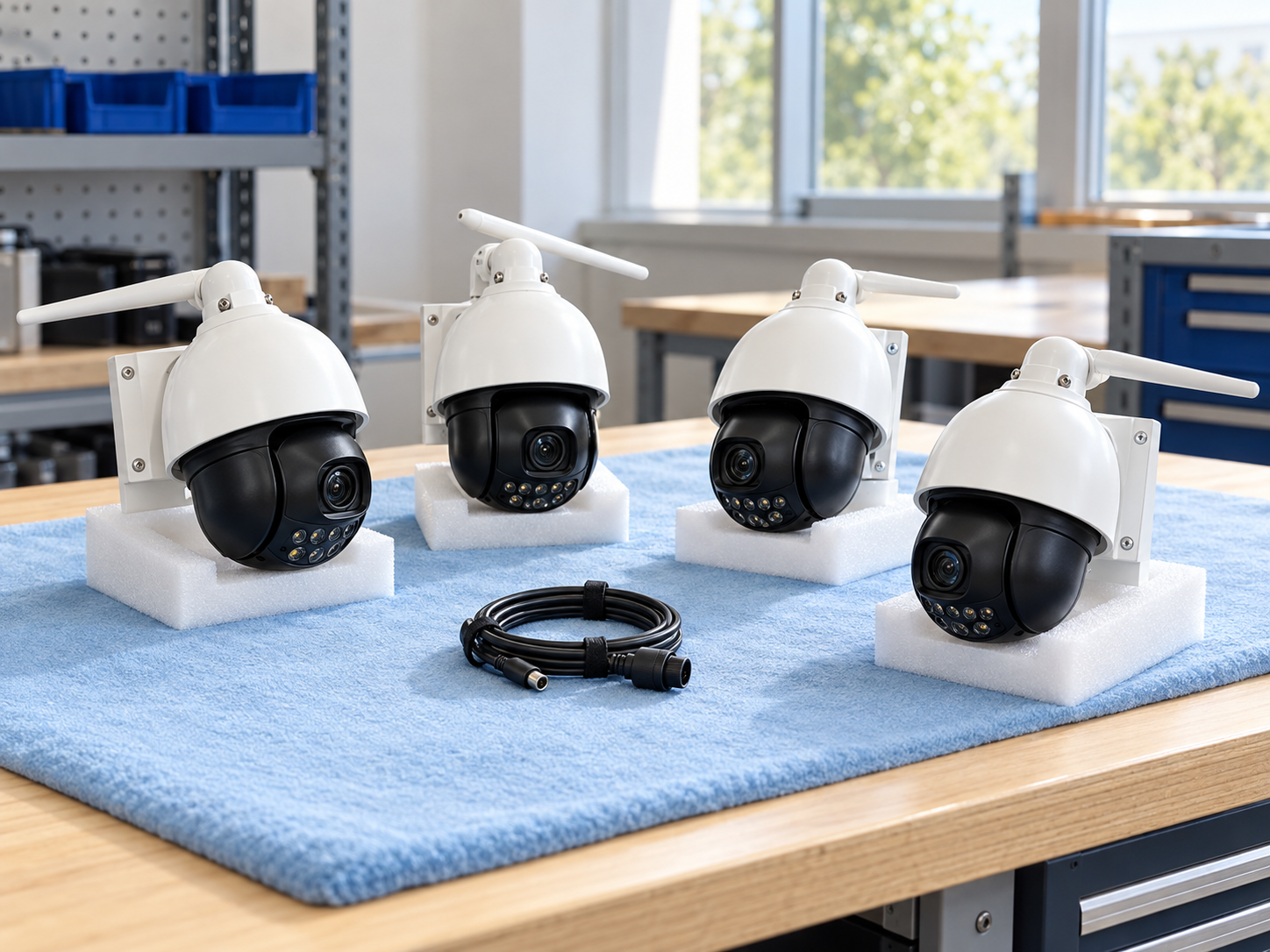
Our S973 camera arrangement is 4 PTZ cameras. Build the rest of the security system around the scene detail you need, the recording workflow and the route from an alert to a response.
Define the functions in the quotation
| Configuration area | Selection input | Acceptance question |
|---|---|---|
| Camera views | Overview, observation or identification at a stated distance | Does each agreed view show the required detail? |
| Night operation | Available light, glare and infrared requirements | Can the proposed security cameras meet the night scene requirement? |
| Onboard recording | Continuous or event recording; retention period | Which NVR or edge storage device stores footage, and how is it exported? |
| Remote access | Cellular operator, site signal and permitted users | Which network, account and data plan support live video? |
| Analytics and deterrence | AI detection, two-way audio, lighting or warning requirements | Which functions are included, and who configures and responds to them? |
| Security management | User roles, update responsibility and access removal | Who administers devices and credentials after delivery? |
Recording and remote viewing serve different needs
Local recording and remote viewing can be done in a single system with a remote monitoring trailer, but they require separate acceptance testing. A network outage can interrupt remote viewing and alert delivery; it need not stop recording when the specified recorder can operate locally.
-
Storage: calculate from camera count, bitrate, recording hours and retention days.
-
Connectivity: check the proposed modem, carrier compatibility, data allowance and signal at the deployment point.
-
Response: identify who receives each real-time notification and what happens if they cannot respond.
Solar Power and Battery Planning
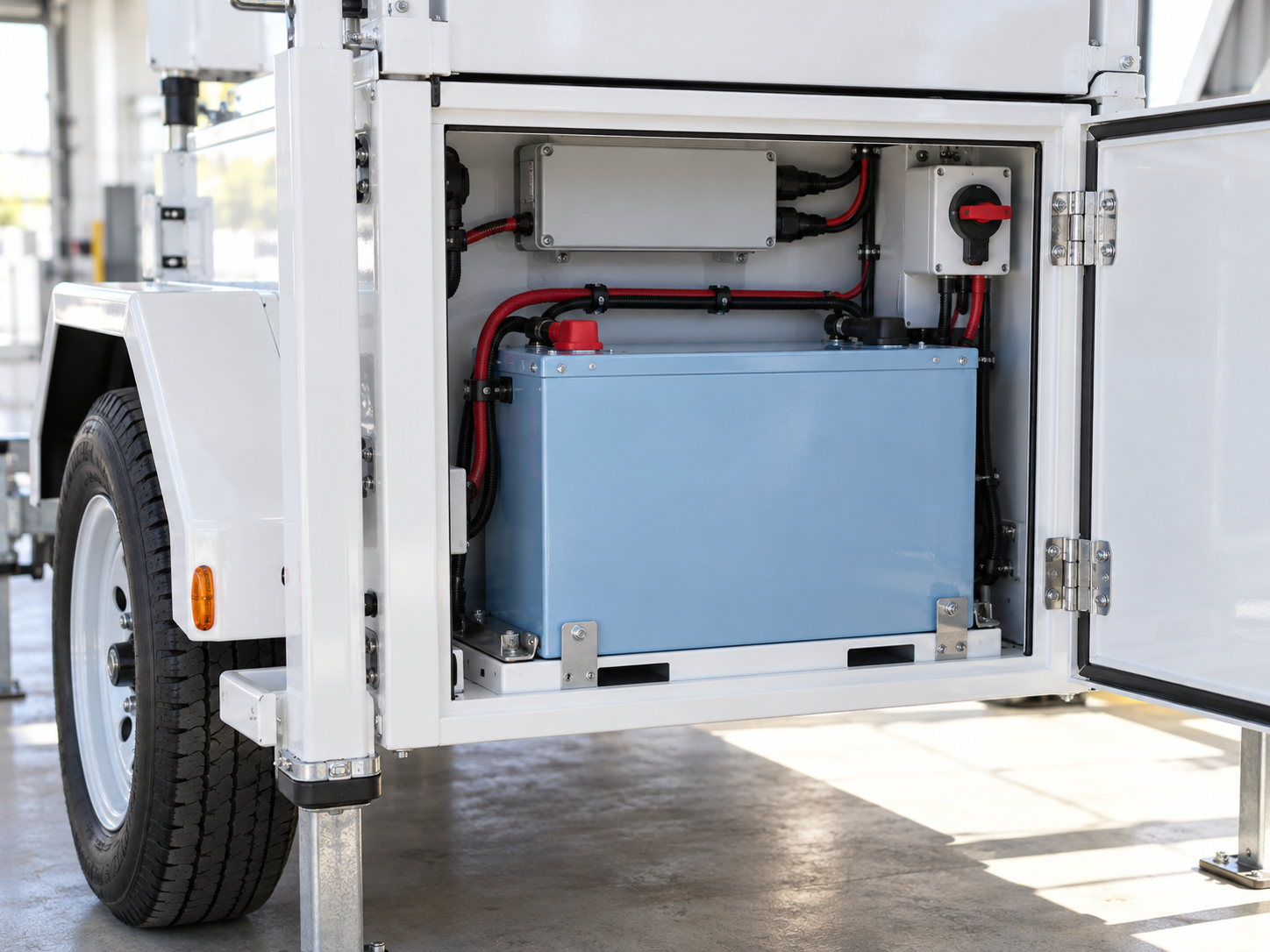
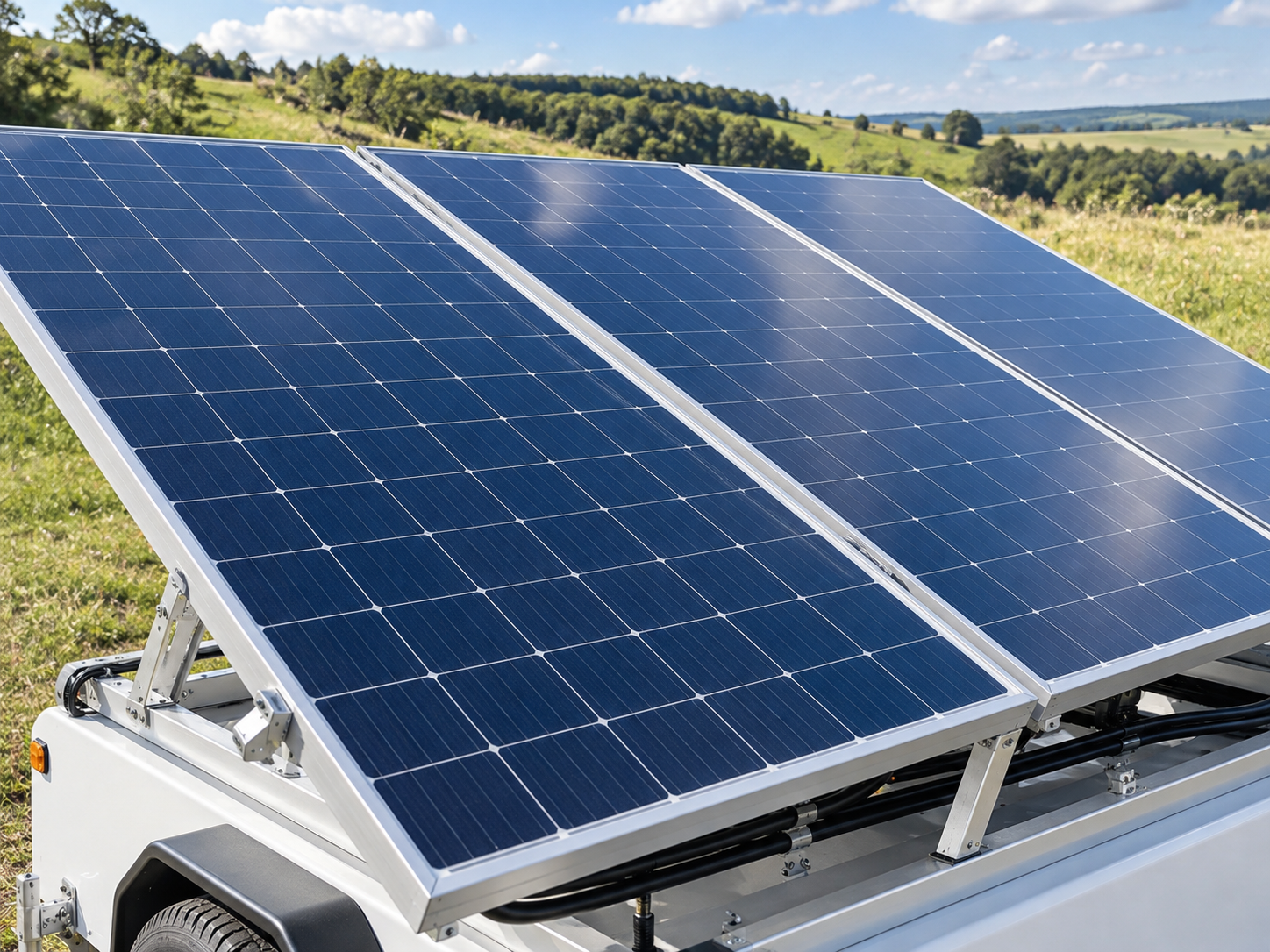
SpecificationsOur S973 solar surveillance trailer uses 3 × 450 Wp solar panels and a 5.12 kWh nominal LiFePO4 battery. The combined panel rating is 1.35 kWp; it describes peak rated power, not the energy the site will collect each day.
| Average load | Daily demand | Calculated hours without solar |
|---|---|---|
| 50 W | 1.2 kWh | 50 hours |
| 100 W | 2.4 kWh | 25 hours |
| 150 W | 3.6 kWh | About 16.7 hours |
| Constraint | Operational effect | Planning response |
|---|---|---|
Demand exceeds collected energy |
Battery reserve falls over successive days | Measure load; review reserve, charging and service access |
Trailer position is shaded |
Solar collection falls at that position | Balance the camera sightline with a clear solar location |
Mobile connection fails |
Remote video or alerts become unavailable | Specify local recording and a recovery procedure |
Storage fills too soon |
Required footage is overwritten | Review bitrate, retention and recorder settings |
No one handles an alert |
Detection produces no timely action | Assign the response contact and escalation route |
S973 Mobile Surveillance Trailer Specifications
We supply the S973 platform with the configuration below. Use the folded dimensions for transport planning and the deployed dimensions when allocating space at the site.
S973 platform and electrical specifications
| Item | Specification | Planning use |
|---|---|---|
| Model | S973 | Reference this model in your inquiry |
| Camera arrangement | 4 PTZ cameras | Confirm camera functions and view requirements |
| Solar array | 3 × 450 Wp | 1.35 kWp combined rated peak power |
| Nominal battery energy | 5.12 kWh | Specify usable energy and reserve for the operating load |
| Battery rating | 25.6 V, 200 Ah | Electrical configuration |
| Battery chemistry | LiFePO4 | Lithium iron phosphate |
| Folded dimensions | 2100 × 1450 × 2350 mm | Length × width × height; approximately 6.89 × 4.76 × 7.71 ft |
| Deployed dimensions | 2650 × 2450 × 7000 mm | Length × width × overall height; approximately 8.69 × 8.04 × 22.97 ft |
| Weight | 800 kg | Approximately 1,764 lb |
| Ambient temperature | −10 to 50°C | 14 to 122°F |
Space for deployment and access
Account for deployed equipment, access for operators, and the site exclusion area when positioning the mobile surveillance tower. The total height of the deployed equipment is 7000 mm. Verify overhead clearance and the site-specific mast configuration before you deploy.
-
01
Share the available footprint and ground conditions.
-
02
Identify overhead lines, structures and vehicle routes.
-
03
Include destination and towing arrangements in the inquiry.
Mobile Surveillance Trailer Price and Ordering
The mobile surveillance trailer cost depends on the functions of the cameras, the recording capacity, the communications equipment, the power system and the delivery scope. Provide the site specific details and the quantity to LFADJ for a configuration based quotation.
The lowest purchase price is not always the lowest project cost. Buying equipment and hiring a managed surveillance service are not interchangeable; compare the monitoring responsibility, installation, connectivity and maintenance included in each offer. Use the cost categories in Axis’s total-cost advice to compare.
Enter two actual quotations over the same number of months to compare equipment, service and maintenance costs. The Project Cost Calculator helps comparison without assuming any savings.
[01]
Equipment and delivery
- Trailer platform, cameras and agreed accessories
- Recorder, storage and communications equipment
- Packing, shipment destination and required documents
- Configuration and acceptance requirements
[02]
Operating costs
- Monthly connectivity or monitoring charges
- Software subscriptions and data allowance
- Maintenance visits and relocation
- Replacement parts and end-of-project handling
- Minimum order: Our minimum order quantity is 1 unit.
- Samples: Sample orders follow the same policy as finished products.
- Payment: Our payment terms are 50% deposit; balance before shipment.
- Delivery: Provide the required arrival date, destination and quantity when requesting timing for production and shipment.
Resources // Quotation Checklist
Request Price and Delivery Details
For an agreed mobile surveillance trailer, the scope of the service and equipment is the proper basis for comparison. When requesting a camera list, accessories, commercial terms and delivery arrangements, make sure omitted items do not mean a second purchase.
Configuration Review and Product Support
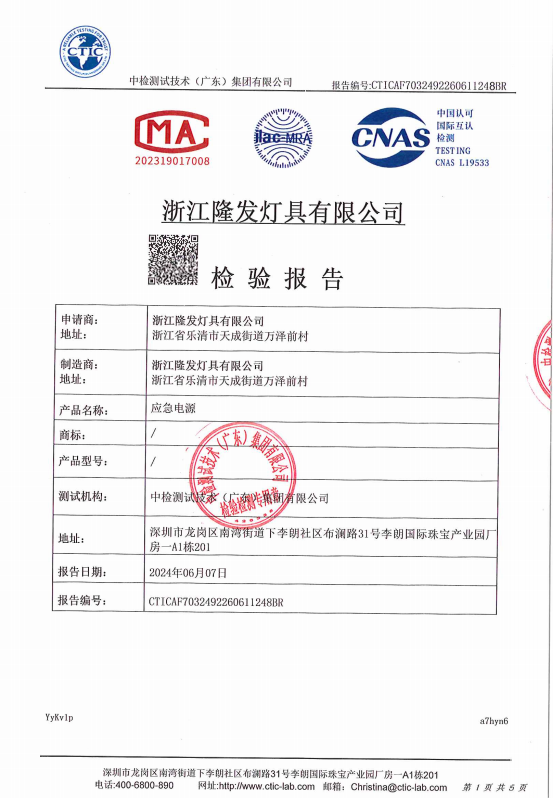
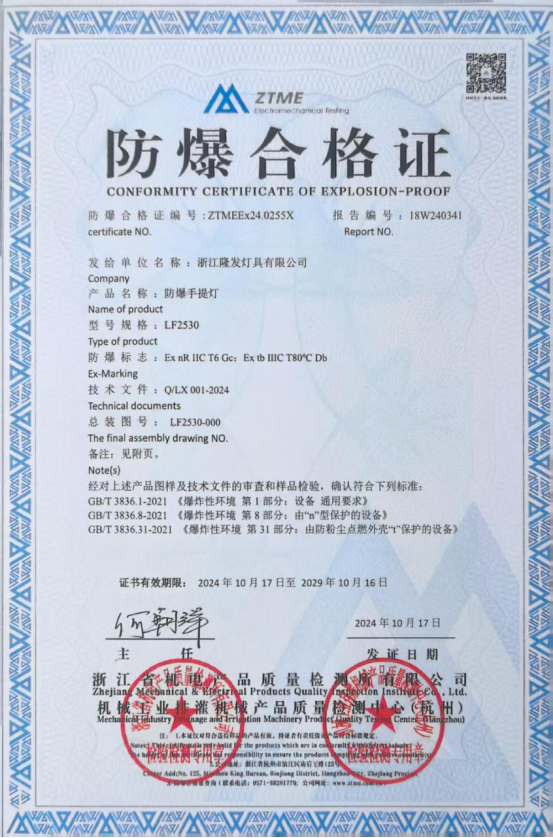
LFADJ is the lighting brand of Zhejiang LONGFA Lighting Co., Ltd., established in 2013 in Yueqing, Zhejiang. We provide customers with product consultation, selection support and configuration communication for temporary site and industrial equipment.
When explaining product configurations to customers, we take into account the application environment and operating requirements.
LFADJ project support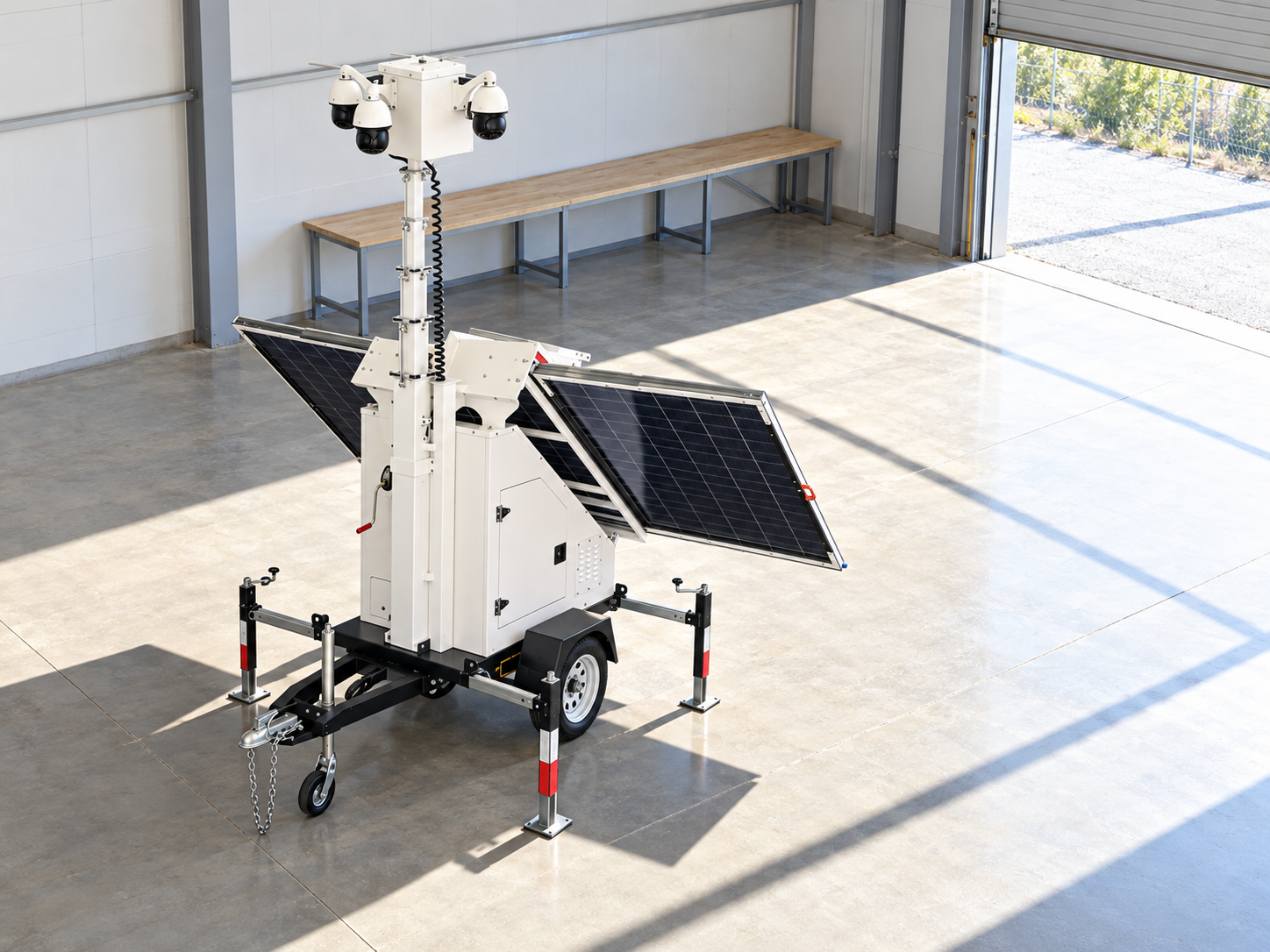
Turn operating requirements into acceptance points
-
Image task:
agree the views and required scene detail, including the night condition.
-
Recording:
agree retention, playback and footage export requirements.
-
Remote operation:
agree access permissions, notifications and connectivity responsibilities.
-
Power:
review the connected load, charging inputs and battery reserve assumptions.
-
Handover:
determine the guides and documents required for operation of the provided configuration.
From Site Requirements to Shipment
Use a single configuration brief for the purchasing team, installers, and people that will operate the cameras. This helps to keep the hardware selection aligned with the security needs of the site.
-
Describe the location. Send a marked site plan, the assets being observed, shade conditions and available power or communications.
-
Define the camera and response tasks. State required views, recording days, access users and who will handle an alert.
-
Review the configuration for completeness, and ensure that the package includes cameras, power supplies, recording equipment, connectivity, and any other active deterrence requirements.
-
Confirm the commercial scope. Agree quantity, equipment, payment, delivery arrangements and support responsibilities before ordering.
-
Coordinate supply. LFADJ handles configuration communication and supply coordination against the agreed project requirements.
-
Plan use and service. Establish operating contacts, maintenance access and the process for reporting a product issue.
Destination and transport details
Identify whether the trailer will remain within a private site or travel on public roads, and provide the destination. For imports to the United States, the NHTSA importation guidance distinguishes vehicle certification and import requirements; determination of road use requirements in the destination country is to be done separately before import.
Trailer Deployment Limits and Alternatives
For a solar security trailer, the best plan is to incorporate both the camera view and the power supply. A simpler alternative may be more appropriate when those requirements cannot be met in the same location.





-
01
Long-term sites with permanent infrastructure
For an unchanged perimeter with available power and network cabling, compare a fixed camera installation. Repeated relocation capability may add little value when the viewing positions never change.
-
02
Persistent shade or high loads
A solar trailer positioned under a structure may need a different power arrangement or location. Panel nameplate power is not a substitute for usable storage during a sustained daily energy deficit.
-
03
Weak communications
Local recording does not replace live remote monitoring when immediate response is required. Review an alternative connection, the allowable outage period and the response procedure.
-
04
Specific identification tasks
A wide view can’t always be relied on to identify individuals or read vehicle registration details. An overview is not a substitute for a correctly positioned identification view; assess distance, lens, lighting and obstructions before relying on a wide view.
A remote installation should not become a constant maintenance headache. Agree access for cleaning, inspection and fault recovery when you discuss the configuration, drawing on the load and service planning in the solar security system design guidance.
Mobile Surveillance Trailers Planning Tools
-
Surveillance Trailer Energy Budget Worksheet
Calculate daily power consumption and battery autonomy for mobile surveillance trailer deployments.
Access Tool
-
Two-Option Project Cost Comparison
Evaluate one-time equipment expenditure and recurring monthly maintenance costs across two project configurations.
Access Tool
-
Video Storage Planning Calculator
Estimate onboard recording storage capacity requirements based on camera count, bitrate, and retention days.
Access Tool
Frequently Asked Questions About Mobile Surveillance Trailers
-
How does a mobile surveillance trailer work?
Cameras placed on the trailer observe the site, and the specified recording and communications equipment stores the site footage and provides remote access. In a solar configuration, the panels charge the battery that powers the equipment. The components chosen dictate the recording, alert and viewing functions.
-
How long can it run through cloudy weather?
Calculate this from usable battery energy and the average connected load, then account for the solar energy available during that period. The S973's 5.12 kWh is nominal battery energy, not a stated number of cloudy-day operating hours.
-
Can the trailer operate without Wi-Fi?
Remote access can be achieved with a suitable connection to cellular if site Wi-Fi is not available. Determine if operator coverage and the modem are compatible with the plan; determine if the data plan meets the needs of the deployment location.
-
Will it keep recording if the internet connection drops?
Specify local recording if footage must continue during a network interruption. Confirm the behavior of the recorder when it goes offline, the storage capacity and reconnection process; remote viewing and notification delivery can still be interrupted.
-
What should I check for night surveillance?
Describe the target, illumination conditions, glare and distance. Configure a system against conditions and requirements rather than against camera count or the advertised distance for night vision.
-
Are AI analytics and two-way audio included?
Include these functions in your inquiry so they can appear on the equipment list. Identify the event to be monitored, the warning/audio response (if any) and the person responsible for the function.
-
Is remote monitoring the same as a staffed monitoring service?
No. Remote monitoring can describe your team's ability to access the cameras. A staffed service assigns people to review events and respond within the agreed service scope.
-
What affects a solar camera trailer quotation?
The quotation scope depends on camera functions, storage, communications, power configuration and accessories, as well as the trailer quantity and destination. Ongoing data, software and monitoring requirements should be taken into account when comparing quotations.
-
Can I order one trailer or a sample?
Our minimum order quantity is 1 unit. Sample orders follow the same policy as finished products.
-
What are the payment and delivery arrangements?
Our payment terms are 50% deposit; balance before shipment. Request production and shipment timing for your configuration, quantity and destination.
-
Can the trailer be moved between job sites?
Include relocation frequency, towing arrangements and destination requirements in the brief. Our S973 weighs 800 kg, so transport selection must account for the complete towing setup and the applicable requirements at each destination.
-
What support does LFADJ provide?
Before supply we offer selection support and configuration communication, followed by product-use consultation and after-sales issue handling. Warranty, response time, maintenance and on-site support are defined in the contract.