Get in touch with LFADJ Company

Portable Emergency Lights for Industrial and Rescue Scenes
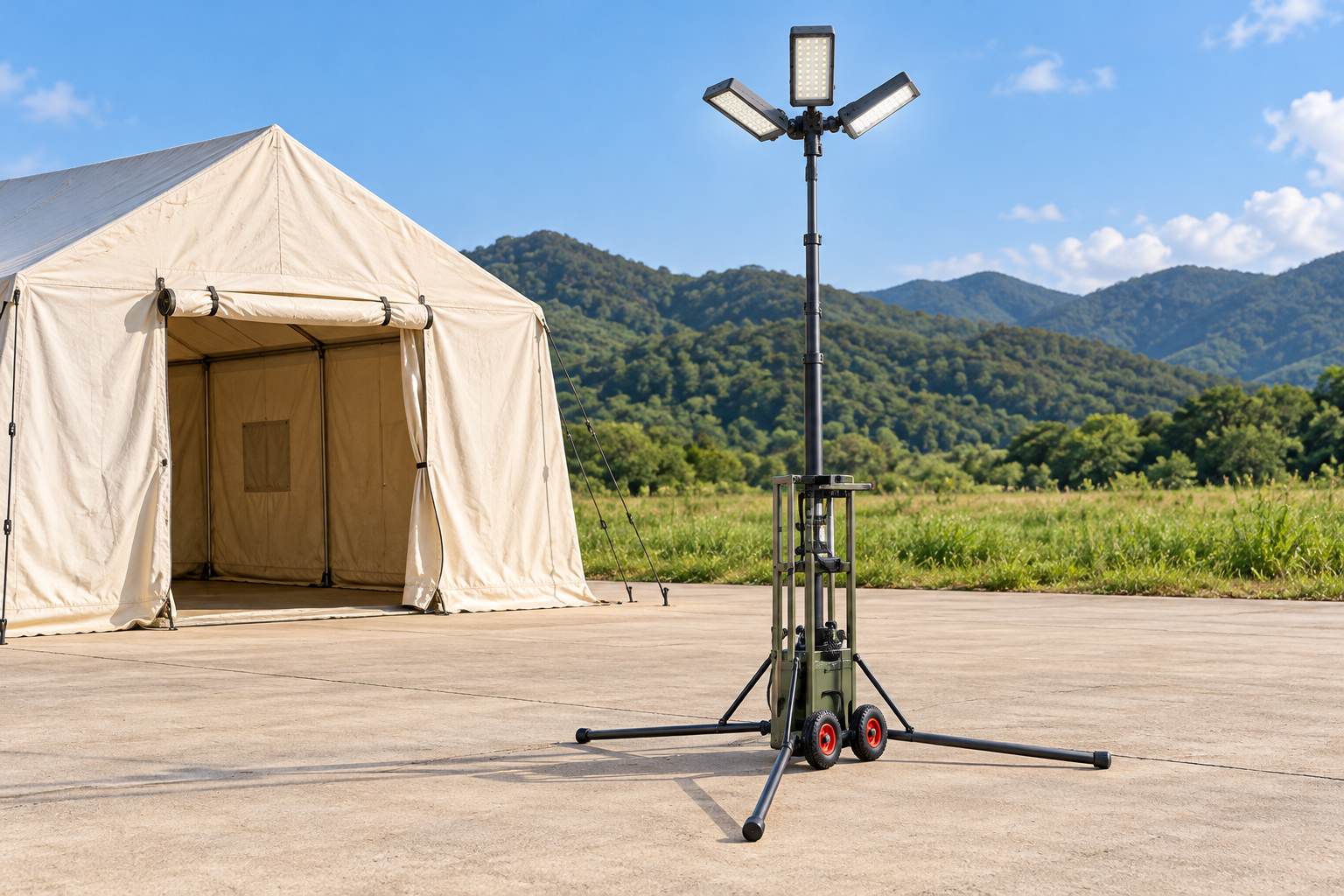
LFADJ portable emergency lights are built for temporary operations that need elevated flood lighting, directional control and on-scene communication. This page covers the LF6133 configuration for rescue work, inspection, maintenance and night operations, not a household light bulb or camping lantern.
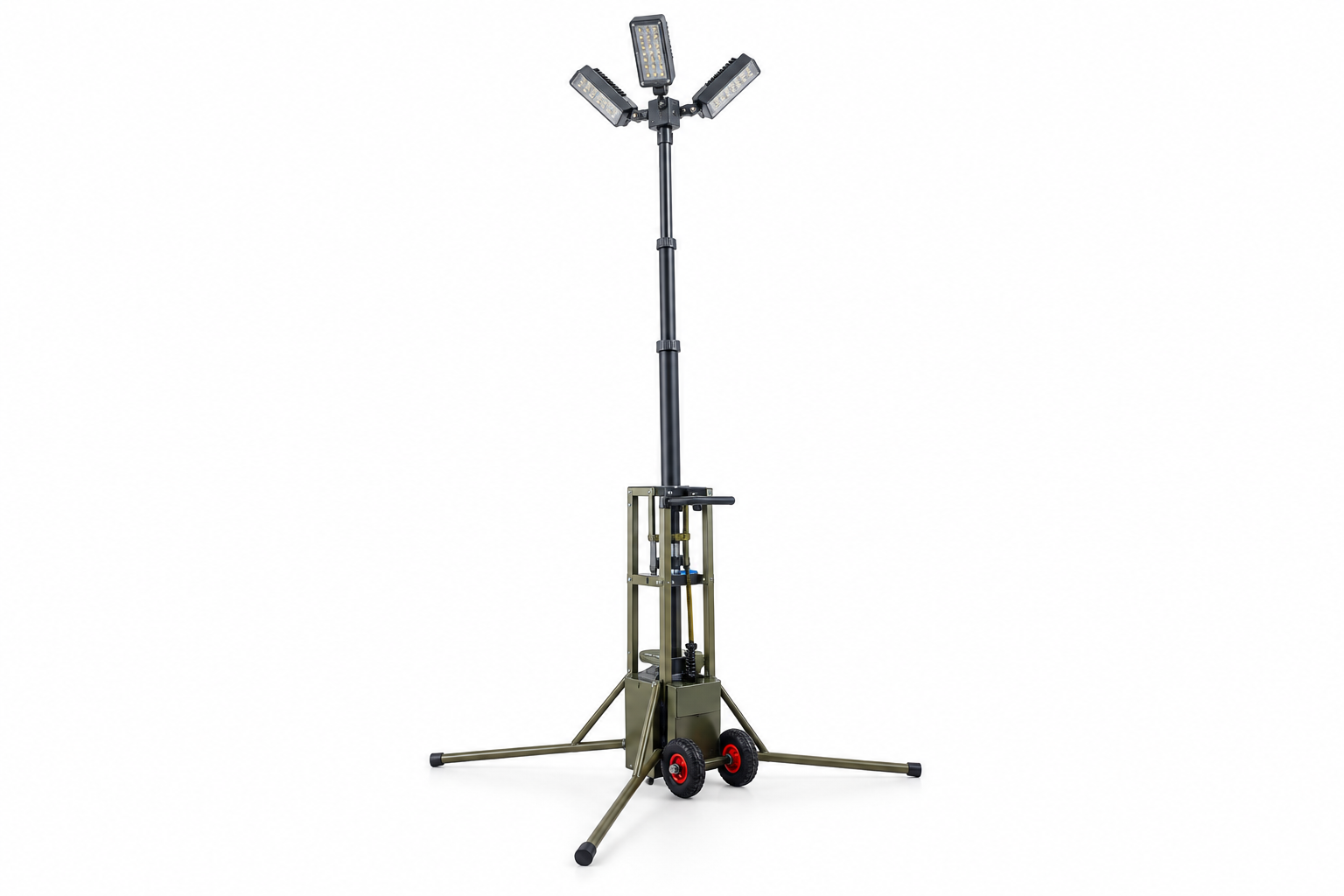
- 3 × 200 W aimable LED heads
- 4.8 m maximum mast height
- IP65 declared ingress rating
Start with the Operating Requirement
There’s a significant risk of error when relying on a single specification such as 23,000 lm.
Work-Plane Inputs
Useful specifications start at the work plane: what people need to see, where they need to see it and where the portable scene light can be positioned.
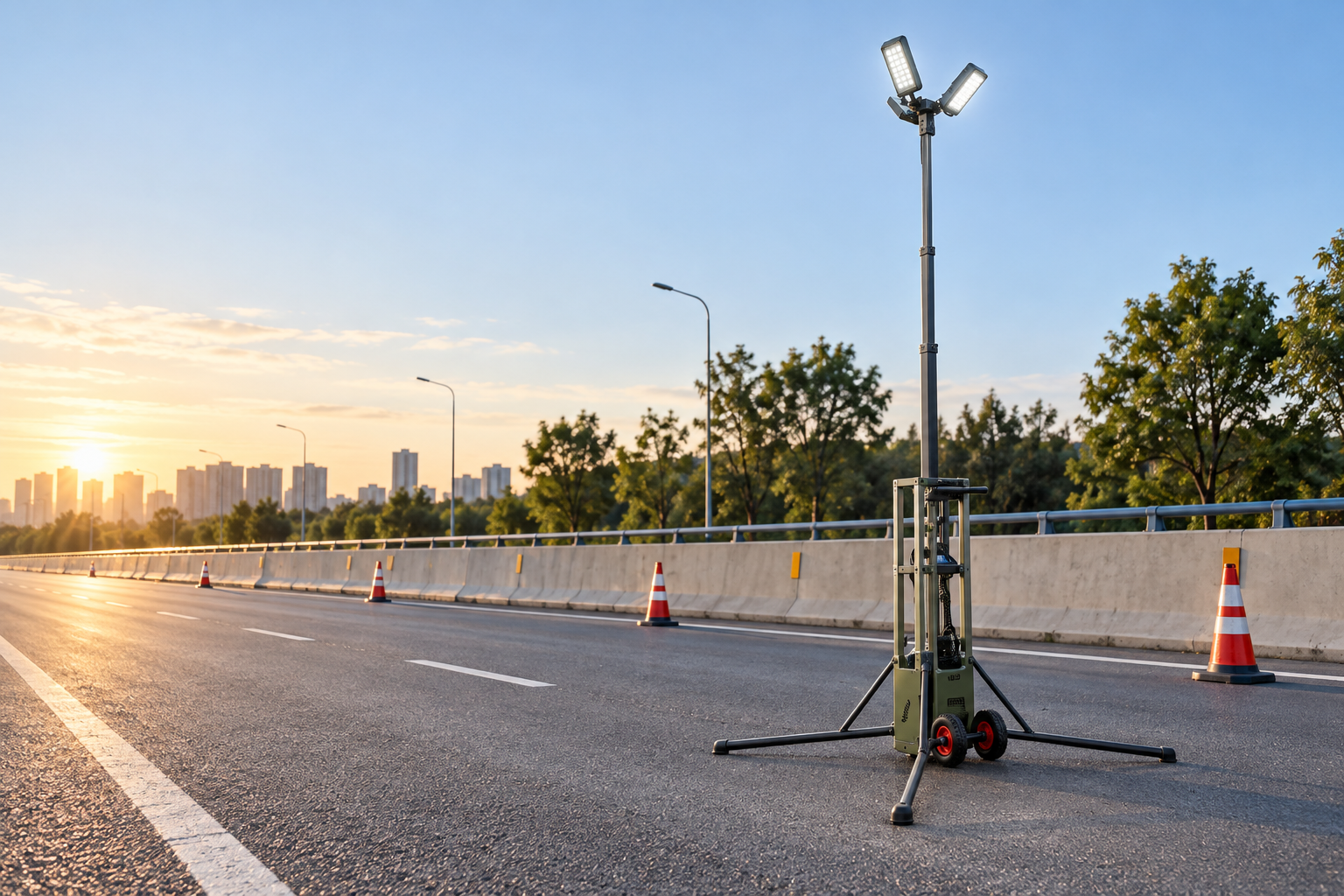
Task and work area
- Safe movement, inspection or sustained task lighting
- Area dimensions and critical work surfaces
- Obstacles, shadows and access routes
Height and aiming
- Required mount or mast height
- Beam direction and flood coverage
- Driver, operator and bystander sightlines
Runtime and power
- Required operating interval
- 220 V supply availability
- Charging window and backup plan
Environment
- Indoor, outdoor or wet-location exposure
- Surface condition and wind exposure
- Hazardous-area classification, if applicable
Transport
- Vehicle, doorway and route limits
- Crew size and manual handling
- Storage and readiness checks
Documents
- Exact model and configuration
- Required reports or certificates
- Destination-market requirements
Selection principle
Headlight lumen output does not create usable illumination by itself. Beam positioning and distance, Dimming rate, and the minimum acceptable level of illumination are all factors that impact workability of a scene.
LF6133 Configuration Snapshot
The risk is assuming one published value proves the whole duty; the wrong reading can create a specification gap. The values below are manufacturer-declared for model LF6133, so confirm the quoted configuration and applicable product documents before order.
| Specification | LF6133 declared value | What to confirm for your project |
|---|---|---|
| Marking shown | Ex ib IIC T4 Gb | Verify certificate, ambient range and specific conditions |
| Light source and rated power | LED, 3 × 200 W | Required work-plane illumination and duty cycle |
| Declared luminous flux | 3 × 23,000 lm | Beam direction, distance and acceptance method |
| Rated voltage | 220 V | Site voltage, plug and power-distribution arrangement |
| Emergency battery supply | 1 h | Operating mode, output threshold and test method |
| Charging time | 5 h | Turnaround between deployments |
| Maximum mast height | 4.8 m | Working height, surface and wind conditions |
| Weight | 70 ± 5 kg | Crew, transport and route plan |
| Dimensions as printed | 390 × 645 × 1450 mm | Packed/body interpretation and vehicle space |
| Ingress protection | IP65 | Exact exposure and document requirement |
| Dimming range | 10%–100% | Required operating level and glare control |
AUXILIARY OUTPUTS
5 V 4.5 A
USB output
5 V 2.0 A
USB output
12 V 2 A
dedicated equipment output
Deployment, Aiming and Scene Communication
The deployment problem is a trade-off: height may reduce eye-level glare, but the wrong height or beam angle can leave a gap at the work surface. Because geometry changes with every incident, LFADJ uses the site inputs and the 4.8 m limit to review a specific configuration.
Use only the height and output the task needs, and then walk the scene boundary before work begins.
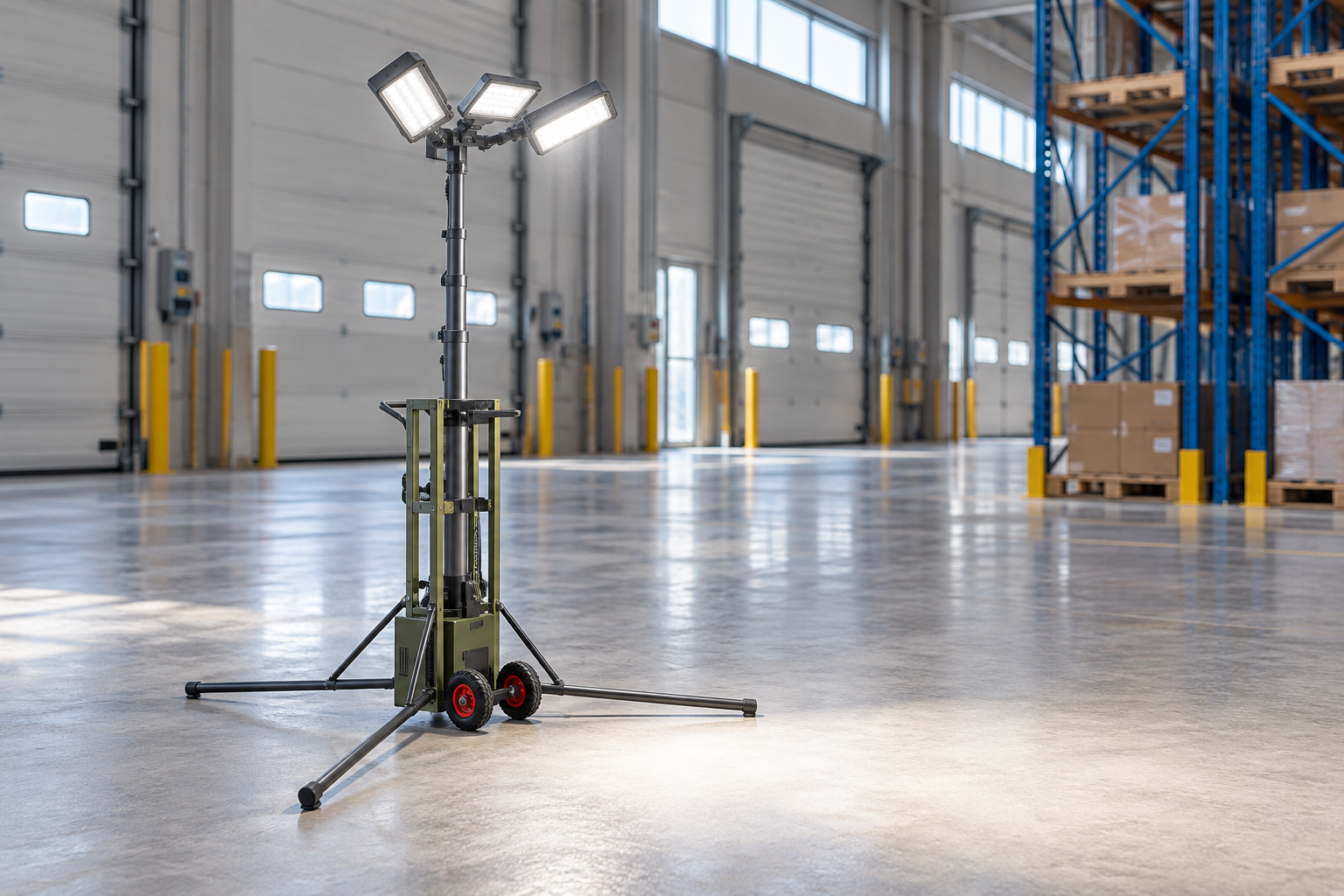
MAX_H: 4.8M
Power and Runtime Planning
The common assumption that battery powered means constant brightness is not always correct; the trade-off is finite stored energy. LF6133 combines 220 V operation with a stated one-hour emergency battery supply and a five-hour charging time, but the supplied material does not define the test method or end-of-runtime output threshold.
Operating question
What the available data supports
Manufacturer declares 1 h emergency battery supply.
What it does not prove
Constant 3 × 23,000 lm for the full interval.
What the available data supports
Manufacturer declares 5 h charging time.
What it does not prove
Recharge time under every temperature or supply condition.
What the available data supports
Listed 5 V USB outputs and 12 V 2 A output.
What it does not prove
Compatibility with an unspecified device or load.
What the available data supports
Use on mains may support a planned temporary operation.
What it does not prove
Battery-powered all-shift operation.
Runtime acceptance
Define the required illumination on the work surface. Then record output at the start and end of the required interval. A runtime label without an endpoint cannot address this acceptance criteria.
Battery, cord and generator tradeoffs
-
A rechargeable battery removes a live cord during the backup interval; however, it requires a charging and readiness routine.
-
A cord can operate for a longer period as it depends on mains power; however, routing and trip controls become part of deployment.
-
A separate generator can provide power remotely; however, exhaust, noise and maintenance must be managed, and it should never be operated in an enclosed space.
Application Scenarios
The risk is treating every emergency as the same 1-hour duty; the wrong assumption can leave a crew without useful task lighting. This industrial emergency lighting page covers temporary project use, not a claim that one fixture fits all rescue, warehouse, outdoor, or commercial emergency.
01
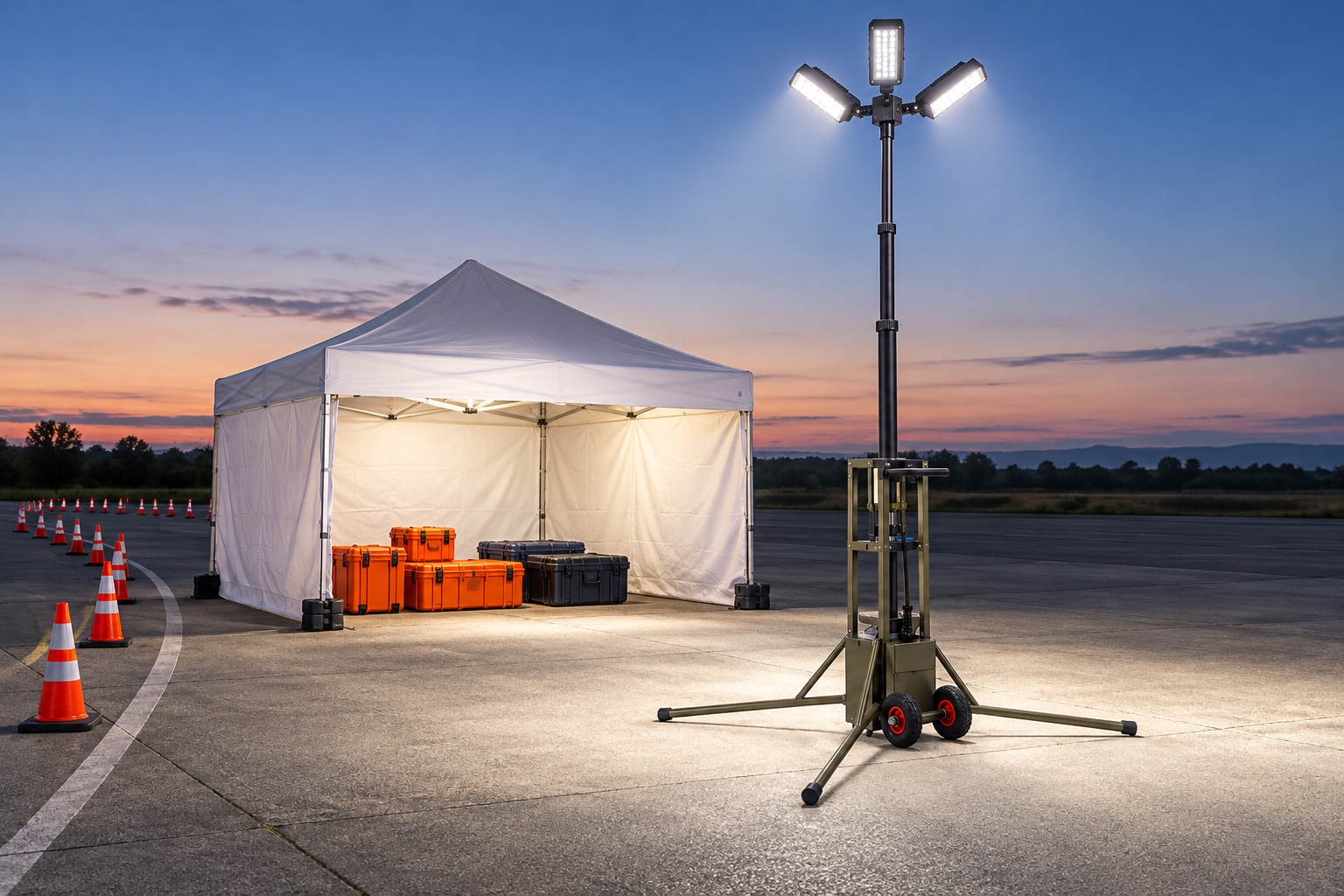
Emergency rescue and incident command
02
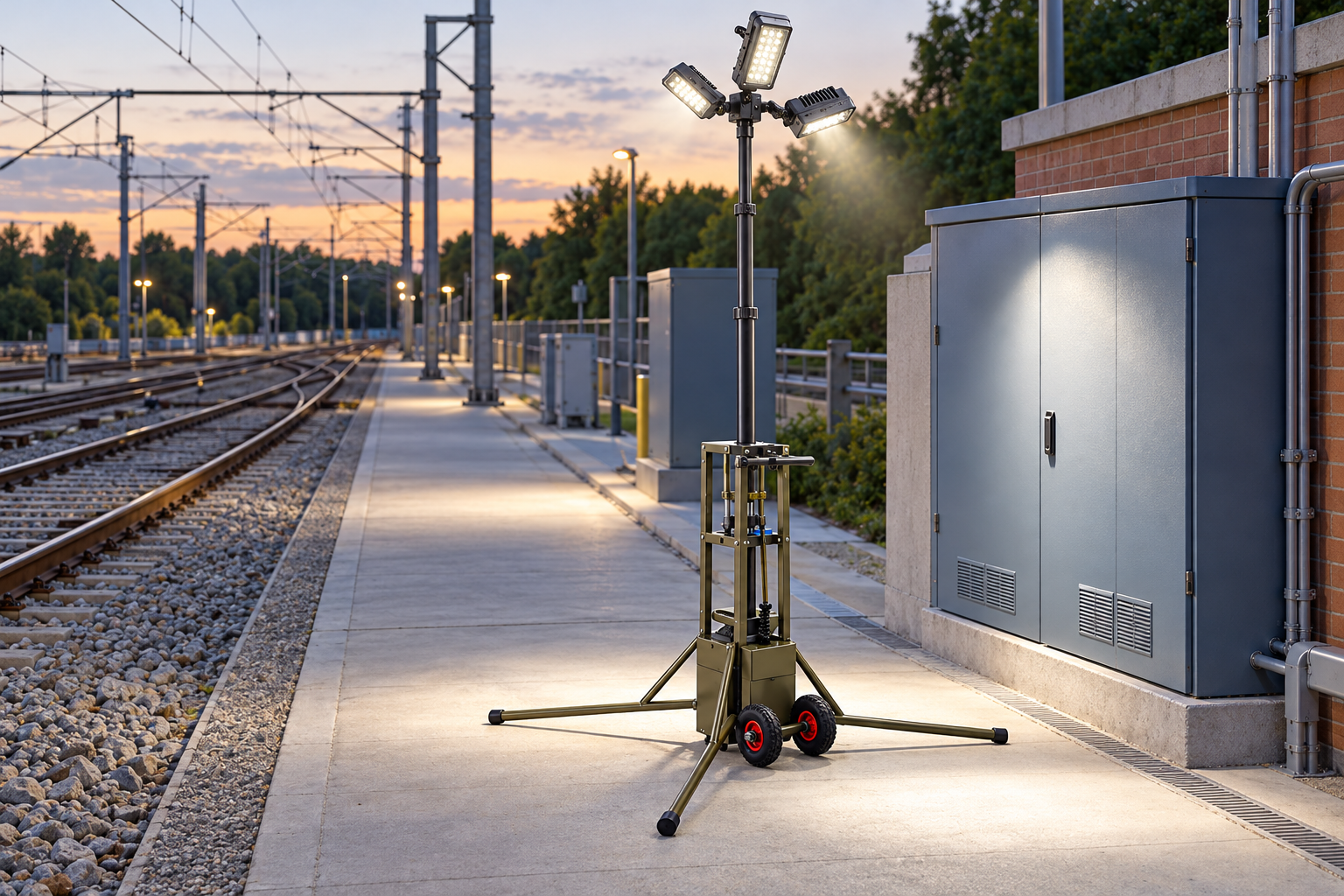
Night construction and maintenance
03
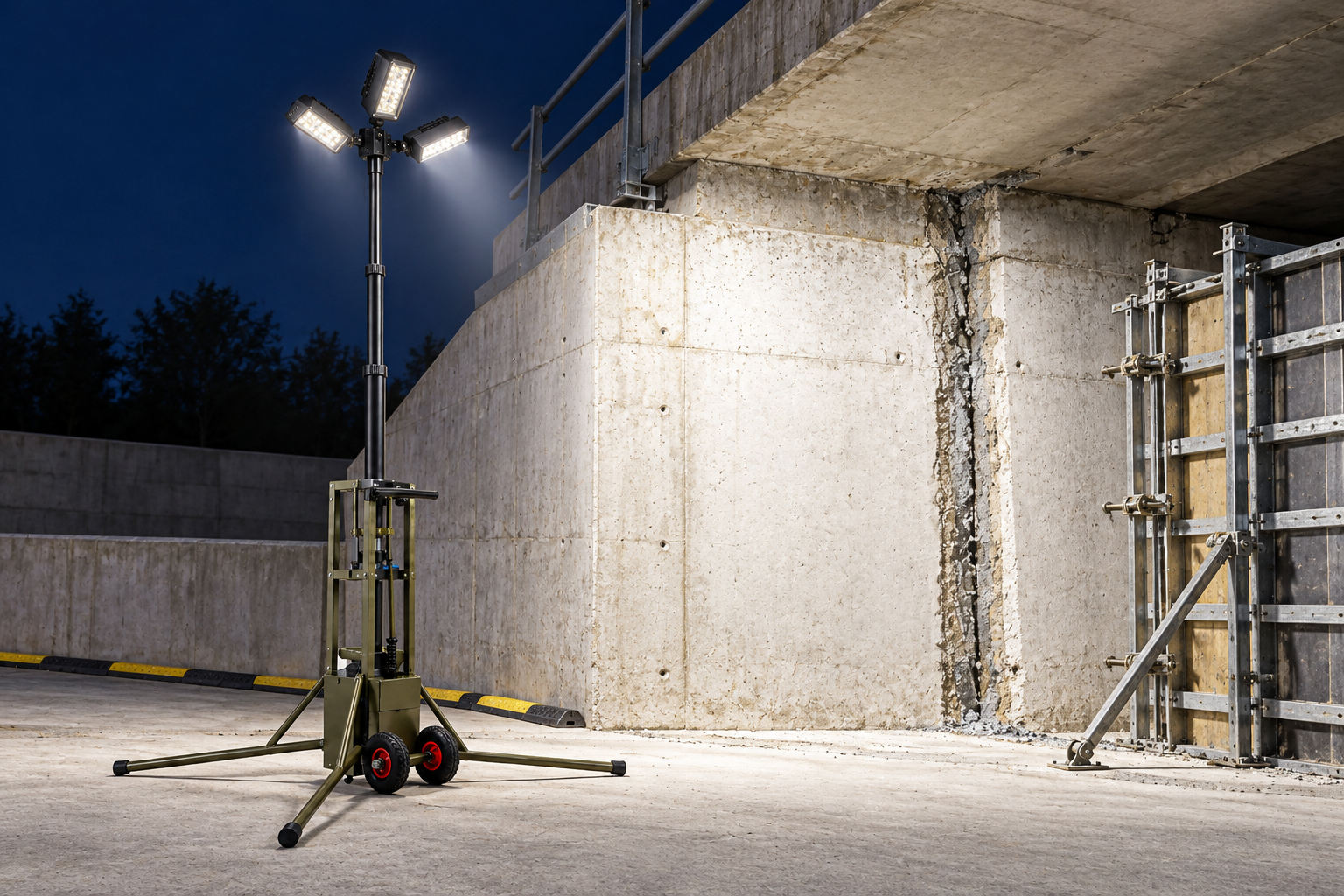
Rail and power inspection
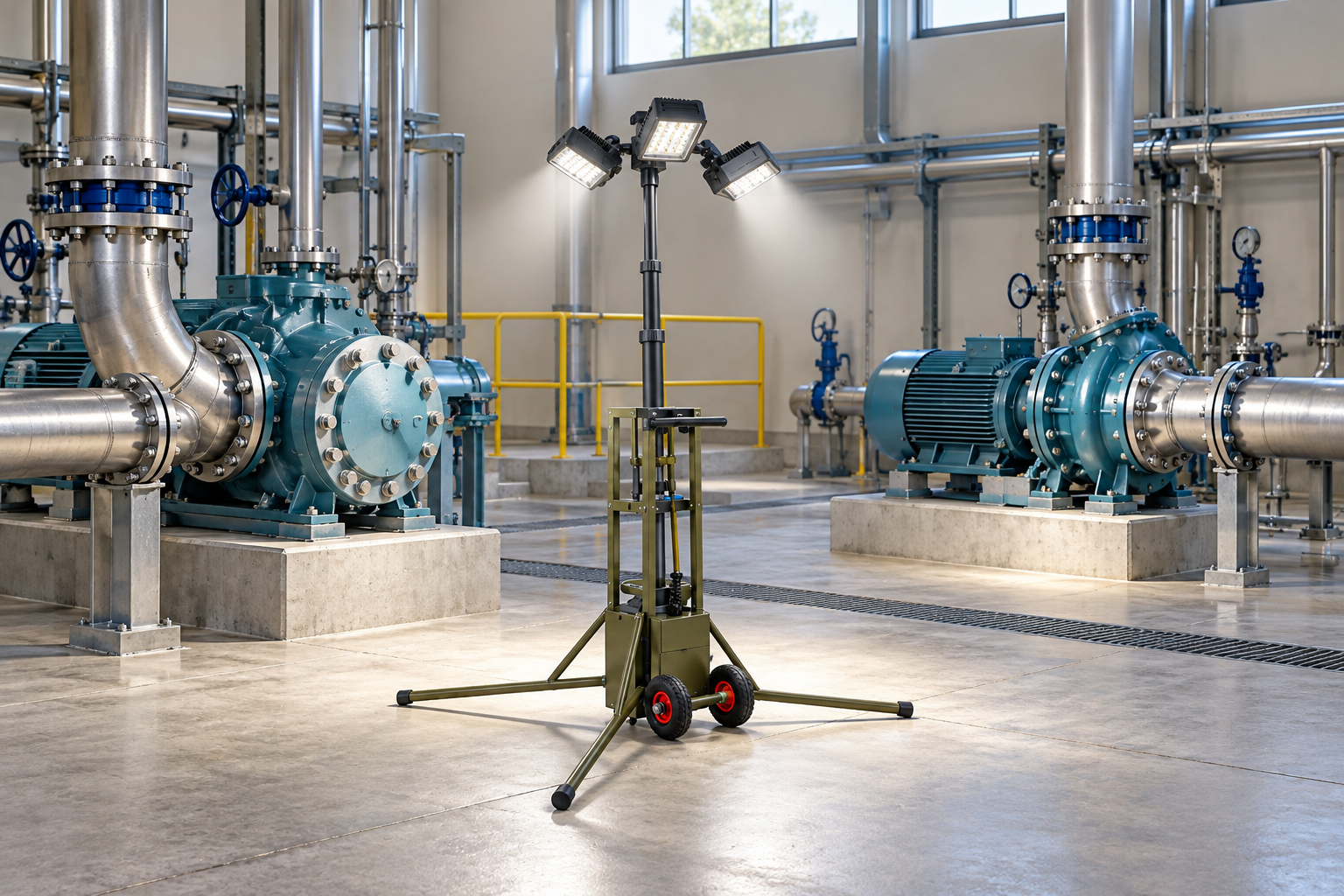
04
Industrial shutdown work
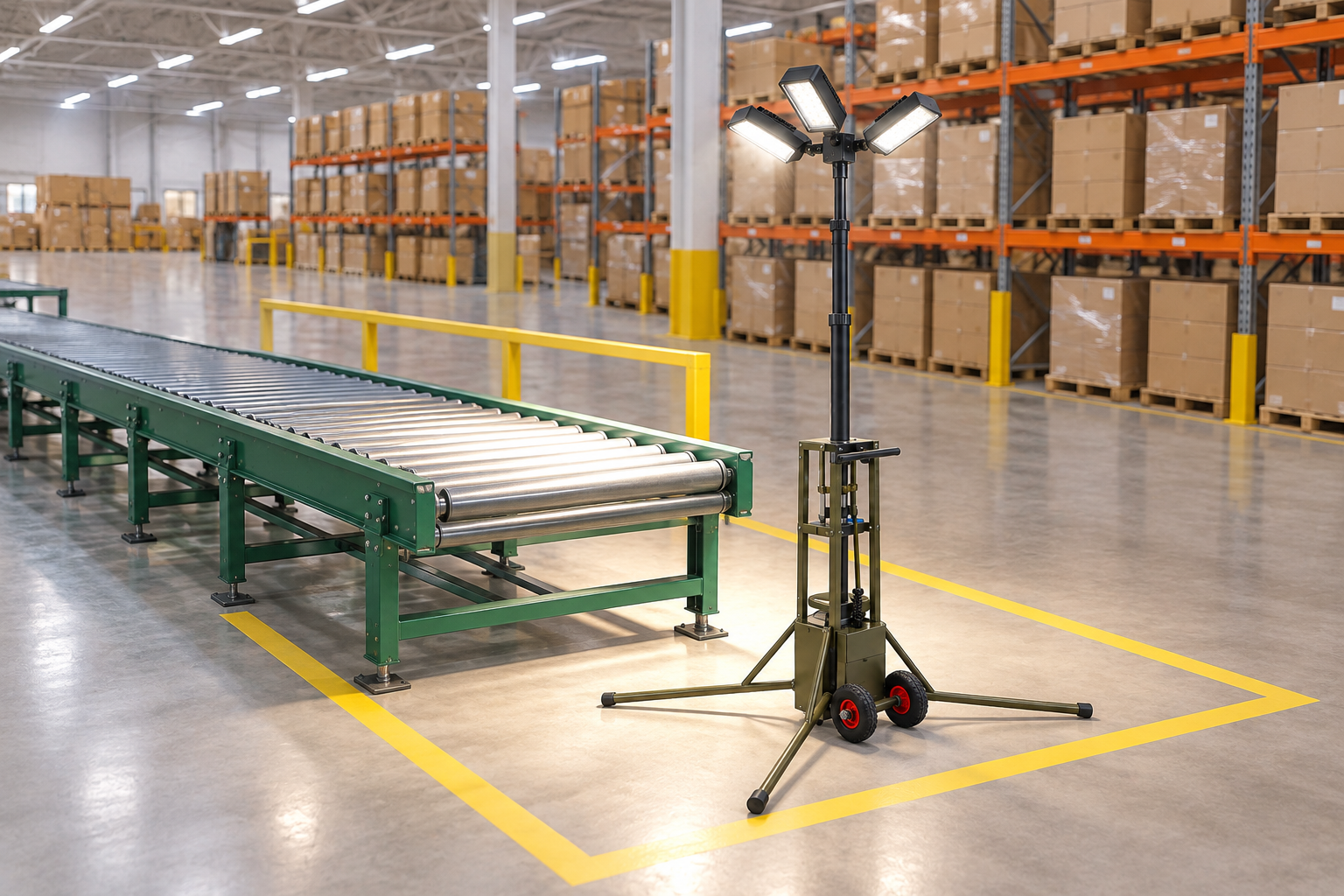
05
Temporary warehouse support
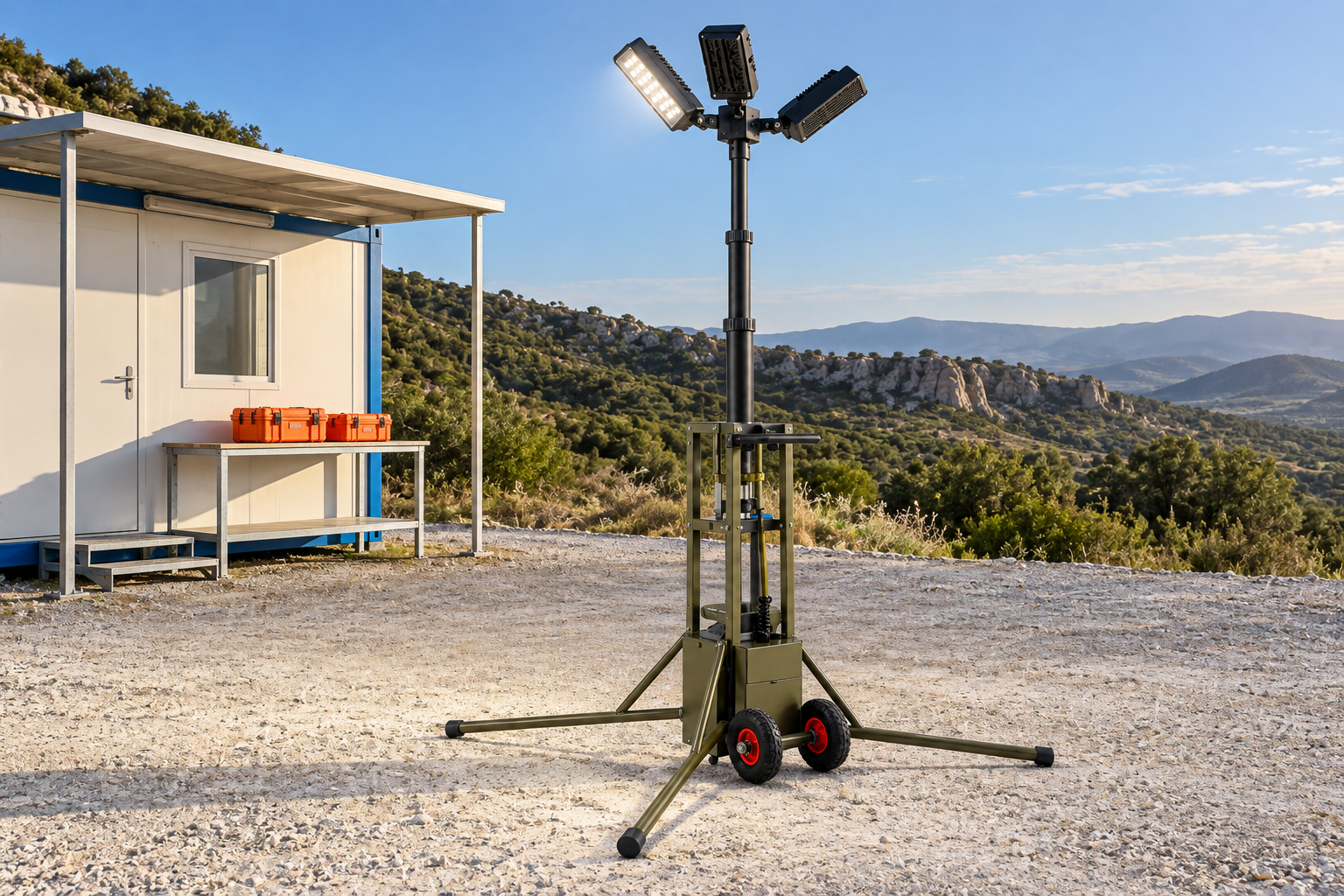
06
Remote-capable site coordination
01 / 06
Emergency rescue and incident command
Use elevated scene lighting to support staging and equipment identification in the work zone during backup. Send the required approach traffic directions and backup interval.
Night construction and maintenance
Plan beam around equipment, inspection and cord routing. Send the available input power and the duration of the task.
Rail and power inspection
Differentiate between safe access lighting and detailed maintenance illumination. Submit route constraints, mounting distance and required documents.
Industrial shutdown work
Use adjustable heads to divide lighting across work faces. Submit site classification, environmental exposure and shift handover plan.
Temporary warehouse support
A mobile LED light may support a defined work zone during planned maintenance. It does not replace required emergency exit lighting, exit signs or fixed light fixtures for businesss.
Remote-capable site coordination
Communication functions may be used for local coordination, in accordance with procedures. Determine who will control the speaker, alarm and lamp fixture prior to deployment.
Environmental Fit Is Not Hazardous-Area Approval
IP65 and explosion protection answer different questions
IP65 addresses ingress protection for the stated LF6133 configuration. It does not establish explosion-proof, intrinsically safe or hazardous-location suitability.
-
Provide the required zone or division.
-
Provide the gas or dust group and temperature class.
-
State the certificates and markings required by the destination or facility.
-
Do not deploy LF6133 in a classified area unless the exact configuration has suitable evidence.
A waterproof or wet-location claim, for example, does not stipulate wind stability, impact resistance or chemical compatibility. LFADJ needs the exposure and acceptance documents before equipment can be recommended.
Compare the Configuration, Not Just the Wattage
There is a comparison risk when assuming more wattage is always the correct choice. Compare all four (output, runtime, handling and scene control) against a given duty to ensure a proper trade-off.
3 × 200 W LED; declared 3 × 23,000 lumen
Minimum lux at named points and distance
Three adjustable heads; 10%–100% dimming
Flood boundary, shadows and glare limits
Pneumatic mast up to 4.8 m
Required height, footing and wind condition
1 h stated emergency supply; 5 h charge
Mode, output threshold and readiness cycle
70 ± 5 kg; 390 × 645 × 1450 mm as printed
Vehicle, access route and crew
IP65 declared
Ingress, temperature, impact and classification needs
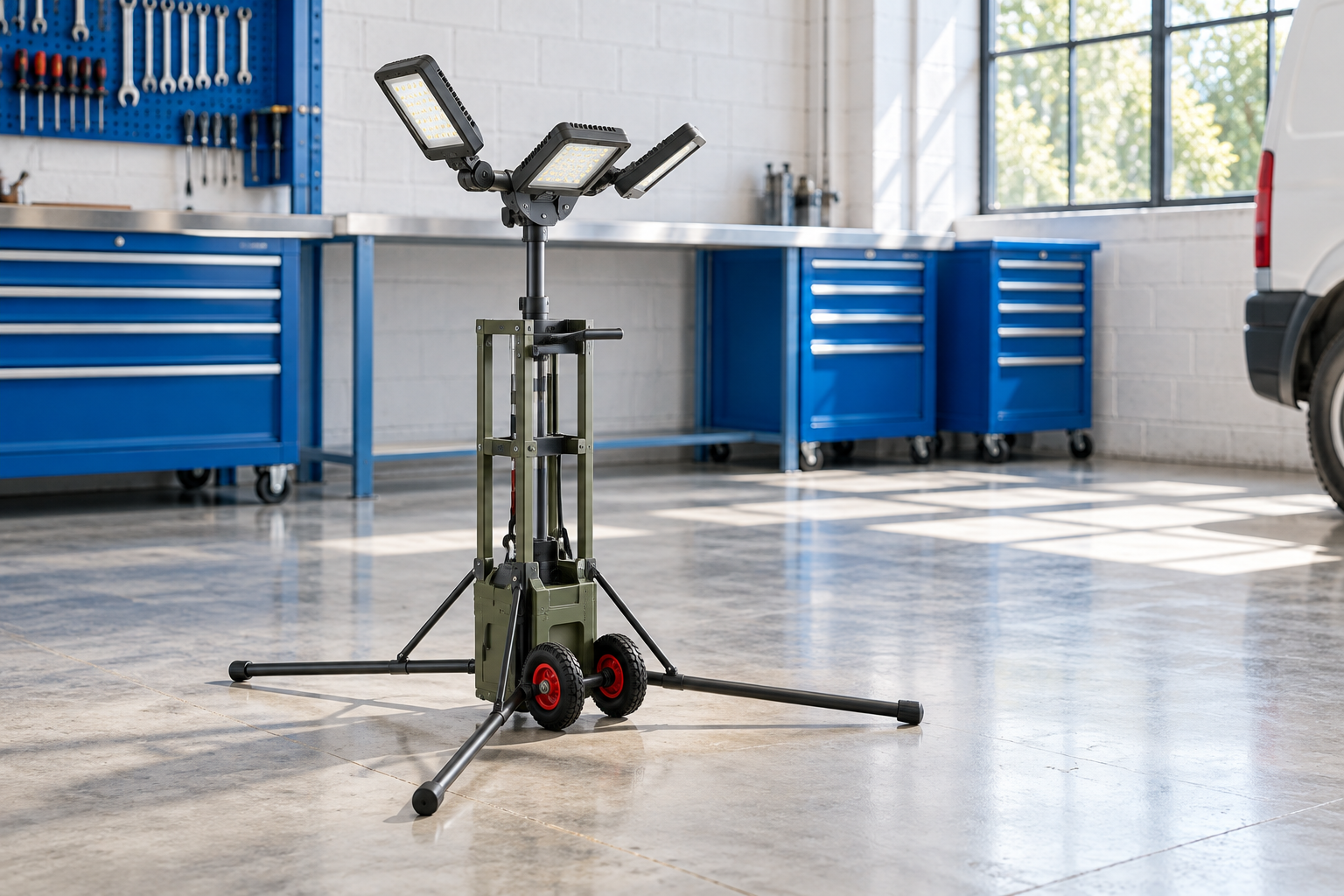
Project Configuration Tools
Utilize our engineered toolset to streamline your hazard assessment, RFQ preparation, and runtime calculations. These digital resources are designed to bridge the specification gap, ensuring your portable emergency lighting deployment is fully compliant and optimized for your specific operational shift.
TOOL // 01
Hazard Area Intake
Identify and document your precise Ex-certification requirements, gas groups, and T-classes. Ensure full regulatory compliance for your targeted explosion-proof environments before product selection.
TOOL // 02
RFQ Readiness
Streamline your procurement workflow. Compile technical specifications, required quantities, and project timelines efficiently to ensure a rapid and accurate quotation process.
TOOL // 03
Runtime Coverage
Calculate the required battery capacities and illumination output mapping. Guarantee that your equipment covers the entirety of your specific operational shifts and emergency response durations.
Portable Emergency Lighting FAQs
The risk is assuming one published value proves the whole duty; the wrong reading can create a specification gap. The values below are manufacturer-declared for model LF6133, so confirm the quoted configuration and applicable product documents before order.
Usable light at the task, deployment time, runtime, rechargeable battery readiness, handling, mount stability and fit in the environment are some factors that will contribute to overall suitability. Start with the scene rather than an LED emergency light rating.
Compare measured illumination at critical work surfaces, then check shadows and glare at the intended height. LF6133 declares 3 × 23,000 lm and a 4.8 m mast, but those numbers do not define coverage without geometry and an acceptance threshold.
No constant-output test was supplied. Treat 1 h as the manufacturer-declared emergency battery supply time and confirm the operating mode, endpoint and acceptable output before purchase.
No. IP65 is an ingress-protection statement and does not establish hazardous-area approval; provide the required zone or division, material group, temperature class and certificate.
No blanket replacement claim is made. Building emergency lighting, emergency exit fixtures and exit lighting are governed by the facility design and applicable authority, while LF6133 is manually deployed project lighting.
The supplied specification states 70 ± 5 kg and 390 × 645 × 1450 mm. Ensure printed dimensions describe pack or body condition and compare the route, vehicle and crew plan.
LF6133 lists a 30 W speaker, 6.5 mm microphone input, wired or wireless microphone support and Bluetooth alarm playback. Confirm local procedures and accessory scope in the quotation.
MOQ 1 unit. Samples follow the same specification and commercial treatment as finished products, with 50% deposit and balance paid before shipment.
The request, work space, required height, runtime, input power, environmental exposure, hazardous classification, if any, quantity, destination and documents list is required. The delivery deadline is also required, to confirm supply timings.