
Get in touch with LFADJ Company


By GW · LFADJ · Updated October 2026
Diesel light towers incorporate an engine-driven generator, an adjustable mast, and lights all in one wheeled unit. They offer portable lighting for use in outdoor, temporary work sites. Equipment selection is determined by the needs of the job. How much light reaches the work surface? How long is the shift? What’s the service schedule for the equipment?
A diesel light tower provides a movable source of light, but the bright patch beside its trailer tells little about the far end of an excavation. How long can the unit run? If the tower is supplying extra tools, that time may not be available for lighting. Site supervisors need the towers to provide illumination; maintenance crews need service points; and procurement needs operating conditions described in numbers.
Always start with the lighting demand, evaluate power supply and fuel logistics, and check the operating record. The connections below tie those decisions together.
How Diesel Light Towers Work
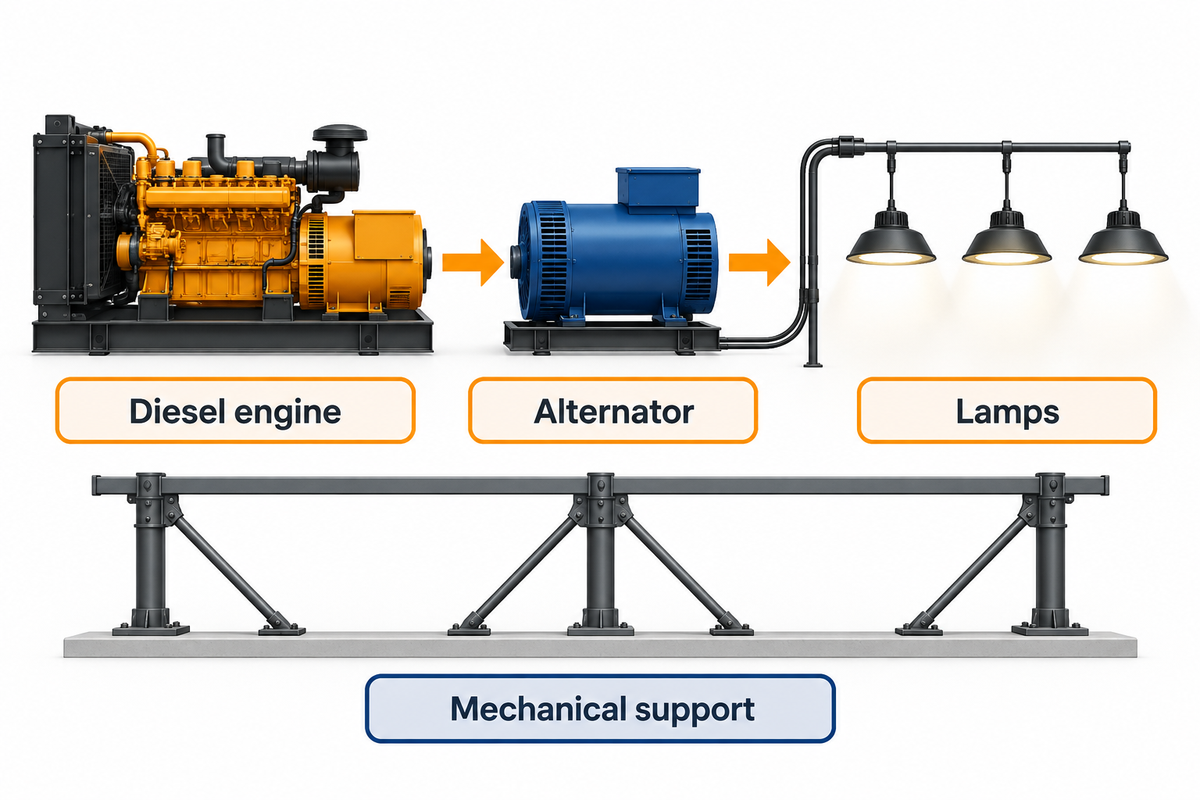
The engine on a diesel light tower drives a generator to power the lighting circuits. A mast with a telescoping arm positions and adjusts the light fixtures. Drivers, ballasts, and other electronic components control the electrical supply and protect the equipment.
How do diesel light towers work?
Fuel supplies the diesel engine; the engine turns the alternator; electrical circuits feed the lamps. The lighting head is supported mechanically above the work area. The mast can change the position of the light falling on the work area while the individual light changes the distribution. Therefore the engine, generator and lamps all have their own ratings and requirements for maintenance.
LED fixtures usually start promptly. Certain metal halide equipment requires a warm-up and restart of its lamps and ballasts, as specified. Interrupting operation or repeated starting isn’t the same as following the warm-up and restart procedure. A lamp that hasn’t restarted and an engine that has stopped are different symptoms.
The U.S. Department of Energy guidance on LED luminaires separates light output from electrical input and stresses application and distribution when selecting lighting. A generator rating describes available electrical power; it doesn’t describe the brightness at a worker’s task.
A towable light tower needs more than a hitch for transport readiness. A vertical mast needs to be lowered and secured in the transport position, and its fixtures and outriggers are also secured, according to the operator’s manual. A compact light tower can still need a substantial deployed footprint around its supports.
LFADJ’s published D955 configuration has four LED light fixtures rated at 400 W each and a 7 m hydraulic mast. Four lamps draw 1600 W in combined lamp input. That figure belongs in the lighting-load record; generator capacity, auxiliary sockets and the light reaching the ground require their own specifications.
Read the Lighting Numbers Before Comparing Towers
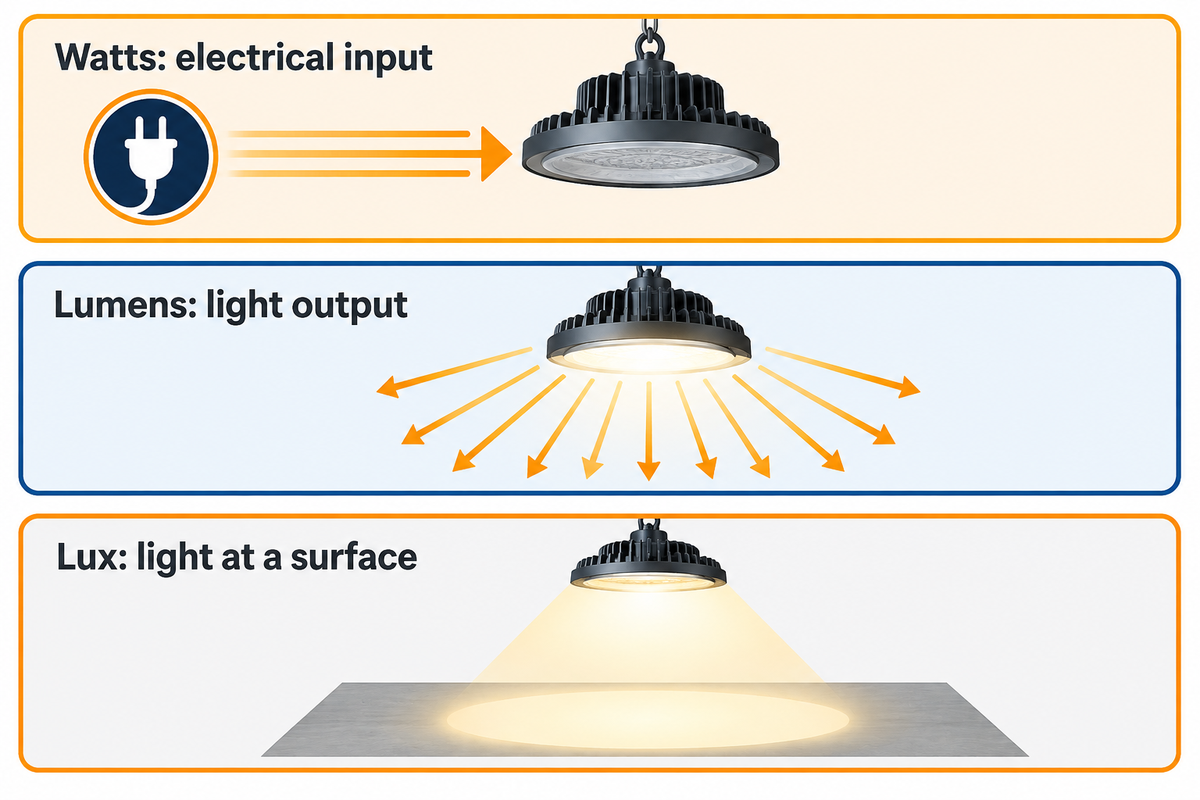
Useful lighting consists of the light required for the task at hand, with shadows and glare under control. Lumens describe the light output; lux and foot-candles describe light at a surface. Lamp watts describe the electric input. When comparing all these in conjunction with mast height, aiming of the fixture, and the site, only then can an advertised coverage area be accepted.
9-Field Lighting Evidence Map
The 9-Field Lighting Evidence Map breaks down the electrical, optical and site measurements to ensure each quoted figure addresses the right question.
| Field | Record | Decision it supports |
|---|---|---|
| Lamp electrical input | Watts per fixture and fixture count | Calculate the lighting load separately from other loads. |
| Fixture light output | Lumens and the specified fixture/optic | Compare emitted light on the same stated basis. |
| Task illuminance | Lux or foot-candles at the working surface | Check whether the actual task receives sufficient light. |
| Minimum versus average | Which statistic is quoted and where readings were taken | Identify dark positions hidden by a bright average. |
| Optical distribution | Fixture-specific photometric distribution | Put light on the work instead of beyond its boundary. |
| Mast geometry | Operating height and tower positions | Evaluate reach, overlap and clearances. |
| Aiming and obstructions | Head angles, equipment shadows and driver viewpoints | Correct glare and changing shadows during the shift. |
| Generator rating | Rated output, voltage and operating conditions | Match the electrical supply to the intended equipment. |
| Auxiliary load | Additional equipment, operating pattern and permitted socket load | Avoid treating nameplate power as unused spare capacity. |
For U.S. construction, the Occupational Safety and Health Administration’s Table D-3 lists different minimum levels by activity: 5 foot-candles for general construction area lighting, 3 for several specified areas including refueling and field maintenance, 10 for general construction plants and shops, and 30 for first-aid stations and offices. Selecting the correct activity matters.
The Federal Highway Administration’s work-zone guidance discusses task categories at 54, 108 and 216 lux. These are design recommendations, and the table isn’t a universal coverage claim for a particular tower.
Planning scenario: A road crew has a machine working between a tower and an inspection point. The ground next to the trailer looks well-lit, but the machine casts a shadow where the inspector needs detail. Adding an additional high-output fixture without changing the lighting angle can leave the obstruction in place. Moving or supplementing the lighting, and then measuring the inspection surface solves the problem. The supervisor also checks the motorist’s view: a brighter work surface is a poor trade if the lamps shine toward approaching traffic. Positions of equipment can change, so the field check follows the work rather than ending when the tower is first switched on.
A 7 m mast and 1600 W of lamp input describe LFADJ’s published configuration, but neither dictates the number of towers for an obstructed work area. The hidden constraint is the light reaching the required surface. A photometric layout followed by onsite measurements reveals this constraint.
When Diesel Fits, and When Another Power Source Fits Better
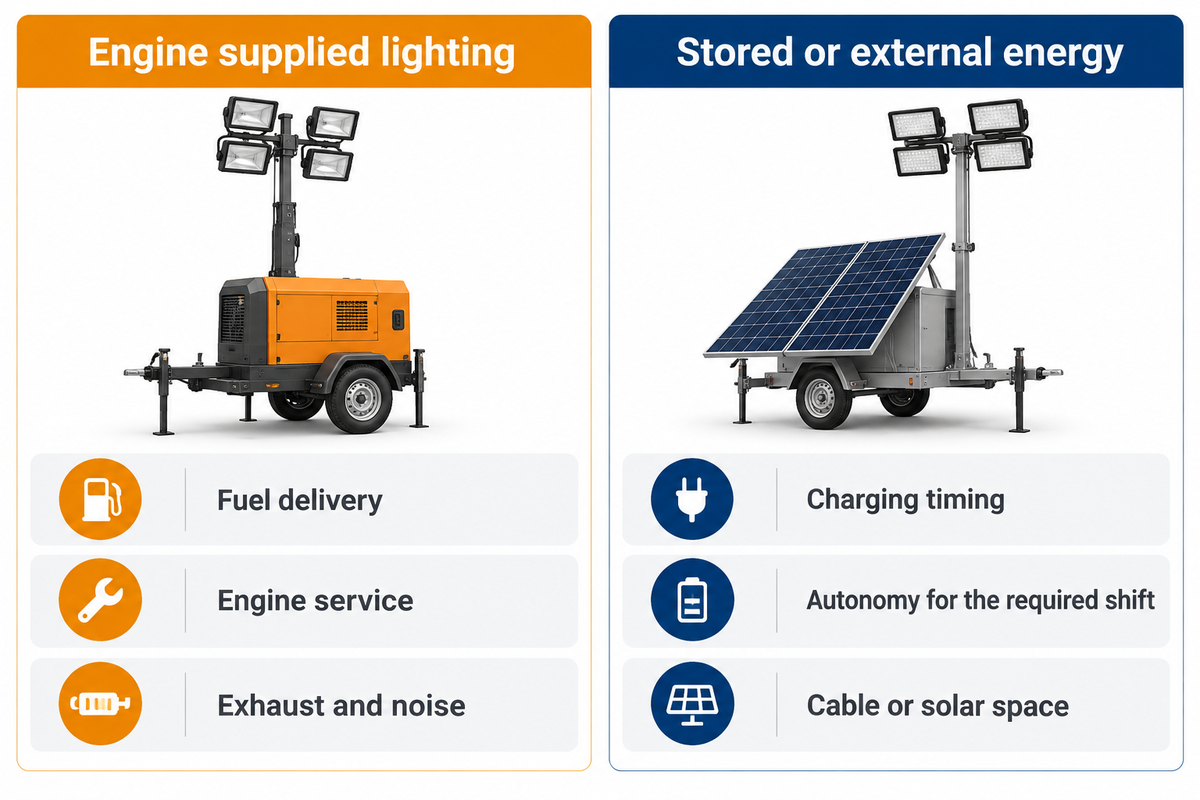
Diesel is well-suited to outdoor shifts where fuel delivery and engine servicing are practical and an independent power source is useful. When comparing equipment, consider the total energy available over the entire duty cycle, taking into account the time available for charging or fueling.
Remote mining, construction sites and disaster relief operations can require portable light towers before permanent infrastructures are built. Logistics then become even more critical to the success of the operation. Access to fuel, and suitable locations for service and exhaust remain a part of the operation even when the generator is built-in.
For an indoor task, use suitable electrically supplied or battery equipment instead of running a diesel generator inside. OSHA’s portable-generator guidance also warns against exhaust entering occupied spaces through openings. A canopy is weather cover, not an exhaust-management solution.
Engine supplied lighting
- Plan fuel delivery and cooled shutdowns.
- Provide engine service access.
- Manage exhaust and noise at the site.
Stored or external energy
- Plan charging energy and its timing.
- Check autonomy against the required shift.
- Manage cables or solar collection space.
LFADJ’s solar lighting options and hybrid lighting options present other opportunities to evaluate those systems. Battery operation during a quiet period can be beneficial; however, the next charging opportunity must be aligned with the site needs. External power sources also need a practical connection and cable route. Outdoor events and special events can have very strict restrictions during occupied periods.
Planning scenario: Assume an outdoor maintenance crew works an 8-hour night shift next to occupied buildings. The crew needs to use a quiet period to carry out their tasks; however, procurement prefers the diesel unit. A hybrid arrangement can be considered if the stored energy covers the quiet period and the system can be recharged later. If the plan requires diesel to run continuously, using the hybrid system doesn’t solve the problem. The decision is based on lighting demand and permitted operating windows. A user-friendly control panel helps the crew carry out the plan, and ease of use can’t compensate for a missed recharge or refuel opportunity.
Fuel Use and Runtime: Read the Conditions First
Runtime is the period of operation provided by the usable fuel with a given load and mode of operation. Tank capacity doesn’t define hourly fuel use. A useful comparison keeps the lighting configuration, auxiliary loads, test basis and fuel reserve together, then checks the expected shift against those conditions.
How much fuel does a light tower use?
A light tower’s fuel use follows its engine, lighting load and other coupled equipment, and the lamp type can change it sharply: Construction Equipment reported a 6kW light tower whose 28-gallon fuel tank lasted 50 hours with 4,000 watts of metal halide lighting and 150 hours after a switch to LEDs. If it isn’t documented, fuel consumed can be recorded for a given engine hour with controlled conditions. Longer run times can result from a larger fuel tank, a lower load, or a different mode of operation.
As an example, Allmand’s Night-Lite GR liquid-cooled 3 kW product page shows a 63-US-gallon tank and 313 hours with 350 W lights, or 360 hours with optional 250 W lights. Its footnote describes a one-hour full-tank consumption test basis. These results are configuration-specific and published results, not a choice between two universally equivalent lighting outputs.
Generac’s MLT4060KV page identifies a 6 kW machine, a 320 W LED lighting designation, four lights and a maximum runtime of 95 hours. Its runtime note references engine-manufacturer and field-test data after a 100-hour break-in, with results affected by age, maintenance, environment and fuel density. Keep the maximum runtime and these conditions together.
The International Organization for Standardization’s ISO 3046-1 catalogue describes a framework for declaring engine power and fuel consumption. Matching the declared test basis makes comparisons more useful. A tank-runtime claim and an independently measured lights-only consumption rate answer different questions.
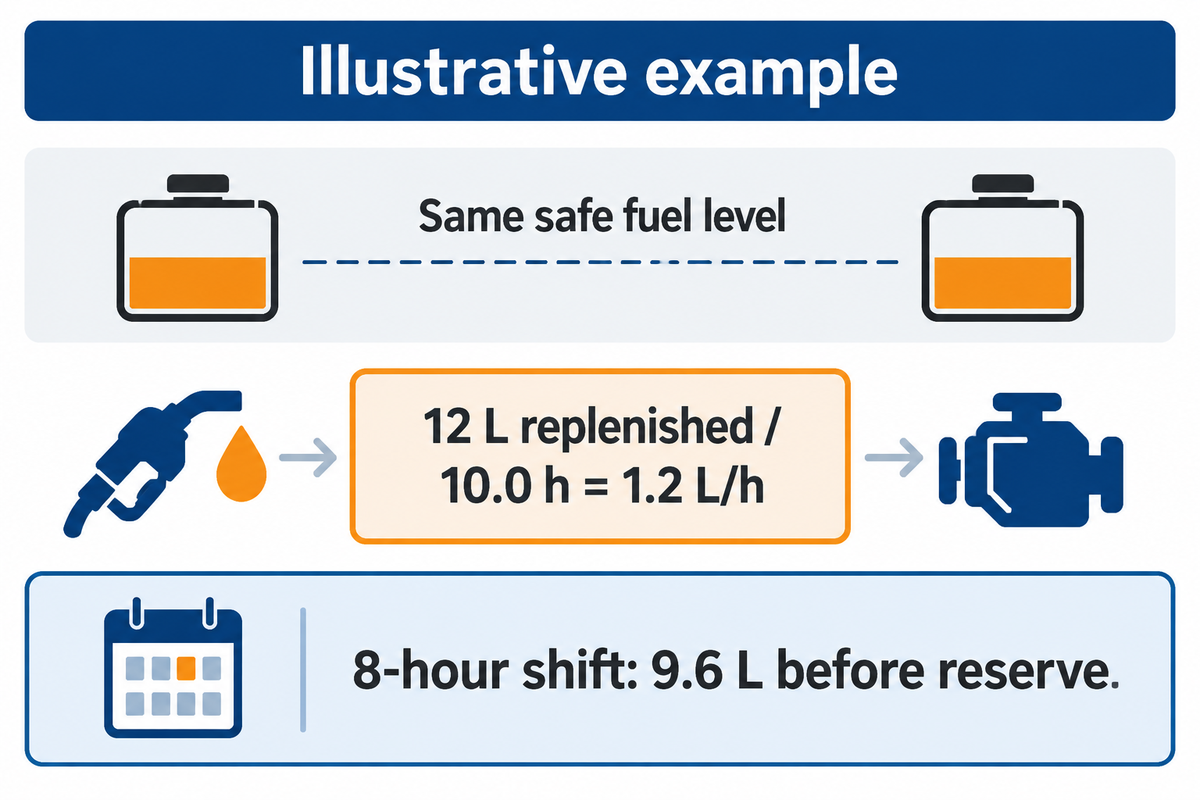
Example: document an identical safe fuel level at the start and finish, with no other additions or withdrawals. After 10.0 engine hours of the recorded lighting-only duty, replenishing 12 L represents 12 L consumed. The average is 12 ÷ 10.0 = 1.2 L/h. At that observed duty, an 8-hour shift would use 9.6 L before the planned reserve. A changed load requires a new estimate.
Record fixture settings, auxiliary equipment and operating interruptions next to hour meter readings. Refueling is a stopped, cooled task, performed in accordance with the site fuel procedure and the equipment instructions; don’t use measurement as an excuse to refuel a running engine. LFADJ’s existing shift and refuel planner can be used to organize known consumption data.
A measured 1.2 L/h average answers the question “how much fuel did this recorded duty consume” better than a claim to the longest run time. Keeping the 12 L replenishment and 10.0 engine hours with the load record lets maintenance and finance revisit the estimate when equipment or shift conditions change.
Prepare the Tower for an Outdoor Shift

Exercise control of your work area, mast movement and electrical connections. Inspect the tower before starting, follow its setup sequence and check the lighting after dark. Use similar controls during shutdown, lowering and removal from the job site.
The prestart inspection includes leaks, the condition of the mast and its lifting mechanism, tires, guards, support structures, and visible damage to cables and hoses. The site support must take the deployed unit. Model instructions set the permitted wind, slope, extension and transport conditions; an unrelated tower’s limit is a poor substitute. Finish the setup before dusk where practical, then check performance in low-light conditions.
“Before refueling, shut down the generator and allow it to cool.”
Electrical grounding also needs the correct arrangement. OSHA’s grounding factsheet explains a conditional exception in which a generator frame can serve the stated grounding function for specified mounted or cord-connected equipment and bonding. This doesn’t warrant that a ground rod be installed or omitted. A qualified electrician makes the connection to a structure and supply.
New York State’s FACE investigation, Report 12NY018, describes a fatal May 2012 accident during removal of a rented light tower. The mechanic was working alone beneath a powerline. The unwitnessed incident apparently involved extending the mast rather than lowering it; investigators couldn’t establish the exact reason. The published account links the event to overlooked overhead hazards, training and the lighting plan. Removal belongs in the plan from the start.
- Survey the position: include overhead lines, nearby traffic, exhaust paths and access for service.
- Set the supports: use the manual’s ground, leveling and outrigger procedure.
- Raise and aim: follow the controls and clearance plan for the identified tower.
- Check the working area: inspect task lighting, glare and moving shadows.
- Close the shift: shut down, lower and secure the mast before the planned removal procedure.
For road-facing jobsites, LFADJ’s construction and roadwork lighting page addresses the application. The operating plan still needs to account for pedestrians, passing vehicles and changing equipment positions.
A 10-hour shift doesn’t end the exposure to hazards when the lamps go out. Lowering and securing the mast can bring the equipment close to overhead services again. Good controls and a planned movement envelope, along with the required observing personnel, protect the removal stage as well as night work.
Build a Maintenance Plan Around the Actual Manual
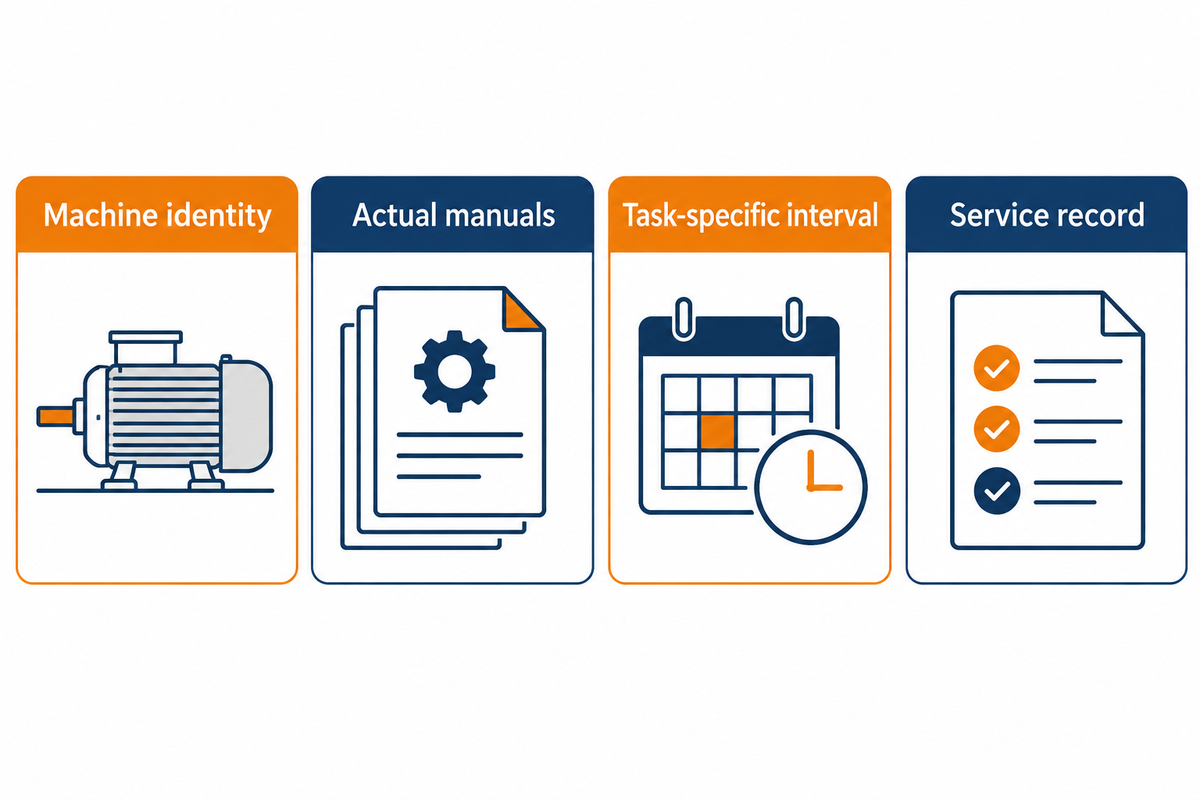
A maintenance plan follows both the tower and engine documentation, with service recorded against operating hours and applicable calendar limits. Include inspection and cleaning of the lighting and support systems alongside engine care. OSHA’s portable-generator factsheet directs maintenance and operation according to the manufacturer’s instructions, rather than a generic schedule from another model.
The Construction Equipment maintenance interview emphasizes oil and filters, fluid levels, clean lenses and correct setup. Dust, transport vibration and rough handling affect more than the diesel engine. Inspect connections and supports using the manufacturer’s safe procedure; leave in-depth electrical repairs to trained personnel.
Some models promote 1,000-hour oil or service intervals. Allmand and Generac do this with their models. This doesn’t replace any engine schedule, specified fluids, inspection responsibilities or shorter service intervals for particular conditions. The oil change interval is different from the service interval for other components.
List the model and serial number of the machine at the top of each entry. Identify the engine, revision of the manual, service task, hours or date due, reading, parts used and personnel. A copied record from a similar looking compact light tower with a different engine can result in the wrong filter or lubricant being placed in the service kit.
Planning for maintenance accounts for reliability as well as downtime. Leave enough space for access to the canopy. Durability claims do not eliminate checks after towing. A rugged enclosure can protect equipment while dirt on the lens still reduces the light tower’s useful illumination. Dusk-to-dawn operation also needs a service window outside the working shift.
A published 1,000-hour interval is a prompt to identify exactly which task and model it covers. The service record should show that scope before the next shift. Keeping engine care, fixture inspection, and the mast checks separate reduces the likelihood that one completed oil change is considered a completed tower inspection.
Use Symptoms to Decide What to Check or Escalate
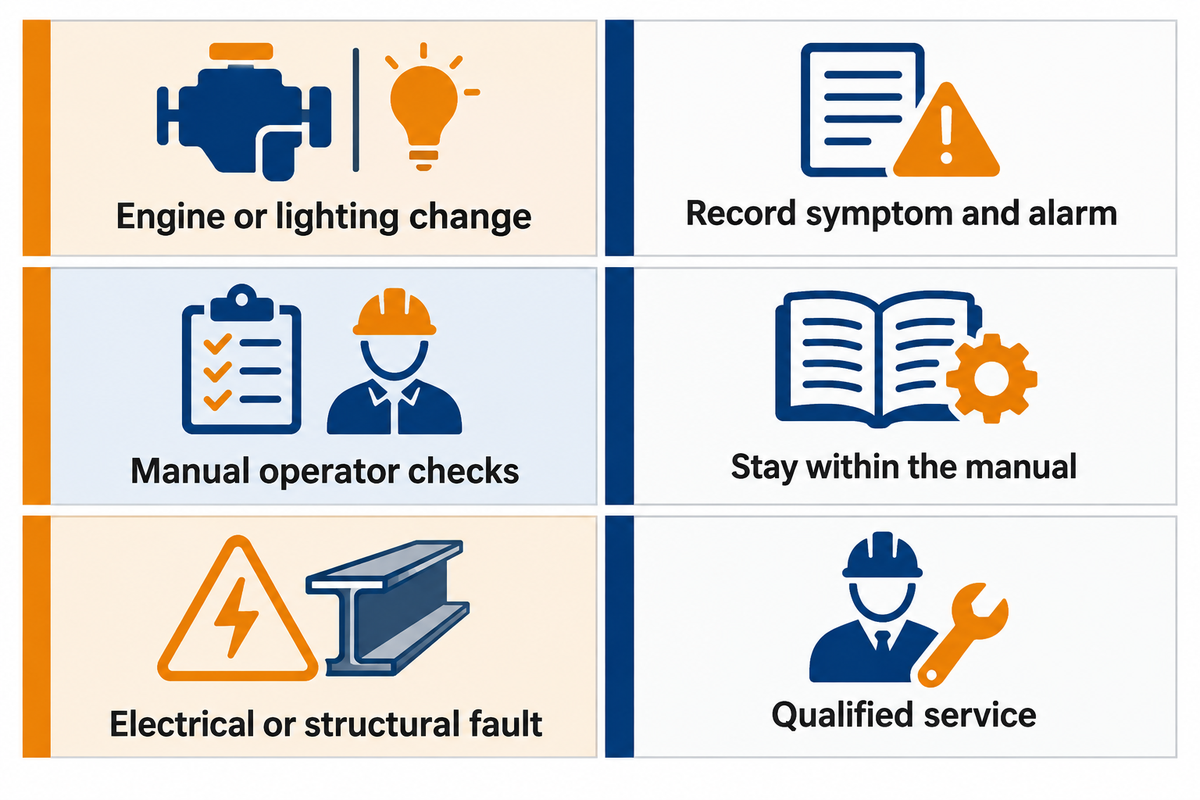
Identifying what changed is the basis for choosing among responses: change in engine operation, all lighting, one fixture, an auxiliary outlet, or the mast. Record the symptom and any alarm, and choose the response that most appropriately resolves the problem. Manual operator checks don’t address all possible faults and must stay within the safe procedures in the manual. Electrical, structural and repeated protective faults need service by a qualified technician.
9-Symptom Stop-or-Check Map
The 9-Symptom Stop-or-Check Map sorts the possible observations into manual operator checks and conditions that require stopping or qualified service.
| Symptom category | Record or safe check | Stop or escalate when |
|---|---|---|
| Engine will not start | Record controls, indicators and manual prestart checks. | A fault persists or the permitted starting procedure fails. |
| Engine shuts down | Record the alarm and operating load. | A protection activates; do not bypass it or keep restarting. |
| All lights are off, engine runs | Record lighting controls and permitted manual checks. | The fault remains or protection trips. |
| One fixture is dark | Identify the fixture and lamp technology. | A fixture, driver or ballast needs diagnosis. |
| Metal-halide lamp has not restarted | Follow its documented cool-down/restrike procedure. | It fails after that procedure or shows another fault. |
| Auxiliary tools behave abnormally | Record the equipment and connections in use. | Output needs electrical testing; do not adjust engine speed by guesswork. |
| Cable or connector is damaged | Identify and isolate the defective equipment safely. | Damage is visible; remove it from service. |
| Mast movement is abnormal | Stop movement and keep the area controlled. | Locks, cables, hydraulics or structure need examination. |
| Fuel leak, smoke or unstable support | Follow the site’s stop and isolation procedure. | The condition is unsafe; keep people clear and summon assistance. |
A Genie AL-tower service tip separates lamp, ballast and fixture faults, but restricts maintenance to trained and qualified personnel. Shutdown alone doesn’t make every internal electrical component safe to handle; stored energy is another reason to leave those repairs to the proper service team. OSHA’s inspection guidance calls for defective equipment to be removed from service and marked or tagged unsafe.
An unresolved Heavy Equipment Forums discussion describes an older light tower whose engine ran while connected tools performed poorly. That’s a useful symptom, not a confirmed diagnosis. Sending the service team the symptom and machine identity is more useful than assuming a capacitor or changing engine speed.
For a four-light tower with one dark fixture, the first useful distinction is one lamp versus all lamps. As indicated in the “safe record,” the fixture type, lamp type, and controls are identified without the need to open the energized equipment. Qualified service can then use the correct model procedure instead of repeating an unrelated machine’s repair.
Compare Supplier Claims on the Same Basis
When assessing suppliers against the lighting duty and the operating evidence, then evaluate ownership responsibilities. An appropriate dependable unit must be compatible with the work shift and service arrangement. Procurement is generally better off taking a consistent specification record rather than selecting the highest lumen number, largest generator or longest advertised runtime individually.
Consolidate the questions in one handoff:
- Confirm the task illumination target, working surface, site dimensions and expected obstructions.
- Ask for the fixture distribution, mast position and basis behind any coverage figure.
- Identify the exact engine and generator, permitted auxiliary loads and relevant market documentation.
- Confirm the lighting configuration, fuel capacity and load behind the runtime claim.
- Request the actual manuals, service schedule, parts identification and agreed support scope.
- When comparing ownership against light tower rentals, be sure to record transport, refueling, and maintenance responsibilities.
A light tower manufacturer could build on the examples supplied with the brief. LFADJ’s diesel light tower configurations page is the source for selecting the product and discussing the project. Use their provided tool to compare quotation costs once the operating assumptions are agreed.
For long-term U.S. siting, the Environmental Protection Agency’s nonroad-engine definition has a more than 12 consecutive month exclusion for certain portable engines, with seasonal-source and replacement engine provisions. Build the intended location and duration into the project review rather than assuming wheels settle the classification.
One useful accounting example is the reported rental comparison of the REIC which shows a 28-day cycle with telemetry for hours, fuel and maintenance, using two units of each type. The inputs belong to that comparison and the savings are study specific. Keeping similar inputs, with equivalent lighting duties, before finance evaluates options, is the method.
What Is Changing in Diesel Lighting, and What Should You Plan For?
Lighting decisions are increasingly requiring separation of power arrangement from fixture choice, while keeping current site requirements distinct from anticipated regulatory changes. For a 2026-2027 project, specifying the required level of illumination and permitted engine operating periods and service responsibility is helpful. A forecast about equipment sales can’t provide these inputs.
LED light fixtures, hybrid and solar options are available along with engine-driven lighting. Labels of different parts describe the system. A towable LED light tower can still be powered by diesel; a hybrid can still need fuel. “Extended run times” and “fuel-efficient” become useful only when attached to a stated lighting output, duty and charging or refueling pattern.
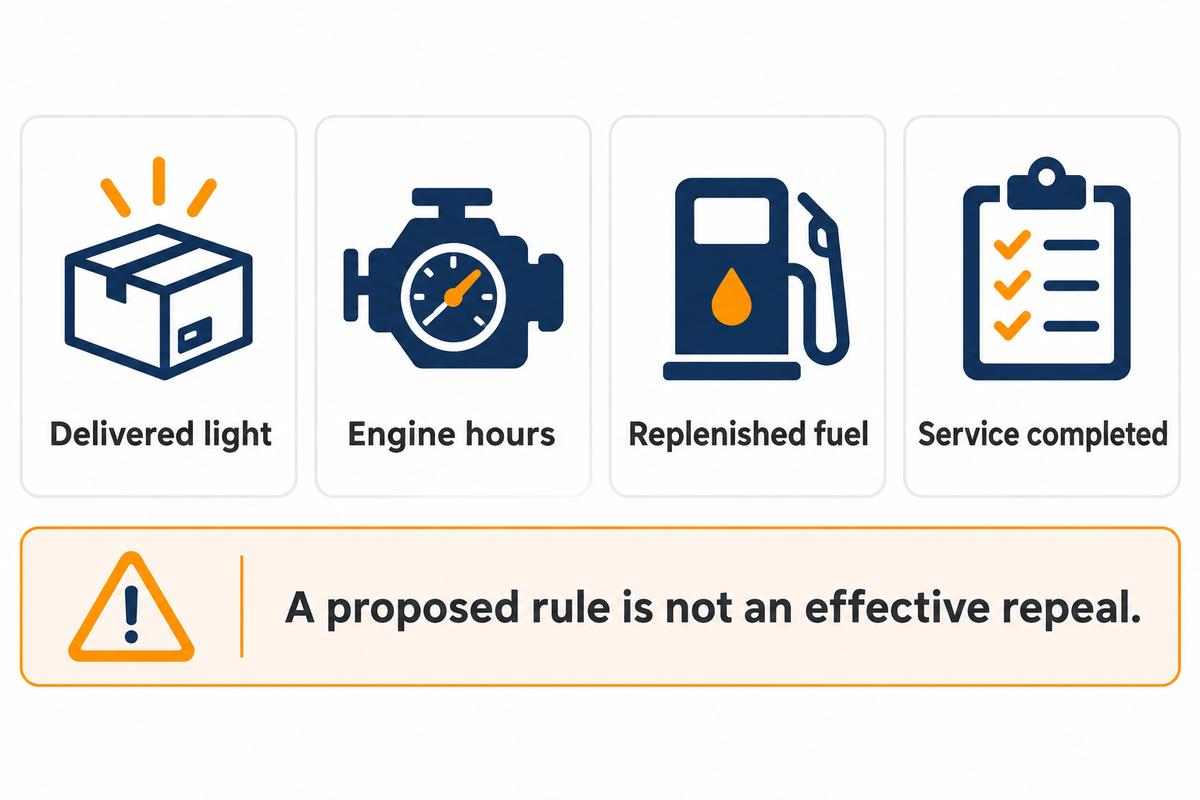
The standard-setting context also deserves care. OSHA’s July 1, 2025 construction-illumination action proposed rescinding specified illumination requirements. The current eCFR text viewed in October 2026 still displays section 1926.56 and Table D-3. A proposal and an effective repeal are different stages. The task lighting plan should continue to follow the requirements applicable to the project.
In the oil and gas work, construction and temporary industrial maintenance work, a good improvement is a better operating record of delivered light, engine hours, replenished fuel, and service completed. That record shows a mismatch between the quoted duty and the shift actually worked. It establishes a baseline for comparison of battery and/or hybrid power for later work.
When purchasing or renting equipment next, take a lighting brief and energy schedule with you. The equipment should be suitable for the task and the people operating it and support available after it’s delivered. High-performance lighting solutions should be selected for the task by meeting the lighting brief, rather than by vague statements about productivity.
Key takeaway
Select the lighting duty first, compare fuel and power under matched conditions, then plan the service and site controls that keep the shift workable.
FAQs
Do light towers take diesel?
Diesel-powered models take the fuel specified for their engine.
Yes, a diesel-powered light tower uses diesel fuel of the grade its engine manufacturer specifies. The category of equipment also includes battery, solar, hybrid and externally powered models, so the tower’s identity is important. Check the engine and fuel label before filling. Keep the fuel clean and follow the shutdown and cooling procedure. An LED lighting head tells you the lamp technology, not which fuel or power source supplies it.
How long will a diesel light tower run?
Runtime follows usable fuel, load and operating mode.
A diesel light tower’s published full-tank runtime runs from 95 hours to 360 hours in the two examples below, and it changes with tank, configuration and lamp load. Allmand’s example changes from 313 hours to 360 hours, depending on the listed lamp option; Generac lists a maximum of 95 hours for a different tower. Compare load and test conditions before using a figure for shift planning and allow for the planned reserve and refueling shutdown.
How many gallons of diesel does a light tower hold?
Tank capacity is model-specific; Allmand’s cited example lists 63 US gallons.
Tank size is model-specific for diesel light towers: Construction Equipment, for example, cites a 6kW light tower with a 28-gallon fuel tank. Allmand publishes 63 US gallons for the Night-Lite GR liquid-cooled 3 kW unit discussed here. Other units have different capacities. Nominal tank capacities and usable fuel capacities in operating plans need to be kept separate and US gallons need to be kept separate from other gallon units. A bigger tank may extend the refueling interval without making the lighting or engine more efficient.
Are diesel light towers safe?
Safe working requires the correct equipment, setup and operating controls.
Diesel light towers require trained operation. They require a stable support, overhead clearance, exhaust control, and adequate power and electrical connections. Use the actual manual and the site plan during setup, shift, and removal. Stop equipment with defects or protective faults and use qualified service.
What records should accompany a used diesel light tower?
Keep its identity, manuals, service history and inspection findings together.
A used tower must come with the machine identity that matches the tower, the operating manual, and the engine manual. The serial numbers, engine type, lamp technology, and the generator must be matched for the equipment being inspected. Service entries must show hours or dates, and what work was done. What was replaced must be identifiable. Inspection findings should cover the trailer and supports as well as the mast, lighting circuits and visible wiring.
For a purchase or rental handover, record outstanding defects and who will resolve them before use. Light towers for rent can move among crews, so a handover record helps prevent a familiar appearance from substituting for control familiarization. A clean canopy or user-friendly dashboard tells little about the condition of the lifting system or electrical equipment beneath it.
Does an IP rating make a diesel light tower explosion-proof?
No. Ingress protection and hazardous-location approval address different hazards.
An IP rating is a measure of protection against ingress of solid and/or liquid particles. Suitability for a hazardous location requires the specific equipment be approved, marked and the conditions of the intended location be evaluated. Company management-system certification or a certificate for a separate portable lamp does not confer that suitability on an entire diesel tower.
References & Sources
- Purchasing Energy-Efficient Commercial and Industrial LED Luminaires U.S. Department of Energy.
- 29 CFR 1926.56, Illumination Occupational Safety and Health Administration.
- FHWA Lighting Handbook, §8.3.2 Work Zone Lighting Federal Highway Administration, 2012.
- Using Portable Generators Safely Occupational Safety and Health Administration, 2005.
- ISO 3046-1:2002: engine performance declarations and test methods, public catalogue International Organization for Standardization.
- Grounding Requirements for Portable Generators Occupational Safety and Health Administration, 2005.
- Report 12NY018: Mechanic Electrocuted When a Mobile Light Tower Contacted Powerline New York State FACE Program, 2017; hosted by the Centers for Disease Control and Prevention.
- Proper Maintenance Keeps Light Towers Burning Bright Construction Equipment, July 25, 2014.
- 40 CFR 1068.30, Nonroad engine definition Environmental Protection Agency, current eCFR text.
- Construction Illumination, Proposed Rule 2025-11645 Occupational Safety and Health Administration, July 1, 2025.
- 29 CFR 1926.56, current electronic text Electronic Code of Federal Regulations.