Get in touch with LFADJ Company

Explosion-Proof LED Lights for Hazardous Industrial Worksites
LED lighting must withstand an explosion-proof housing. LFADJ reviews the criteria including classified location, gas or dust group, temperature, electrical supply, mounting plan, and the specific lighting task to specify the explosion proof LED lights for your application.
Compare Selection Inputs
We can produce a quote for the inputs you know, and quantity and destination. We’ll determine the missing inputs needed for a model review.
Start with the site, not the wattage
- Class/Division or Zone information
- Gas, vapor, dust or fiber involved
- Ambient and environmental exposure
- Voltage, mounting and coverage
- Quantity, destination and required documents
LFADJ Project Support at a Glance
7 days
Sample or prototype planning baseline
Up to 20 days
Small-batch or production baseline after configuration approval
Pre-sale review
Product consultation, selection and lighting solution discussion
After-sales path
Use consultation and contract-based service handling
Explosion-Proof LED Lighting Selection Starts with Site Conditions
Classification confusion is the first source of selection risk. A buyer may be familiar with the term “hazardous location lighting,” but may not be familiar with class, division, zone, material group or temperature information needed to validate fixture classification.
Approval scope before model comparison
A classification mismatch creates a risk to safety and to procurement. A general product label cannot replace the required approval scope. Therefore LFADJ starts with the site designation and checks it against the exact equipment marking; OSHA 1910.307 states that equipment must be approved for the hazardous location where it is to be used.
TECHNICAL SPECIFICATION // NODE READOUT
01
STEP 01 / 06
Location classification
Submit the classified area drawing or the designation used by the responsible engineer. For United States projects, OSHA 1910.307 requires equipment to be approved for the hazardous location for which it is used.
02
STEP 02 / 06
Hazard material
Recognize whether the hazard is gas, vapor, combustible dust, fibers or flyings. A generic label stating “Hazardous Material” will not suffice. A gas approval must not be assumed to cover dusts.
03
STEP 03 / 06
Temperature conditions
What is the ambient range and required temperature code/ maximum surface temperature? The provided data will be analyzed to determine if it fits the marked operating range.
04
STEP 04 / 06
Environmental exposure
Describe the effects of rain and weather, washing and salt buildup, chemical exposure, vibration, and corrosion. Environmental protection of enclosures supports environmental durability. It is not a substitute for hazardous location approval.
05
STEP 05 / 06
Lighting task
Indicate work area, mounting height, coverage, glare concerns and target maintained work plane. Maximum lux value alone does not describe shadows cast across the complete task area.
06
STEP 06 / 06
Supply and installation
Check the voltage, frequency, cable entry, mounting method, and accessories. An analysis of the delivered configuration must be performed with regard to the entire system rather than to an individual model number.
LFADJ Explosion-Proof LED Light Configurations
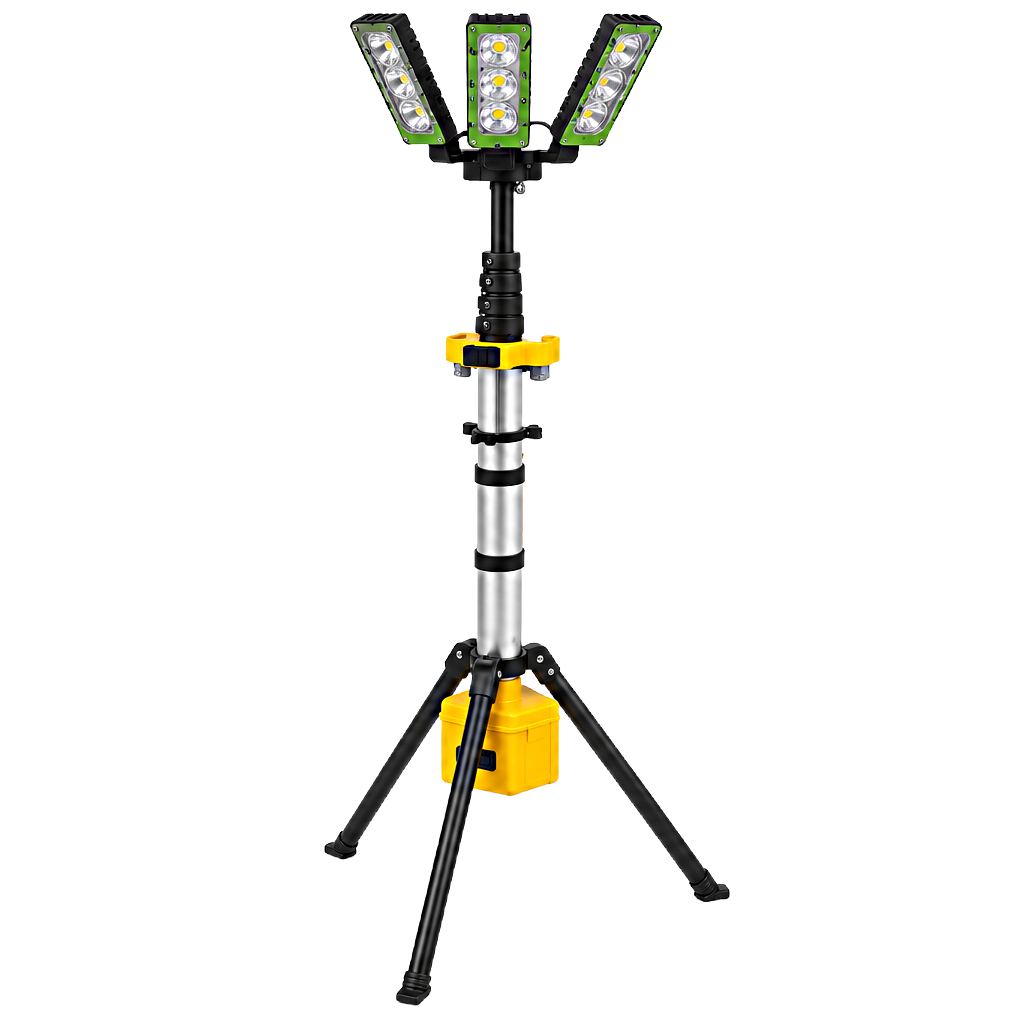
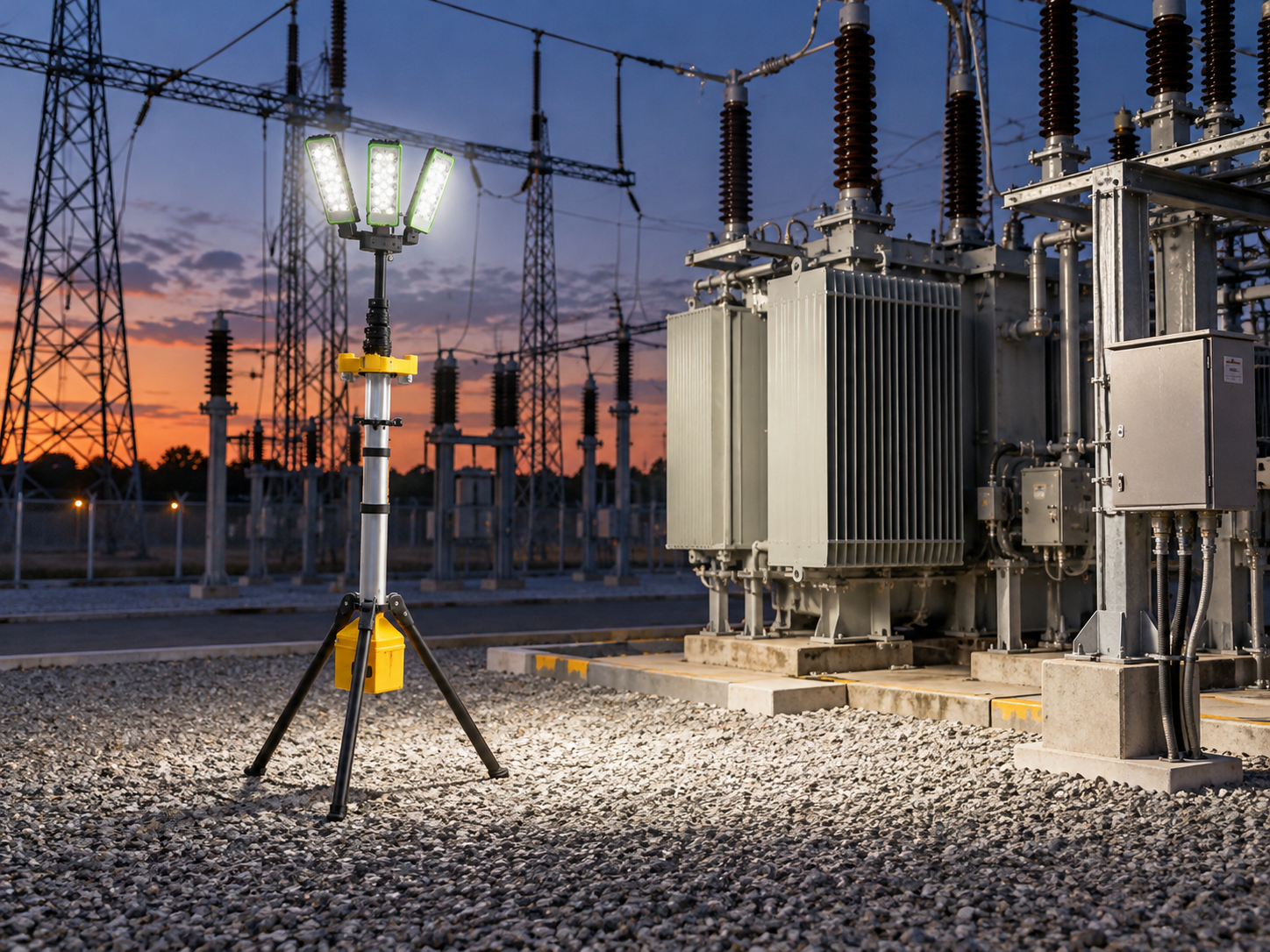
LF6129 Omnidirectional Mobile Lighting System
LF6129 offers a mobile lighting design with an elevated work position for temporary lighting, inspection and large-area site lighting. Its product sheet lists 180 W power, 4 m maximum raised height and an initial illuminance of 600 lx at 10 m.
Power
180 W
Max Height
4 m
Illuminance
600 lx @ 10 m
Specifications
LF6129
- Electrical: DC 22.2 V
- Ingress protection: IP66
- Gas marking shown: Ex eb ib mb IIC T5 Gb
- Dust marking shown: Ex ib mb tb IIIC T95°C Db
- Selection boundary: Order only after the certificate, nameplate and delivered configuration are complete.
600 lx Reading the 600 lx value correctly
The sheet gives maximum initial illuminance at a specified distance. It does not control average illuminance, uniformity, maintained output, glare control or visibility behind obstructions within your work area.
Fixture Format and Operating-Condition Matching
Design flexibility allows HID to address mounting and coverage problems with portable, flood, high-bay, linear and area-light fixtures. The fixture form comes after the safety classification gate; HSE lighting guidance also treats glare, shadows and the work task as layout considerations.
Format under review
Portable or mobile
Task question
Will the light move between inspection or maintenance positions?
Inputs LFADJ needs
Runtime, movement path, battery or supply, lifting height
Decision boundary
Do not treat portability as proof of emergency escape capability
Format under review
Flood light
Task question
Does the task need directional coverage across a defined area?
Inputs LFADJ needs
Distance, beam direction, target plane, glare constraints
Decision boundary
Check photometric distribution, not watts alone
Format under review
High bay
Task question
Is the mounting point high above a fixed work zone?
Inputs LFADJ needs
Mounting height, spacing, ceiling conditions, maintenance access
Decision boundary
Verify exact hazardous rating at the chosen configuration
Format under review
Linear fixture
Task question
Does the site need elongated coverage along a corridor or process line?
Inputs LFADJ needs
Length, mounting, spacing, cable route, obstruction map
Decision boundary
Confirm the complete certified assembly
Format under review
Area light
Task question
Does the project need broad outdoor or process-area coverage?
Inputs LFADJ needs
Site plan, weather exposure, pole or wall position, target levels
Decision boundary
Separate ingress and corrosion needs from Ex approval
“The model recommendation begins with classified information and the work task. Only then are power, optics and mounts relevant.”
LFADJ Engineering Team
Specifications
Configuration and Operating Requirement Comparison
This comparison matrix assesses explosion proof lighting. When assessing fixtures, keep in mind that two fixtures with the same wattage aren't always interchangeable. You must compare scope of certification, temperature class, optics, mounting, and ambient limits; OSHA 1910.307 requires equipment to be approved for the hazardous location where it is used.
| Selection input | What to provide | Why it changes selection | LFADJ review output |
|---|---|---|---|
| Hazard classification | Class/Division or Zone designation | Defines the approval scope that must be matched | Candidate model list for document checking |
| Hazard material | Gas, vapor, dust, fiber and group | One material approval cannot be assumed to cover another | Marking and certificate-scope check |
| Temperature | Ambient range and required T-class or surface limit | Surface temperature suitability is site-specific | Operating-range comparison |
| Environment | Water, dust, washdown, salt, chemicals, vibration | Ingress and corrosion exposure affect enclosure choice | Enclosure and material review |
| Lighting task | Work-plane target, area, shadows and glare concerns | Maximum point illuminance does not describe complete coverage | Optic and layout information request |
| Mounting | Height, wall, ceiling, pole, portable or lifting arrangement | Changes distribution, access and accessory needs | Mounting configuration proposal |
| Electrical | Voltage, frequency, controls and backup requirement | Changes drivers, wiring and delivered assembly | Electrical configuration review |
| Procurement | Quantity, destination and schedule | Changes production and shipping planning | Commercial quotation |
| Documents | Certificates, drawings, manuals and photometric files required | Prevents document gaps after model selection | Document availability confirmation |
Project Pricing, Lead Time and Supply Coordination
We use different pricing strategies for different types of hazardous-area projects. We price the exact model, configuration, quantity, required documents, destination, and delivery requirement instead of quoting based on a fixed list. A complete RFQ helps engineering and procurement compare scope.
01
Driver
Approval and marking requirement
Commercial effect
Defines eligible models and document scope
How to reduce clarification
Send the project classification and destination country
02
Driver
Optic, mounting and electrical configuration
Commercial effect
Changes the complete bill of materials
How to reduce clarification
Send voltage, height, area and accessory needs
03
Driver
Quantity and production stage
Commercial effect
Changes sampling, production and packing plan
How to reduce clarification
Separate evaluation quantity from expected production quantity
04
Driver
Delivery destination
Commercial effect
Changes packing and freight coordination
How to reduce clarification
Provide city, country and requested delivery point
Current planning baselines
Sample or prototype
We take samples or prototypes through 7-day baseline after the configuration is confirmed for this stage.
Small batch or production
Configuration approval enables us to initiate small-batch or production supply within 20 days.
Quote readiness before price comparison
Use the readiness tool to see if a request has the minimum required technical and commercial information. The score measures the completeness of the information, not the approval of the product.
CONFIGURATION & COMPLIANCE
Model Marking, Certificates and LFADJ Quality Systems
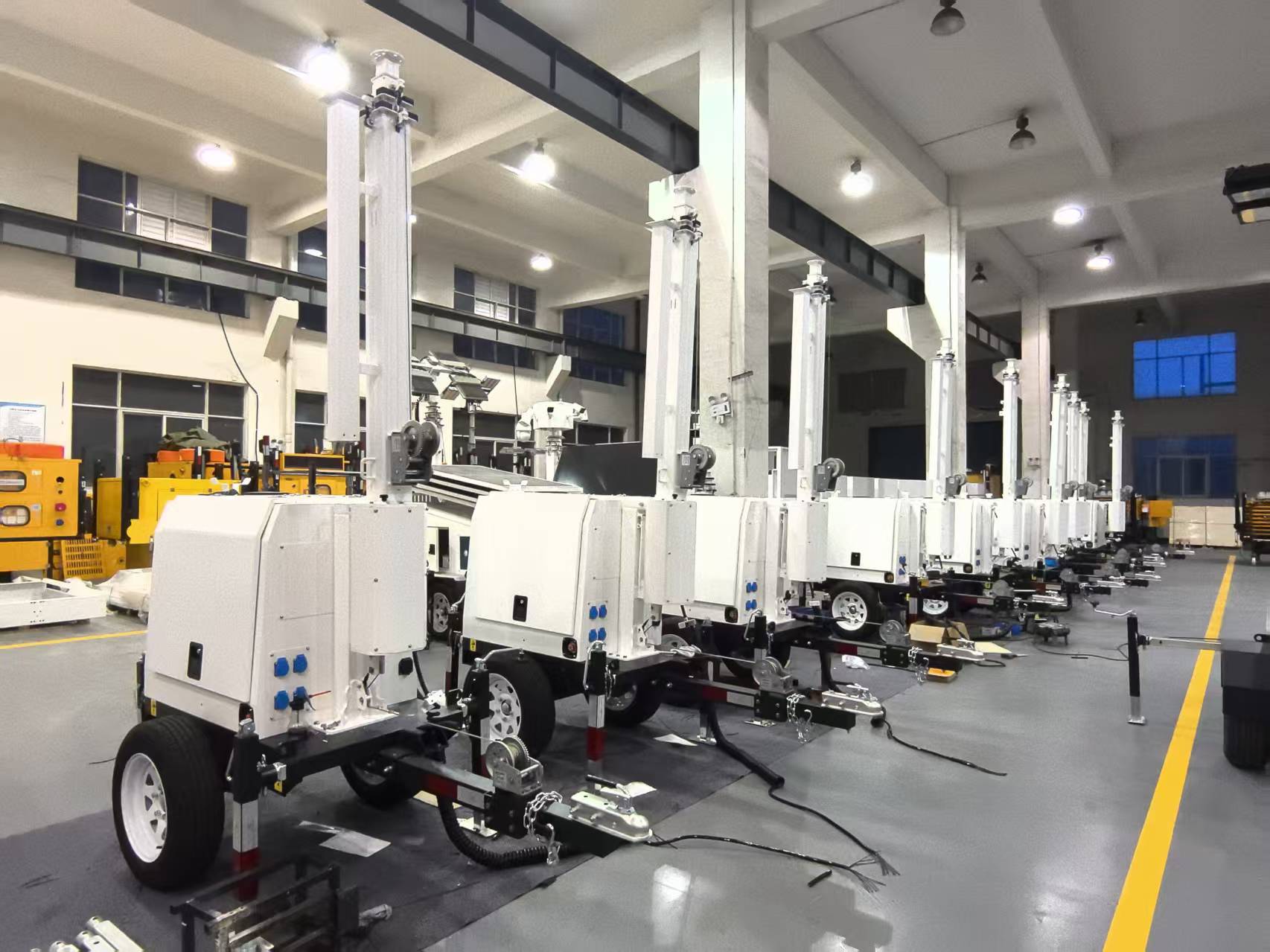
Certificate scope uncertainty should be resolved prior to issuance of the purchase order, not after delivery. LFADJ verifies the exact model, nameplate marking, certificate object, operating conditions and requested project documents as part of configuration communication.
01
Identify the exact model
STEP // 01
SPEC-A1
Identify the exact model
Use a model and ordered configuration over a product-family label.
02
Read the complete marking
STEP // 02
SPEC-B2
Read the complete marking
Compare the gas or dust protection marking, temperature information, and ambient range with the requirements of the project.
03
Check the certified object
STEP // 03
SPEC-C3
Check the certified object
Confirm whether complete equipment or components are covered by the evidence. Verify that accessories are also covered by the evidence.
04
Review installation conditions
STEP // 04
SPEC-D4
Review installation conditions
Check entries, glands, wiring, mounting and associated equipment with responsible project parties.
05
Request project documents
STEP // 05
SPEC-E5
Request project documents
List certificates, instructions, drawings, and photometric information with the quotation.
06
Freeze the configuration
STEP // 06
SPEC-F6
Freeze the configuration
Use the confirmed model and configuration when creating purchase and supply records.
Management systems and product evidence
-
ISO 9001ISO 9001:2015 quality management system certification
-
ISO 14001ISO 14001:2015 environmental management system certification
-
ISO 45001ISO 45001:2018 occupational health and safety management system certification
- Domestic explosion-proof certificates are issued for some portable and panoramic lighting products; application should be checked by actual model and certificate.
Process
LFADJ Project Process and After-Sales Support
Information that prevents avoidable rework
Specifications| Before review | Practical rule | Buyer benefit |
|---|---|---|
| Classification | Use the responsible engineer's project designation | Avoids comparing ineligible models |
| Lighting target | Describe the work plane and area, not watts alone | Improves optic and mounting discussion |
| Electrical supply | Freeze voltage and accessory requirements with the configuration | Reduces late assembly changes |
| Documents | List required certificates and files in the RFQ | Prevents document gaps at shipment |
Hazardous-Area Applications and Lighting Scenarios
LFADJ provides lighting solutions for the industrial production, equipment maintenance, nighttime construction, inspection and emergency operations. Each application starts with the task and site conditions rather than assuming one fixture serves every hazardous environment.
Scenario Readout
01 / 06
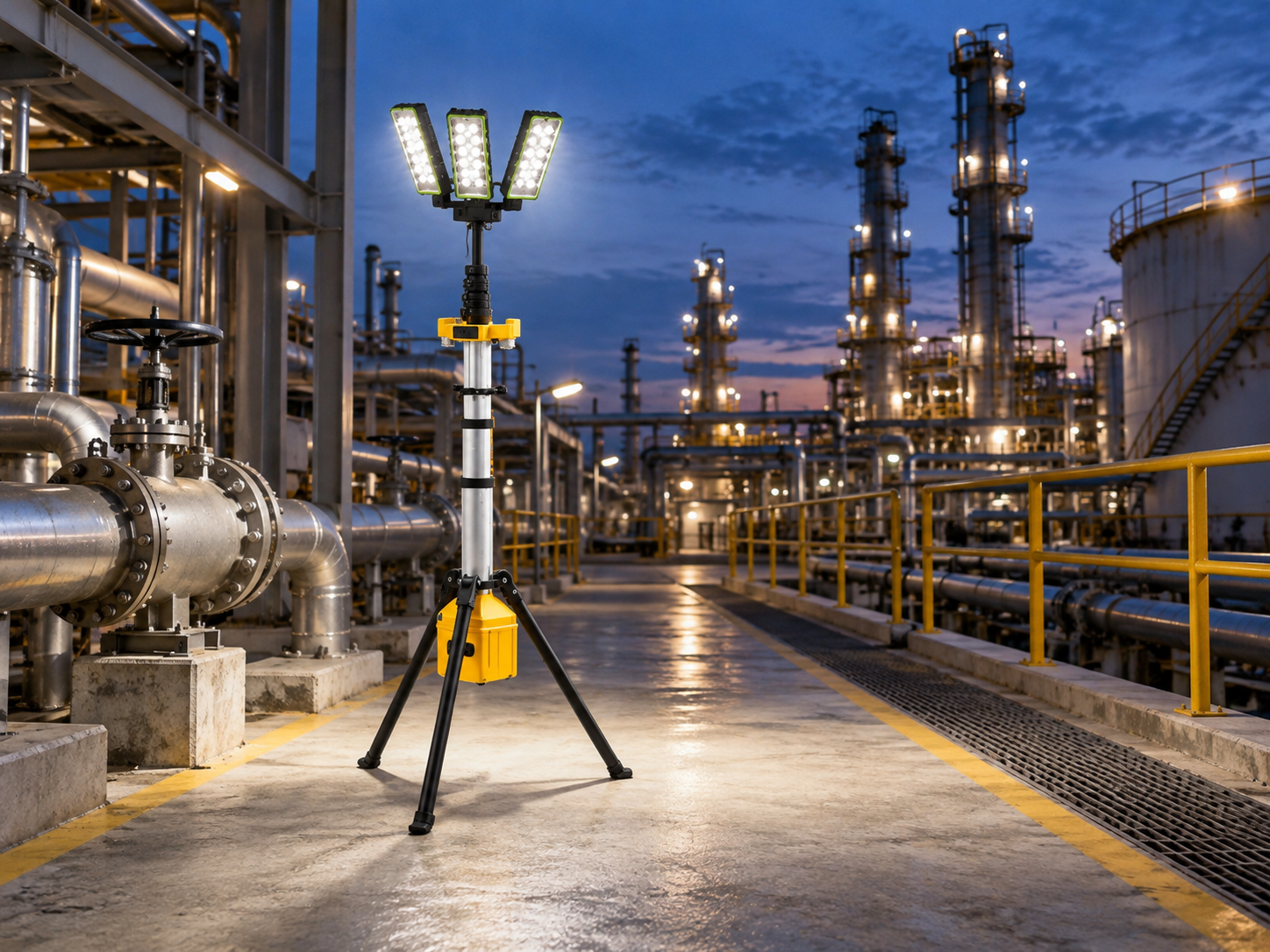
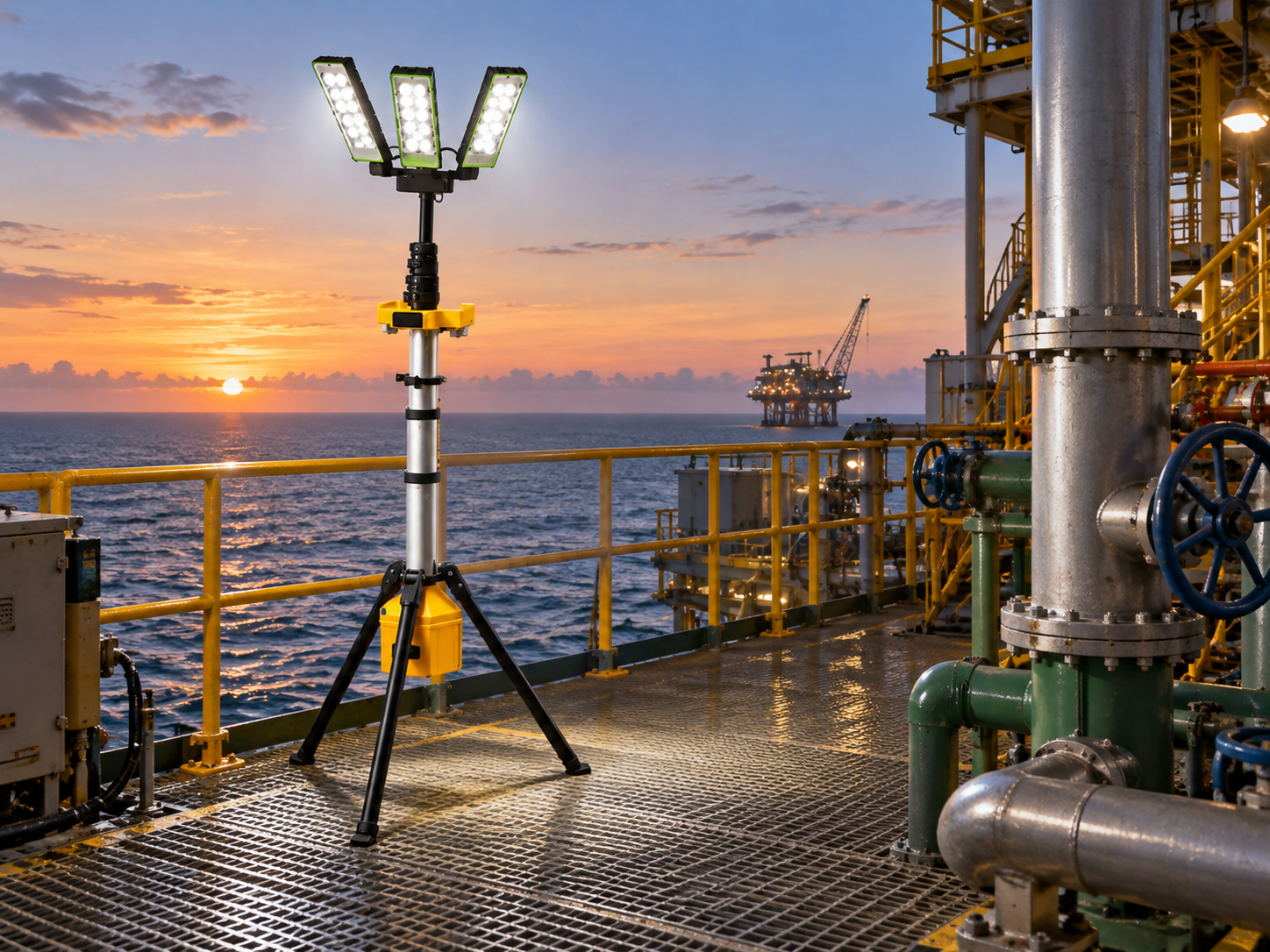
Oil and petrochemical sites
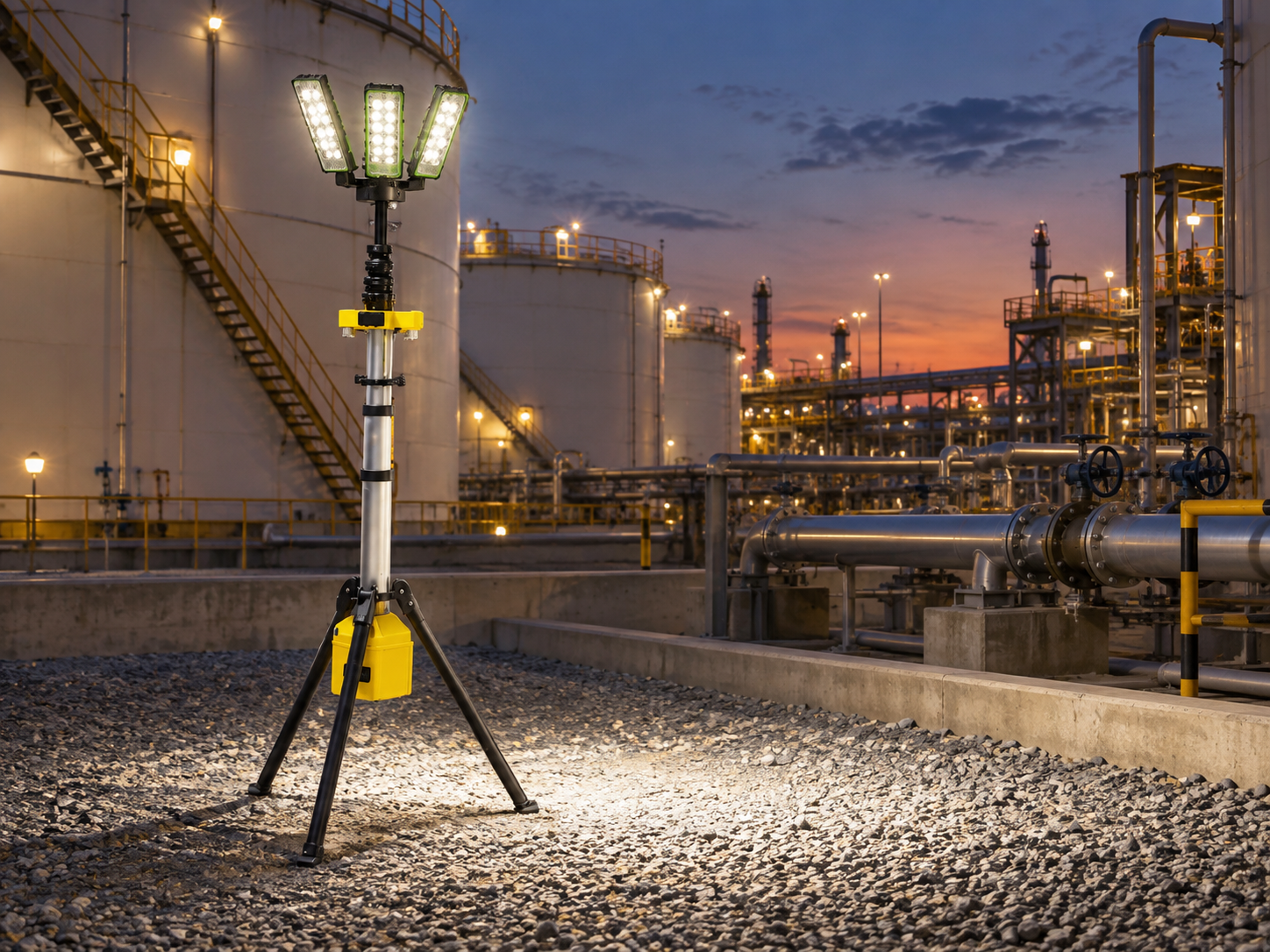
Identify the classified area, gas or vapor group, temperature requirement, corrosion exposure and fixed or portable task.
Operating Parameters
Scenario Readout
02 / 06
Coal and mining operations
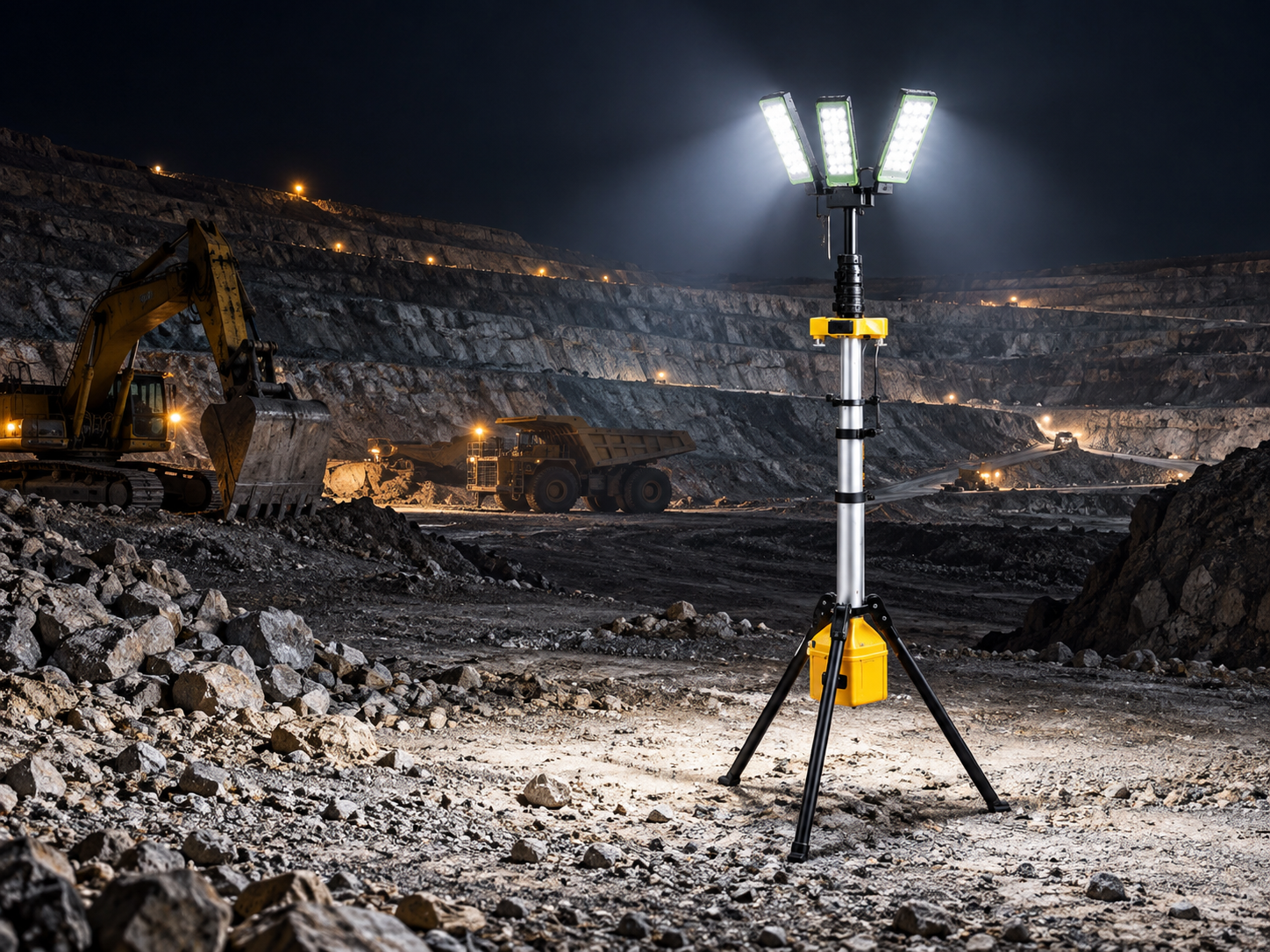
Separate combustible-dust conditions, mobile inspection requirements, impact and runtime. Gas and dust markings should be checked separately.
Operating Parameters
Scenario Readout
03 / 06
Power and metallurgy
Heat, dust, vibration and maintenance access should be related to the task.
Operating Parameters
Scenario Readout
04 / 06
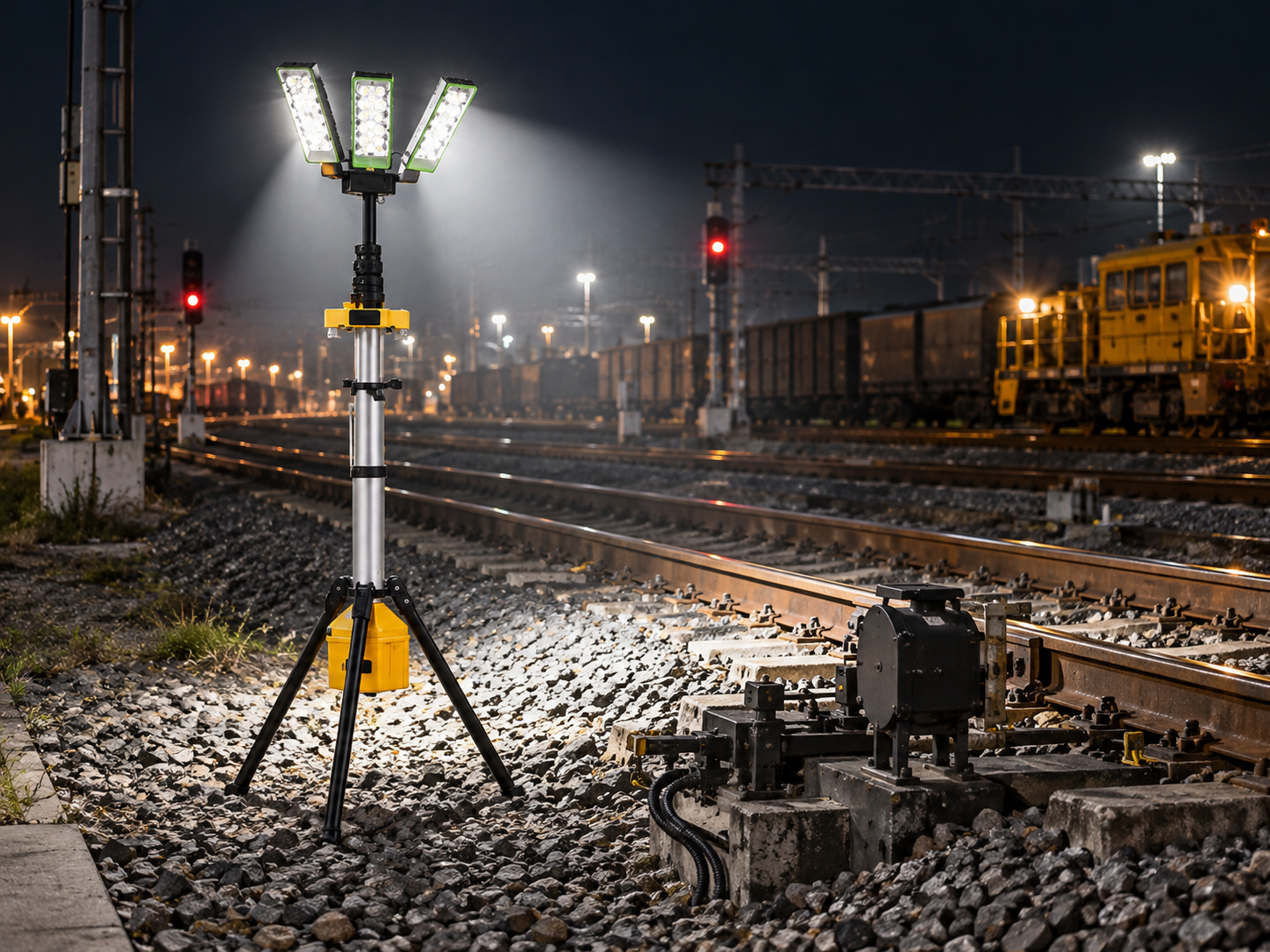
Railway and shipping
Define exposure to salt and moisture, movement, mounting and delivery. IP and corrosion requirements are to be defined next to, not above, hazardous approvals.
Operating Parameters
Scenario Readout
05 / 06
Inspection and maintenance
Portable explosion-proof lighting may be used for changing task positions, with the exact model approved for the site. Runtime, arrangement of cable or battery and shadow control are part of the review.
Operating Parameters
Scenario Readout
06 / 06
Emergency operations
Normal work lighting does not provide backup power, transfer or escape-route illumination. Normal power failure should be stated separately if backup is required.
Operating Parameters
Selection Trade-Offs and Better Alternatives
The strongest quotation is sometimes the one that redirects an unsuitable starting point. These trade-offs help avoid choosing an approach for the wrong reasons; HSE site-lighting guidance supports separating normal task lighting from escape-lighting functions.
STEP 1 Starting assumption
STEP 2 Why it fails
STEP 3 Better next step
Choose the highest wattage
Why it fails
Wattage does not establish hazardous suitability or work-plane distribution
Better next step
Confirm classification, photometric task and mounting first
Use IP66 as the approval test
Why it fails
Ingress and explosion protection cover different risks
Better next step
Check exact marking, certificate and site designation
Use one portable light for normal and escape lighting
Why it fails
Primary-lighting failure introduces a separate function and power condition
Better next step
Define normal task lighting and emergency escape requirements separately
Compare unit prices before configuration
Why it fails
Unlike approval, optic, electrical and document scopes distort the comparison
Better next step
Issue the same 9-input RFQ to each supplier
Explosion-Proof LED Lighting Tools
-
Hazardous-Area RFQ Checklist
/explosion-proof-lighting/led-lights/hazardous-area-rfq-checklist/
-
Lighting Task Input Builder
/explosion-proof-lighting/led-lights/lighting-task-input-builder/
-
Quote Readiness Score
/explosion-proof-lighting/led-lights/quote-readiness-score/
Explosion-Proof LED Light FAQ
-
No. LED technology describes the light source. Hazardous location suitability is based on the exact equipment approval, marking, and installation conditions documented through the IECEx Certified Equipment Scheme or the project’s applicable approval system.
-
No. IP66 protection is against dust ingress and powerful water jets. Explosion protection is related to equipment use in specified explosive atmospheres.
-
Begin with the classification of the site regarding gas or dust groups, temperature conditions, and the approval scheme. Then consider the exact equipment model, configuration and electrical supply, and the method of installation.
-
They define varying conditions of a hazardous material based on likelihood in the North American classification approach. Use the designation for the specific area and do not substitute a Zone designation without a project-level assessment.
-
Yes. In addition to project-related Zone designation, the full marking and the gas or dust groups, temperature class, equipment protection level and other ambient conditions must also be considered.
-
No. A maximum value at a given point in space does not describe average or maintained illuminance, uniformity, glare, shadows or obstructions across the work plane.
-
No. Emergency escape lighting is to ensure safe movement along escape routes in the event of loss of normal operation lighting.
-
For hazardous areas, consider movement, mounting, coverage, access, and task-plane requirements. Format should follow the task, rather than a product-category preference.
-
LFADJ reviews the requested model and project document list during technical communication. Certificate availability and applicability are confirmed against the exact model and configuration.
-
We base our prices on the exact model, configuration, quantity, document package, destination and delivery requirement. Send the same input set when requesting quotations from suppliers.
-
We set samples or prototypes on a 7-day lead time and small-batch or production supplies within 20 days after configuration approval. The final project schedule is contained in the written quote.
-
Give country, classification, gas or dust, ambient conditions, voltage, mounting, task area, quantity, destination and required documents. Send classified area information and layout, if available.