Get in touch with LFADJ Company

LFADJ portable industrial lighting
Portable Explosion-Proof Lighting for Hazardous Worksites
Match the portable light to worksite classifications, inspections, operational times and project quantities. LFADJ supports selection of models and quotations for predictive and preventive maintenance, inspections and emergencies.
Model suitability is confirmed against the quoted model documents and your site classification. A category name alone is not an approval for every hazardous location.
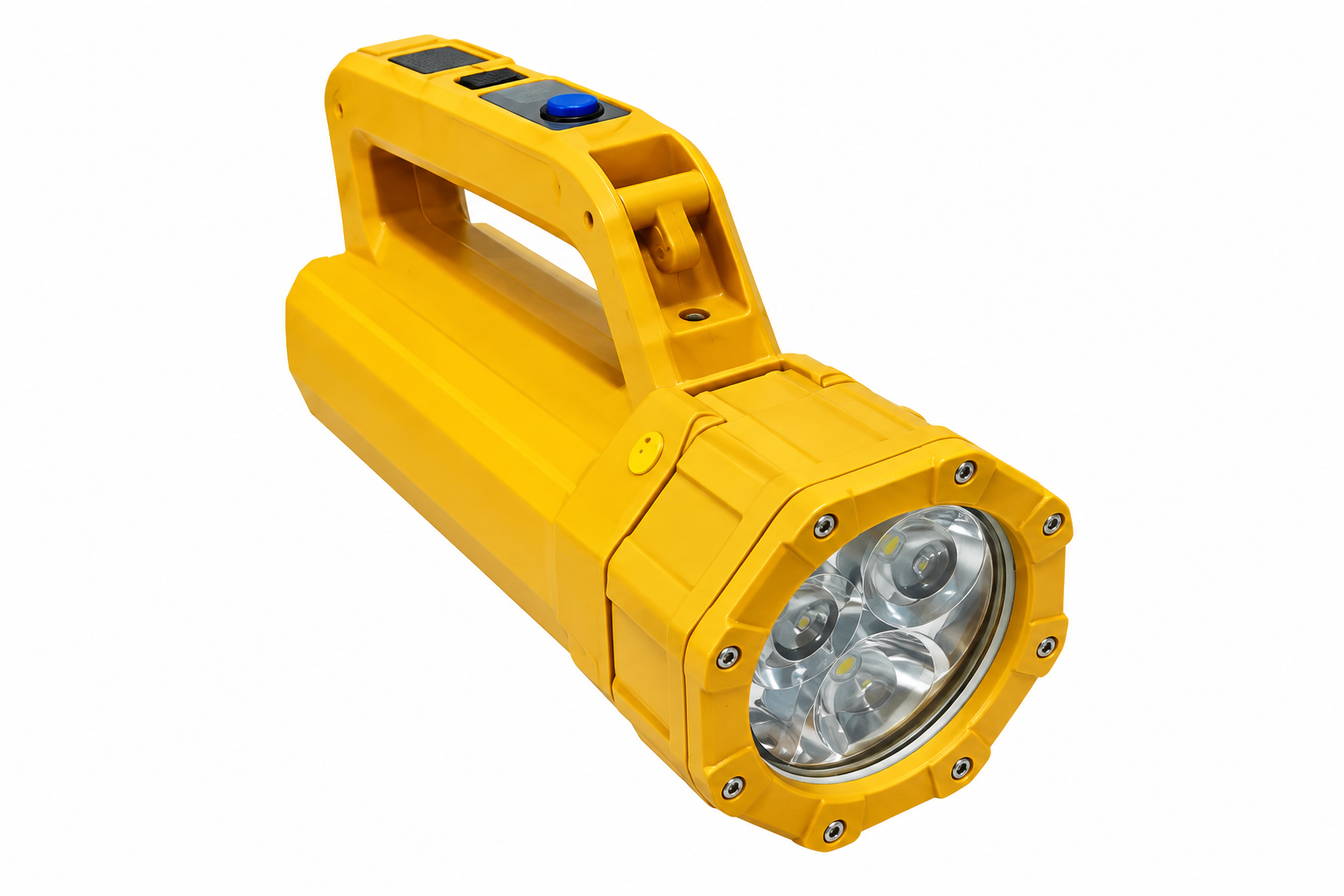
LF2530 at a Glance
The supplied LF2530 product sheet positions the unit as a portable high-intensity search light with multiple output modes. These figures are model-specific LFADJ supplier data, not specifications for every portable light in the series.
For project acceptance, compare the exact model documentation with the worksite classification and equipment-suitability requirements in OSHA 29 CFR 1910.307.
Important performance boundary
The five-hour figure is not presented as five hours of constant 30 W electrical draw. Request the test method for maintained output, condition of the battery and ambient temperature, and the cutoff point for your acceptance criteria.
-
30 W 3 × 10 W LED, as supplied
-
5 / 10 / 36 h Stated mode runtimes
-
IP65 Protection rating shown on the sheet
-
≈ 1.2 kg Portable body weight
Hazardous-Location Fit Comes Before Brightness
Portable hazardous location lights are selected from documented hazard outward. OSHA 29 CFR 1910.307 requires classified locations to be documented and equipment to be suitable for the specific location. OSHA requires equipment to be suitable for the particular location and IEC marks state the limit of protection and the application of the equipment and not a universal equipment permission to use a light anywhere.
Do not start with lumen output
A portable explosion proof lamp or LED lighting fixture can have a useful lumen figure and still be the wrong choice for a flammable gas or vapor location. Class I Div 1, written out as Division 1, is a jurisdiction-specific designation; it is not interchangeable with an IEC Zone marking or a supplier category label.

-
01Selection inputJurisdictionWhat your team suppliesCountry and governing project requirementWhat LFADJ checksWhich certification or conformity documents must accompany the quoted modelDecision owner Procurement + QA
-
02Selection inputHazard typeWhat your team suppliesGas/vapor, combustible dust, or another classified hazardWhat LFADJ checksWhether the model’s protection concept addresses that hazard familyDecision owner Safety engineer
-
03Selection inputArea classificationWhat your team suppliesClass/Division or Zone, plus groupWhat LFADJ checksExact marking and certificate scopeDecision owner Electrical engineer
-
04Selection inputTemperature and ambientWhat your team suppliesRequired temperature class or maximum surface temperature; site rangeWhat LFADJ checksMarking, permitted ambient range and special conditionsDecision owner QA + site owner
-
05Selection inputLighting taskWhat your team suppliesClose inspection, patrol, search, maintenance or emergency useWhat LFADJ checksBeam, handling and positioning requirementDecision owner Maintenance lead
-
06Selection inputOperating windowWhat your team suppliesRequired hours at the useful output modeWhat LFADJ checksMode runtime, charging arrangement and reserveDecision owner Operations
-
07Selection inputProject scaleWhat your team suppliesQuantity, destination and required documentsWhat LFADJ checksConfiguration, packing and quotation scopeDecision owner Procurement
LFADJ Portable Lighting Capability
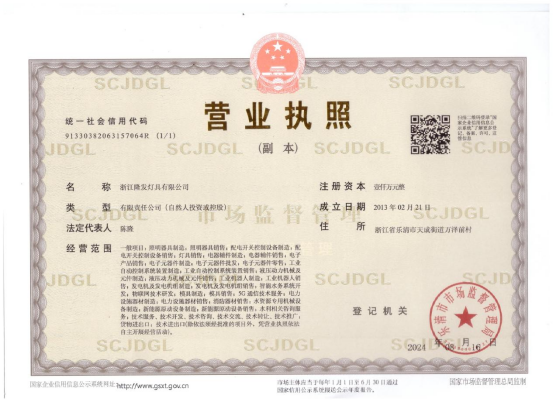
Zhejiang LONGFA Lighting Co., Ltd. was established in 2013 in Yueqing, Wenzhou, Zhejiang. The company combines product development, manufacturing, trade and service across industrial, mobile, explosion-protected and emergency lighting.
 EX-PORTABLE SERIES
01
Pre-sale matching
- Review the application environment
- Identify the operating task
- Collect lighting and document requirements
02
Project configuration
- Confirm the quoted model
- Align accessories and quantity
- Coordinate supply requirements
03
After-sales support
- Product-use consultation
- Issue handling through the service network
- Maintenance scope governed by the contract
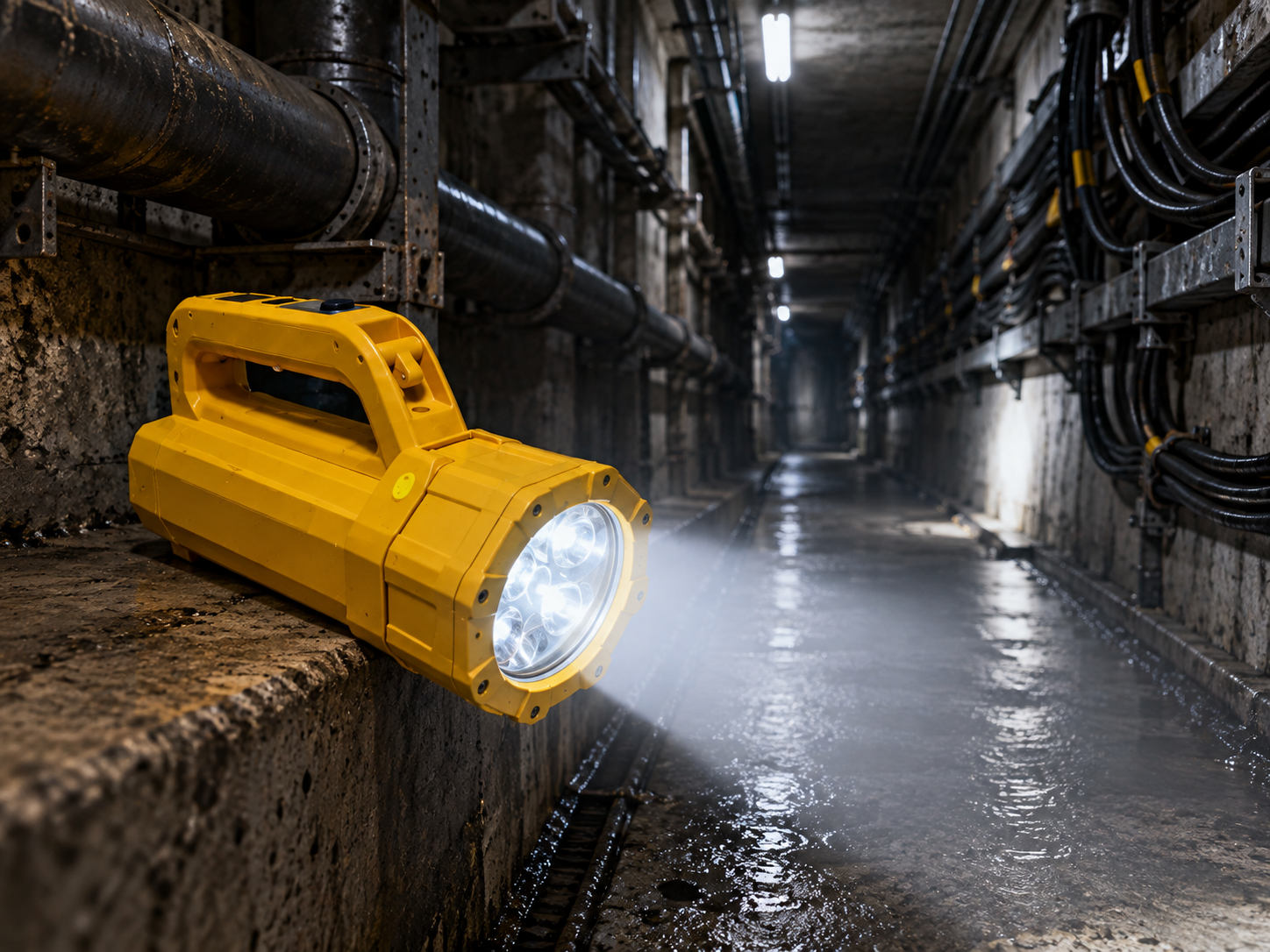
LF2530 Portable High-Intensity Search Light
This model card is a translation of the supplied LF2530 product sheet, for the benefit of engineers and buyers to develop a verification checklist. Request the latest datasheet, nameplate and applicable certification for the model referenced for acceptance. This document check implements the location-specific suitability principle in OSHA 29 CFR 1910.307; it does not turn OSHA into the source of the LF2530 specifications below.
Where buyers get the wrong answer
Copying one row into a tender does nothing for model traceability when the nameplate, charger or certificate names a different variant. If that mismatch is found after delivery, quarantine, replacement freight and schedule delay can cost more than the light itself.
| Field | Supplied LF2530 value | Acceptance question |
|---|---|---|
| Rated voltage | 11.1 V | Is the battery configuration covered by the model documentation? |
| Rated power | 3 × 10 W LED | Is this emitter rating, peak input or tested operating draw? |
| Battery capacity | 5.5 Ah | What usable-energy and end-of-discharge criteria apply? |
| Operating modes | 36 W high: 5 h; 20 W strong: 10 h; 9 W work: 36 h | What output, temperature and battery-age conditions define each result? |
| Charging time | 12 V fast charge: 4 h; 5 V slow charge: 8 h | Where is charging permitted, and which charger is included? |
| Protection | IP65 | Which test record and exact variant support the rating? |
| Head adjustment | 90° | Does the chosen position remain stable for the task? |
| Dimensions | 245 × 85 × 145 mm (±5 mm) | Does it fit storage, PPE and access constraints? |
| Weight | Approx. 1.2 kg | Is one-hand carrying acceptable for the shift? |
| Battery-cycle statement | >1,000 cycles | What depth of discharge and retention threshold were used? |
| Light-source-life statement | About 100,000 h | What lifetime definition and thermal conditions apply? |
| Additional function | USB emergency charging | Where may the USB function be used under the instructions? |
Marking shown on supplied sheet
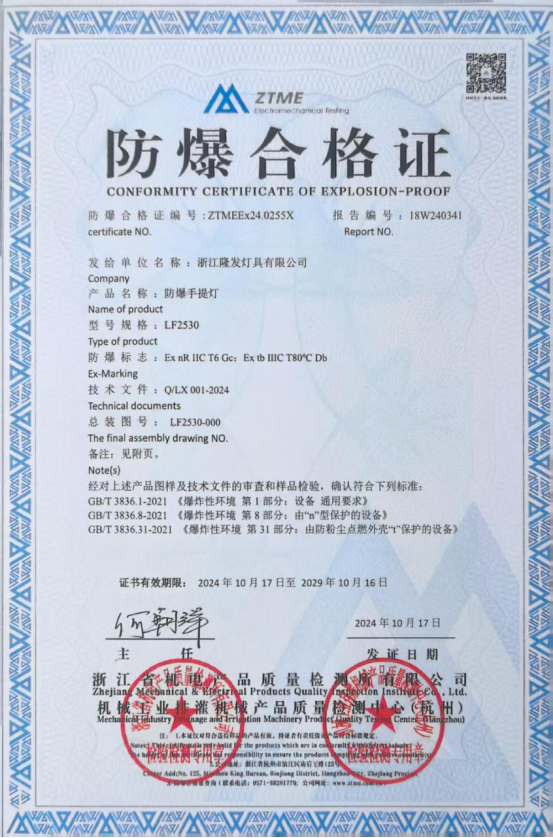
Ex nR IIC T6 Gc
Ex tb IIIC T80°C Db
What the marking does not prove by itself
- US NRTL listing or OSHA “approval”
- ATEX or IECEx certification for this exact model
- Suitability for every gas, dust, mine or ambient condition
Protection Concepts and Site-Suitability Checks
“Explosion-proof” is a term used frequently in commercial searches, but decision-making hinges on more technical language. Explosion-proof marking on the LF2530 sheet refers to restricted breathing in the IEC type n framework, and OSHA defines explosion-proof apparatus as those that contain an internal explosion. The applicable source boundaries are IEC 60079-15 for type of protection n, IEC 60079-31 for dust protection by enclosure t, and OSHA 29 CFR 1910.399 for the US definition.
The reason terminology matters
A protection-concept mismatch creates ignition risk because the equipment may have been evaluated for a different hazard or protection method. LFADJ therefore asks buyers to compare the exact marking against the site record and the applicable IEC 60079 or local approval framework.
-
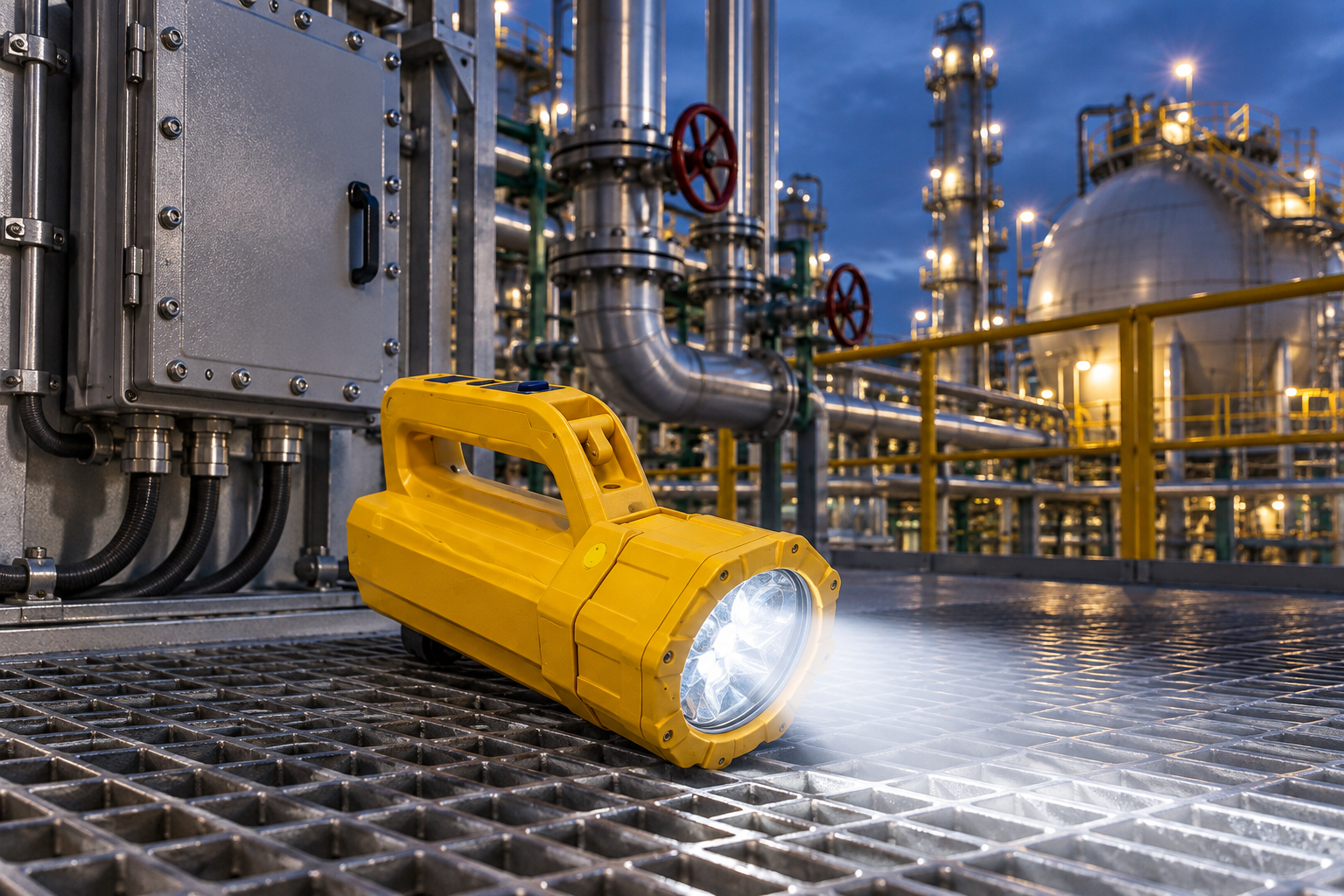 Restricted breathing Ex nR
Limits the entry of an external atmosphere into an enclosure under defined conditions. Review the complete certificate, variant and conditions of use.
-
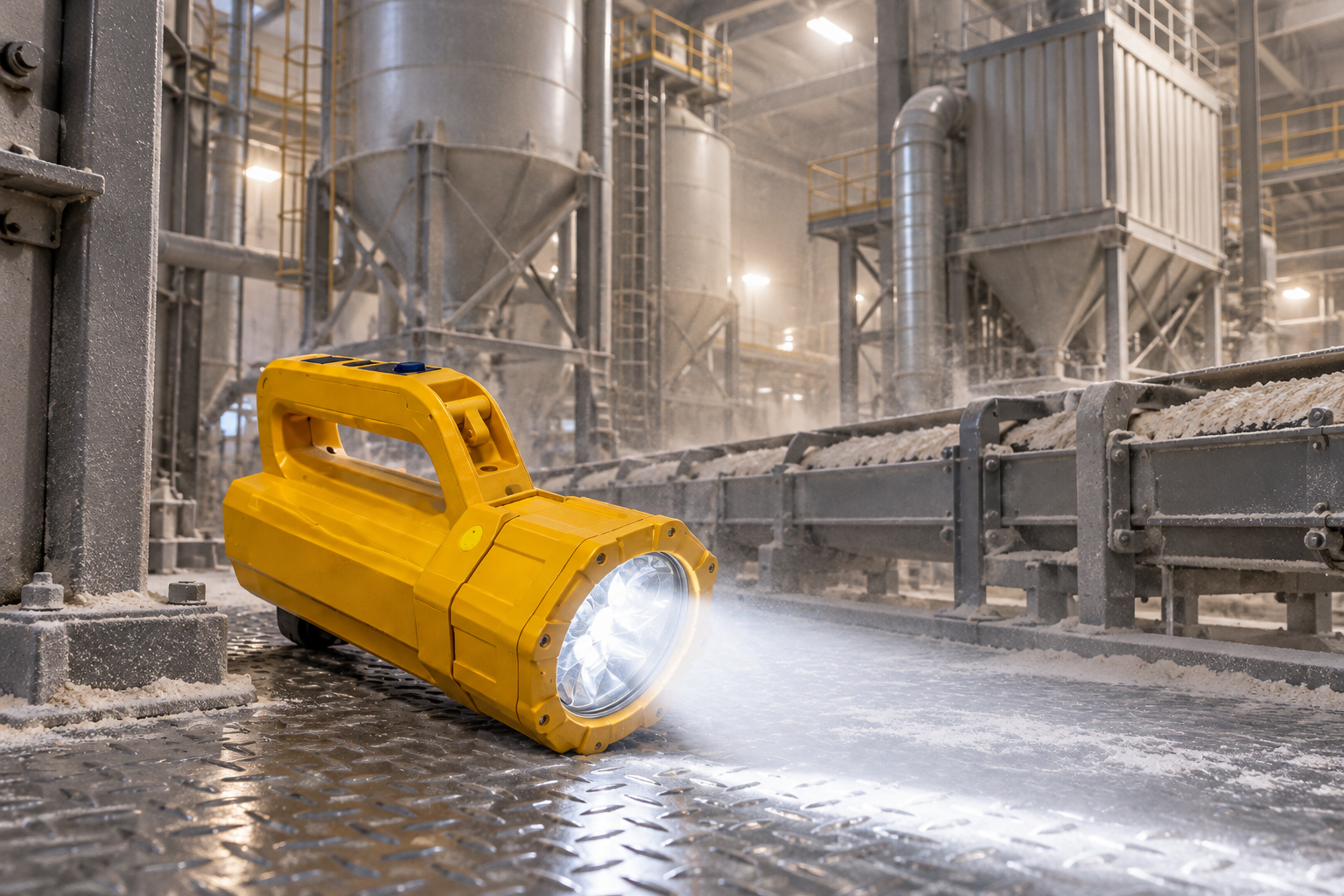 Protection by enclosure Ex t / tb
Addresses explosive dust atmospheres through enclosure and surface-temperature controls within the applicable scope. The exact dust group and conditions still matter.
-
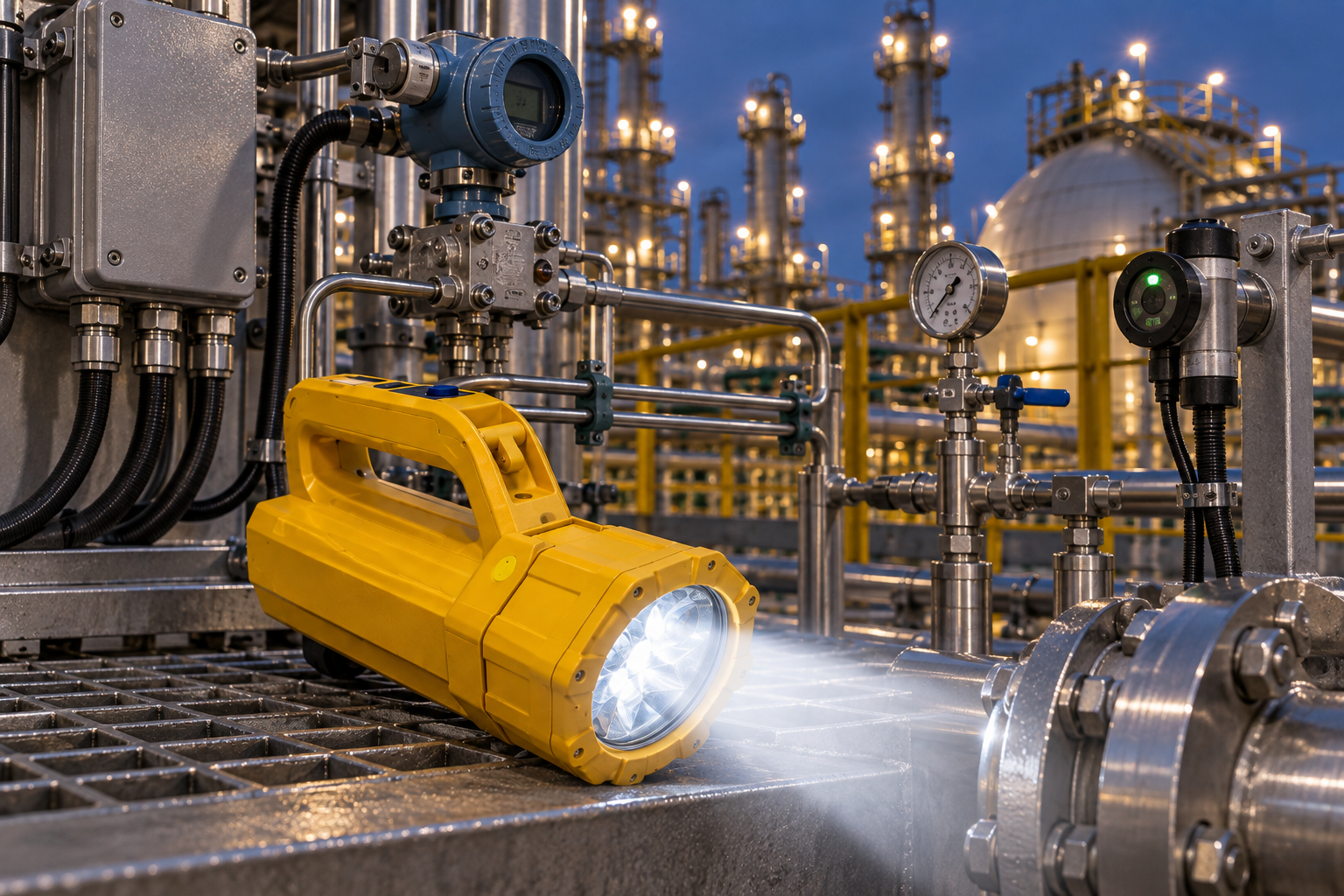 Energy limitation Intrinsic safety
Limits electrical and thermal energy under specified fault conditions. A low-voltage, battery-powered or plastic-bodied light is not automatically intrinsically safe.
Selection rule
Do not translate one protection concept into another for marketing convenience. Approve the quoted model only when the marking, document scope, jurisdiction and actual worksite classification line up.
Engineering review starts with the classified location and the complete marking. The commercial phrase “explosion proof” is not a substitute for that comparison.
Selection principle synthesized from OSHA 29 CFR 1910.307/399 and IEC 60079 terminology
US project question
Ask whether the exact equipment is acceptable under the project’s OSHA and NRTL framework. A Class/Division requirement belongs there instead of being mapped casually from an IEC marking.
IEC project question
Ask for the complete marking, certificate schedule and any special conditions. Voltage and enclosure shape are not a substitute for the protection concept and equipment-protection level.
The Approval Chain Hidden Bottleneck
The brightest specification is not the limiting factor. The governing link is the documented location and the exact equipment marking, as required by OSHA 29 CFR 1910.307. The project stops at the first absence of a link connecting the worksite record with the completed configuration.
Why this becomes a procurement delay
Teams often collect the certificate after choosing the lamp, but the wrong model suffix can send the review back to the start. The tell is a quotation that says only “explosion-proof light” while omitting the exact variant, marking and certificate reference.
01
Site record
Document the jurisdiction, hazard, Class/Division or Zone, group, temperature and ambient range.
02
Exact model
Match the model and variant on the quotation, nameplate, datasheet and certificate.
03
Full configuration
Check battery, charger, cable, plug, accessories and any permitted charging location.
04
Release evidence
Keep current documents with revision, certificate scope and project acceptance record.
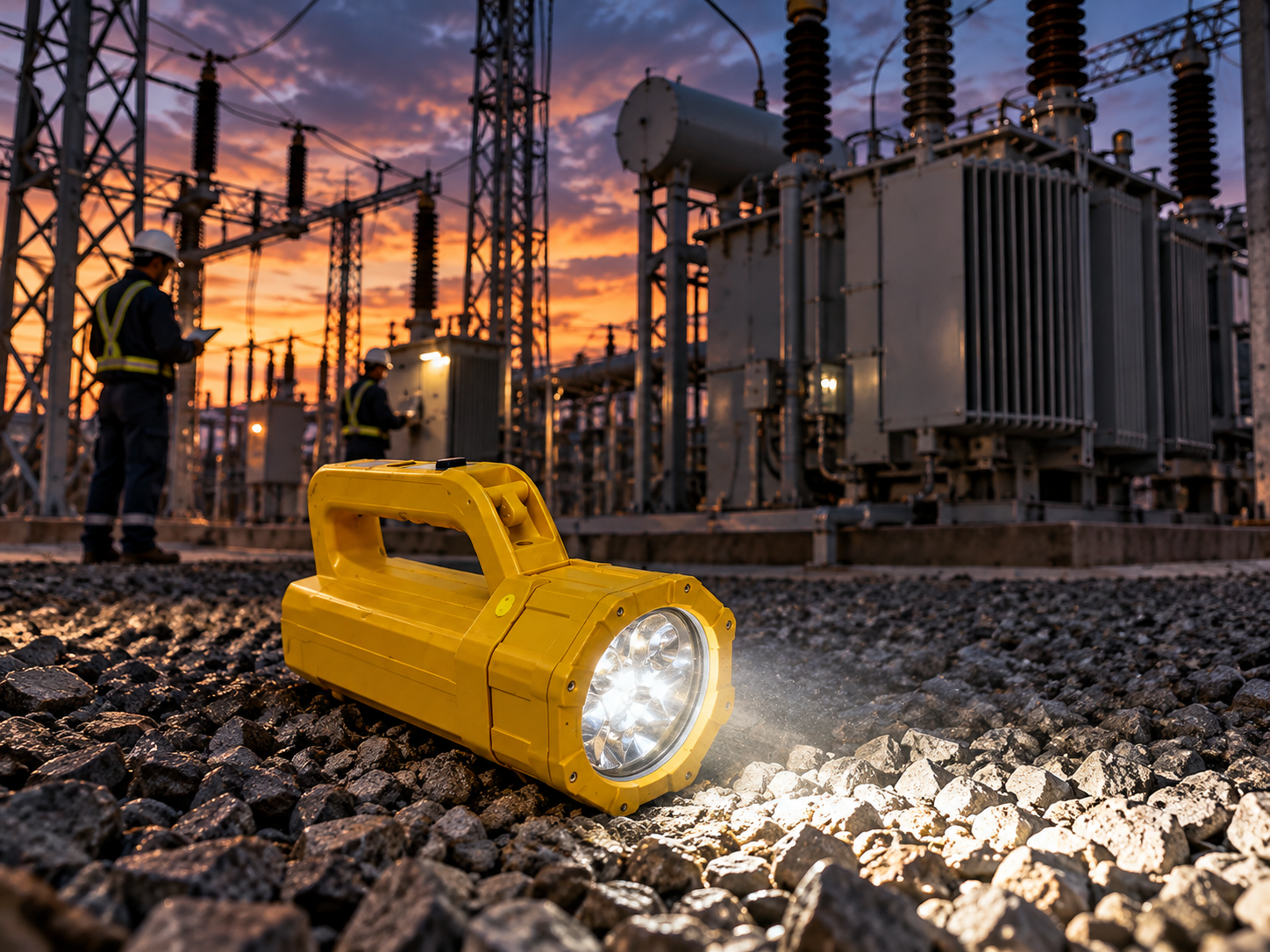
Stop condition
If one link is unknown, pause approval and request it. Substituting brightness, IP rating or a general company certificate does not close the missing link.
Evidence to attach
- 01 Approved worksite classification record
- 02 Quoted model and variant
- 03 Nameplate image and current datasheet
- 04 Applicable certificate or listing schedule
Release decision
QA can compare the four records before purchase order release and again at incoming inspection. Contrary to a price-first review, this short evidence check exposes substitutions before they reach the worksite.
Runtime, Handling and Emergency Functions
The LF2530 sheet describes three operating durations, and hence, provides buyers the flexibility of trading off immediate intensity against operating time. The mode labels should not be altered to be generic and provide a false assurance of battery life. Runtime and charging convenience must be reviewed only after the equipment is suitable for the documented location under OSHA 29 CFR 1910.307; OSHA is not the source of the supplier-stated runtime figures.
5 h stated
for the sheet’s 36 W high mode
High-intensity search
Use for short, visibility-critical tasks only after the required beam performance is confirmed.
10 h stated
for the sheet’s 20 W strong mode
Strong inspection light
Compare the useful output at the actual working distance, not runtime alone.
36 h stated
for the sheet’s 9 W work mode
Long work-light window
Confirm whether the lower-output mode still meets the task and reserve requirement.
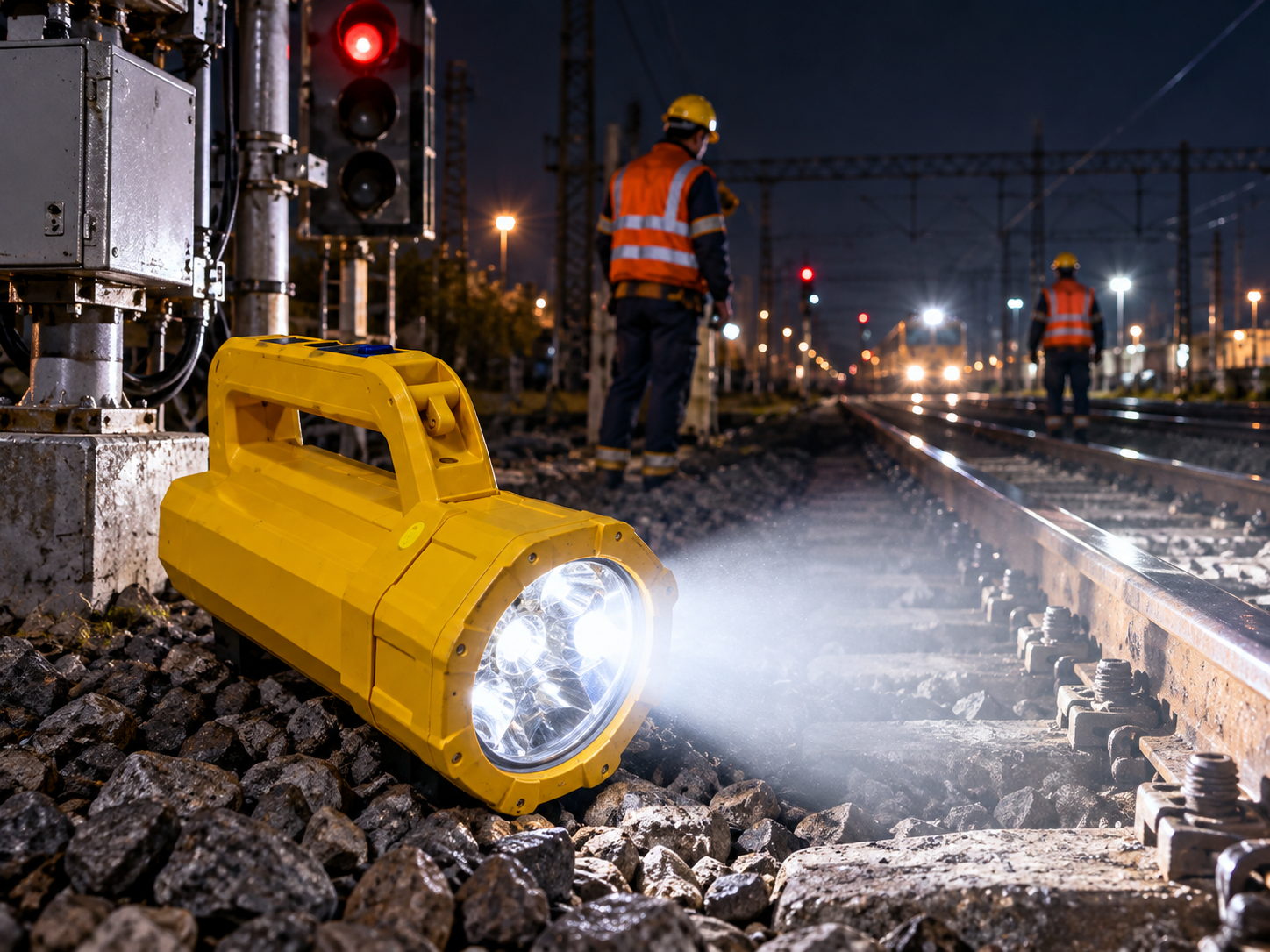
Application Scenarios for Inspection and Emergency Work
The portable use cases for LFADJ include single operator searches, equipment inspection, routine and emergency patrols, responses to floods and other incidents, and post incident cleanup. These use cases do not provide approval for a defined industry or hazardous zone.
Inspection and maintenance
- Close equipment checks
- Temporary maintenance access
- Patrol routes and outage work
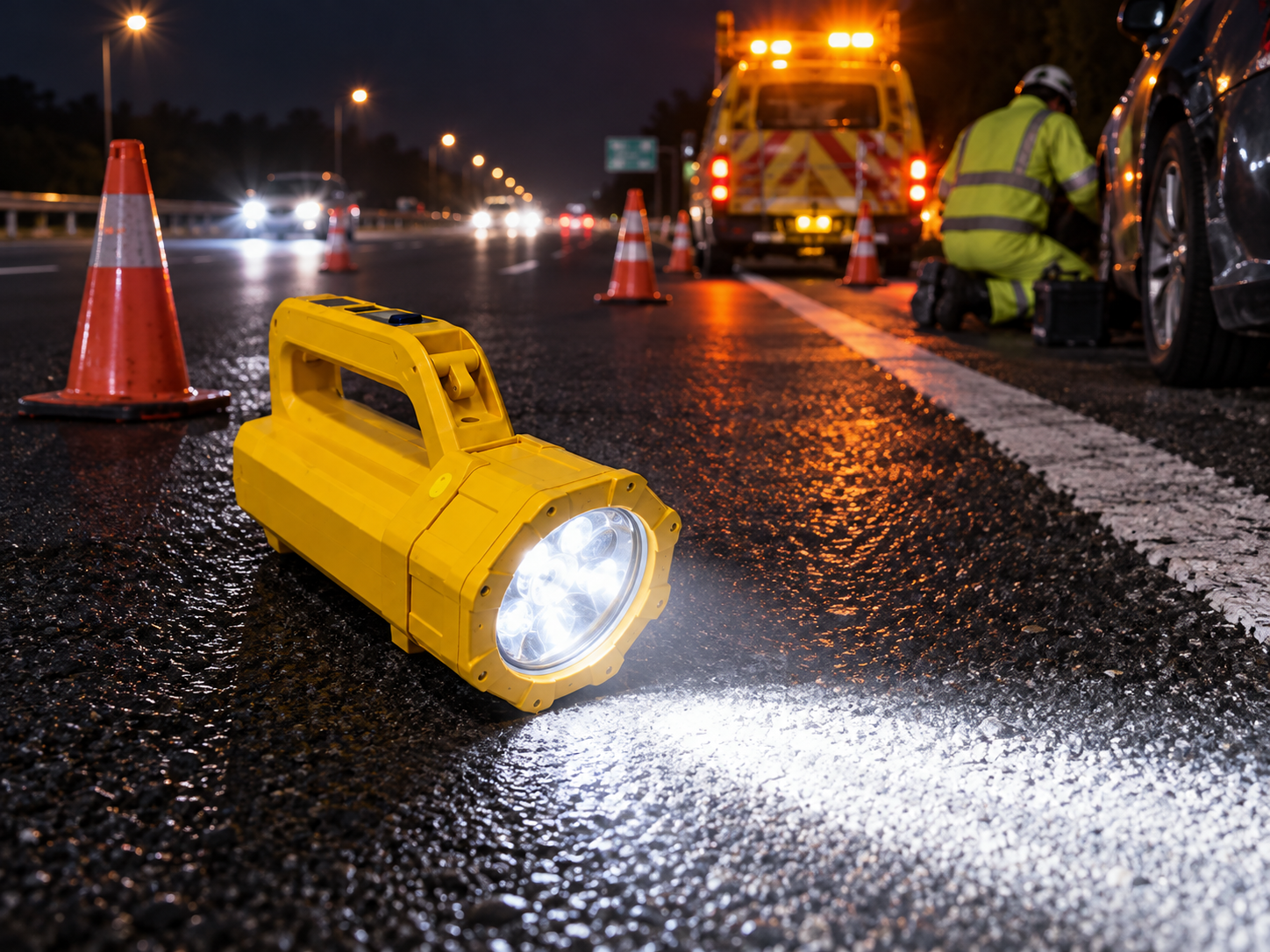
Emergency response
- Search and scene assessment
- Rescue-team portable lighting
- Flood and incident response
Industrial environments
- Petrochemical and energy facilities
- Metallurgy, rail and shipping
- Public-safety operations
Application boundary
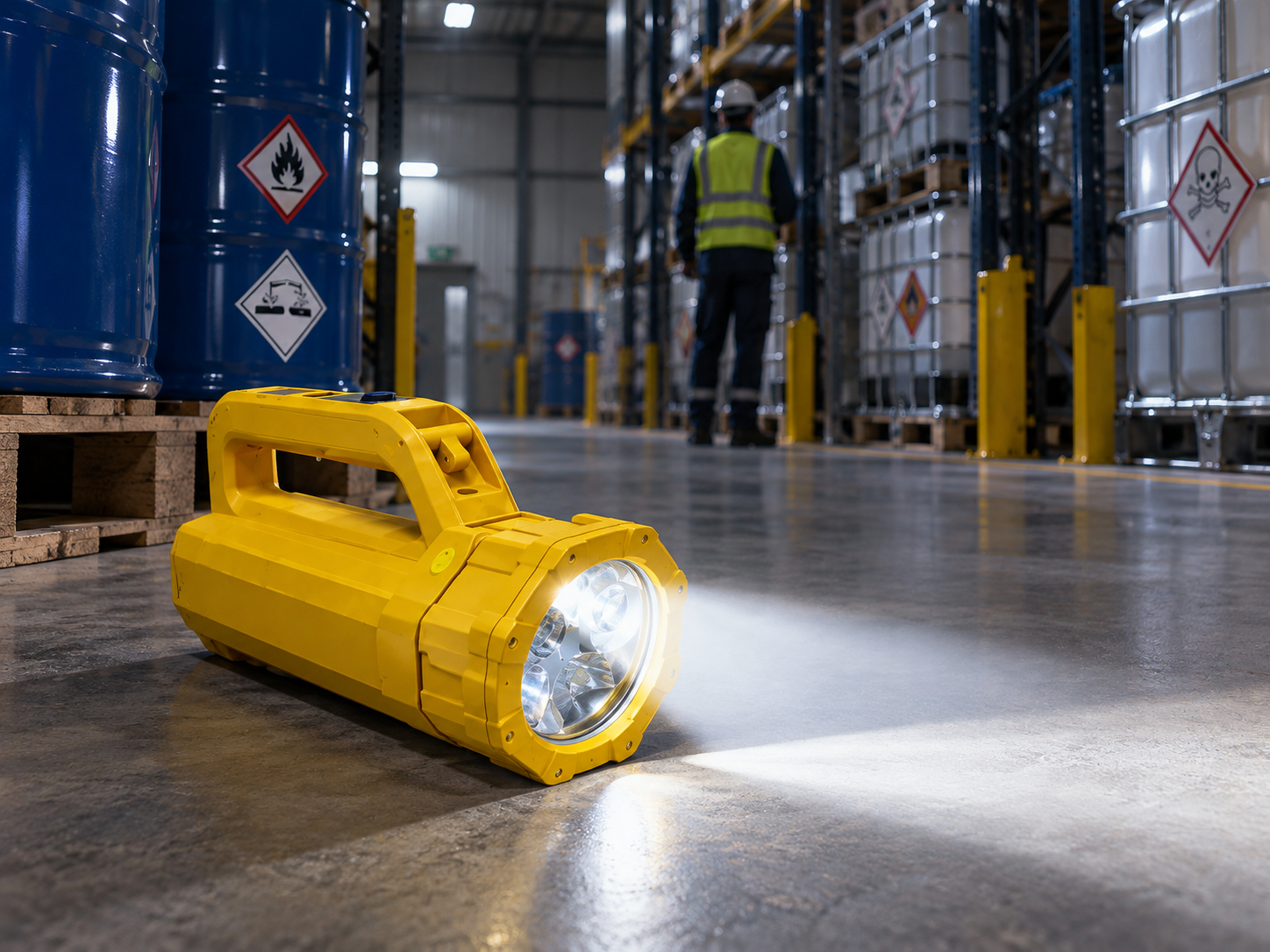
Coal mines, reactive dusts, unusual oxygen conditions and other special environments need their own regulatory and certificate review. Do not approve a model from an industry label or a picture of a similar job.
RFQ Readiness Scorecard
Use this scorecard when sending an inquiry or comparing two offers. Each row must have a specific response. An empty safety-critical row is a stop condition, not a zero-cost assumption. The classification, marking and suitability rows reflect the documentation and equipment-selection requirements in OSHA 29 CFR 1910.307.
-
Category01 Worksite classificationRequired evidenceJurisdiction, hazard, Zone/Division, group, temperature, ambientReady0–2Buyer action Obtain the site record from the qualified owner
-
Category02 Exact model identityRequired evidenceModel, variant, nameplate and datasheet revisionReady0–2Buyer action Reject “equivalent model” wording without documents
-
Category03 Approval scopeRequired evidenceCertificate/listing number and permitted conditionsReady0–2Buyer action Match every field to the worksite record
-
Category04 Task performanceRequired evidenceUseful beam/output at distance and runtime by modeReady0–2Buyer action Define an acceptance check
-
Category05 Power and chargingRequired evidenceBattery, charger, cable/accessory scope and charging locationReady0–2Buyer action Identify ordinary-location restrictions
-
Category06 Commercial scopeRequired evidenceQuantity, included items, payment, destination and documentsReady0–2Buyer action Normalize quotations before price comparison
01
Hazard-Area Intake Builder
Turn site data into a clean model-matching brief.
02
Runtime Coverage Check
Compare a stated mode duration with your shift and reserve.
03
Interactive RFQ Score
Find the missing fields before requesting quotes.
LFADJ Inquiry Support Process
Share the site requirement
Send the classification, task, operating time, quantity and destination.
Review the model boundary
LFADJ aligns the proposed model, configuration and available documents with the request.
Confirm the quotation
Both parties confirm the commercial scope, supply connection and contract terms.
Upon delivery, the service network’s product use consultants address reported issues in accordance with the signed agreement. Warranty, response time, maintenance and on-site support are based on the signed agreement.
Certification and Quality Controls
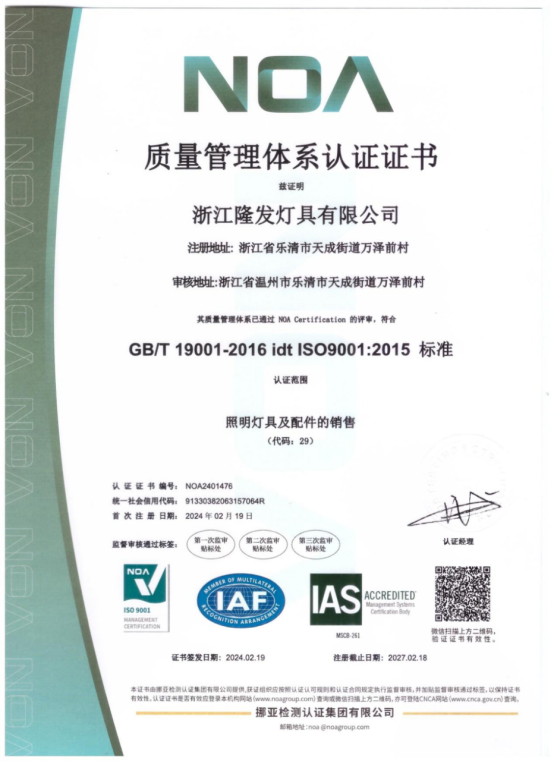
LFADJ reports ISO 9001:2015, ISO 14001:2015 and ISO 45001:2018 management-system certification. These systems support organizational quality, environmental and occupational-safety processes, but they do not replace hazardous-location approval for a luminaire.
Management systems
Confirm the current certificate holder, scope and validity for ISO 9001, ISO 14001 and ISO 45001.
Model documents
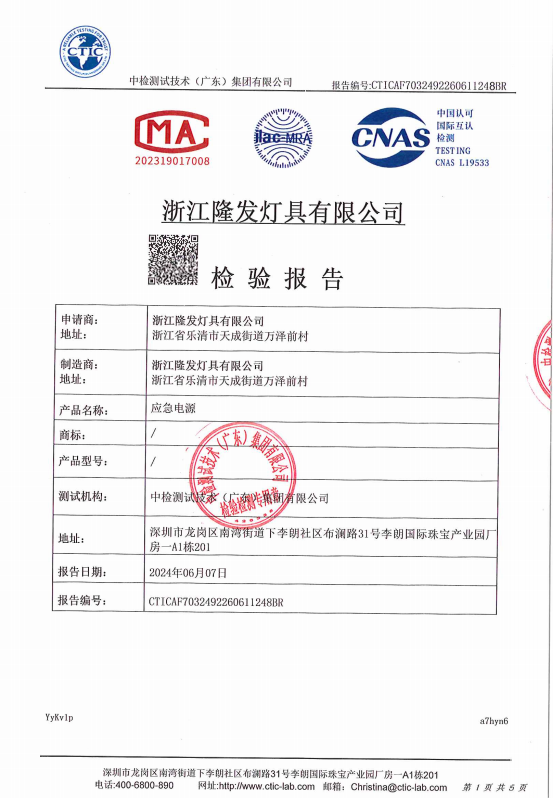
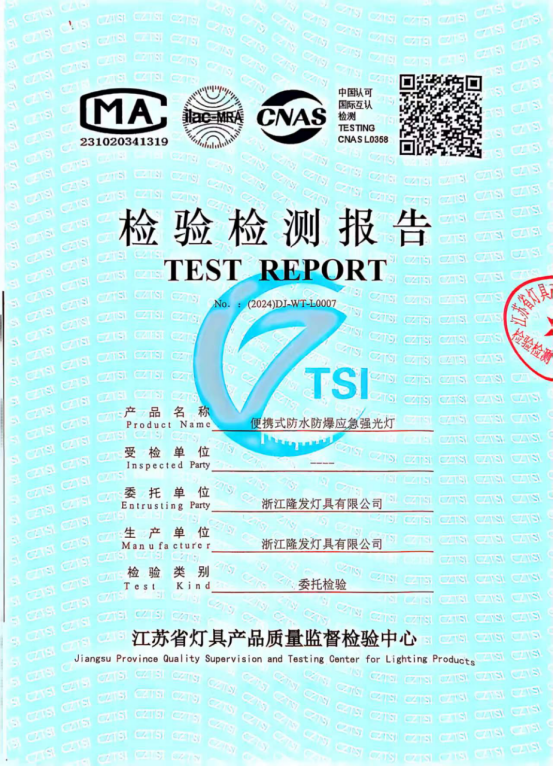
Request the quoted model’s datasheet, nameplate, explosion-protection document and applicable test report.
Project review
Compare the document scope with the jurisdiction, area classification, material group, temperature and ambient conditions.
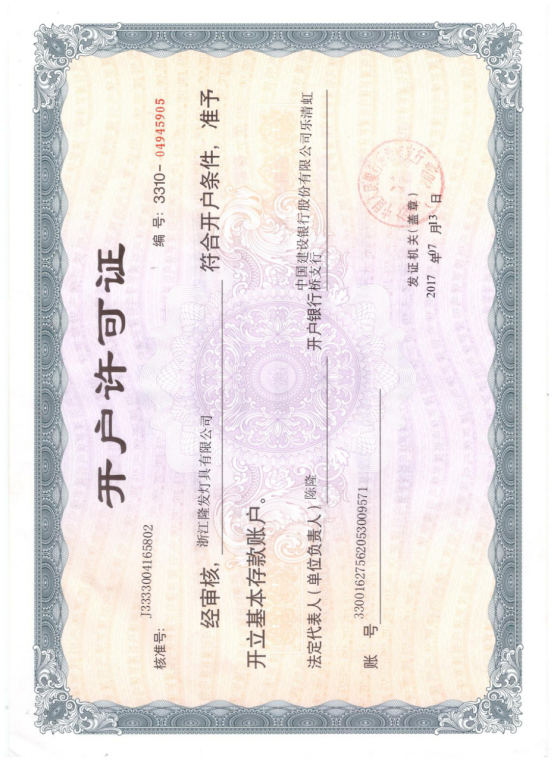
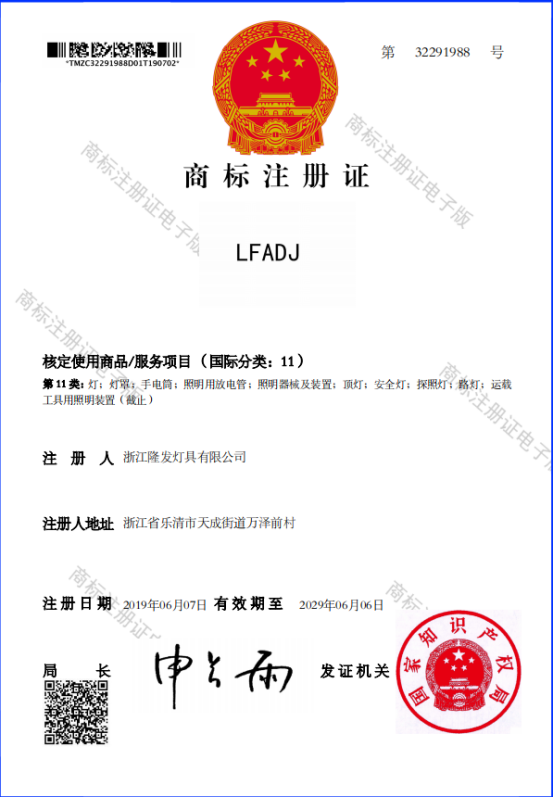
Company materials indicate explosion-protection certificates exist for portable and panoramic lighting devices. Therefore, the page invites potential buyers to request the certificate for the quoted model, instead of assuming one certificate covers the entire LFADJ product line.
Procurement Snapshot
Prices quoted on projects are based on many factors including the model selected, quantity, type of documents required, accessories, type of charging, and the location. LFADJ has not posted a general online price for this product or committed to a specific lead time.
Minimum order
MOQ 1 unitSingle-unit orders are accepted.
Sample policy
Samples follow the same commercial terms as finished products.
Payment terms
50% deposit, with the balance paid before shipment.Quote normalization
When comparing suppliers, keep the exact certification scope, included charger/accessories, runtime basis, document pack and delivery destination on the same line. A lower figure is not comparable if one of those fields is missing.
Portable Explosion-Proof Lighting Selection & Verification Tools
Review hazard-area suitability, RFQ readiness and operating runtime coverage before submitting project specifications under OSHA 29 CFR 1910.307.
Hazard Area Intake
Application Environment & Classification Review
Align jurisdiction, area classification, material group, temperature class and ambient operating conditions before luminaire model selection.
RFQ Readiness
Project Configuration & Document Scope Alignment
Verify quoted model parameters, explosion-protection certificates, test reports, charger accessories, quantity and delivery destination.
Runtime Coverage
Operating Duration & Reserve Window Evaluation
Compare 36 W high, 20 W strong and 9 W work mode durations against working-distance output and emergency reserve requirements.
Frequently Asked Questions
The hazardous-location answers below use OSHA 29 CFR 1910.307 for US classification and suitability boundaries and IEC 60079-15 for the referenced type n protection concept.
How do I select portable explosion-proof lighting for a hazardous area?
Start with the jurisdiction, documented classification, material group, temperature requirement and ambient range. Only then compare task performance, runtime, handling and price.
Is explosion-proof lighting the same as intrinsically safe lighting?
No. Explosion containment, restricted breathing, dust protection by enclosure and intrinsic safety use different protection concepts and approval scopes.
What does Ex nR mean on the supplied LF2530 sheet?
IEC 60079-15 uses nR for restricted-breathing enclosures. It should not be translated into a claim that the enclosure meets the US definition of explosion-proof apparatus.
What operating times are stated for the LF2530?
The supplied sheet lists 5 hours for the 36 W high mode, 10 hours for the 20 W strong mode and 36 hours for the 9 W work mode. Request the test conditions when runtime is an acceptance criterion.
Does IP65 prove hazardous-location suitability?
No. IP65 addresses ingress protection against water and solids; it does not evaluate ignition risk in a classified atmosphere. Hazardous-location suitability depends on the applicable protection concept, complete marking, certificate scope, installation conditions and site classification.
Can the LF2530 charge a phone in an emergency?
The supplied product sheet shows a USB emergency-charging function. Confirm where that function may be used and any restrictions in the product instructions.
Is the LF2530 approved for the United States?
This page does not claim US NRTL listing or OSHA approval. Request the exact model documents required by the project jurisdiction before approval.
What is the minimum order quantity?
MOQ is 1 unit. This can support a document and handling evaluation before a larger project order, but the sample follows the same commercial terms as finished products. Agree any inspection or acceptance method in the quotation.
What payment terms does LFADJ use?
LFADJ requires a 50% deposit, with the balance paid before shipment. The quotation and contract govern the final commercial scope.
What should I send for a project quotation?
Send the jurisdiction, area classification, gas/dust group, temperature requirement, ambient conditions, task, runtime, quantity, destination and required documents.